Sep 1, 2026 Artificial Intelligence
Generative artificial intelligence has moved past experimental prototypes into core infrastructure. Yet, enterprise leaders frequently struggle to define its precise role within existing software stacks. Are we building novel content engines, automating routine tasks, or redesigning how systems reason? Knowing the primary objective determines whether your deployment yields measurable return on investment or becomes another expensive tech proof of concept.
According to an industry report from Fortune Business Insights, the global generative AI market is projected to grow from roughly $161 billion in 2026 to well over $1 trillion by 2034. On the enterprise side, spending on dedicated software and infrastructure is compounding at over 29.30% annually.
At Xicom, we work directly with tech leaders, application architects, and product teams to translate technical capabilities into production-grade systems. By clarifying the strategic focus of generative AI technology, we ensure that goals of generative AI and software investments remain resilient, scalable, and aligned with core business objectives.
What Is Generative AI?
Generative AI is a type of artificial intelligence that creates new content, such as images, videos, text, and audio, instead of simply analyzing or sorting existing data. It uses the knowledge it has learned during training to solve new problems and generate original output. In creative fields like social media, this is especially useful, helping produce new ideas such as conversations, stories, images, videos, and music. Generative AI can also work across human languages, programming languages, and complex technical subjects, using what it has learned to solve problems in each of these areas.
This is what makes generative AI different from traditional software, which can only follow rules that are already built into it. Because generative AI learns patterns instead of following fixed instructions, it can adapt to new situations and produce a fresh result each time, without needing someone to manually create every version by hand.
Large organizations are already putting this to use in several ways. Generative AI powers chatbots that can hold natural conversations with customers, helps create media such as images and videos, supports product development by quickly generating design ideas, and speeds up creative work across marketing and design teams.
How Generative AI Works?
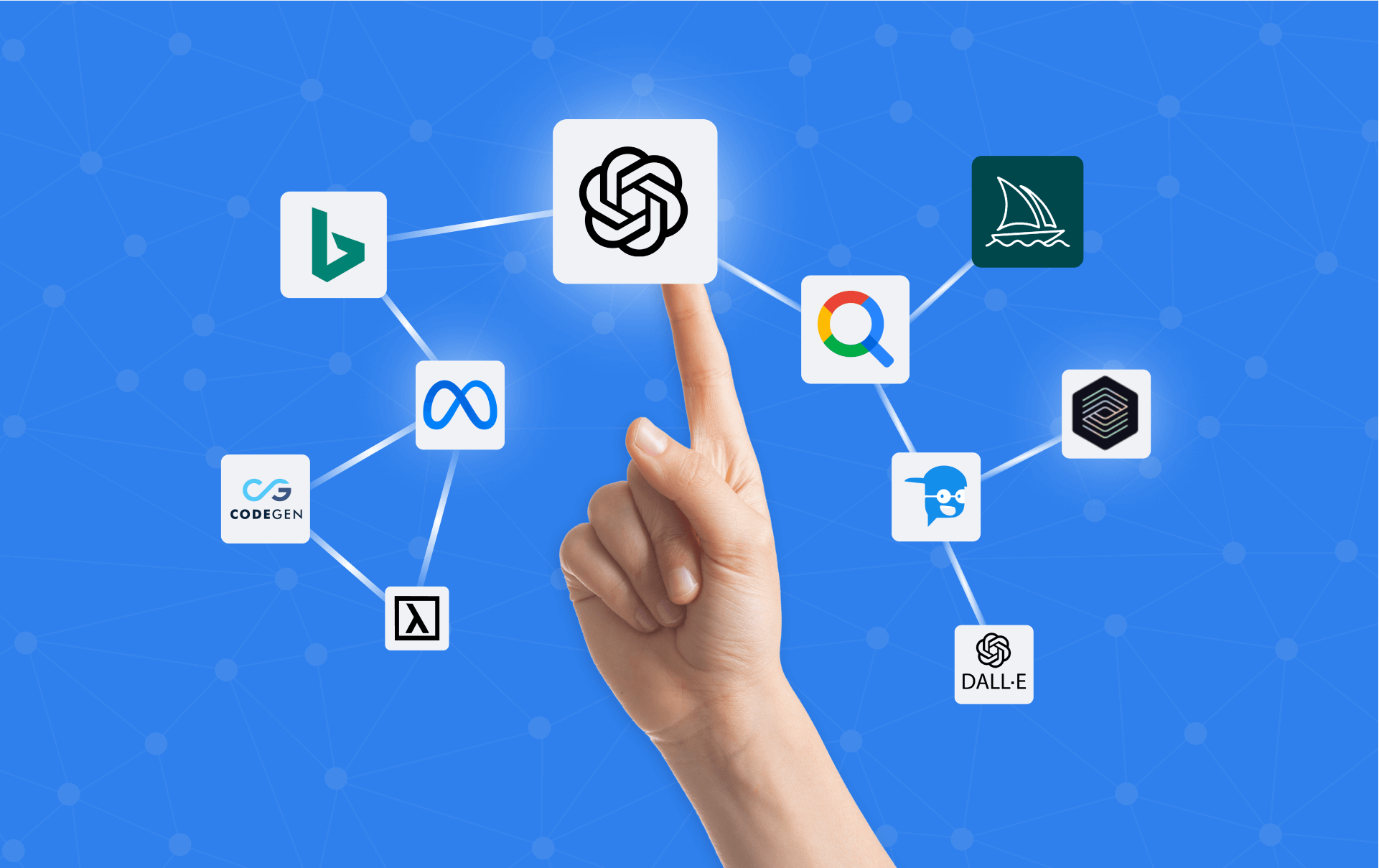
Let’s discuss how generative AI works in detail. Generative AI analyzes patterns in large datasets to create new content, like text, audio, or images, using advanced learning techniques. It doesn’t simply copy or repeat what it has seen before; it uses what it has learned to generate something new each time. Here’s how the process works:
1. Data Gathering
The first step is to collect large datasets of images, text, and audio from various sources. This raw data is often messy, so it needs to be cleaned by removing irrelevant, duplicate, or inconsistent information before it can be used for training. The quality of this data directly impacts how well the AI performs later on.
2. Model Training Process
After cleaning the data, advanced machine learning techniques are used to train AI models on it. During this stage, the model is exposed to millions of examples and gradually adjusts itself to get better at recognizing what it’s looking at. The AI analyzes patterns and relationships in the dataset to learn how the data is structured, essentially building an internal understanding of the subject it’s being trained on.
3. Finding Patterns
Once trained, the AI can identify relationships within data that would be difficult for a human to spot manually. For example, a language model learns how words and sentences are typically structured and which words tend to appear together. An image model learns to recognize colors, shapes, textures, and the relationships among visual elements. This pattern recognition is what allows the AI to work with new inputs it hasn’t seen before.
4. Text and Image Creation
At this stage, the AI uses everything it has learned to create new text and images based on the input it receives. It applies the patterns it identified during training to generate content in various forms, whether that’s a written response, a generated image, or even code. The output is built based on probability; the AI predicts what should come next based on everything it has learned so far.
5. Improvement
AI improves over time by learning from feedback and user interactions. As more people use the model and provide corrections or preferences, the system is refined further, leading to more accurate, relevant, and useful outputs with each iteration.
Also Read: Assistive AI vs Generative AI
Main Goal of Generative AI
The main goal of generative AI is to create new, meaningful content by learning patterns from existing data and using them to solve real problems. At its core, it comes down to one idea: based on everything the model has learned, what should it generate next? Instead of copying something it has already seen, the AI builds a fresh response from scratch, whether that’s text, an image, code, or audio. Here’s what this goal actually looks like in practice:
1. Creating Content Faster
Generative AI helps produce text, images, audio, and code in far less time than doing it manually. Businesses use it for tasks like drafting reports, writing customer responses, and generating marketing content, freeing up employees to focus on higher-value work instead of repetitive tasks.
2. Working Around the Clock
Unlike employees, AI tools don’t need breaks. Chatbots, automated content generators, and virtual assistants can respond to customers and handle routine requests at any time, helping businesses stay responsive without adding extra staff.
3. Helping Businesses Scale Without Extra Resources
Growing a business usually means hiring more people or investing in more infrastructure. Generative AI lets companies handle more work and maintain quality without a proportional increase in cost or headcount.
4. Personalising Content and Experiences
Generative AI can tailor its output based on user context, past interactions, and preferences. This makes it possible to deliver personalized recommendations, responses, and content to large numbers of users, something that would be difficult to do manually at scale.
5. Supporting Creativity and Problem-Solving
Writers, designers, and developers use generative AI to explore ideas, generate first drafts, debug code, and explain complex concepts. Rather than replacing creative work, it gives people a faster starting point to build from.
Applications of Generative AI
Generative AI is already being used across industries in practical, measurable ways. Here’s where it’s making the biggest impact:
| Industry | Application | What It Does |
|---|---|---|
| Healthcare | Medical report drafting, clinical documentation, drug discovery support | Speeds up documentation and accelerates early-stage compound identification |
| Finance | Financial report summarisation, risk scenario modelling, fraud pattern analysis | Cuts down analyst time spent on routine, repetitive reporting |
| Education | Personalised learning content, AI tutoring and doubt-solving bots | Adapts study material and pacing to each student’s level |
| Media & Entertainment | Script and story generation, image and video creation | Speeds up early-stage creative production and concept testing |
| Software Development | Code generation, automated bug detection, technical documentation | Shortens development cycles and reduces manual coding errors |
| E-Commerce | Product descriptions, ad copy, personalised chatbots | Produces high-volume, on-brand content at scale |
| Legal | Contract review, clause drafting, compliance checks | Flags risks early and speeds up first-draft legal work |
Also Read: Generative AI Use Cases and Applications
Benefits of Generative AI
The value of generative AI isn’t only that it speeds things up. It makes certain kinds of work possible for teams that could never have justified the cost or time before. Here’s where that shows up in practice:
Speed
A first draft that used to take an afternoon can be ready in minutes. A rough version of a script or component that once needed a senior developer’s time can now be scaffolded in seconds and refined from there.
Scale
One well-written prompt can produce dozens of variations of an ad, a product description, or a customer message, at a fraction of the cost of producing each one by hand.
Lower Skill Barrier
You no longer need deep design or coding expertise to get a usable first output. A clearly written prompt is often enough to get something workable to start from.
Consistent Output Quality
Generative AI doesn’t have an off day. Once you set a quality bar through good prompts and review, the output stays reliably close to that bar.
Faster Iteration
Teams can explore ten different directions for a campaign, a design, or a feature in roughly the time it used to take to explore one.
Challenges and Limitations
Reaching this goal isn’t automatic, and there are real limits worth knowing before relying on these systems for anything business-critical.
Hallucinations
The model can generate incorrect information and present it with complete confidence. There’s no built-in flag warning you when this happens, which is exactly why output review matters.
Inherited Bias
Generative models learn from human-created data, and human biases are part of that data. Left unchecked, the model can reproduce, and even amplify, them.
Pattern Matching, Not Understanding
These systems recognize statistical patterns, not meaning. Push them toward something genuinely novel, and the limitations show up fast.
Unclear Ownership
Who legally owns AI-generated output is still being worked out in courts and legislation worldwide. Businesses using generative AI commercially should stay aware of this shifting ground.
Compute Cost
Running generative models at scale requires real infrastructure investment. Smaller teams can hit cost ceilings faster than expected.
Potential for Misuse
Any capability that helps a business can be redirected toward something harmful by someone else. That risk doesn’t disappear just because most use cases are legitimate
Future of Generative AI
What generative AI can do today is really just the opening chapter. Most of what’s in production right now is single-task generation, one prompt, one output. Where the technology is headed looks different: multimodal, action-taking, and built directly into everyday business workflows.
A few shifts already underway:
- Multimodal systems that handle text, images, audio, and video within a single model rather than separate tools for each
- Agentic AI that doesn’t stop at generating a response; it takes actions, calls tools, and completes multi-step tasks with less human handoff
- Domain-specific models fine-tuned for fields like healthcare, law, and engineering, where general-purpose accuracy isn’t good enough
- Real-time personalisation built into enterprise software, consumer apps, and learning platforms
- Deeper integration with enterprise systems, so AI agents can pull from live databases, trigger workflows, and coordinate across platforms directly
Career Opportunities in Generative AI
| Role | What They Do | Typically Hired By |
|---|---|---|
| Prompt Engineer | Designs and refines prompts that get consistent, reliable output from LLMs | Product teams, agencies, AI-first startups |
| AI/ML Engineer | Builds, fine-tunes, and deploys generative models into production | Tech companies, fintech, healthcare firms |
| AI Product Manager | Defines the roadmap and use cases for AI-powered features | SaaS companies, product-led businesses |
| LLM Application Developer | Builds applications on top of APIs like OpenAI, Gemini, or Claude | Startups, enterprise IT teams, consulting firms |
| AI Content Strategist | Uses generative tools to plan and produce content at scale | Media companies, e-commerce brands, agencies |
| Generative AI Data Scientist | Trains, evaluates, and improves generative models | Research labs, enterprise data teams |
| Agentic AI Developer | Builds autonomous agents that complete multi-step tasks with minimal supervision | AI-native startups, large tech companies |
Demand for people who can actually build with generative AI, not just use off-the-shelf tools, is outpacing supply right now. For businesses that don’t want to spend months hiring and onboarding for these roles, generative AI developers can be brought in on a dedicated or staff-augmentation basis to close that gap immediately.
Why Choose Xicom for Generative AI Development?
Most generative AI content stops at explaining what the technology can do. Actually building it, and building it reliably, is a different problem. Xicom has been building software for over 20 years, with a 350+ person engineering team that has delivered 1,800+ projects for clients across healthcare, finance, retail, logistics, and education.
On the generative AI side specifically, that means production-grade work: fine-tuned LLMs, RAG pipelines built on real enterprise data, AI agents that integrate with existing systems, and AI-powered products taken from prototype to deployment. Engagement is flexible: fixed-price for well-scoped projects, time-and-materials for evolving ones, or a dedicated team model for ongoing capacity, with a free consultation available to scope the right approach before any commitment.
The focus isn’t proof-of-concept demos. It’s systems that hold up in production, with the security, monitoring, and maintainability enterprise deployment actually requires.
Conclusion
Moving generative AI out of the lab and into your core software stack isn’t about moving towards the latest tech trends. It is about adopting the smartest technology to maximize operations. It requires a strategic approach that aligns well with data security, handles edge cases, and integrates directly with the systems your business relies on every day.
At Xicom, we help organizations navigate this exact journey. Whether you need to modernize legacy workflows, build secure internal knowledge engines, or launch intelligent customer-facing applications, our senior engineering teams provide the technical expertise and execution blueprints to build safely and effectively. We focus on creating custom software architectures that solve the actual operational friction and deliver measurable returns.
If you’re figuring out which of these goals actually fits your business, Xicom’s generative AI development team can help you build it properly the first time. Work alongside a proven team to design, build, and deploy intelligent AI solutions tailored to your long-term business goals.
Frequently Asked Questions
What is the main goal of generative AI?
To create new content text, images, code, and audio, by learning patterns from existing data and generating original output from those patterns, rather than retrieving something that already exists.
How does generative AI actually create content?
It takes your prompt, compares it against the patterns it learned during training, and builds the response piece by piece, word by word for text, until the output is complete.
What are the real benefits of generative AI?
Mainly speed and scale. Work that used to take hours can be produced in minutes, and a single prompt can generate dozens of variations without a proportional increase in cost.
Which industries are using generative AI the most right now?
Healthcare, finance, education, media, software development, and e-commerce are leading adopters. Any industry with heavy content creation or knowledge work has a viable use case.
Do I need a technical background to use generative AI in my business?
Not for basic use. For building custom applications on top of it, some technical grounding helps, but working with an experienced development partner removes that barrier for most businesses.

Make your ideas turn into reality
With our web & mobile app solutions