×
Our valued Brands & Agencies
















LLM development and consulting, from strategy to deployment
As a LLM development company, we enable businesses to experience the power of AI with our prime suite of LLM development services, ranging from fine-tuning and optimizing your pre-trained models to building powerful, personalized LLM solutions that enable you to analyze and understand your business data intelligently.

LLM Consulting Services
Our LLM consulting services help you work out where a language model will add value and how to build it. We identify and prioritize use cases, compare commercial and open-source models, and decide whether prompting, RAG or fine-tuning fits your goals, so development starts with a clear, costed plan.

Large Language Model (LLM) Development
As a reputated AI development company, we develop LLMs tailored to your business needs, capable of performing tasks like sentiment analysis, text generation, and more. Our models are built to seamlessly integrate with your existing operations and provide industry-focused AI solutions.

Domain-specific LLM powered Solution
We deliver industry-oriented LLMs that ensure superior accuracy, compliance with legalities, and contextual intelligence for high-impact use cases. Our team ensures that each LLM that we craft is fine-tuned with domain-specific data and drives value to businesses.

LLM Fine-tuning
We enable you to hire mobile app developers trained in optimizing existing LLMs by fine-tuning them with your business-related data, domain-specific terminology, and real-time contextual insights. Our expert LLM coders enable you to achieve higher accuracy and relevance in specific domains by driving innovation.

LLM Model Integration
Our experienced team of developers seamlessly integrates LLMs into your existing systems to enhance productivity, automate tasks, and offer smarter user interactions without disrupting your existing workflows. We further optimize its performance to meet the evolving user experience and business requirements.

LLM-Based Chatbot Development
We build intelligent chatbots that deliver human-like interactions, transform customer engagement, and boost user satisfaction. We utilize Generative AI development capabilities along with the top frameworks, such as Rasa and Microsoft Bot Framework.

LLM Model Maintenance and Upgrades
We offer comprehensive support and maintenance services for model monitoring, performance evaluation, re-training of LLMs, and version upgrades to ensure your Large Language Models will stay secure, current, and aligned with evolving objectives and ensure long-term success.
Accelerating enterprise transformation through AI and digital engineering.
20+
Years in Business
350+
IT Professionals
ISO 9001 Certified
NASSCOM & STPI Accreditation
NASSCOM & STPI Accreditation
750+
Clients Worldwide
1800+
Projects Executed
LLM CONSULTING
LLM consulting before you build
Most Large Language Model projects that stall do so because of decisions made in the first few weeks: the wrong use case, the wrong model, or no plan for data and cost. Our LLM consulting services settle those questions before development starts, so your budget goes into a system that fits your business. It builds on our broader AI consulting services, with a focus on large language models.
Book an LLM Consulting Session
01
Use-Case Discovery and Prioritization

We review your workflows with your team and identify where a language model can save time or improve accuracy. Each use case is ranked by business value, data availability and implementation effort, so you start with the one most likely to pay back.
02
Choosing the Right Model for the Job
We compare commercial models such as GPT, Claude and Gemini with open-source options such as Llama, Mistral and Qwen against your requirements for accuracy, data privacy, hosting and budget. You get a clear recommendation and the reasoning behind it.
03
Prompting, RAG or Fine-Tuning
Not every project needs a custom-trained model. We assess whether prompt engineering, retrieval-augmented generation or LLM fine-tuning will meet your quality targets at the lowest cost and effort.
04
Data Readiness and Security Review
We check the quality, format and access controls of the data your LLM will use, and map how sensitive information will be handled. Privacy requirements such as GDPR and HIPAA are factored into the architecture from the start, not added after launch.
05
Cost, Latency and Scaling Estimates
Token usage, hosting and response times decide whether an LLM solution stays viable at scale. We model these for your expected volume, so you know what the system will cost to run each month before you commit to building it.
06
What You Get at the End
Every consulting engagement closes with four deliverables your team can act on: an LLM adoption roadmap, a solution architecture document, a PoC plan with success criteria, and a cost estimate for development and ongoing operations.
Industries
At Xicom, our experts blend deep industry knowledge with technical expertise to overcome sector-specific challenges. We craft tailored LLM solutions that drive innovation, streamline workflows, and personalize experiences across industry sectors.

Automotive

Real Estate

Entertainment

Retail & Ecommerce

Healthcare

Transportation

Manufacturing

Travel & Tourism

Professional Services

Software Vendors

Banking & Finance

Education

Natural Language Processing (NLP)
At Xicom, NLP is the core of our LLM development process. We use it to help models comprehend and generate human-like language. Our experts apply NLP development techniques to enable content summarization, machine translation, sentiment detection, and conversational understanding.

Machine Learning (ML)
As a leading Machine Learning development company, we leverage ML capabilities in LLMs by enabling them to identify data patterns, learn from user interactions, and continuously self-improve. We integrate ML algorithms into the LLM lifecycle to build predictive and generative models capable of intelligent automation.

Transfer Learning
We accelerate LLM development at Xicom using transfer learning by fine-tuning robust, pre-trained foundation models like GPT or BERT on your domain-specific data. This reduces the time and cost of development while significantly improving accuracy, especially in industries with limited labeled datasets or complex terminology.

In-context Learning
Xicom’s LLMs leverage in-context learning to dynamically understand user prompts based on examples given in real-time without any need to retain LLMs. This technique allows our models to perform tasks with high precision, making them ideal for interactive applications like smart chatbots.

Few-shot Learning
We incorporate few-shot learning into our LLMs to minimize data dependency. By training the models on just a few examples, we can build effective solutions for niche use cases or data-constrained environments. This method ensures quicker deployment with reliable performance even in highly specialized domains.

Sentiment Analysis
Our LLM solutions use sentiment analysis to extract emotional and intent-driven signals from text data. This enables businesses to personalize customer support, monitor brand reputation, and optimize communication. We embed this capability within LLMs for contextual understanding and human-like emotional intelligence.
Case studies showcasing the value delivered to clients through our solutions
Our clients have achieved measurable success through our tailored LLM development solutions. From automating internal processes to enhancing customer support, our models have helped businesses to improve efficiency, reduce costs, and ensure long-term scalability.
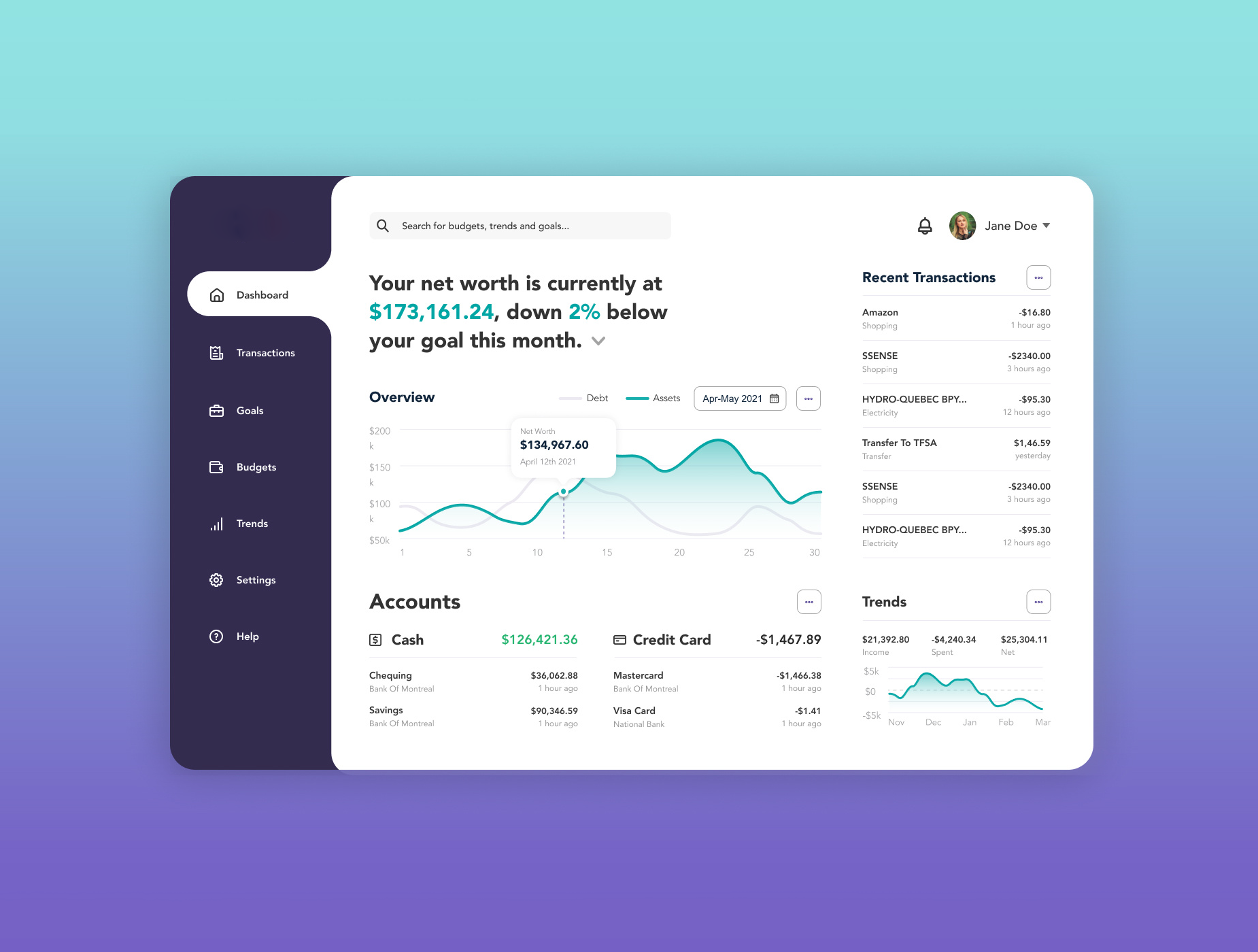
Parity AI AI Finance Platform
The Challenge
Personalized financial advice was expensive and limited to periodic meetings. Users had no way to consolidate banking, investments, debt, and insurance into one platform with real-time, AI-driven guidance.
Our Approach
We built Parity AI as an always-on financial wellness platform powered by AI. It securely pulls data from multiple sources, analyzes user behavior, forecasts outcomes, and delivers personalized recommendations — acting as a digital financial advisor, not a budgeting app.
The Result
- AI-powered financial planning across banking, investments, and debt
- Personalized recommendations based on life events and behavior
- Integrated financial education with actionable insights

SmartVend AI Smart Vending Platform
The Challenge
Managing a distributed vending machine network meant manual inventory tracking, disconnected payment systems, no remote management capability, and zero real-time visibility into machine health or sales performance across locations.
Our Approach
We built SmartVend as a cloud-connected IoT platform combining an Android kiosk app, centralized web portal, real-time inventory sync, hardware integration for payments and dispensing, and a digital advertising layer — all managed from a single dashboard.
The Result
- Real-time inventory sync with low-stock alerts
- Remote machine management across unlimited locations
- IoT integration for payments, dispensing, and monitoring
- Centralized sales analytics and revenue reporting
Not sure which LLM approach fits? Book an LLM consulting session
Tell us what you want to automate or improve. Our team will review your use case and data, and recommend whether a commercial model, an open-source model, RAG or fine-tuning is the right fit, before you commit to development.
Latest trends and technology stacks we use for LLM model development
As a custom LLM development company, we utilize advanced tools, frameworks, and scalable infrastructure to build secure, high-performance LLM solutions tailored to your business goals, data complexity, and deployment needs.
 Google Gemini
 LangChain
 LangGraph
 LlamaIndex
 Hugging Face Transformers
 CrewAI
 PydanticAI
 MCP (Model Context Protocol)
 PyTorch
 vLLM
vLLM Databricks Mosaic AI
 Docker
 Kubernetes
 Pinecone
 Qdrant
 Weaviate
 PostgreSQL (pgvector)
 Redis
Redis MongoDB Atlas Vector Search
 Amazon Bedrock
 Microsoft Foundry
 Google Vertex AI
 Snowflake Cortex AI
 Terraform
 GitHub Actions
Why choose Xicom as your LLM development company?
As a custom LLM development and cusulting company, we implement a well-planned and highly structured approach for developing a Large Language Model. Our experts rely on agile methodology and remain committed to delivering success to clients through secure, transparent, and timely deliveries.
Achieving unparalleled excellence for our clients
- Rated 4.8/5 on Clutch and GoodFirms, Top 1% on TrustPilot.
- 20+ years of digital engineering and AI-first innovation.
- 1,800+ projects delivered across 50+ countries.
- 350+ dedicated IT and AI professionals.
- End-to-end AI development from startups to enterprises.
- 100% Satisfaction & Moneyback Guarantee.





20+ YEARS OF EXPERTISE
Our two decades of experience in artificial intelligence and product engineering help us build future-ready solutions for measurable business outcomes.
100% Transparency
We enable real-time progress tracking, clear communication, and structured reporting to maintain complete visibility across every stage of product development.

98% Ontime Delivery
With systematic project management and agile execution, we ensure consistent delivery of tailored solutions within agreed upon timelines.
SIGN NDA
We enforce strict NDAs, industry-approved encryption, and secure architectures, safeguarding confidentiality and data integrity across every engagement we undertake.
FLEXIBLE ENGAGEMENTS
Our engagement models cover scalable resource allocation, fixed scope delivery, and dedicated teams, adapting flexibly to your evolving business requirements.

24X7 Support
We offer round-the-clock support and continuous monitoring, ensuring faster issue resolution, system stability, and ongoing performance optimization for every project.
Our LLM consulting and developmentprocess
Every engagement starts with consulting and discovery, so the model, architecture and budget are agreed before development begins.
-
Consulting and Discover
We assess your use cases, data and infrastructure, recommend the right model and approach, and agree on scope, success criteria and cost.
-
Design Phase
Our architects design the solution architecture, covering model hosting, data pipelines, retrieval layers, security controls and integration points.
-
Development Stage
At Xicom, we build, train, fine-tune, and integrate intelligent LLMs into target platforms.
-
Quality Assurance
To ensure optimum functionality and accuracy of LLMs, we conduct in-depth testing.
-
Release and Support
We deploy solutions with ongoing maintenance and support to meet evolving needs.
Large language models we work with
We work with both commercial and open-source LLMs, and recommend the right one for each project based on accuracy needs, data privacy, hosting requirements and running cost.

OpenAI GPT

Anthropic Claude

Google Gemini

Meta Llama

Mistral

DeepSeek

Qwen

Google Gemma
Microsoft Phi

Amazon Nova

Cohere Command

IBM Granite
Client testimonials and reviews showcasing the value we consistently deliver
Explore how our clients describe their journey with us, reflecting strong collaboration, effective execution, and consistent outcomes delivered across engagements. See how our delivery framework ensures consistency from initiation through to successful completion.
❝
Parity AI
We came to Xicom with an ambitious goal: make institutional-grade financial planning accessible to everyone through AI. Xicom went beyond the brief, blending conversational AI and predictive analytics into an effortless platform. Parity AI is exactly what we envisioned.

❝
RadioFX
Xicom took the time to understand what our stations and listeners actually need, building something tailored rather than generic. Live chat and polls are now core to how we connect with our audience — the app has become a true extension of our on-air presence.


❝
StudyBuddy
Xicom built exactly what our students needed: a secure space to connect, collaborate, and find tutoring support in one place. Their understanding of student behavior shows in how naturally everything fits together — StudyBuddy is something students genuinely rely on.

❝
BoxxDocks
Xicom helped us bring BoxxDocks to life exactly as we envisioned it. Their team understood the complexity of AI powered real-time asset tracking and delivered a platform that's both powerful and genuinely easy to use.


❝
TodayFit
We are very happy with their services. I cannot recommend them highly enough. The value, ability, and delivery that we have seen has been superb, and we look forward to continuing this relationship.


❝
SmartVend AI
Their team built SmartVend from the ground up, combining hardware integration, real-time inventory sync, and a centralized dashboard that completely changed how we operate. We couldn't have asked for a more capable technical partner.

❝
Tap Retail
Partnering with Xicom to develop our Tap Retail app and website was one of the best decisions we made. Their team demonstrated exceptional professionalism, technical expertise, and a deep understanding of our business goals.


❝
GoGmGo
Partnering with Xicom was a game-changer for us. They didn't just build software, they helped us redefine how we run our business. Their proactive support and deep domain knowledge gave us the confidence to innovate faster.

❝
DENVEN
Working with Xicom has been a transformative experience. Their team quickly understood our challenges and delivered a scalable, intuitive solution. I highly recommend Xicom to any organization seeking future-ready, high-performance digital products.

Top tech insights of our blog
Explore latest tech stories & News
✦ AI-First Company
Deep Insights into Emerging Technology and Innovation!
Stay ahead in the digital world with our latest insights covering AI trends, industry developments, and expert advice on building smarter businesses.
1800+
Projects
20+
Years Experience
Frequently Asked
Questions
As an LLM development and consulting company, we hear many of the same questions from teams planning an LLM project. Here are clear answers on how LLMs work, consulting, data security, cost, timelines and support.
What are Large Language Models (LLMs)?
Large Language Models are AI systems trained on very large volumes of text to understand and generate human-like language. They are built on deep learning and natural language processing (NLP) techniques, and businesses use them for tasks such as answering questions, summarizing documents, drafting content, translating text and searching internal knowledge.
How does a Large Language Model work?
LLMs use a transformer-based neural network architecture. During training, the model learns patterns of grammar, facts and reasoning from large text datasets. When you enter a prompt, it generates a response by predicting the most likely next word, one step at a time, based on everything it learned and the context you provided.
What do LLM consulting services include?
LLM consulting services cover the decisions you need to make before building an LLM solution. This includes identifying and prioritizing use cases, choosing between commercial and open-source models, deciding whether prompting, RAG or fine-tuning is the right approach, reviewing data readiness and security, and estimating development and running costs.
Every consulting engagement at Xicom ends with an adoption roadmap, a solution architecture document, a PoC plan and a cost estimate that your team can act on.
Do I need LLM consulting before development?
Not always. If your use case, model and data are already clear, we can move straight into development. Consulting is most useful when you are unsure which use case to start with, which model to use, how to handle sensitive data, or what the solution will cost to run at scale. Settling these questions early helps avoid rework and budget overruns later.
How do you choose between GPT, Claude, Gemini or an open-source LLM?
We compare models against your requirements rather than picking a default. The main factors are accuracy on your own data, data privacy and hosting needs, response time, and cost per request at your expected volume. Commercial models such as GPT, Claude and Gemini are usually the fastest to deploy, while open-source models such as Llama, Mistral and Qwen can be self-hosted when data must stay within your infrastructure. We test shortlisted models on real samples before making a recommendation.
Can you integrate LLMs into my existing software systems?
Yes. Our team integrates LLMs into existing business software, including CRMs, ERPs, CMS platforms and custom applications, with minimal disruption to how your teams work today. The model is configured around your workflows and data structures rather than the other way around.
We also handle API integrations, model deployment, access controls and performance tuning, so both legacy and modern systems can use the new capabilities reliably.
How do you keep our data secure when building an LLM solution?
Data security is planned into the architecture from the start. Depending on your requirements, we can self-host open-source models in your own cloud or on-premise environment, use enterprise API endpoints with data retention controls, apply role-based access to documents the model can retrieve, and mask sensitive fields before they reach the model. Solutions are designed to align with the regulations that apply to you, such as GDPR or HIPAA, and every engagement is covered by an NDA.
How much does LLM development cost?
The cost depends on project scope, task complexity, data preparation, required integrations and the level of model customization. Simple LLM-powered applications such as a chatbot typically start between $20,000 and $25,000, while enterprise-grade LLM solutions usually require $50,000 or more.
Running costs such as API usage or hosting are separate from development, so we estimate both before work begins. You can engage us on a fixed cost, dedicated team, or time and material basis, depending on your goals and budget.
How long does it take to build an LLM-based solution?
Timelines depend on project complexity, level of customization, data availability and infrastructure requirements. A basic LLM-powered solution such as a chatbot can take 4 to 6 months, while more advanced solutions involving fine-tuning, multiple system integrations and extensive testing can take 6 to 9 months. A focused PoC can be delivered sooner to validate the approach before full development.
Do you provide support and maintenance after launch?
Yes. LLM solutions need ongoing care because models, data and user behavior change over time. Our support covers performance and accuracy monitoring, prompt and retrieval updates, model upgrades when better versions are released, retraining or re-tuning when needed, bug fixes and security patches.
Every award marks a milestone in our journey of excellence
As AI-first digital engineering company, Xicom has earned global recognition for delivering innovative, scalable, and high-performing technology solutions. Our awards reflect the trust of clients and industry leaders alike.