×
Our valued Brands & Agencies
















Our machine learning development services for enterprise AI
Our machine learning development services help enterprises turn business data into models that predict, classify, forecast, and detect. As a machine learning development company, we cover data preparation, feature engineering, model training, validation, and integration, building models around your objectives, data, and existing systems.

Custom ML Model Development
We build custom machine learning models around your business problem, data, and operating environment. Our engineers handle problem framing, algorithm selection, feature design, training, and evaluation, choosing between classical ML, gradient boosting, and neural approaches based on what the data supports. Each model is built to meet agreed accuracy and performance targets.

Predictive Model Development
We develop predictive models that estimate outcomes such as churn, demand, credit risk, conversion, and equipment failure. Our work covers historical data analysis, target definition, feature selection, model training, and calibration. We design these models to produce reliable scores that teams can act on within sales, finance, operations, and customer management workflows.

Time Series Forecasting
We build forecasting models for demand, inventory, revenue, energy use, and other time-dependent metrics. Our engineers account for seasonality, trends, external variables, and irregular events, using statistical and ML approaches as the data requires. Forecasts are validated against historical periods so planning teams understand expected accuracy before relying on them.

Anomaly and Fraud Detection
We develop anomaly detection models that flag unusual transactions, user behavior, sensor readings, and system activity. Our approach combines supervised and unsupervised techniques, threshold tuning, and feedback loops to balance detection rates against false alerts. These models help finance, security, and operations teams spot issues earlier and focus on the cases that matter.

Feature Engineering
We turn raw enterprise data into features that improve model accuracy and stability. Our engineers handle encoding, aggregation, time-based features, domain-specific signals, and leakage checks, then test which features actually improve results. Feature logic is documented and kept consistent between training and production, so models behave the same way once they go live.

ML Data Engineering
We design and implement data engineering pipelines that prepare enterprise data for ML workloads. Our work covers data ingestion, transformation, integration, quality management, and pipeline orchestration. We establish data flows that give models consistent, usable, and well-structured data throughout development and production across diverse enterprise data environments.

Model Training and Validation
We train models using structured experimentation, hyperparameter tuning, and cross-validation to find the best-performing approach for your data. Each model is tested against holdout data, edge cases, and bias checks where relevant. You receive clear evaluation results, so stakeholders know how the model performs and where its limitations sit before release.
Model Optimization
We improve machine learning models to address performance, accuracy, latency, scalability, and resource requirements. Our approach evaluates model behavior, data, features, training processes, and inference conditions to identify improvement opportunities. We apply appropriate optimization techniques while maintaining the performance characteristics required by the target business application.
ML Integration
We integrate machine learning models with your applications, data platforms, APIs, and business workflows. Our engineers build inference endpoints, batch scoring jobs, and connectors to CRM, ERP, and analytics systems, so predictions reach the people and processes that use them. We plan each integration around your existing architecture to keep disruption low.
Model Deployment
We package and deploy trained models to cloud, on-premises, or edge environments and define the checks needed to track accuracy once they are live. For enterprises that need automated pipelines, CI/CD for ML, and full lifecycle management, our MLOps consulting services extend this work into ongoing production operations.

Trained ML Models
We deliver trained, validated machine learning models built for your specific use case and data. Each model comes with its selected algorithm, tuned parameters, and performance results against agreed benchmarks. Models are packaged in formats that suit your target environment, ready for integration with applications, data platforms, or business workflows.

Data Pipelines and Features
We deliver the data pipelines and feature logic used to build each model, so the same transformations run consistently in training and production. This includes ingestion, cleaning, transformation, and feature generation steps, along with documentation of data sources, assumptions, and quality checks that your engineering teams can maintain.

Model Evaluation Report
We provide a clear evaluation report covering accuracy, precision, recall, error analysis, and other metrics relevant to the use case. The report explains how the model performs across data segments, where its limitations sit, and what conditions may affect results, giving business and technical stakeholders a shared view before release.

Integration Endpoints
We deliver the APIs, batch scoring jobs, and connectors that make model predictions available to your applications and systems. Endpoints are built around your architecture, security requirements, and expected load, so predictions reach the tools and teams that rely on them without forcing major changes to existing workflows.

Source Code and Documentation
You receive full source code, training scripts, configuration files, and technical documentation for every model we build. Clear documentation of model design, data dependencies, and retraining steps helps your teams understand how the solution works, maintain it confidently, and extend it as business requirements change.

Deployment Handoff
We hand over each model with a deployment plan covering environment setup, monitoring needs, retraining triggers, and ownership. Where ongoing automation and lifecycle management are required, our team can extend the work through MLOps support, helping models stay accurate as data and business conditions change.
Accelerating enterprise transformation through AI and digital engineering.
20+
Years in Business
350+
IT Professionals
ISO 9001 Certified
NASSCOM & STPI Accreditation
750+
Clients Worldwide
1800+
Projects Executed
Machine learning solutions we help deliver across industries
We build custom ML solutions for your industry that turn your business data into faster decisions, lower costs, and measurable growth.

Automotive

Real Estate

Entertainment

Retail & Ecommerce

Healthcare

Transportation
Manufacturing

Travel & Tourism

Professional Services
Software Vendors

Banking & Finance

Education

Reinforcement Learning (RL)
We apply RL to problems where models learn from feedback and improve decisions through repeated interaction. Our expertise covers reward-based learning, policy optimization, environment-driven training, and decision modeling for use cases involving sequential decisions, adaptive behavior, dynamic conditions, and changing operational requirements across enterprise environments and applications.

Deep Learning
We use deep learning for complex problems involving large volumes of structured and unstructured data. Our expertise covers neural network architectures, model training, representation learning, optimization, and inference for applications requiring advanced pattern recognition, classification, prediction, or processing of complex enterprise data across business functions and operational environments.

Transfer Learning
We apply transfer learning to adapt existing trained models to specific enterprise requirements, reducing training effort where appropriate. Our expertise covers model selection, domain adaptation, fine-tuning, validation, and performance evaluation to determine whether transferred knowledge can effectively support the target application, dataset, business context, and operational requirements.

Federated Learning
We apply federated learning where models need to learn from distributed datasets without requiring centralized access to underlying data. Our expertise covers distributed training, local model updates, aggregation strategies, communication processes, and privacy-aware architectures for organizations managing data across multiple locations, systems, business units, or operational environments.

Graph Machine Learning
We use graph machine learning to analyze relationships between entities, events, transactions, and interactions that conventional data representations may not capture effectively. Our expertise covers graph representation, node and edge analysis, graph embeddings, relationship modeling, and predictive approaches for connected enterprise data and relationship-driven business use cases.

Ensemble Learning
We combine multiple machine learning models where doing so can improve predictive performance, stability, or generalization. Our expertise includes bagging, boosting, stacking, and model combination approaches, with model selection based on dataset characteristics, business requirements, performance objectives, and the operational conditions under which the resulting models will function.

Self-Supervised Learning
We use self-supervised learning to derive useful representations from large volumes of unlabeled data. Our expertise covers learning objectives, representation development, pretraining, and downstream adaptation, helping organizations reduce dependence on manually labeled datasets where appropriate and support ML applications involving large, complex, or continuously growing enterprise datasets.

Automated Machine Learning (AutoML)
We apply AutoML techniques to automate selected stages of ML development, including feature processing, model selection, hyperparameter optimization, and experimentation. Our expertise helps accelerate model development while maintaining appropriate validation and evaluation practices, enabling teams to explore suitable approaches efficiently without compromising requirements for performance or reliability.
Explainable AI (XAI)
We apply explainability techniques where enterprises need greater visibility into how machine learning models produce their outputs. Our expertise covers feature importance, prediction explanations, model interpretation, and explainability evaluation, helping technical and business teams understand model behavior and supporting informed decisions around validation, governance, accountability, and operational use.
Edge Machine Learning
We develop machine learning approaches for environments where inference needs to occur closer to the source of data. Our expertise covers model optimization, resource constraints, inference performance, connectivity considerations, and deployment requirements for devices and edge environments, supporting applications that require responsive processing, reduced data transfer, or localized ML capabilities.
Case studies of how our clients have gained competitive advantage.
At Xicom, we build machine learning solutions that solve real business problems. These case studies show how our ML development work has helped clients add intelligent features, improve decisions, and deliver better experiences to their users.
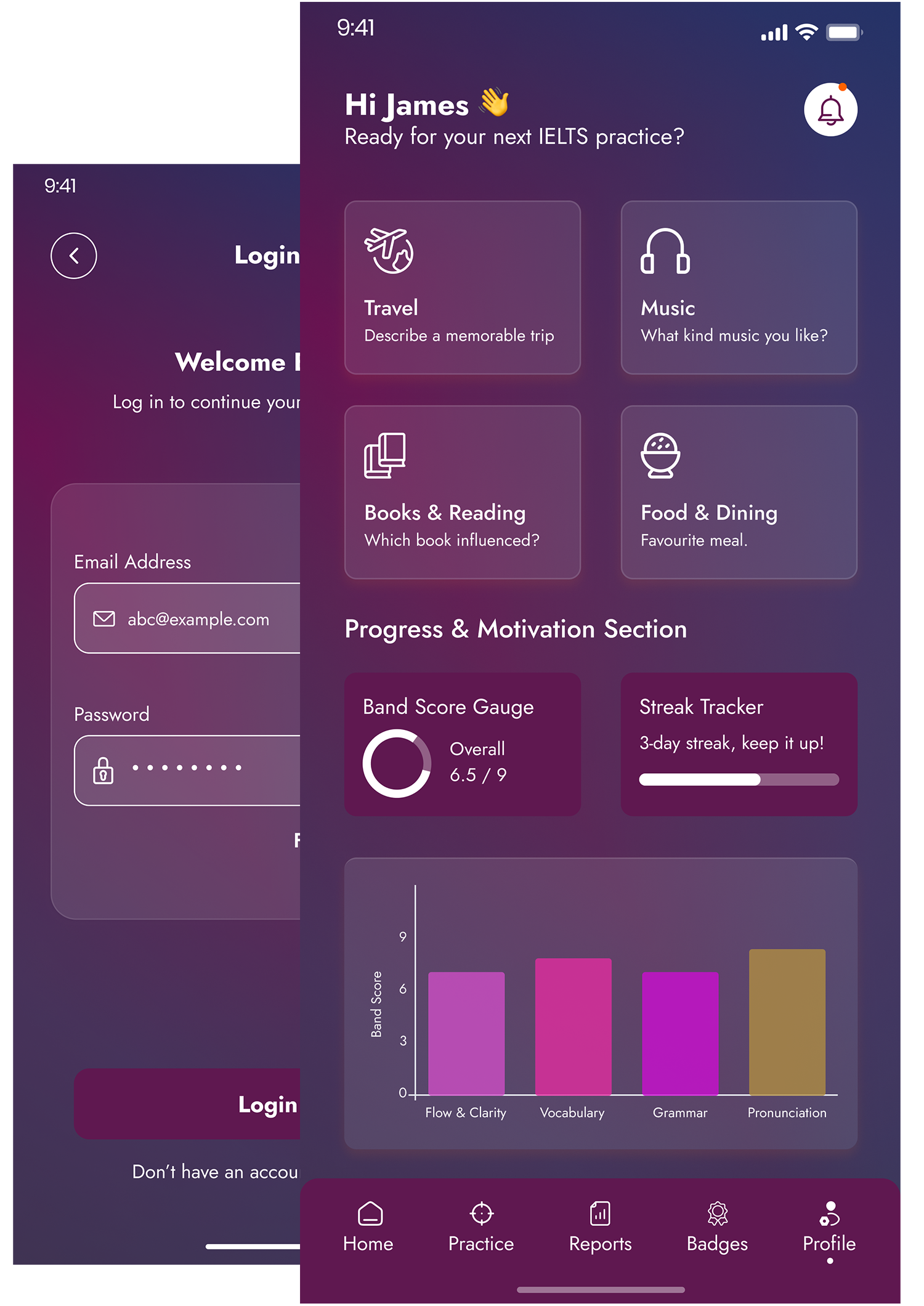
IELTS AI-Powered Speaking Evaluator
A full-stack AI platform featuring an AI Avatar Examiner with real-time lip-sync, multi-criteria IELTS band scoring, LangGraph conversation engine, Google Cloud TTS with visemes, and a comprehensive no-code admin panel, built to make premium English speaking practice accessible to learners worldwide.
Industry
EdTech / Conversational
AI
Technologies
React 19, FastAPI, LangGraph, Gemini, Whisper, Google TTS, Postgres
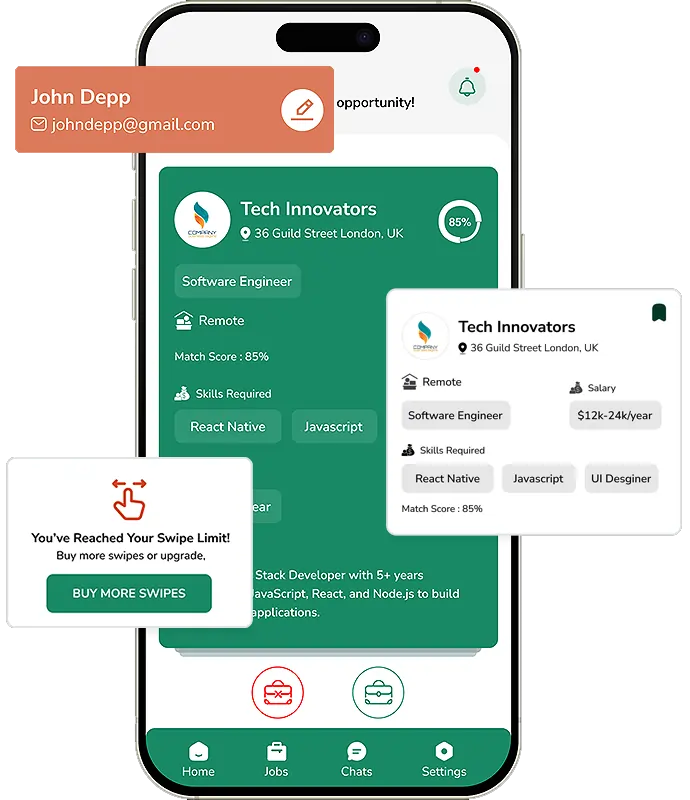
JobMinglr Recruitment App
JobMinglr, developed by Xicom in partnership with its visionary founder John Carter and headquartered in Austin, Texas, is a cutting-edge job-matching platform engineered to revolutionize how job seekers and employers connect. By leveraging advanced AI algorithms and machine learning, the app delivers hyper-personalized job recommendations based on users’ skills, experience, and preferences.
Industry
Jobs and Recruitment
Technologies
React Native, Node.js, Machine Learning
GoGmGo POS and CRM
GoGmGo is a Singapore-based application targeting the F&B (Food and Beverage) industry, designed to oversee and manage the operations of a food and beverage business, right from planning the menu, controlling inventory, to managing staff. GoGmGo itself is an all-in-one F&B operating platform that uses automation to manage various aspects of the F&B business.
Industry
Food and Beverages
Technologies
React Native, Node.js, MongoDB, AI/ML
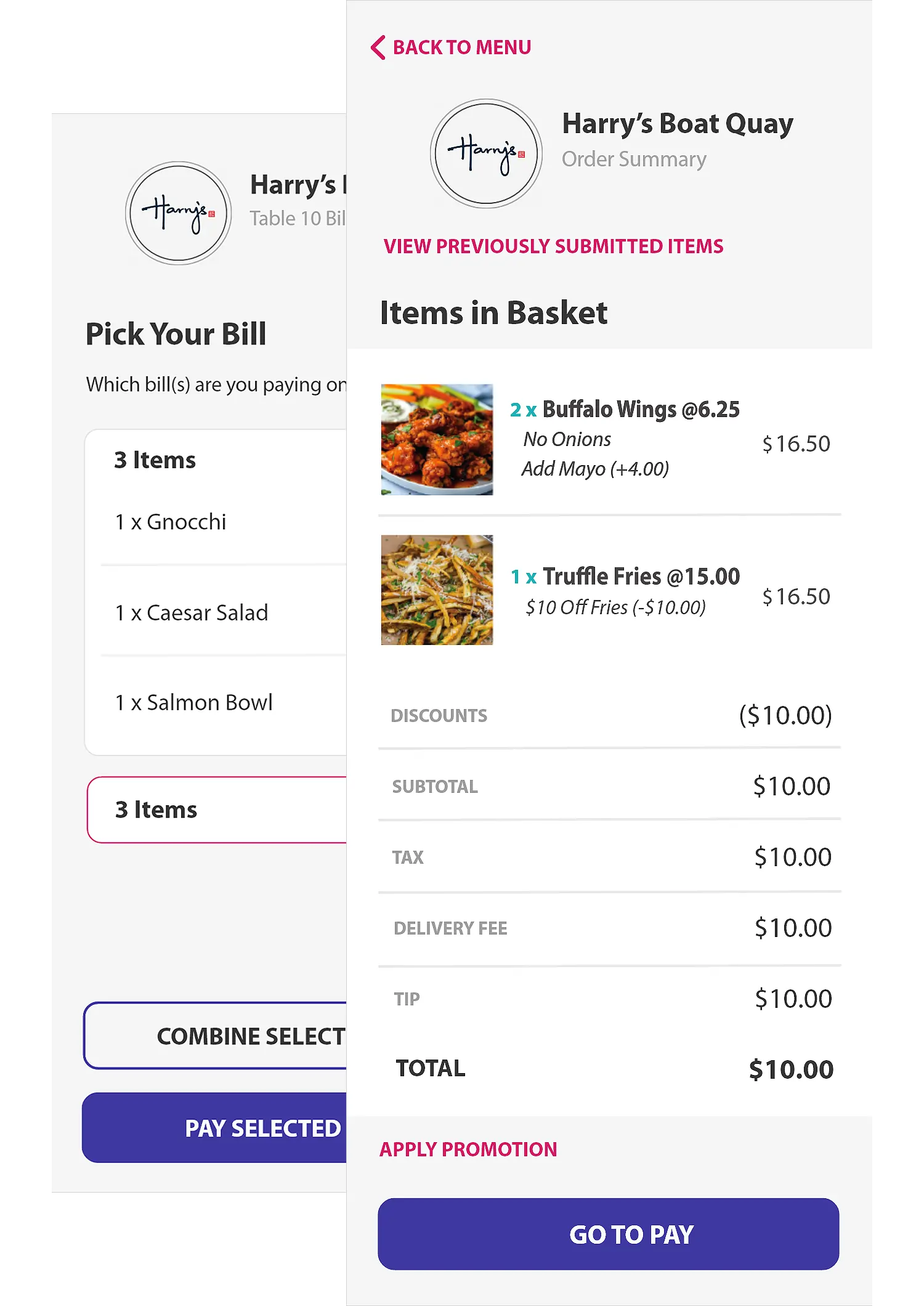
ML development backed by real projects, not just promises
The machine learning work behind IELTS Speaking Evaluator, Parity AI, StudyBuddy, and SmartVend shapes how we build accurate, scalable, and production-ready models for your business.
Top technologies we use to build scalable, secure, and production-ready machine learning
Our machine learning engineers work with the frameworks, foundation models, and experiment tracking tools that modern AI teams rely on. From training and fine-tuning models to integrating them with your systems, we pick the right stack for your data, budget, and performance goals.
 PyTorch
 TensorFlow
 JAX
 Keras
 scikit-learn
 XGBoost
 OpenAI GPT
 Anthropic Claude
 Google Gemini
 Meta Llama
 Mistral
 LangChain
 LangGraph
 LlamaIndex
 AutoGen
 Semantic Kernel
 MLflow
 Kubeflow
 Weights & Biases
 Apache Airflow
 LangSmith
 Apache Spark
 Databricks
 Snowflake
 Apache Kafka
 dbt
 Pinecone
 Weaviate
 Chroma
 pgvector
 Elasticsearch
 OpenCV
 YOLO
 Detectron2
 MediaPipe
 Tesseract
 Power BI
 Tableau
 Looker
 Grafana
 Amazon SageMaker
 Amazon Bedrock
 Google Vertex AI
 NVIDIA NIM
Adapt to Changing Demand
Changing customer behavior and market conditions can make established assumptions less reliable. We use machine learning to uncover demand patterns and emerging signals within enterprise data, giving decision-makers better visibility into changing requirements. This can help organizations adjust planning, offerings, and resources sooner as market and customer needs evolve.
Improve Resource Allocation
Better resource allocation requires visibility into how demand, capacity, and operational activity interact. Our ML expertise helps organizations uncover these relationships within their data and identify opportunities to allocate resources more effectively. The resulting insights can support decisions around workforce capacity, inventory, production, and other resources that influence day-to-day performance.
Strengthen Revenue Performance
Revenue opportunities can be difficult to identify when customer, product, and transaction data exists across disconnected business processes. We help enterprises extract meaningful patterns from this data to support demand planning, customer analysis, and commercial decisions. This can reveal opportunities that help organizations improve revenue performance while making more informed business choices.
Increase Customer Retention
Understanding why customers stay, disengage, or change their behavior can help enterprises respond before valuable relationships are lost. Machine learning can uncover behavioral patterns across interactions, purchases, and service activity. We help translate these insights into practical inputs for customer engagement, enabling organizations to respond more appropriately to changing customer needs.
Reduce Operational Uncertainty
Business decisions often involve incomplete information, fluctuating conditions, and large volumes of historical data. The ML models we develop can bring greater structure to this information by identifying patterns and relationships that support forecasting and planning. This gives teams additional evidence for assessing potential conditions and making decisions with greater clarity.
Adapt Faster to Business Change
As business conditions change, organizations need to reassess decisions without relying entirely on historical assumptions. We help enterprises apply machine learning insights to changing operational and market data, providing a stronger basis for adjusting priorities, processes, and plans. This supports a more responsive approach to business change across functions.
From data to deployed model: Our ML development process
Our machine learning development process takes each project from business problem to a working model inside your systems. We define requirements, prepare data, build and validate models, and integrate them into your environment, with clear checkpoints so stakeholders can review progress and results at every stage.
1
Discover
We define the business problem, success metrics, available data, and technical constraints to confirm the ML use case is feasible and worth building.
2
Prepare
We collect, clean, and transform data, build the required pipelines, and engineer features that give the model reliable and relevant inputs.
3
Build
We select suitable algorithms, train candidate models, and tune parameters through structured experiments to find the best approach for your data.
4
Validate
We test models against holdout data, edge cases, and agreed benchmarks, then document performance, limitations, and readiness for production use.
5
Integrate
We deploy the model, connect it to your applications and workflows, and hand over documentation, monitoring needs, and retraining guidance.
Business-first ML Approach
We approach machine learning from the business problem first, then determine where data, models, and engineering can create value. This keeps ML initiatives aligned with measurable objectives rather than technology alone. We consider operational realities, existing capabilities, and implementation constraints to build models that enterprises can adopt effectively.
Cross-functional Tech Expertise
Our teams bring together expertise across machine learning, data engineering, software development, cloud infrastructure, and enterprise systems. This allows us to address the dependencies that influence an ML initiative beyond the model itself. We consider how data moves, models operate, applications interact, and production environments need to be managed.
Production-ready Delivery
We build models with production in mind from the first sprint, not as experiments that stall after a demo. Our work considers technical feasibility, data availability, integration requirements, performance targets, and resource constraints. This focus helps organizations move from promising prototypes to ML solutions that support real business requirements.
Tech-agnostic Model Development
We select algorithms, frameworks, and platforms based on the requirements of each ML project rather than a fixed technology stack. Our choices consider data characteristics, model requirements, existing infrastructure, integration needs, scalability, and operational constraints. This lets enterprises adopt models that fit their environments and long-term technical direction.
Scalable Engineering Practices
We apply engineering practices that account for changing data volumes, evolving models, increasing workloads, and expanding business requirements. Our approach considers maintainability, deployment, monitoring, and infrastructure from the outset. This helps establish machine learning environments that can evolve as organizations move from individual initiatives toward broader enterprise adoption.
Long-term ML Enablement
We consider the capabilities enterprises need to manage machine learning beyond initial implementation. Our approach addresses processes, operational ownership, engineering practices, and ongoing model management. By considering these requirements early, we help organizations establish a foundation that supports continued development, maintenance, and expansion of ML initiatives over time.
Our engagement models for machine learning development
We offer flexible engagement models for machine learning development: fixed price for well-defined projects, a dedicated team for ongoing ML work, or time and material for evolving model requirements.

Fixed Price Model
Best for well-defined ML development projects, this model gives you clear deliverables, predictable costs, and timely delivery without surprises.
- Upfront agreed cost and project scope
- Milestone-based progress tracking
- No hidden charges or overheads
- Reliable timelines for PoCs and model builds
Most Popular

Dedicated Team Model
Ideal for organizations with ongoing ML work, this model gives you a dedicated team of ML engineers and data scientists working on your models.
- Full control over team structure and workflows
- Scales as your ML roadmap grows
- Direct access to ML engineers
- Continuity from pilot to production

Time & Material Model
Perfect for ML projects with changing requirements, this model lets you adjust scope and focus as data and model results emerge.
- Flexible billing based on actual effort
- Adjust resources and scope anytime
- Suited to iterative model experimentation
- Faster tuning and continuous optimization
Enterprise ML development designed around compliance, security, and full transparency
In enterprise machine learning, governance is not optional. Our ML engineers review every model, data pipeline, and integration for security gaps, privacy risks, and bias concerns. We go beyond ticking compliance checklists to build ML systems your teams can audit, explain, and depend on every day.








Client testimonials and reviews showcasing the value we consistently deliver
Explore how our clients describe their journey with us, reflecting strong collaboration, effective execution, and consistent outcomes delivered across engagements. See how our delivery framework ensures consistency from initiation through to successful completion.
❝
Parity AI
We came to Xicom with an ambitious goal: make institutional-grade financial planning accessible to everyone through AI. Xicom went beyond the brief, blending conversational AI and predictive analytics into an effortless platform. Parity AI is exactly what we envisioned.

❝
RadioFX
Xicom took the time to understand what our stations and listeners actually need, building something tailored rather than generic. Live chat and polls are now core to how we connect with our audience — the app has become a true extension of our on-air presence.


❝
StudyBuddy
Xicom built exactly what our students needed: a secure space to connect, collaborate, and find tutoring support in one place. Their understanding of student behavior shows in how naturally everything fits together — StudyBuddy is something students genuinely rely on.

❝
BoxxDocks
Xicom helped us bring BoxxDocks to life exactly as we envisioned it. Their team understood the complexity of AI powered real-time asset tracking and delivered a platform that's both powerful and genuinely easy to use.


❝
TodayFit
We are very happy with their services. I cannot recommend them highly enough. The value, ability, and delivery that we have seen has been superb, and we look forward to continuing this relationship.


❝
SmartVend AI
Their team built SmartVend from the ground up, combining hardware integration, real-time inventory sync, and a centralized dashboard that completely changed how we operate. We couldn't have asked for a more capable technical partner.

❝
Tap Retail
Partnering with Xicom to develop our Tap Retail app and website was one of the best decisions we made. Their team demonstrated exceptional professionalism, technical expertise, and a deep understanding of our business goals.


❝
GoGmGo
Partnering with Xicom was a game-changer for us. They didn't just build software, they helped us redefine how we run our business. Their proactive support and deep domain knowledge gave us the confidence to innovate faster.

❝
DENVEN
Working with Xicom has been a transformative experience. Their team quickly understood our challenges and delivered a scalable, intuitive solution. I highly recommend Xicom to any organization seeking future-ready, high-performance digital products.

Top tech insights of our blog
Explore latest tech stories & News
✦ AI-First Company
Deep Insights into Emerging Technology and Innovation!
Stay ahead in the digital world with our latest insights covering AI trends, industry developments, and expert advice on building smarter businesses.
1800+
Projects
20+
Years Experience
Frequently Asked Questions
What do machine learning development services include?
Machine learning development services cover everything needed to turn a business problem into a working model. At Xicom, this includes use case definition, data preparation, feature engineering, model training, validation, optimization, and integration with your applications and workflows.
Depending on the project, we also build data pipelines, inference APIs, and batch scoring jobs, and hand over documentation so your teams can maintain the model.
What data do I need to start a machine learning development project?
You need historical data that reflects the outcome you want the model to predict or detect. Useful starting points include:
- Transaction, customer, or operational records covering a meaningful time period
- Labeled examples of the outcome, such as churned customers or fraudulent transactions
- Context data such as product, location, or time attributes
- Access details for the systems where the data lives
If data is incomplete or scattered, we assess what is usable and plan the data engineering needed before model development starts.
How long does it take to develop a custom machine learning model?
Timelines depend on the use case, data readiness, model complexity, and integration needs. A focused proof of concept on clean, available data can take a few weeks, while a production model that needs new data pipelines and system integration usually takes a few months.
We confirm a realistic timeline after reviewing your data and requirements during discovery.
Can you integrate machine learning models into our existing systems?
Yes. We integrate machine learning models with CRMs, ERPs, data warehouses, web and mobile applications, and internal tools through APIs, batch scoring jobs, or embedded components. Integration is planned around your existing architecture, security policies, and expected traffic.
The goal is to get predictions into the workflows where people make decisions, without forcing a rebuild of systems that already work.
How much does it cost to hire a machine learning development company?
The cost of machine learning development depends on project scope, data volume and quality, model complexity, integration requirements, and the level of ongoing support. A single predictive model built on existing data costs far less than a multi-model program with new pipelines and enterprise integration.
At Xicom, we share a detailed estimate after an initial discovery call. You can choose a fixed price, dedicated team, or time and material model based on your scope and budget.
What is your machine learning development process?
Our machine learning development process follows these stages:
- Discovery: Define the business problem, success metrics, and available data
- Data preparation: Clean, transform, and engineer features from your data
- Model development: Select algorithms, train candidate models, and tune performance
- Validation: Test models against holdout data and agreed benchmarks
- Integration: Connect the model to your applications and workflows
- Production handoff: Set up monitoring and retraining guidance, with MLOps consulting services available for automated pipelines and lifecycle management
Every award marks a milestone in our journey of excellence
As an AI-first digital engineering company, Xicom has earned global recognition for delivering innovative, scalable, and high-performing technology solutions. Our awards reflect the trust of clients and industry leaders alike.