×
- 20+ Years in Business
- 350+ IT Experts
- 750+ Enterprise Clients
- CMMi Level 3 Certified
- ISO 9001:2015
- Top 1% on TrustPilot
-
 4.8 on Clutch
Our valued Brands & Agencies
















AI governance consulting services for secure, responsible AI implementation
We help organizations deploy AI responsibly through governance frameworks, risk management, and regulatory compliance that keep systems accountable, secure, and aligned with the standards your industry and regulators actually expect.
AI Governance Framework Design
We build governance frameworks around how your organization actually uses AI, not textbook best practices that fall apart the moment they meet operational reality. Each framework sets out accountability structures, decision-making authority, policy foundations, and the controls that keep AI systems working inside agreed boundaries across their full lifecycle, so oversight still holds firm when live deployments start putting heavy, sustained pressure on it.
WHAT’S INCLUDED
- Governance maturity assessment
- Accountability structure design
- Decision-rights and authority matrices
- Control boundary definition
- Framework charter documentation
AI Risk Assessment & Management
We identify and categorize the risks sitting across your current and planned AI deployments, from bias and data privacy through to security gaps, model drift, and regulatory exposure. Each finding is scored, prioritized, and turned into a clear remediation roadmap your teams can actually work through over time, not a static report that gets filed away and quietly ignored until the next audit cycle finally comes around and forces the conversation again.
WHAT’S INCLUDED
- AI risk taxonomy and registers
- Bias and fairness risk identification
- Security vulnerability assessment
- Data privacy risk evaluation
- Remediation roadmap prioritization
Regulatory Compliance Alignment
We help you understand and meet your obligations under the EU AI Act, NIST AI RMF, ISO/IEC 42001, GDPR, and the various sector rules that apply right across financial services, healthcare, and other tightly regulated industries. The work means mapping every single requirement to the systems you already run today and surfacing the gaps early, so they get closed on your own schedule instead of being found and flagged for you later on by a regulator.
WHAT’S INCLUDED
- EU AI Act readiness mapping
- NIST AI RMF gap analysis
- ISO/IEC 42001 alignment
- GDPR data obligation mapping
- Sector-specific compliance mapping
AI Policy Development
We write AI policies that are specific, enforceable, and tied directly to the regulatory and ethical standards your organization answers to. That means acceptable use rules, data handling standards, model approval processes, and enforcement mechanisms that carry real teeth. The aim is to hand governance committees genuine authority over how AI gets used, instead of leaving them in a purely advisory role that everyone is free to quietly route around.
WHAT’S INCLUDED
- Acceptable use policy drafting
- Data handling standards
- Model approval workflows
- Policy enforcement mechanisms
- Policy review and versioning
AI Audit & Accountability Systems
We build the audit trails, model documentation standards, and clear reporting structures that show leadership, compliance teams, and outside auditors exactly how AI is being used right across the whole organization. The goal is a clear, accurate view of which decisions your models are shaping, where the data behind them actually came from, and who carries accountability at each stage, so nothing important ever disappears into an unexamined black box.
WHAT’S INCLUDED
- Audit trail architecture
- Model documentation standards
- Leadership reporting structures
- External auditor readiness packs
- Decision logging and traceability
Responsible AI & Ethics Integration
We help you build fairness, transparency, and explainability directly into your AI workflows, instead of listing them as values in a press release that nobody ever operationalizes. The work covers algorithmic impact assessments, fairness measures, explainability design, and the documentation that proves to regulators and stakeholders your AI use is genuinely responsible in practice, and not just on paper when someone finally asks you for the evidence.
WHAT’S INCLUDED
- Algorithmic impact assessments
- Fairness metric selection
- Explainability and transparency design
- Ethics review board structuring
- Responsible AI documentation practices
AI Governance Operating Model
We design the operating model that gives AI governance real weight inside the organization: the committee structures, roles, ownership, and decision rights that determine who actually runs the program day to day. That work includes carefully shaping Chief AI Officer mandates, standing up cross-functional governance bodies, and building practical escalation paths that still function properly when they are tested under genuine operational pressure.
WHAT’S INCLUDED
- Chief AI Officer mandate design
- Cross-functional committee structuring
- Operating-model role definition
- Escalation path engineering
- Governance resourcing and budgeting models
Third-party AI Vendor Risk Management
More and more of your AI now runs on systems you did not build yourself and cannot ever fully see inside. We develop vendor risk frameworks that examine the governance practices, transparency, and compliance posture of the third-party providers you have come to depend on, then bake those checks directly into how you select and contract with them, so external AI never quietly introduces exposure your organization has no real way to see, question, or manage.
WHAT’S INCLUDED
- Vendor governance due diligence
- Third-party transparency evaluation
- Vendor compliance posture review
- Contractual AI risk clauses
- Supply-chain AI dependency mapping
AI Lifecycle Governance
Oversight cannot simply stop the day a model ships into production. We build governance that follows the entire AI lifecycle, from the first use case assessment through development, deployment, ongoing monitoring, retraining, and eventual retirement. Accountability gets wired into each stage and every handoff, so responsibility does not pile up at launch and then quietly evaporate the moment attention moves on to whatever the next project happens to be.
WHAT’S INCLUDED
- Use case intake assessment
- Development-stage oversight gates
- Deployment readiness gates
- Retraining governance triggers
- Decommissioning and retirement protocols
Continuous Monitoring & Governance Maintenance
AI shifts, regulations keep moving, and business needs rarely sit still for very long at all. We set up continuous monitoring that closely watches model performance, catches drift early, flags incoming regulatory changes, and keeps your governance framework current as the ground underneath it steadily moves. The point is simple: the program you stand up today should still be fit for purpose a year from now, not slowly drifting out of date behind you.
WHAT’S INCLUDED
- Model performance tracking
- Drift detection programs
- Regulatory change monitoring
- Framework refresh cycles
- Governance KPI tracking
We provideAI governance consulting to highly regulated industries
Our AI governance consulting spans diverse industries, from financial services and healthcare to retail, insurance, and the public sector, tailoring frameworks, risk controls, and compliance to the regulatory realities each sector faces.





Government & Public Sector
Public Accountability Frameworks, Procurement Compliance Support, Algorithmic Transparency Controls, Policy Execution Oversight

Technology & SaaS
AI Governance Frameworks, Product Transparency Practices, Enterprise Buyer Compliance, Third-Party AI Risk Controls

Legal & Professional Services
Legal AI Accuracy Controls, Client Confidentiality Governance, Professional Liability Frameworks, Regulatory Compliance Mapping


Insurance
Underwriting Fairness Controls, Claims AI Explainability, Fraud Detection Oversight, Regulator-Ready Audit Trails


Energy & Utilities
Critical Infrastructure Governance, Grid Management AI Controls, Safety Standard Compliance, Demand Forecasting Governance

Telecommunications
Network AI Governance, Fraud Detection Oversight, Customer Data Compliance, Algorithmic Fairness Controls
The AI governance gaps we help organizations identify and close
Most AI governance gaps are not the result of negligence. They reflect the speed at which AI adoption has outpaced the structures organizations have in place to manage it. We work with organizations across industries to identify and close those gaps before they become regulatory, operational, or reputational problems.

Undefined AI Ownership
Ownership of AI decisions and outcomes remains undefined across teams and departments.

Inconsistent Risk Assessment
AI risk is assessed informally, inconsistently, or not at all across the organization.
Partial Regulatory Understanding
Regulatory obligations are partially understood and unevenly applied
No Monitoring or Audit Trails
AI systems operate without proper monitoring, audit trails, or accountability controls in place

Policy Without Practice
Governance policies exist in documentation but not in daily operations

Decentralised AI Adoption
AI tools are adopted across business units without central visibility or control
LET’S BUILD TOGETHER
Ready to build a robust AI governance framework that drives innovation and ensures accountability?
Every AI decision your organization makes carries risk. We help you govern it with the right structure, controls, and confidence.
Accelerating enterprise transformation through AI and digital engineering.
20+
Years in Business
350+
IT Professionals
ISO 9001 Certified
NASSCOM & STPI Accreditation
NASSCOM & STPI Accreditation
750+
Clients Worldwide
1800+
Projects Executed
Why Xicom is your trusted AI governance consulting partner
With 20+ years of enterprise experience, Xicom delivers AI governance consulting programs built for regulated industries from framework design and risk assessment to compliance mapping and continuous oversight.
Regulatory Expertise
Deep working knowledge of EU AI Act, NIST AI RMF, ISO/IEC 42001, GDPR, and sector-specific compliance obligations.
Data Confidentiality
Strict adherence to data protection, NDA enforcement, and information security across every engagement.
Flexible Engagement Models
Fixed price, dedicated team, or time and material structured around your governance program needs.
Strict NDA
Your AI systems, risk data, and compliance posture stay fully protected at every stage.
24/7 Advisory Support
Dedicated governance specialists available round the clock across time zones.
Quality Delivery
Governance frameworks delivered on time, within scope, and audit-ready from day one.

Agile Process
A structured six-stage process from gap assessment to a live, audit-ready governance program.
Transparency
Real-time engagement visibility, clear reporting, and direct access to senior consultants throughout.



- ISO/IEC 42001
- AI Management System
- ISO/IEC 27001
- Information Security
- SOC 2 Type II
- Security & Confidentiality

National Institute of Standards and Technology AI Risk Management Framework (NIST AI RMF)
European Union Artificial Intelligence Act (EU AI Act)
General Data Protection Regulation (GDPR)
Organisation for Economic Co-operation and Development AI Principles (OECD AI Principles)
United Nations Educational, Scientific and Cultural Organization AI Ethics Recommendation (UNESCO AI Ethics)
International Organization for Standardization Privacy Information Management (ISO/IEC 27701)
Health Insurance Portability and Accountability Act (HIPAA)
Payment Card Industry Data Security Standard (PCI DSS)

- United Kingdom
- UK GDPR
- Data (Use and Access) Act 2025
- ICO AI Guidance
- United Arab Emirates
- PDPL
- DIFC Regulation 10
- UAE AI Charter
- India
- DPDP Act 2023
- IT Act & Rules
- India AI Governance Guidelines
- United States
- NIST AI RMF
- State AI Laws · CO · NYC · IL · CA
- FTC / EEOC Enforcement
- European Union
- EU AI Act
- GDPR

Built around your business
Our AI governance consulting services are built around what matters most to your organisation: clarity, ownership, and day-to-day control. We work across your product, legal, compliance, and technology teams to put the right structures in place, from approval workflows to performance monitoring dashboards. Everything we deliver is designed to work with your existing tools, your people, and your pace of operations.
No two frameworks are the same
We do not deal in templates. Every AI governance framework we build is shaped around how your specific business uses AI, because a customer-facing model carries different risks than an internal automation tool. We apply the right level of control where it is needed, making every framework practical, enforceable, and aligned with your industry's regulatory environment.
Compliance built in from day one
Our AI governance consulting services help you identify risks before they escalate and ensure full compliance with global and regional regulations including GDPR, HIPAA, SOC 2, and PDPL. From vendor assessments to access control reviews, we surface weak points early and embed privacy, documentation, and transparency into your workflows from the very start.
End-to-End governance support
We manage the full lifecycle of your AI governance programme, from initial assessment and framework design through to implementation, monitoring, and ongoing maintenance. You get a single, experienced team handling every layer so nothing falls through the gaps and governance stays consistent as your AI footprint grows.
Governance that scales with you
As your AI adoption expands across departments, geographies, and use cases, your governance framework needs to keep pace. We build scalability into every engagement from the start, ensuring the controls, policies, and oversight mechanisms we put in place today can accommodate the AI systems you will deploy tomorrow.
 Microsoft Purview
 IBM-OpenPages
 Holistic AI
 Open Policy Agent
 ModelOp Center
 Fiddler AI
 MLflow
  Azure Machine Learning
  Google Vertex AI
 Evidently AI
 Arize AI
 Fairlearn
 AI Fairness 360 (AIF360)
 Aequitas
 Google What-If Tool
 Holistic AI Guardian Agents
 Collibra
 BigID
BigID Immuta
 OneTrust
 Optro (formerly AuditBoard)
  Lumenova AI
  dbt
dbt Great Expectations
  OPAL / OPA
  Alation
Case studies showcasing the value delivered to clients through our solutions
Discover here how our custom app development services have helped our clients gain a competitive edge through enhanced efficiency and user engagement. Our case studies showcase real-world success in driving growth across industries.
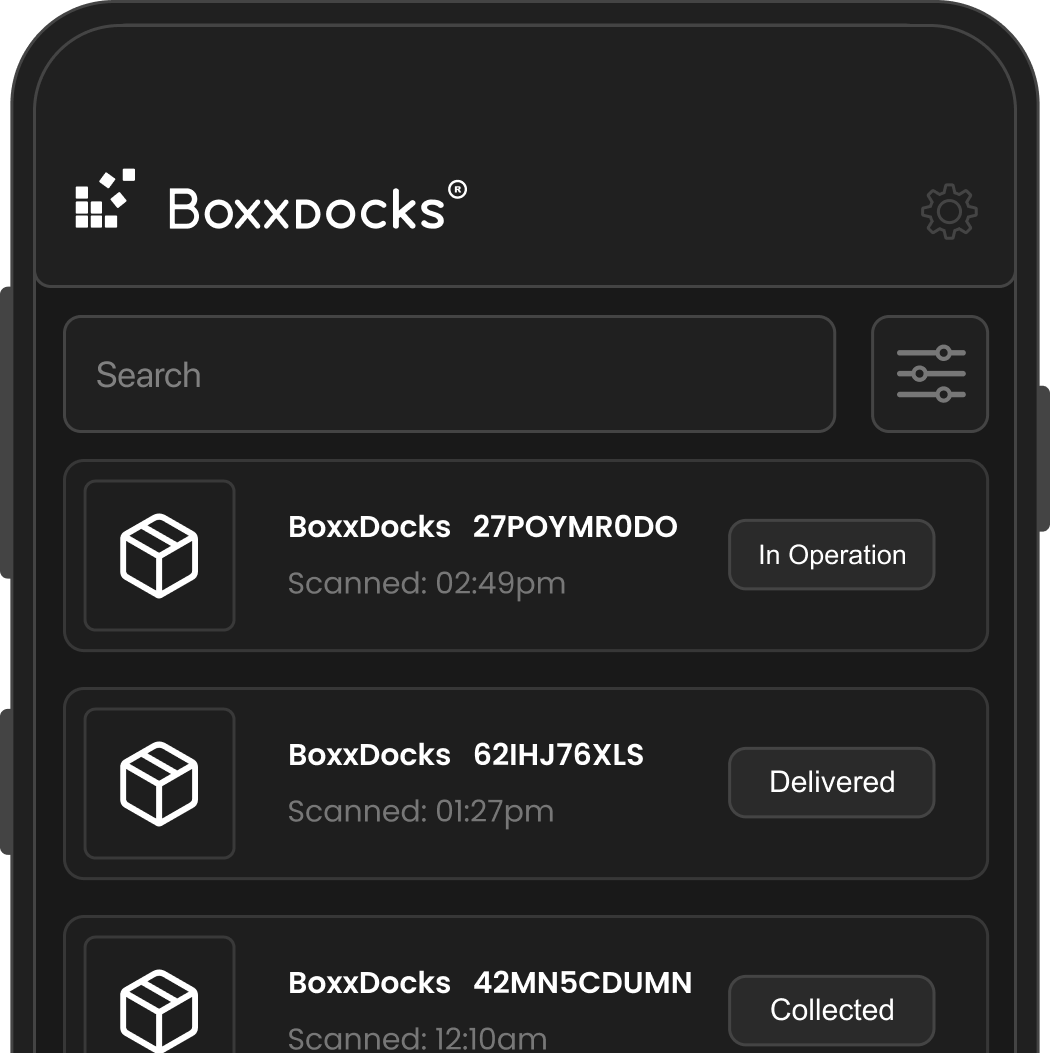
BoxxDocks AI Asset Tracking Platform
The Challenge
Asset tracking was manual, error-prone, and scattered across disconnected systems. The client had no centralized visibility into asset movement, no real-time location data, and no way to generate instant reports across multiple enterprise clients from a single platform.
Our Approach
We built BoxxDocks as an AI-enabled asset lifecycle platform using QR/NFC scanning, real-time dashboards, geolocation tracking, and a RAG-powered conversational engine that lets users query live operational data in plain English instead of navigating dashboards.
The Result
- Real-time inventory tracking across warehouses, transit, and delivery
- AI query engine for natural language insights
- LLM-powered reporting with anomaly detection
- Complete audit trail with location, timestamp, and status
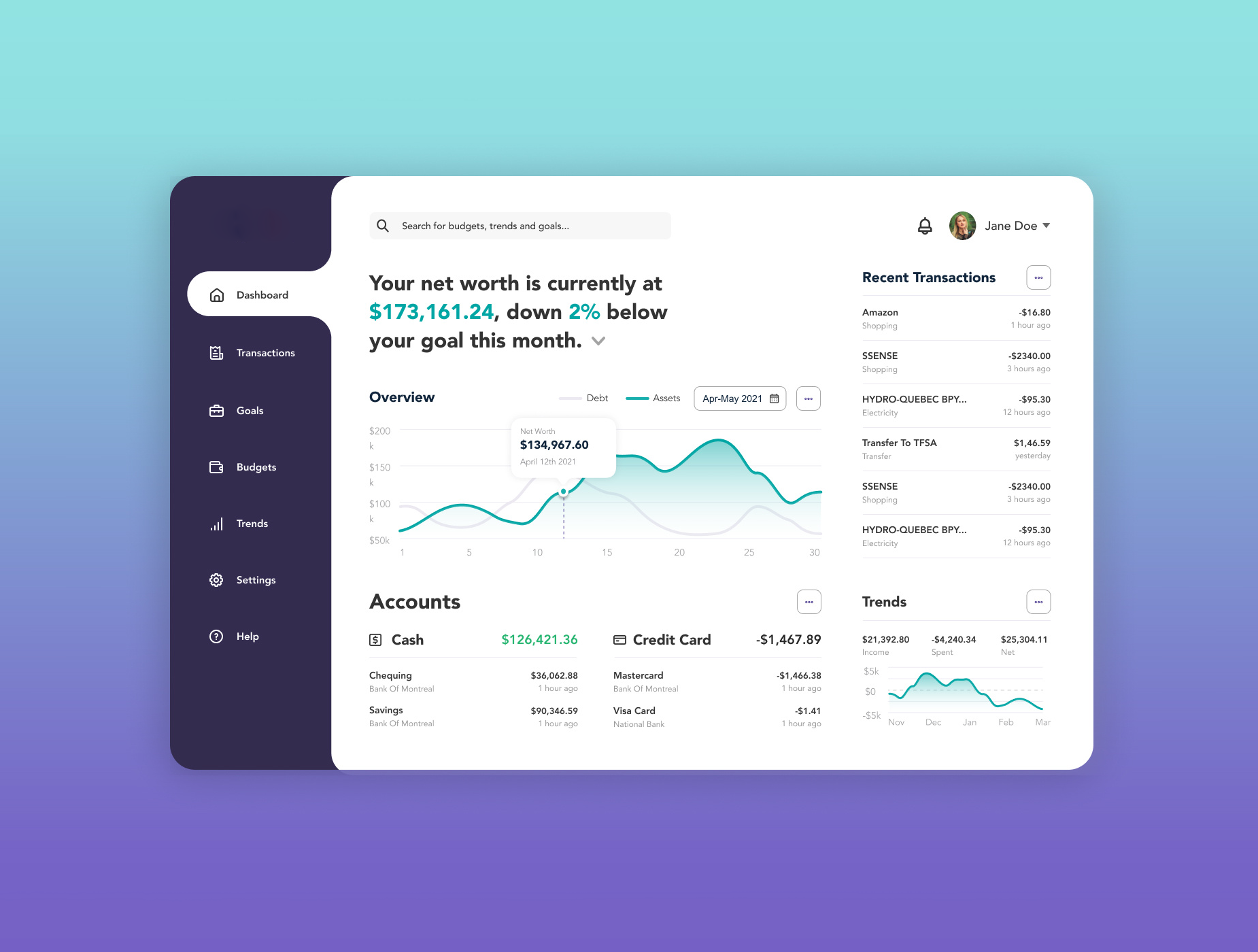
Parity AI AI Finance Platform
The Challenge
Personalized financial advice was expensive and limited to periodic meetings. Users had no way to consolidate banking, investments, debt, and insurance into one platform with real-time, AI-driven guidance.
Our Approach
We built Parity AI as an always-on financial wellness platform powered by AI. It securely pulls data from multiple sources, analyzes user behavior, forecasts outcomes, and delivers personalized recommendations — acting as a digital financial advisor, not a budgeting app.
The Result
- AI-powered financial planning across banking, investments, and debt
- Personalized recommendations based on life events and behavior
- Integrated financial education with actionable insights
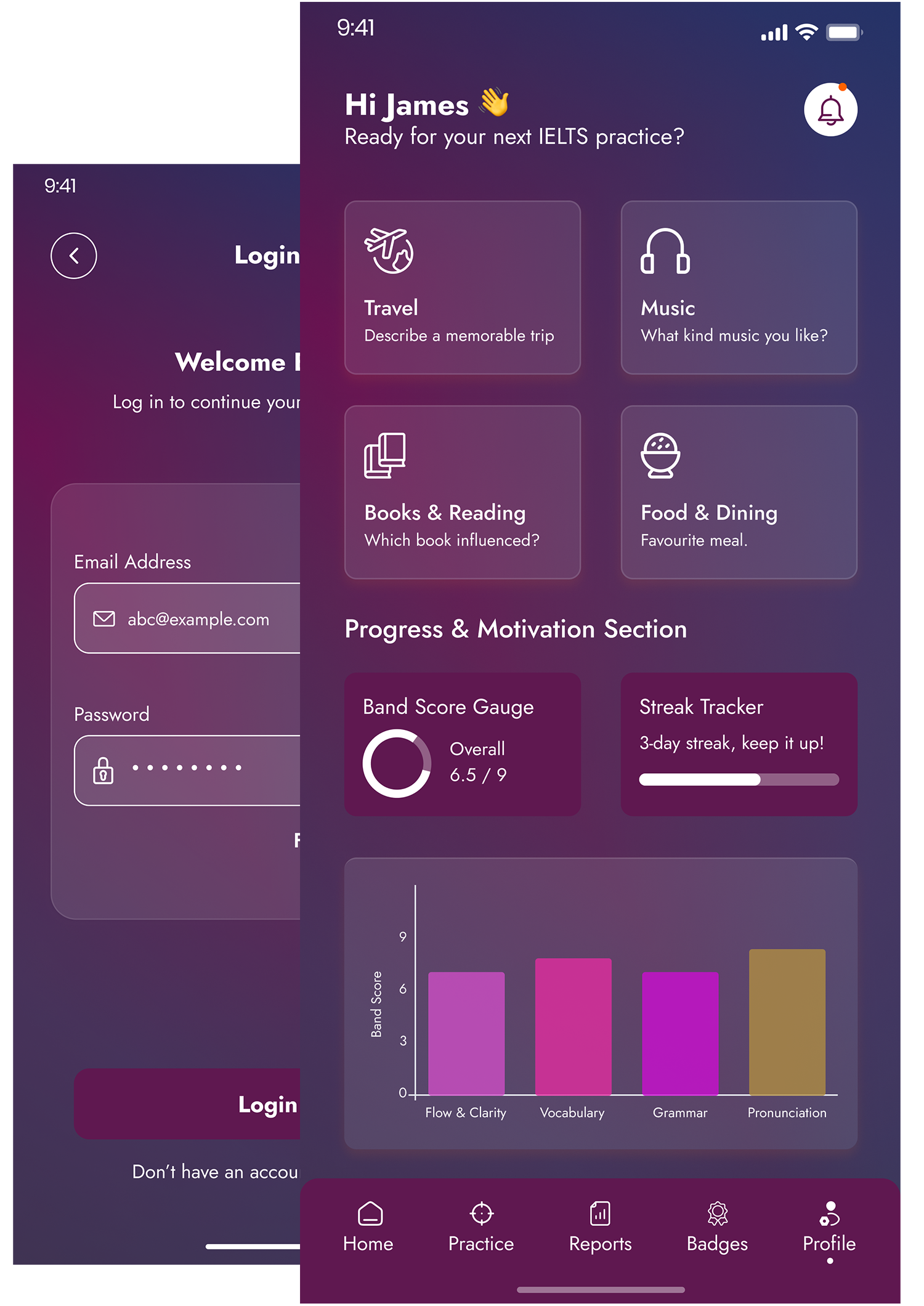
IELTS AI-Powered Speaking Evaluator
The Challenge
Human IELTS tutors cost $30-$80/hour with limited availability. Generic speaking apps lack authentic Part 1/2/3 exam structure, pronunciation feedback, and band-aligned scoring rubrics. Learners had no way to get unlimited, exam-authentic practice at scale.
Our Approach
We built a full-stack AI platform with a lifelike AI Avatar Examiner using LangGraph + Gemini conversation engine, Google Cloud TTS with viseme lip-sync, Faster-Whisper ASR, and a 6-layer IELTS evaluation pipeline scoring all 4 criteria with ±0.5-1.0 band accuracy.
The Result
- 1,000+ concurrent users with 2–3s response latency
- 10x lower cost than human examiners
- 6-service AI microservice with model preloading
- No-code admin panel for rapid content updates
Health E Livin AI Wellness Platform
The Challenge
People struggling with mental health had no single platform to access trusted information, take confidential assessments, and find providers — all without stigma or privacy concerns.
Our Approach
We built HealtheLivin as an AI-powered mental wellness app with a conversational AI assistant, anonymous screenings, evidence-based resource library, and geolocation-based provider discovery — all on privacy-first cloud infrastructure.
The Result
- AI knowledgebase for natural language mental health support
- Confidential assessments with personalized wellness insights
- Location-based provider discovery for professional care
- Privacy-first architecture with encrypted data management
Today Fit Fitness App
The Challenge
Gyms, trainers, and users were stuck with disconnected tools for scheduling, payments, and fitness tracking. There was no single platform that combined personalized fitness with business management.
Our Approach
We developed TodayFit as an AI-driven fitness platform with trainer booking, personalized tracking, community features, and a SaaS layer for gym and trainer business management.
The Result
- 30% increase in user engagement
- 4.7+ average rating on the App Store and Play Store
- 60% growth in trainer bookings
- 45% increase in subscription conversions


SmartVend AI Smart Vending Platform
The Challenge
Managing a distributed vending machine network meant manual inventory tracking, disconnected payment systems, no remote management capability, and zero real-time visibility into machine health or sales performance across locations.
Our Approach
We built SmartVend as a cloud-connected IoT platform combining an Android kiosk app, centralized web portal, real-time inventory sync, hardware integration for payments and dispensing, and a digital advertising layer — all managed from a single dashboard.
The Result
- Real-time inventory sync with low-stock alerts
- Remote machine management across unlimited locations
- IoT integration for payments, dispensing, and monitoring
- Centralized sales analytics and revenue reporting
Our end-to-end AI governance consulting process
At Xicom, we follow a strategic and structured approach to AI governance consulting that moves organizations from risk exposure to regulatory confidence. Every engagement is built on accountability, transparency, and measurable outcomes at every stage of the governance lifecycle.
-
Assessment
We review your current AI landscape, governance posture, regulatory obligations, and risk profile to identify where gaps exist and what closing them requires.
-
Framework Design
We design a governance framework shaped around your organization's structure, risk appetite, and regulatory environment rather than a generic template applied without context.
-
Documentation
We develop the policies, standards, procedures, and documentation that translate governance frameworks into operational reality across your organization.
-
Execution Support
We work alongside your legal, compliance, technology, and business teams to embed governance structures into existing workflows without creating bureaucracy nobody maintains.
-
Testing & Validation
We test governance controls against real operational conditions, validate that policies are being followed in practice, and identify anything that needs to be adjusted before it becomes a problem.
-
Ongoing Support
We provide continuous advisory support to keep governance frameworks current, compliance obligations met, and monitoring programs effective as regulations and AI systems evolve.
Our engagement models AI governance consulting services
As a trusted AI governance consulting partner for enterprises operating in regulated and high-stakes environments, we offer engagement models built around your specific risk profile and compliance requirements. From full-program delivery to targeted advisory support, every engagement is scoped to what your organization actually needs.

Fixed Price Model
Best for organizations where governance scope needs to flex as AI deployments expand, regulatory obligations shift, and new risk exposure emerges across the business.
- Upfront agreed cost and project scope
- Milestone-based delivery and review
- No hidden charges or overheads
- Predictable outcomes and timelines
Most Popular

Dedicated Teams Model
Ideal for enterprises that need a dedicated AI governance consulting team covering risk assessments, compliance mapping, policy development, and ongoing oversight.
- Full control over governance priorities
- Scalable team structure as obligations grow
- Direct access to senior governance consultants
- Continuous program oversight and improvement

Time & Material Model
Best for organizations where governance scope needs to flex as AI deployments expand, regulatory obligations shift, and new risk exposure emerges across the business.
- Billing based on actual effort and scope
- Adjust priorities and resources at any time
- Ideal for phased governance programs
- Faster response to regulatory changes
Client testimonials and reviews showcasing the value we consistently deliver
Explore how our clients describe their journey with us, reflecting strong collaboration, effective execution, and consistent outcomes delivered across engagements. See how our delivery framework ensures consistency from initiation through to successful completion.
❝
Parity AI
We came to Xicom with an ambitious goal: make institutional-grade financial planning accessible to everyone through AI. Xicom went beyond the brief, blending conversational AI and predictive analytics into an effortless platform. Parity AI is exactly what we envisioned.

❝
RadioFX
Xicom took the time to understand what our stations and listeners actually need, building something tailored rather than generic. Live chat and polls are now core to how we connect with our audience — the app has become a true extension of our on-air presence.


❝
StudyBuddy
Xicom built exactly what our students needed: a secure space to connect, collaborate, and find tutoring support in one place. Their understanding of student behavior shows in how naturally everything fits together — StudyBuddy is something students genuinely rely on.

❝
BoxxDocks
Xicom helped us bring BoxxDocks to life exactly as we envisioned it. Their team understood the complexity of AI powered real-time asset tracking and delivered a platform that's both powerful and genuinely easy to use.


❝
TodayFit
We are very happy with their services. I cannot recommend them highly enough. The value, ability, and delivery that we have seen has been superb, and we look forward to continuing this relationship.


❝
SmartVend AI
Their team built SmartVend from the ground up, combining hardware integration, real-time inventory sync, and a centralized dashboard that completely changed how we operate. We couldn't have asked for a more capable technical partner.

❝
Tap Retail
Partnering with Xicom to develop our Tap Retail app and website was one of the best decisions we made. Their team demonstrated exceptional professionalism, technical expertise, and a deep understanding of our business goals.


❝
GoGmGo
Partnering with Xicom was a game-changer for us. They didn't just build software, they helped us redefine how we run our business. Their proactive support and deep domain knowledge gave us the confidence to innovate faster.

❝
DENVEN
Working with Xicom has been a transformative experience. Their team quickly understood our challenges and delivered a scalable, intuitive solution. I highly recommend Xicom to any organization seeking future-ready, high-performance digital products.

Top tech insights of our blog
Explore latest tech stories & News
✦ AI-First Company
Deep Insights into Emerging Technology and Innovation!
Stay ahead in the digital world with our latest insights covering AI trends, industry developments, and expert advice on building smarter businesses.
1800+
Projects
20+
Years Experience
Frequently asked questions
What is AI governance consulting and what does it cover?
AI governance consulting helps organizations establish the policies, controls, accountability structures, and oversight frameworks needed to manage AI responsibly. It covers regulatory compliance, risk assessment, policy development, audit readiness, model monitoring, and lifecycle governance, ensuring AI systems operate within agreed boundaries from deployment through retirement.
Why do enterprises need AI governance consulting in 2026?
The EU AI Act entered full enforcement in August 2026, with penalties reaching €35 million or 7% of global turnover. NIST AI RMF, ISO/IEC 42001, and sector-specific regulations across financial services, healthcare, and insurance now mandate documented controls, monitoring evidence, and audit-ready reporting. Organizations without a formal governance structure face regulatory fines, forced system withdrawals, and reputational damage.
What are the best AI governance frameworks for regulated industries?
The three frameworks shaping the majority of enterprise governance programs in 2026 are the NIST AI Risk Management Framework, the EU AI Act, and ISO/IEC 42001. Xicom maps your obligations across all three and against sector-specific regulations such as HIPAA, GDPR, DPDP Act, and PDPL, depending on the industries and geographies you operate in.
How does AI governance consulting differ from data governance consulting?
Data governance focuses on how data is collected, stored, accessed, and protected. AI governance goes further, managing how data is used within AI models, how decisions are made, how risk is monitored across the AI lifecycle, and who carries accountability at each stage. Most enterprises operating in regulated environments require both working together to maintain end-to-end compliance.
How long does it take to build an AI governance framework?
Timelines depend on your organization's size, AI portfolio, and regulatory exposure. A targeted gap assessment and framework design typically takes 6 to 10 weeks. A full governance program covering policy development, implementation, testing, and monitoring infrastructure runs between 3 and 6 months. Xicom works to your regulatory deadlines, not a generic delivery schedule.
What is the difference between AI governance and AI compliance?
AI compliance is about meeting specific regulatory requirements, documenting controls, passing audits, and satisfying regulators. AI governance is the broader operational structure that makes compliance possible and sustainable: the accountability structures, policies, oversight mechanisms, and monitoring programs that keep AI systems within agreed boundaries over time. Compliance is the outcome. Governance is how you get there and stay there.
How does Xicom's AI governance consulting handle agentic AI and LLM governance?
Agentic AI introduces a fundamentally different risk profile, with autonomous systems that execute tasks, commit resources, and make decisions with limited human oversight. Xicom's governance frameworks address agent identity management, autonomy boundary definition, human oversight triggers, and escalation protocols specifically designed for multi-agent and Large Language Model environments, not just traditional ML model governance.
Can AI governance frameworks be built for organizations just starting with AI?
Yes. Governance programs are significantly easier and less costly to build before AI deployment scale than after. Xicom works with organizations at every stage of AI maturity, from those standing up governance from scratch to those extending existing GRC programs to cover AI-specific obligations. Starting early means gaps are closed on your schedule, not a regulator's.
How does AI governance consulting support EU AI Act readiness?
Xicom maps every EU AI Act obligation to the AI systems you currently run, classifying them by risk tier, identifying documentation and oversight gaps, and building the technical and operational controls required for high-risk system compliance. For organizations with deployments across multiple jurisdictions, we layer local regulatory requirements on top of the EU AI Act baseline.
What does an AI governance audit trail need to include?
A defensible audit trail must capture which AI systems are in production, what data they use, which decisions they are shaping, who carries accountability at each stage, and what monitoring evidence exists. Regulators and auditors in 2026 are asking for evidence on demand, not reports assembled before each review cycle. Xicom builds audit trail architecture that keeps this evidence current and accessible at all times.
Every award marks a milestone in our journey of excellence
As AI-first digital engineering company, Xicom has earned global recognition for delivering innovative, scalable, and high-performing technology solutions. Our awards reflect the trust of clients and industry leaders alike.