×
- 20+ Years in Business
- 350+ IT Experts
- 750+ Enterprise Clients
- CMMI Level 3 Appraised
- ISO 9001:2015
- Top 1% on Trustpilot
-
 4.8 on Clutch
Our valued Brands & Agencies
















AI powered app development services by Xicom
With 20+ years of app engineering experience, Xicom delivers end-to-end AI app development services, from product strategy and UX to model integration, in-app chatbots and voice assistants, and post-launch optimization. For AI systems that go beyond apps, such as data platforms, agents, and enterprise models, our custom AI development services team takes the lead.

AI App Strategy and Consulting
Every engagement starts with an app-first AI strategy. Our team reviews your product goals, users, and data to identify the AI features that add real value, then maps them to a delivery roadmap. Backed by our AI consulting practice, we help you decide what to build first, which models to use, and how to measure success after launch.

Custom AI-Powered App Development
We build custom AI-powered mobile and web apps from the ground up, combining intuitive UX with features such as personalization, smart search, predictions, and conversational interfaces. Drawing on our mobile app development experience, every app is designed for iOS, Android, and the web, with secure APIs and performance that holds up under real usage.

Add AI to Existing Apps
You don't need to rebuild your app to make it smarter. We add AI features such as recommendation engines, smart search, document scanning, and automated insights to your current mobile or web app, working within your existing codebase and backend. This helps you modernize quickly while keeping the experience your users already know.

Legacy App Modernization with AI
When an older app can't support modern features, we rebuild it with AI at the core. We refactor legacy architecture, move workloads to the cloud, and add intelligent features that improve performance and engagement. Changes roll out in phases, so your users and operations face minimal disruption.

AI Model and API Integration
We connect your app to the AI models, data sources, and business systems it depends on, including LLM APIs, vector databases, CRMs, and ERPs. Through our AI integration services, every connection is secured, monitored, and built to keep data flowing reliably between your app and the rest of your stack.

In-App AI Chatbots
We build AI chatbots that live inside your app, understand user intent, answer questions, and complete tasks such as bookings, order tracking, or account support. Each chatbot is trained on your content and connected to your app data. For standalone and multichannel bots, our AI chatbot development team builds dedicated solutions.

AI-Powered Internal Apps
We build internal AI apps that help your teams work faster, such as field service apps with image-based inspections, sales apps with smart recommendations, and employee apps with built-in assistants. Each app is designed around your workflows and connects securely to your internal systems and data.

In-App Voice Assistants
We add voice assistants to mobile and web apps so users can search, navigate, and complete tasks hands-free. Each assistant handles speech recognition, language understanding, and spoken responses across devices. For phone-based and customer service voice automation, our AI voice agent development team builds dedicated solutions.

Upgrade and Maintenance
We keep your AI app fast, accurate, and secure after launch through ongoing monitoring, model retraining, performance tuning, and OS and framework updates. As user behavior and data change, we refine AI features so the app keeps delivering value release after release.
AI App Solutions Engineered for Enterprise Scale
350+
IT Professionals
1800+
Projects Delivered
ISO 9001 Certified
NASSCOM & STPI Accreditation
750+
Clients Served
50+
Countries Served
Industry-Focused AI App Development Services
From healthcare and fintech to transportation and retail, Xicom's AI-powered applications are engineered for industry-specific performance. We study your workflows, map your pain points, and build solutions that address what's actually slowing your business down.









Machine & Deep Learning As a Service
We embed machine learning and deep learning models into apps for personalization, scoring, classification, and smart automation, using on-device or cloud inference depending on latency and privacy needs. When you need a standalone model or ML platform, our machine learning development services cover design, training, and deployment.

Generative AI-based App Development
We build generative AI features into apps, such as in-app content creation, smart replies, summaries, image generation, and copilots, with guardrails that keep outputs accurate and on-brand. Larger GenAI platforms are handled by our generative AI development team.

Natural Language Processing
We add NLP features such as sentiment detection, language translation, smart search, and text extraction so your app can understand and respond to users naturally. Deeper language solutions, from document processing to custom language models, are covered by our NLP development services.

AIoT-Based App Development
We build AIoT apps that connect to sensors and devices, monitor equipment in real time, predict issues before they cause downtime, and trigger actions from a mobile dashboard. Our IoT solutions team handles the device and connectivity layer behind these apps.

Cloud AI Integration
We connect apps to cloud AI services on AWS, Azure, and Google Cloud, so models scale with your user base without heavy infrastructure investment. Our experience with cloud platforms keeps deployment secure, fast, and cost-efficient as usage grows.

Predictive Analytics Apps
We build apps with predictive features that use historical and real-time data to forecast demand, flag churn risk, and recommend next actions right inside the app. For enterprise forecasting models and analytics strategy, see our predictive analytics consulting services.

Computer Vision
We add computer vision features such as image recognition, document scanning, object detection, and visual search to mobile and web apps, using on-device models where speed and privacy matter. Advanced vision systems are built by our computer vision development team.

User-Facing App Features
- AI-Powered Search & Smart Recommendations
- Real-Time Notifications & Contextual Alerts
- Conversational AI Chat Interface
- Voice Input & Speech-to-Text Processing
- Personalized Dashboards & Data Views
- Multi-Language & Localization Support
- Biometric Authentication (Face ID, Fingerprint)
- In-App Feedback, Ratings & Sentiment Capture
- Offline Mode with On-Device AI Processing
- Role-Based Access & User Profiles

Admin Panel Features
- Centralized Analytics & Performance Dashboard
- User Management & Access Control
- AI Model Performance Monitoring
- Content & Workflow Management
- Automated Reporting & Data Export
- Subscription & Billing Management
- Audit Logs & Activity Tracking
- Multi-Tenant Architecture Support
- Notification & Campaign Management
- API Usage & Integration Monitoring

Advanced AI-Powered Features
- RAG-Powered Knowledge Retrieval & Q&A
- Predictive Analytics & Forecasting Engine
- Computer Vision & Image Recognition
- NLP-Based Document Processing & Extraction
- AI Agent Workflows with Multi-Step Automation
- Anomaly Detection & Real-Time Alerting
- LLM Integration (GPT, Claude, Gemini, Llama)
- Sentiment Analysis & Customer Intent Detection
Ready-made LLM APIs
Models such as GPT, Claude, and Gemini are the fastest route to chat, summaries, and writing help inside an app. You pay per use, and we add prompt design, guardrails, and cost controls. Best for: MVPs and conversational or content features.
RAG on Your Own Data
Retrieval-augmented generation lets the model answer from your documents, catalog, or knowledge base and cite its sources, with no retraining needed. Best for: support assistants, product search, and internal knowledge apps.
Fine-tuned Models
When answers must follow your tone, format, or domain terms every time, we fine-tune a model on your examples. It costs more upfront but gives steadier output. Best for: specialist and regulated domains.
Small and On-device Models
Small language models and on-device frameworks such as Core ML and TensorFlow Lite run on the phone itself, so features work offline, respond faster, and keep data on the device. Best for: privacy-sensitive and offline use.
Custom ML Models
For predictions on your own data, such as churn risk, fraud flags, demand, or lead scores, we train custom machine learning models and serve them to the app through secure APIs. Best for: scoring, forecasting, and personalization.
AI Agents Inside Apps
AI agents go beyond answering questions to complete multi-step tasks, such as booking, updating records, or filing requests, through approved tools and APIs. Best for: workflow and self-service apps.
Proven results: building AI apps that deliver impact
Discover how our custom AI app development services help enterprises automate operations, cut costs, and turn data into a competitive edge.
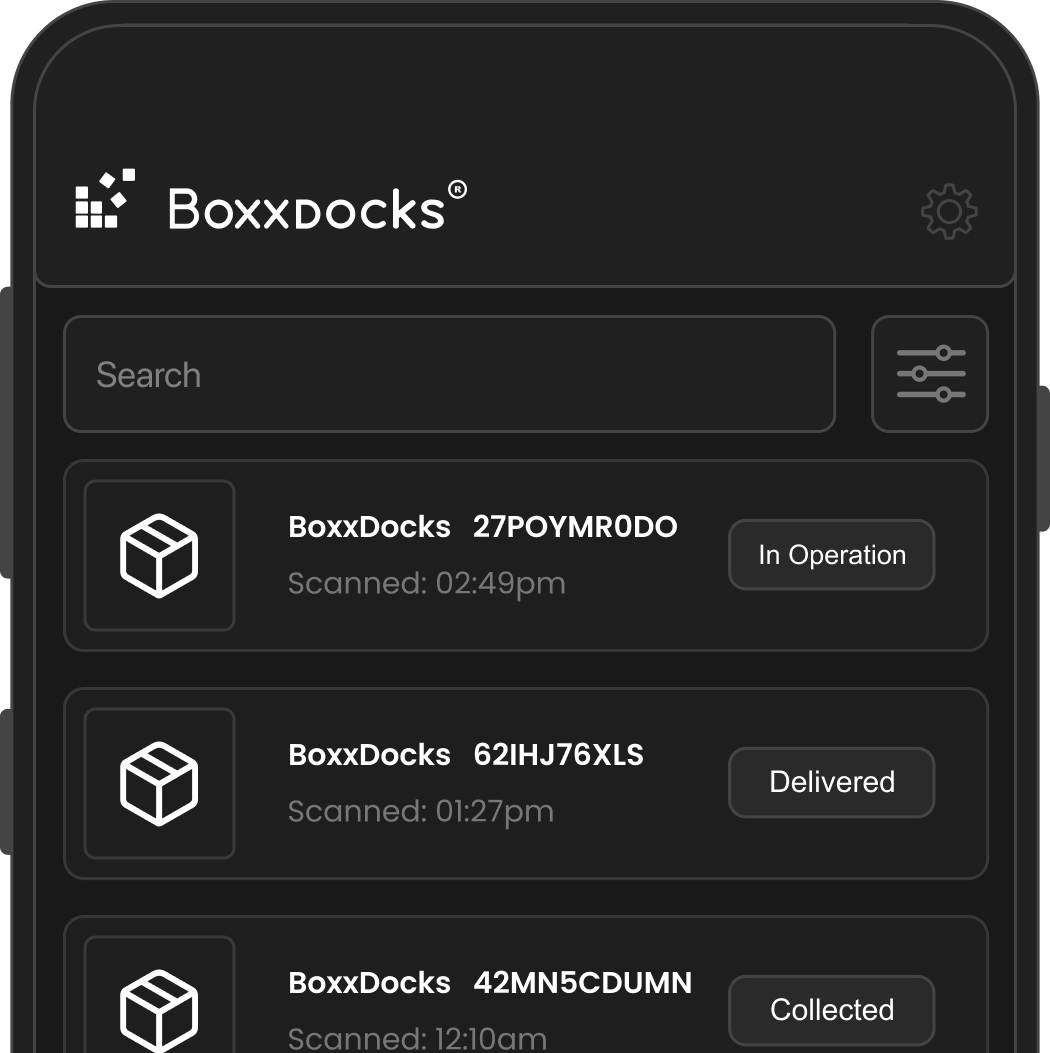
BoxxDocks AI Asset Tracking App
The Challenge
Asset tracking was manual, error-prone, and scattered across disconnected systems. The client had no centralized visibility into asset movement, no real-time location data, and no way to generate instant reports across multiple enterprise clients from a single platform.
Our Approach
We built BoxxDocks as an AI-powered asset management app with QR/NFC scanning, real-time dashboards, geolocation tracking, and a RAG-based conversational interface that lets users query live operational data in plain English, with no dashboard navigation needed.
The Result
- Real-time inventory tracking from warehouse to last-mile
- AI-powered query engine for natural language data insights within the app
- LLM-powered reporting with anomaly detection
- Complete audit trail with location, timestamp, and status
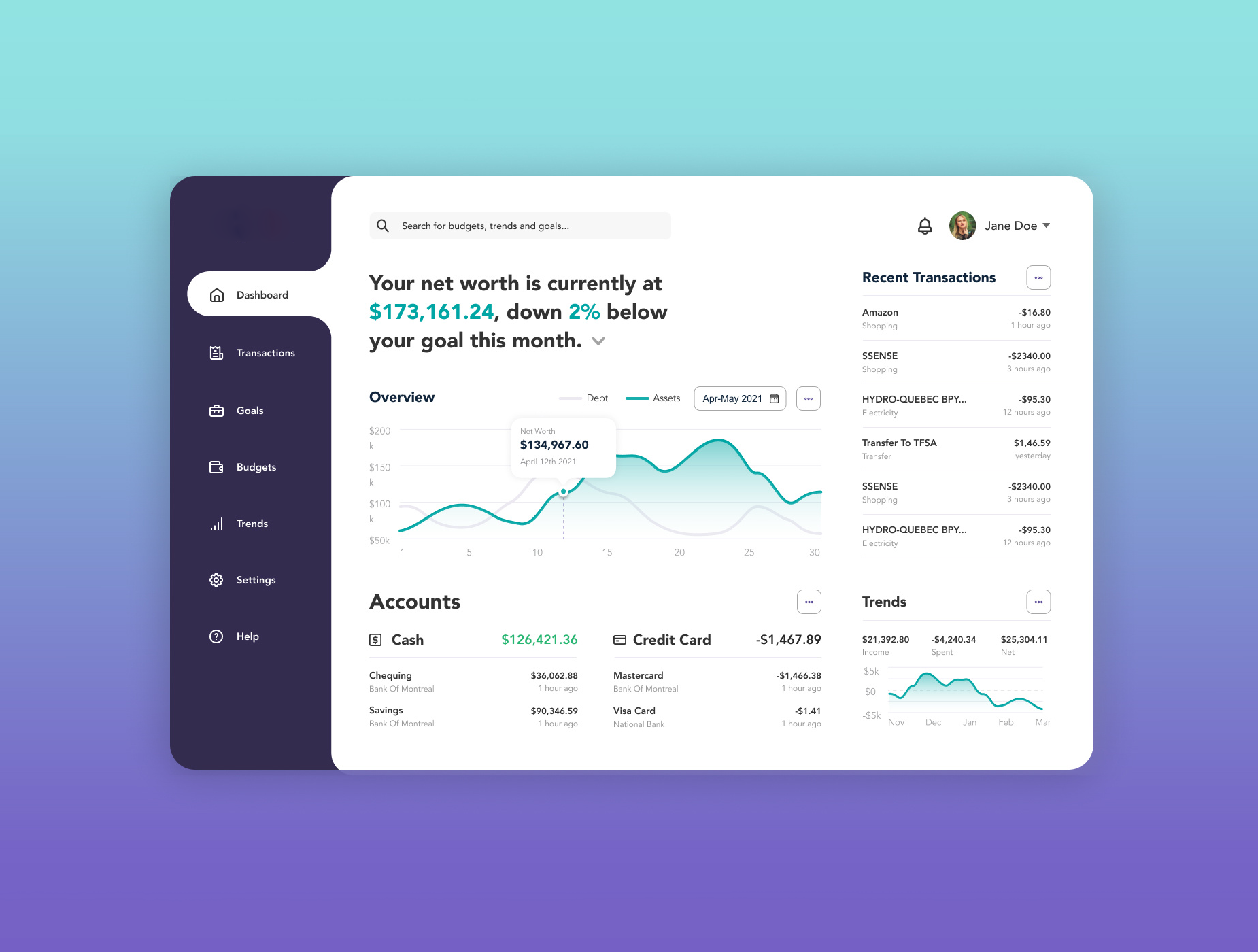
Parity AI AI Finance App
The Challenge
Personalized financial advice was expensive and limited to periodic meetings. Users had no way to consolidate banking, investments, debt, and insurance into one platform with real-time, AI-driven guidance.
Our Approach
We built Parity AI as an always-on financial wellness platform powered by AI. It securely pulls data from multiple sources, analyzes user behavior, forecasts outcomes, and delivers personalized recommendations, acting as a digital financial advisor rather than a budgeting app.
The Result
- AI-driven banking, investment, and debt management in one app
- Personalized recommendations based on life events and behavior
- In-app financial education with actionable insights
Today Fit AI Fitness App
The Challenge
Gyms, trainers, and users were stuck with disconnected tools for scheduling, payments, and fitness tracking. There was no single platform that combined personalized fitness with business management.
Our Approach
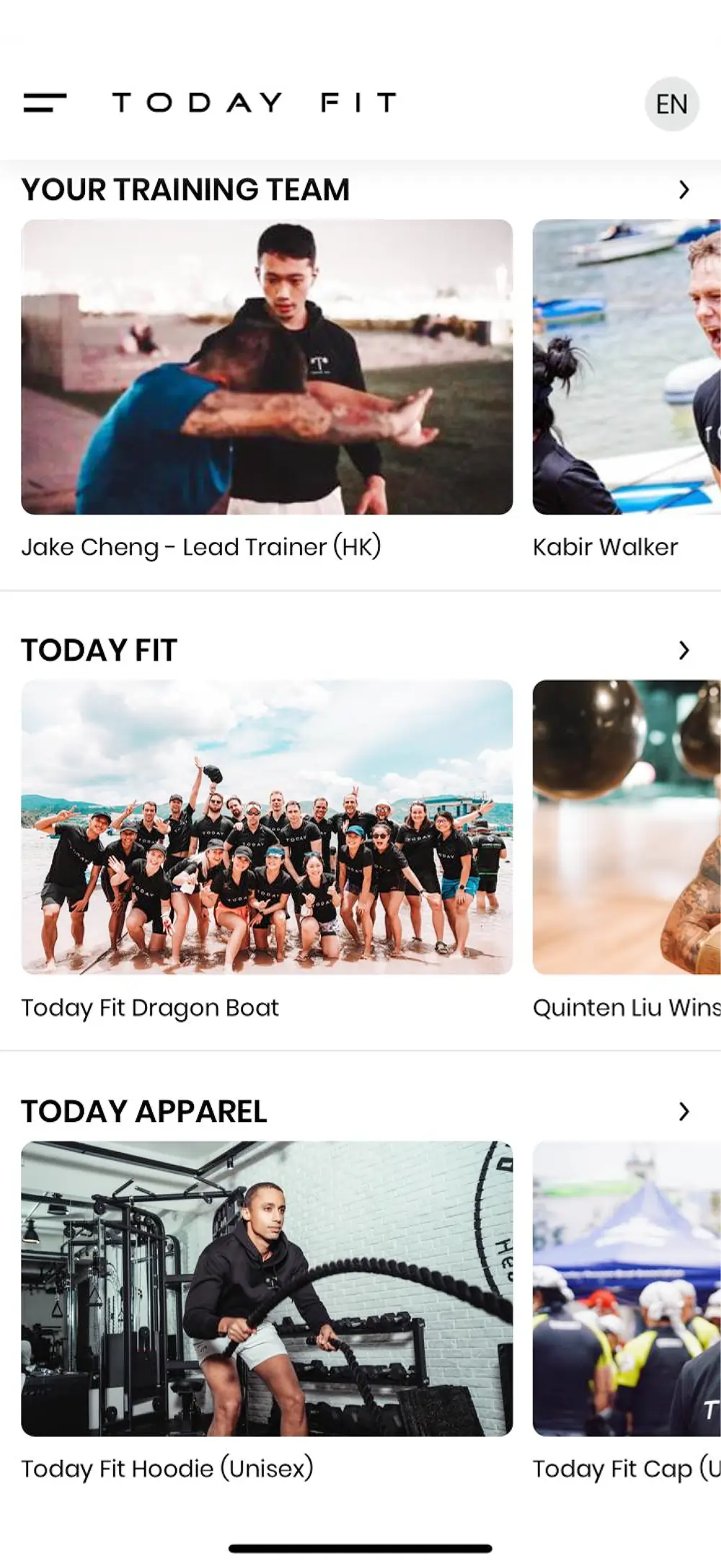
We built the TodayFit mobile app with AI-driven fitness course recommendations and HealthKit-based personalization, along with trainer discovery and booking, activity tracking, community features, and a SaaS backend that lets gyms and trainers run operations from one dashboard.
The Result
- 30% boost in in-app user engagement
- 4.7+ average rating on the App Store and Play Store
- 60% growth in trainer bookings
- 45% growth in subscription conversions driven by AI recommendations
IELTS AI-Powered Speaking Evaluator
The Challenge
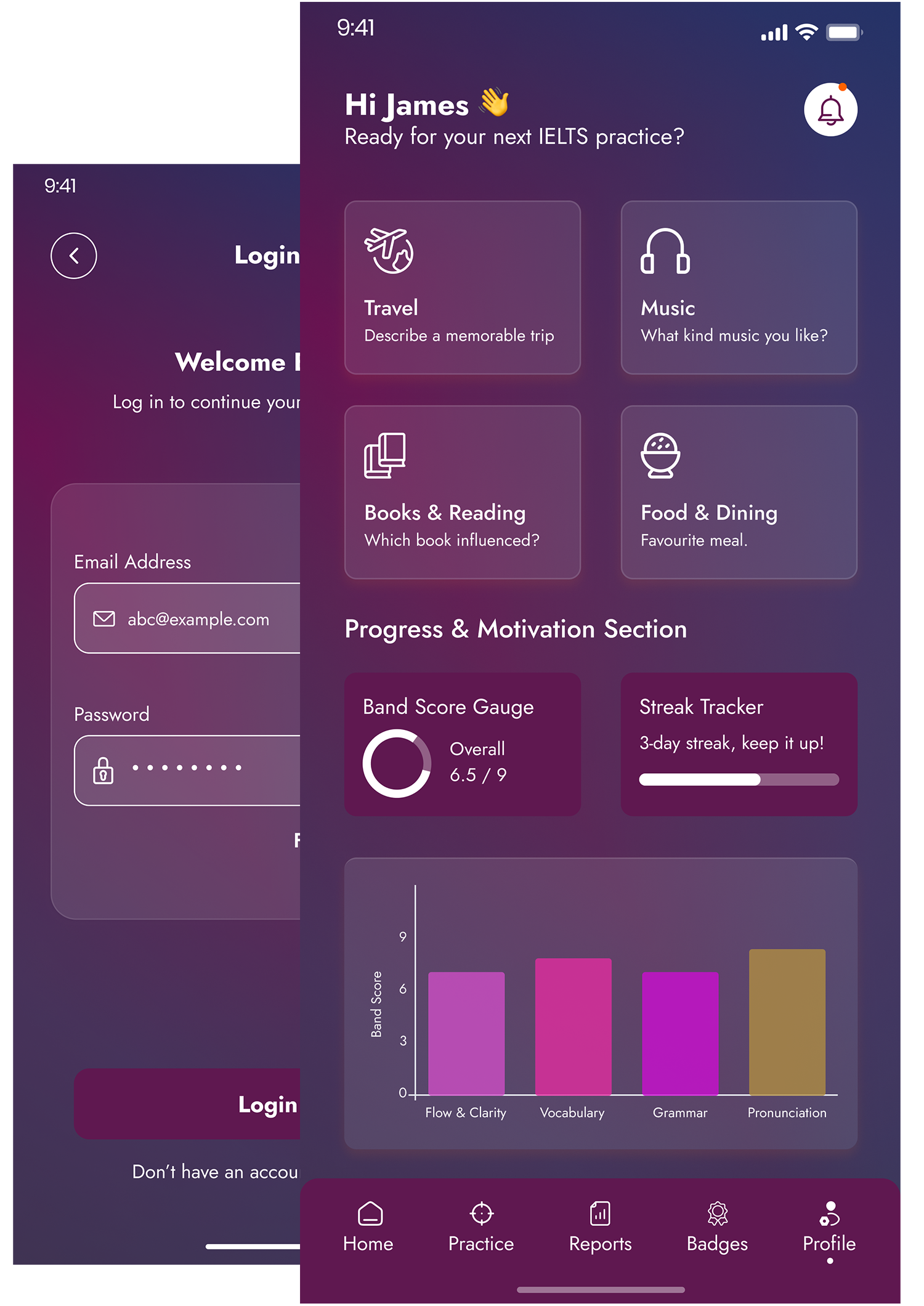
Human IELTS tutors cost $30-$80/hour with limited availability. Generic speaking apps lack authentic Part 1/2/3 exam structure, pronunciation feedback, and band-aligned scoring rubrics. Learners had no way to get unlimited, exam-authentic practice at scale.
Our Approach
We built a full-stack AI platform with a lifelike AI Avatar Examiner using LangGraph + Gemini conversation engine, Google Cloud TTS with viseme lip-sync, Faster-Whisper ASR, and a 6-layer IELTS evaluation pipeline scoring all 4 criteria with ±0.5-1.0 band accuracy.
The Result
- 1,000+ concurrent users with 2–3s response latency
- 10x lower cost than human examiners
- 6-service AI microservice with model preloading
- No-code admin panel for rapid content updates
Health E Livin AI Wellness Platform
The Challenge
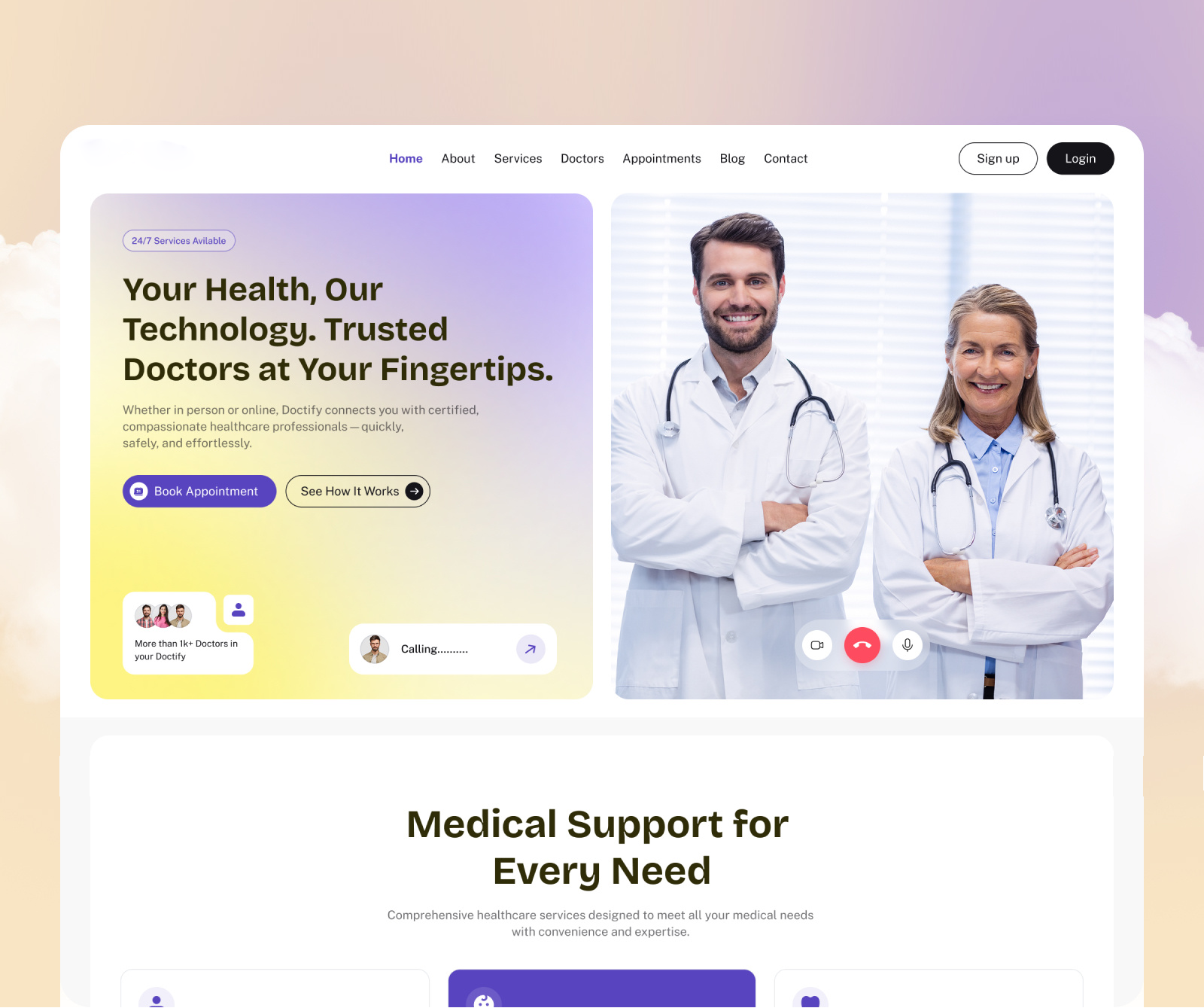
People struggling with mental health had no single platform to access trusted information, take confidential assessments, and find providers without stigma or privacy concerns.
Our Approach
We built HealtheLivin as an AI-powered mental wellness app with a conversational AI assistant, anonymous screenings, evidence-based resource library, and geolocation-based provider discovery, all on a privacy-focused architecture.
The Result
- AI knowledgebase for natural language mental health support
- Confidential assessments with personalized wellness insights
- Location-based provider discovery for professional care
- Privacy-focused architecture with encrypted data management
Ready to build your AI-powered app?
As an AI app development company, we take your idea from concept to a launched, AI-powered app that users rely on and your business can scale.
Advanced tech stacks behind our AI app development
Our custom AI app development services use proven frameworks for both the AI layer and the app layer, so models, APIs, and front-end experiences work together from day one.
 Python
 TypeScript
 JavaScript
 Java
 Kotlin
 C++
 Claude
 GPT Models
 Gemini
 Llama
 Mistral
 PyTorch
 TensorFlow
 Hugging Face
 Scikit-learn
 Keras
 JAX
 LangGraph
 CrewAI
 AutoGen
 PydanticAIOpenAI Agents SDK
 LangChain
 LlamaIndex
 Pinecone
 Weaviate
 Milvus
 Chroma
 SpaCyNLTK
 Hugging Face Transformers
 YOLO
 Detectron2
 OpenCV
 React
 Next.js
 Angular
 Vue.js
 Tailwind CSS
 Material UI
 Node.js
 Express.jsPython
 GoJava
 .NET Core
 AWS (Bedrock)
 Microsoft Azure
 Google Cloud
 Vertex AI
 Databricks
 MongoDB
 PostgreSQL
 Redis
 Elasticsearch
 OpenSearch
 REST API
 GraphQL
 WebSockets
 gRPC
 OpenAI API
 Stripe API
 MLflow
 Kubeflow
 Docker
 Kubernetes
 AWS SageMaker
 OAuth 2.0
 JWT Authentication
 SSL/TLS
 AES-256 Encryption
 HIPAA
 SOC 2
 Jenkins
 GitLab CI/CD
 Prometheus
 Datadog
 Grafana
 ArgoCD
Why Choose Xicom As Your AI App Development Company?
With 1,800+ projects delivered across 50+ countries, we build AI apps that solve real business problems and actually make it to production.
AI apps built for real, business impact
- 750+ clients served across 50+ countries worldwide.
- 20+ years in app design, development, and AI integration.
- 1000+ apps live on Play Store & App Store with 15 million+ downloads.
- 350+ IT professionals including dedicated AI/ML engineers.
- AI app development for startups, mid-market, and enterprises.
- ISO 9001 certified with NASSCOM and STPI accreditations.





AI App Product Engineering
From ideation to deployment, we engineer AI apps as full products covering architecture, UX, model integration, and post-launch optimization.

Real-Time Data Processing
Our AI apps are built with real-time data pipelines that process, analyze, and surface actionable insights the moment your data changes.

Cross-Platform Deployment
Every AI app we build runs across iOS, Android, and web with consistent performance, one codebase, and unified AI capabilities.

Custom Model Integration
We integrate pre-trained, fine-tuned, or custom ML models directly into your app. Every model is configured to fit your specific use case.

Scalable AI Architecture
Our AI apps run on cloud-native, microservices architecture designed to scale as your data volume, user base, and model complexity grow.

Post-Launch AI Optimization
We monitor model drift, retrain algorithms, and optimize app performance continuously after deployment, not just at launch.
Our end-to-end AI app development process
As an AI app development company, we take every AI app through a structured development process with clear steps, milestones, and deliverables, whether you're a startup or a large enterprise.
-
Strategic Planning
Our team clearly defines goals, thoroughly assesses requirements, and defines a clear AI app roadmap.
-
Design Phase
We design intuitive interfaces and system architecture to ensure a seamless and consistent user experience.
-
Development Stage
Our developers build scalable, secure AI apps using modern technologies and best practices.
-
Quality Assurance
We continuously test your apps to ensure proper performance, high accuracy, and enhanced data security.
-
Release and Support
We launch the app on the App Store, Google Play, or the web, then provide ongoing support, updates, and performance optimization.
AI app development costs
AI app development costs vary based on the scope of the solution, the AI models and frameworks involved, data infrastructure needs, integration depth with existing systems, and how much autonomy the app requires. Other factors like training data volume, compliance and security requirements, cloud hosting, GPU compute, and post-launch model optimization also play a role in the final investment. A simple AI assistant and a multi-module enterprise AI app sit at very different ends of the investment spectrum, and so do the timelines, team sizes, and infrastructure behind them. Below are typical ranges for each tier. For a full breakdown of cost factors, hidden costs, and running costs after launch, read our AI app development cost guide.
Covers AI chatbots, virtual assistants, smart search, and text summarization built on existing LLM APIs, with a typical timeline of 2 to 4 months. Adding a single focused AI feature to an app you already have often costs less, around $15,000 to $60,000.
Covers recommendation engines, RAG-based knowledge assistants, document processing, and content generation, which need more data work, integrations, and testing. Typical timeline: 4 to 7 months.
Covers apps with custom-trained models, computer vision, real-time voice, and AI agents that take actions inside other systems, along with approval workflows, audit logs, and guardrails. Typical timeline: 7 to 12+ months.
Our engagement models for AI app development
At Xicom, we offer flexible AI app development engagement models tailored to your business needs. Whether you require a dedicated team, a fixed-price approach, or a pay-as-you-go model, we enable you to hire an AI development team that perfectly fits your budget and requirements.

Fixed Price Model
Best for well-defined AI projects, this model ensures clear scope, budget predictability, and timely delivery without surprises.
- Upfront agreed cost and project scope
- Milestone-based progress tracking
- No hidden charges or overheads
- Reliable delivery timelines and outcomes
Most Popular

Dedicated Teams Model
Ideal for businesses seeking a long-term AI development partner, this model provides a dedicated team of AI engineers working exclusively on your project.
- Full control over team structure and workflows
- Highly scalable and cost-effective
- Direct communication with developers
- Increased focus and faster turnaround

Time & Material Model
Perfect for AI projects with dynamic requirements, this model offers agility, cost control, and adaptability to continuous innovation.
- Flexible billing based on actual efforts
- Adjust resources and scope anytime
- Ideal for iterative and evolving projects
- Faster implementation and continuous optimization
Building AI apps that meet industry compliance
Every AI app we build follows strict compliance frameworks and industry standards for security, privacy, and governance, from development to deployment.











Client testimonials and reviews showcasing the value we consistently deliver
Explore how our clients describe their journey with us, reflecting strong collaboration, effective execution, and consistent outcomes delivered across engagements. See how our delivery framework ensures consistency from initiation through to successful completion.
❝
Parity AI
We came to Xicom with an ambitious goal: make institutional-grade financial planning accessible to everyone through AI. Xicom went beyond the brief, blending conversational AI and predictive analytics into an effortless platform. Parity AI is exactly what we envisioned.

❝
RadioFX
Xicom took the time to understand what our stations and listeners actually need, building something tailored rather than generic. Live chat and polls are now core to how we connect with our audience — the app has become a true extension of our on-air presence.


❝
StudyBuddy
Xicom built exactly what our students needed: a secure space to connect, collaborate, and find tutoring support in one place. Their understanding of student behavior shows in how naturally everything fits together — StudyBuddy is something students genuinely rely on.

❝
BoxxDocks
Xicom helped us bring BoxxDocks to life exactly as we envisioned it. Their team understood the complexity of AI powered real-time asset tracking and delivered a platform that's both powerful and genuinely easy to use.


❝
TodayFit
We are very happy with their services. I cannot recommend them highly enough. The value, ability, and delivery that we have seen has been superb, and we look forward to continuing this relationship.


❝
SmartVend AI
Their team built SmartVend from the ground up, combining hardware integration, real-time inventory sync, and a centralized dashboard that completely changed how we operate. We couldn't have asked for a more capable technical partner.

❝
Tap Retail
Partnering with Xicom to develop our Tap Retail app and website was one of the best decisions we made. Their team demonstrated exceptional professionalism, technical expertise, and a deep understanding of our business goals.


❝
GoGmGo
Partnering with Xicom was a game-changer for us. They didn't just build software, they helped us redefine how we run our business. Their proactive support and deep domain knowledge gave us the confidence to innovate faster.

❝
DENVEN
Working with Xicom has been a transformative experience. Their team quickly understood our challenges and delivered a scalable, intuitive solution. I highly recommend Xicom to any organization seeking future-ready, high-performance digital products.

Top tech insights of our blog
Explore latest tech stories & News
✦ AI-First Company
Deep Insights into Emerging Technology and Innovation!
Stay ahead in the digital world with our latest insights covering AI trends, industry developments, and expert advice on building smarter businesses.
1800+
Projects
20+
Years Experience
Frequently Asked Questions
What types of AI applications can Xicom develop?
As an AI app development company, we build a wide range of AI-powered applications tailored to specific business needs. This includes AI chatbots and virtual assistants, recommendation engines, predictive analytics apps, image and speech recognition applications, AI-powered automation tools, NLP-based document processing apps, and AI-powered internal apps for field and office teams.
We also develop AI agent applications, RAG-powered search and retrieval apps, computer vision solutions, and generative AI applications for content, code, and data workflows. Every app is built for production use with scalable architecture, secure APIs, and cloud-native deployment.
How much does AI app development cost?
AI app development costs depend on the scope, complexity, AI models involved, data infrastructure, integration depth, and the level of autonomy the app requires. Here are typical ranges by tier:
A basic AI app, such as a chatbot, virtual assistant, or smart search app built on existing LLM APIs, typically costs $30,000 to $60,000. Mid-level apps with recommendation engines, RAG-based assistants, or document processing usually range from $60,000 to $150,000. Advanced apps with custom-trained models, computer vision, real-time voice, or AI agents start around $150,000 and can exceed $300,000. Adding one focused AI feature to an existing app often costs $15,000 to $60,000.
We provide detailed cost estimates after understanding your project scope, data readiness, and deployment requirements.
What is the typical timeline for developing an AI app?
The timeline depends on the app's complexity, data readiness, number of AI models, and integration requirements. A basic AI app built on existing LLM APIs typically takes 2 to 4 months. Mid-level AI apps with RAG, recommendation engines, multiple data sources, and third-party integrations usually take 4 to 7 months. Advanced AI apps with custom-trained models, real-time voice, or AI agents can take 7 to 12+ months.
We follow an agile delivery approach, running model development, application development, and data engineering in parallel streams. This helps reduce overall timelines and allows you to see working output early through MVPs, even as the full system is built out progressively.
Can you integrate AI into my existing application?
Yes. We specialize in embedding AI capabilities directly into existing mobile apps, web platforms, CRMs, ERPs, and enterprise software without disrupting current workflows. Our integration approach uses secure APIs, event-driven architectures, and optimized data pipelines to connect AI models with your existing systems.
Whether you need to add a conversational AI layer, predictive analytics, intelligent search, or automated decision-making to your current app, we build AI as a native layer inside your existing architecture rather than a separate standalone system.
What technologies do you use for AI app development?
Our AI app development stack covers the full range of frameworks, models, and infrastructure needed for production-grade AI applications. On the model side, we work with GPT, Claude, Gemini, Llama, Mistral, and open-source LLMs, selecting and fine-tuning based on your accuracy, cost, and latency requirements.
For development, we use Python, TensorFlow, PyTorch, scikit-learn, Hugging Face, and LangChain. Our data infrastructure stack includes vector databases like Pinecone and Weaviate, RAG pipelines, and cloud-native services from AWS, Google Cloud, and Azure. For app delivery, we build across React Native, Flutter, Swift, and Kotlin for mobile, and React, Next.js, and Node.js for web, ensuring AI capabilities are fully integrated into the front-end experience.
What are the latest AI trends shaping app development?
Several AI trends are directly changing how apps are built and used. AI agents that can perform multi-step tasks autonomously are replacing simple chatbot interfaces. Retrieval-Augmented Generation (RAG) is enabling apps to pull real-time, context-aware answers from private enterprise data instead of relying on static model knowledge. Multi-modal AI, which processes text, images, audio, and video within a single app, is becoming standard across industries.
On-device AI is gaining traction for apps that need offline functionality, low latency, or strict data privacy. Small language models (SLMs) fine-tuned for specific tasks are offering faster, cheaper alternatives to large general-purpose models. Edge AI deployment, AI-powered low-code platforms, and generative AI for personalized content and UX are also shaping the next wave of AI app development.
What is the future of AI apps for business?
AI apps are moving from being support tools to becoming core business infrastructure. The future points toward autonomous AI agents that handle end-to-end business processes like procurement, customer support, and compliance without human intervention at every step. AI copilots embedded directly into enterprise workflows will assist employees with decision-making, data analysis, and content generation in real time.
Hyper-personalization powered by real-time behavioral data will become the default in customer-facing apps across retail, healthcare, finance, and education. Predictive and prescriptive analytics will shift businesses from reactive decision-making to proactive planning. As AI infrastructure costs drop and open-source models improve, AI app adoption will accelerate across mid-market companies, not just large enterprises. Businesses that invest in AI app development now will have a structural advantage over competitors that wait.
AI can be biased or unsafe. How do you reduce risks and stay compliant?
AI bias and safety are real concerns, and we address them at every stage of development. During data preparation, we audit training datasets for representation gaps, label inconsistencies, and historical biases that could skew model outputs. During model development, we apply fairness testing, bias detection metrics, and adversarial testing to identify and correct problematic behavior before deployment.
On the compliance side, we build AI apps with guardrails, role-based access controls, audit logging, and explainability layers so that every AI decision can be traced, reviewed, and justified. For regulated industries like healthcare and finance, we align with frameworks such as HIPAA, GDPR, SOC 2, and the EU AI Act. Our AI governance consulting services also help organizations set up internal policies, model monitoring, and risk management practices to keep AI systems compliant and accountable over the long term.
Do you provide post-launch support for AI apps?
Yes. Our responsibility does not end at deployment. We provide continuous post-launch support that covers performance monitoring, bug fixes, system updates, and feature enhancements. For the AI layer specifically, we handle model retraining based on new data patterns, drift detection to catch accuracy degradation, and optimization to improve response times and reduce compute costs.
We also address scalability constraints as your user base and data volume grow, ensuring the app performs reliably under increased load. Our support engagement is structured around SLAs with defined response times, regular health reports, and proactive recommendations so your AI app keeps delivering results long after launch.
Every award marks a milestone in our journey of excellence
As an AI-first digital engineering company, Xicom has earned global recognition for delivering innovative, scalable, and high-performing technology solutions. Our awards reflect the trust of clients and industry leaders alike.