×
Retail AI Consulting and Development Company
Reimagine retail operations with our retail AI consulting and development services designed for modern commerce. We help retailers, eCommerce businesses, marketplaces, and consumer brands develop intelligent AI solutions that strengthen merchandising decisions and enable sustainable growth across physical and digital retail channels.
Consult Our AI Experts
- 20+ Years in Business
- 350+ IT Experts
- 750+ Enterprise Clients
- CMMi Level 3 Certified
- ISO 9001:2015
- Top 1% on TrustPilot
-
 4.8 on Clutch
Our valued Brands & Agencies
















Transform Retail operations with our comprehensive Retail AI development services
Our retail AI services combine strategic consulting, custom solution engineering, enterprise integration, workflow automation, and continuous optimization to help organizations solve complex retail challenges. Every engagement is tailored to your business model, ensuring AI solutions deliver measurable value.

PoC and MVP Development
Before expanding AI across multiple business functions, retailers often need confidence that a solution performs effectively within their operating environment. We build proof of concepts and minimum viable products that validate AI capabilities using representative retail data, workflows, and customer scenarios. Early evaluation supports informed investment decisions before full-scale deployment.
Custom Retail AI Solution Development
Every retailer operates with distinct customer expectations, fulfillment models, and operational workflows. We develop AI solutions designed around these unique business characteristics, enabling organizations to improve customer engagement, inventory performance, store operations, and ecommerce experiences through solutions that seamlessly integrate with existing enterprise environments.
LLM Fine-tuning
LLMs become significantly more valuable when they understand your business’s language. We fine-tune LLMs using merchandising standards, operating procedures, internal documentation, and retail terminology to improve contextual understanding. Rigorous evaluation and validation ensure the resulting models produce responses aligned with enterprise knowledge and retail-specific requirements.
Retail AI Solution Integration
AI delivers greater value when it operates as part of the broader retail technology ecosystem. Our engineers integrate AI capabilities with eCommerce platforms, point-of-sale systems, CRM applications, ERP software, warehouse management systems, marketing platforms, and enterprise databases, enabling seamless information flow while preserving operational continuity across retail functions.
AI Workflow Automation
Retail organizations manage countless operational processes that rely on manual coordination across departments and systems. We develop AI-powered workflow automation solutions that streamline merchandising approvals, inventory updates, pricing operations, customer support processes, and administrative activities, improving operational efficiency while reducing repetitive effort.
Maintenance and Support
Our support services help retailers maintain reliable AI environments through continuous monitoring, performance optimization, model refinement, dependency updates, and issue resolution. As customer expectations, product assortments, and business priorities evolve, we ensure AI solutions continue delivering consistent performance, security, and business value across the retail enterprise.
Retail AI solutions engineered for enterprise scale
150+
AI Engineers & Data Scientists
300+
AI Solutions Delivered
ISO 9001 Certified
NASSCOM & STPI Accreditation
NASSCOM & STPI Accreditation
100+
AI Models in Production
30+
Industries Served
Personalized Recommendation Engines
We develop AI-powered recommendation engines that analyze customer preferences, browsing behavior, purchase history, product interactions, and contextual signals to deliver more relevant shopping experiences. These solutions help retailers improve product discovery, increase customer engagement, and boost conversion across digital commerce channels.
Dynamic Pricing Optimization Systems
We build AI-driven pricing optimization solutions that evaluate demand patterns, competitor activity, inventory positions, customer behavior, seasonal trends, and market conditions to support more effective pricing decisions. These systems help retailers respond faster to market changes, improve margin management, and reduce pricing inconsistencies.
Customer Intelligence Platforms
We develop AI customer intelligence platforms that consolidate behavioral data, transaction history, loyalty information, engagement patterns, and demographic insights to create a deeper understanding of shoppers. These solutions enable retailers to identify customer segments, anticipate preferences, personalize interactions, and design targeted experiences.
Demand Forecasting Solutions
We create AI-based demand forecasting systems that analyze historical sales patterns, seasonal fluctuations, market trends, and external factors to predict future product demand. These solutions help retailers improve inventory planning, reduce stock shortages, minimize excess inventory, and make more informed decisions across operations.
Inventory Management Systems
We develop AI inventory intelligence solutions that provide retailers with improved visibility into stock availability, product movement, replenishment requirements, and inventory performance. By analyzing sales velocity, store-level demand, and warehouse capacity, these systems help maintain optimal inventory levels while improving product availability.
Store Operations Intelligence Platforms
We build AI solutions that analyze store performance data, employee activity, customer movement patterns, and operational metrics to improve physical retail management. These platforms help retailers identify opportunities to enhance workforce allocation, optimize store processes, and increase operational efficiency across locations.
Visual Merchandising Analytics
We develop AI-powered visual merchandising solutions that analyze product placement, shelf arrangements, image data, and store layouts to provide actionable merchandising insights. These systems help retailers evaluate display effectiveness, optimize product positioning, improve in-store navigation, and create improved shopping environments.
Customer Service AI Assistants
We develop intelligent customer service assistants that support shoppers across digital and retail channels by providing product information, order assistance, policy guidance, and personalized support. These AI solutions integrate with enterprise knowledge bases and customer systems to deliver faster responses and improve service consistency.
Promotion Optimization Platforms
We build AI-driven promotion intelligence solutions that evaluate campaign performance, product relationships, pricing behavior, and historical outcomes to improve promotional planning. These platforms help retailers identify effective offers, reduce ineffective discounting, maximize campaign impact, and align promotional strategies with commercial goals.
Returns Management Intelligence
We develop AI solutions that analyze return patterns, product issues, customer behavior, transaction data, and operational workflows to improve returns management. These systems help retailers identify recurring causes of returns, detect potential process improvements, optimize reverse logistics operations, and enhance customer experiences.
From consulting to development. We build Retail AI software that solves real business problems
From personalization and demand forecasting to inventory optimization and POS data interoperability, our retail AI solutions deliver outcomes your store teams can measure.
Purpose-built AI Solutions
AI solutions designed around specific business challenges, workflows, and industry requirements rather than generic use cases. Every implementation aligns with your operational objectives, technology landscape, and long-term growth strategy, delivering capabilities that address real business needs while supporting measurable and sustainable outcomes.
Enterprise-ready Architecture
Built to integrate with existing enterprise systems, data platforms, APIs, and business applications. Modular architectures support interoperability across complex technology environments, simplify future enhancements, and provide the flexibility needed to accommodate evolving enterprise requirements without unnecessary redevelopment.
Engineered for Automation
Automates repetitive processes, accelerates decision-making, and improves operational efficiency with AI-driven workflows. Intelligent automation reduces manual effort, standardizes business processes, and enables teams to focus on higher-value activities while maintaining consistency, accuracy, and operational control.
Scalable by Design
Architected to support growing users, expanding data volumes, and evolving business requirements without compromising performance. Flexible system architectures accommodate increasing operational complexity, simplify future expansion, and enable organizations to extend AI capabilities as business demands continue to grow.
Actionable Intelligence
Converts enterprise data into real-time insights, predictions, and recommendations that support informed business decisions. By transforming fragmented information into meaningful intelligence, organizations gain greater visibility into operations, identify emerging opportunities, and make faster, evidence-based decisions with confidence.
Continuous Learning & Optimization
Continuously refined using new data, user feedback, and performance monitoring to improve accuracy and long-term business value. Regular optimization enables AI systems to adapt to changing operational conditions, sustain dependable performance, and deliver consistent outcomes throughout their lifecycle across operational workflows.
Case studies of how our clients have gained competitive advantage.
Discover how our retail AI and custom development services have helped our clients gain a competitive edge through enhanced efficiency and user engagement. Our case studies showcase real-world success in driving growth across industries.
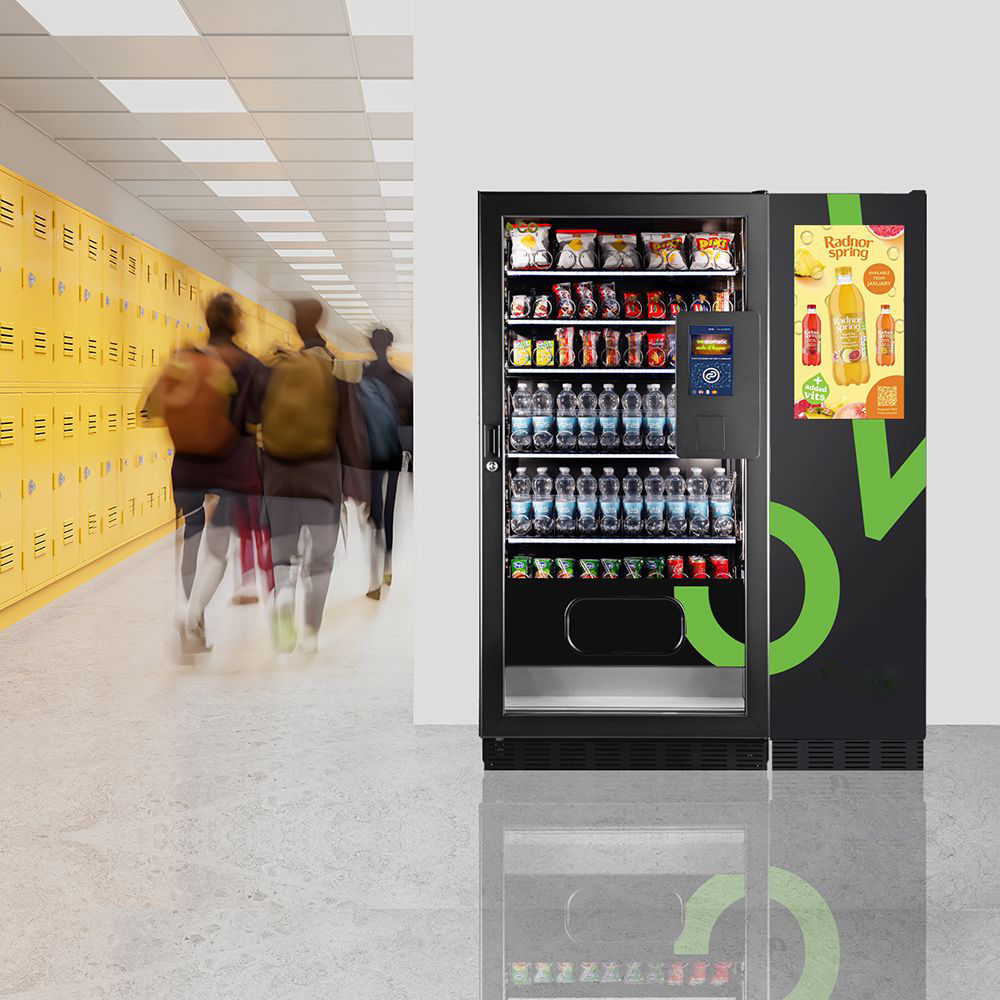
SmartVend AI Smart Vending Platform
The Challenge
Managing a distributed vending machine network meant manual inventory tracking, disconnected payment systems, no remote management capability, and zero real-time visibility into machine health or sales performance across locations.
Our Approach
We built SmartVend as a cloud-connected IoT platform combining an Android kiosk app, centralized web portal, real-time inventory sync, hardware integration for payments and dispensing, and a digital advertising layer, all managed from a single dashboard.
The Result
- Real-time inventory sync with low-stock alerts
- Remote machine management across unlimited locations
- IoT integration for payments, dispensing, and monitoring
- Centralized sales analytics and revenue reporting

GoSupps Custom eCommerce Solution
The Challenge
Selling fitness supplements across 20+ countries required handling multiple currencies, shipping rules, and tax laws from a single platform while supporting 25,000+ daily customers and keeping mobile apps fully synced with the core e-commerce system.
Our Approach
We built three connected platforms (iOS app, Android app, and Magento eCommerce website) hosted on AWS with database indexing and caching, integrated with Odoo, Stripe, PayPal, UPS, and regional shipping providers, all supporting 20+ countries with auto-adjusted currency, tax, and shipping.
The Result
- 25,000+ users registered in the first month
- Multi-country e-commerce across 20+ countries
- Native iOS and Android apps with Magento integration
- AWS infrastructure built for high-traffic scalability
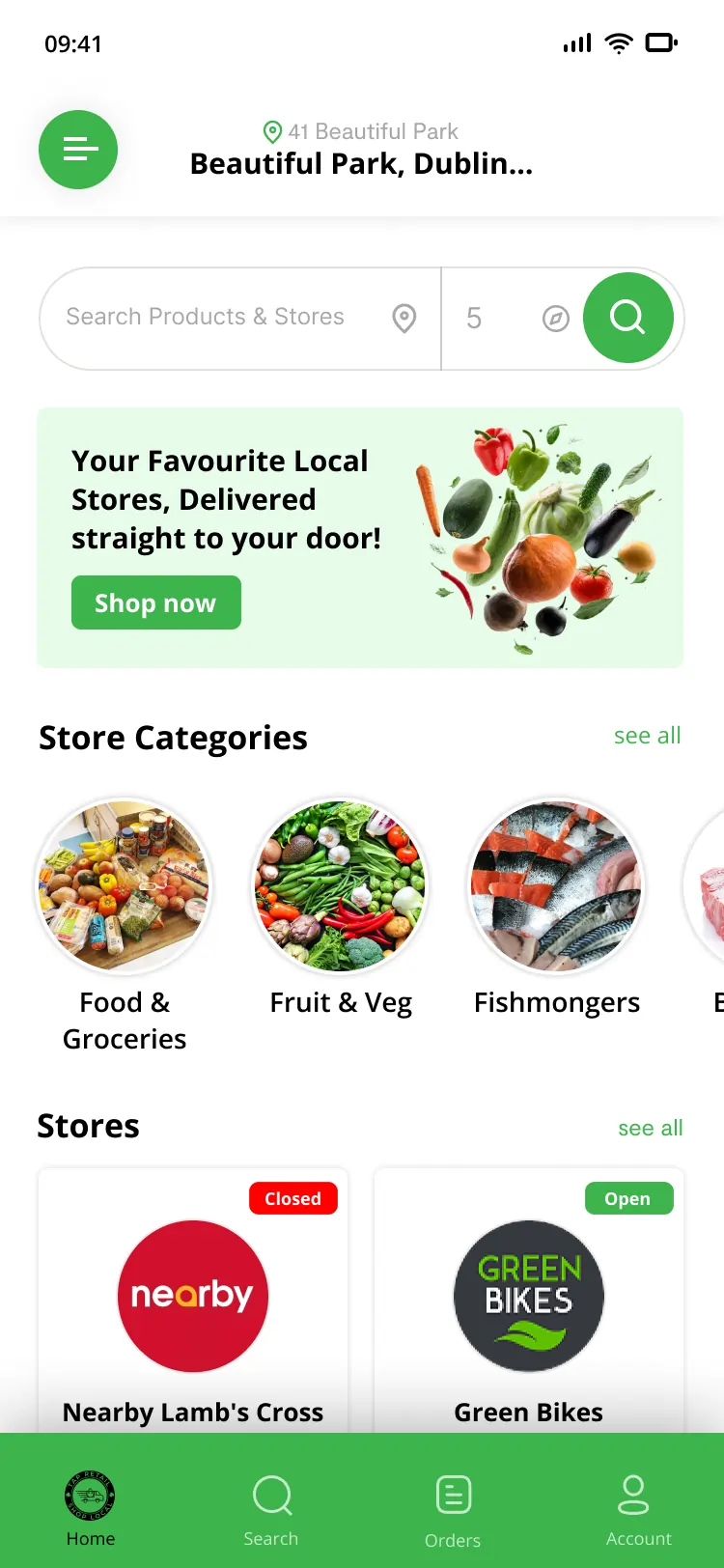
Tap Retail Retail Management
The Challenge
Managing 100+ product categories across fashion, food, and electronics through disconnected systems was causing SKU errors, missed promotions, poor product discovery, and inconsistent experience across mobile and web.
Our Approach
We built a scalable cloud-based retail management platform with modular multi-category inventory, smart search filters, dynamic pricing and promotions, related product recommendations, bulk upload tools, and real-time sync across all touchpoints from a single admin panel.
The Result
- 10,000+ products onboarded in the first 30 days
- 70% reduction in manual operations and SKU errors
- 25% increase in conversions with smart recommendations
- 3x faster inventory sync across departments
Technology stack behind our Retail AI software development services
As a retail AI consulting and custom software development company, we choose technologies that help retailers, eCommerce businesses, and consumer brands create smoother shopping journeys and build IT solutions that move the industry forward.
 Python
 TypeScript
 Node.js
 Go
Go
 Java
Java
 Claude
 GPT-5
GPT-5
 Gemini 3
 Llama 4
 Mistral
 LangGraph
 CrewAI
 AutoGen
 OpenAI Agents SDK
 PydanticAI
 PyTorch
 TensorFlow
 Hugging Face
 Scikit-learn
 ONNX
ONNX
 LangChain
 LlamaIndex
 Pinecone
 Weaviate
 pgvector
 AWS Bedrock
 Microsoft Foundry
 Vertex AI
 Snowflake
 Shopify APIs
Our end-to-end process for Retail AI software development
Our AI consulting and development approach helps retailers move from identifying business opportunities to implementing scalable AI capabilities across commerce, customer engagement, merchandising, and operations. Our structured approach helps organizations build AI solutions that adapt to changing business priorities.
1
Assess
We evaluate retail operations, customer journeys, technology, and data to identify high-impact AI opportunities and establish a strong foundation for adoption.
2
Plan
We align AI capabilities with retail objectives, technology ecosystems, and implementation needs, creating a practical roadmap for successful deployment.
3
Develop
We build AI solutions for retail personalization, pricing, demand forecasting, customer engagement, and operations, integrating intelligence into existing business workflows.
4
Deploy
We integrate AI into retail platforms and enterprise systems, ensuring smooth adoption, operational continuity, and reliable performance across business processes.
5
Optimize
We continuously refine AI models, incorporate new data, and enhance capabilities to keep solutions effective as retail priorities and market conditions evolve.
Retail-focused AI Expertise
We understand the complexities of modern retail ecosystems, including digital commerce, physical stores, customer engagement, merchandising operations, inventory management, and omnichannel experiences. This industry understanding allows us to design AI solutions that address practical retail challenges aligned with commercial objectives.
Business-aligned AI Strategy
We approach every retail AI engagement by connecting technology decisions with measurable business outcomes. Our teams work with stakeholders to understand operational priorities, identify areas where AI can create value, and define implementation strategies for long-term growth. This ensures AI initiatives solve meaningful business challenges.
Adaptable Enterprise AI Architecture
Retail environments continuously evolve with changing consumer behavior and new commerce models. We design AI solutions using flexible architectures that support integration across retail platforms, data ecosystems, and business applications. This helps enterprises expand AI capabilities as their operations grow, without unnecessary complexity or tech constraints.
Secure and Responsible AI Implementation
Retail AI solutions often operate on valuable customer, transaction, and business data. We implement security, governance, and responsible AI practices throughout solution development, including controlled data access, model monitoring, transparency mechanisms, and appropriate safeguards. This enables trusted, enterprise-ready AI deployments for retailers.
Integration Across Tech Ecosystems
Retailers rely on interconnected systems spanning commerce platforms, customer relationship management, inventory applications, marketing tools, payment systems, and enterprise software. We create seamless AI integrations that work alongside existing tech investments, enabling organizations to enhance capabilities without disrupting operations.
End-to-end AI Delivery Capability
From identifying suitable AI opportunities to developing, integrating, and optimizing production solutions, our teams support the complete AI implementation journey. A combination of business understanding, AI expertise, and data capabilities enables us to help retailers move from initial concepts to scalable AI solutions that create sustained value.
Retail AI compliance standards we follow
Built on established compliance frameworks and proven industry practices, we deliver secure, scalable, and high-performance digital solutions that align with global standards for quality, security, privacy, and governance at every stage of development.







Client testimonials and reviews showcasing the value we consistently deliver
Explore how our clients describe their journey with us, reflecting strong collaboration, effective execution, and consistent outcomes delivered across engagements. See how our delivery framework ensures consistency from initiation through to successful completion.
❝
Parity AI
We came to Xicom with an ambitious goal: make institutional-grade financial planning accessible to everyone through AI. Xicom went beyond the brief, blending conversational AI and predictive analytics into an effortless platform. Parity AI is exactly what we envisioned.

❝
RadioFX
Xicom took the time to understand what our stations and listeners actually need, building something tailored rather than generic. Live chat and polls are now core to how we connect with our audience — the app has become a true extension of our on-air presence.


❝
StudyBuddy
Xicom built exactly what our students needed: a secure space to connect, collaborate, and find tutoring support in one place. Their understanding of student behavior shows in how naturally everything fits together — StudyBuddy is something students genuinely rely on.

❝
BoxxDocks
Xicom helped us bring BoxxDocks to life exactly as we envisioned it. Their team understood the complexity of AI powered real-time asset tracking and delivered a platform that's both powerful and genuinely easy to use.


❝
TodayFit
We are very happy with their services. I cannot recommend them highly enough. The value, ability, and delivery that we have seen has been superb, and we look forward to continuing this relationship.


❝
SmartVend AI
Their team built SmartVend from the ground up, combining hardware integration, real-time inventory sync, and a centralized dashboard that completely changed how we operate. We couldn't have asked for a more capable technical partner.

❝
Tap Retail
Partnering with Xicom to develop our Tap Retail app and website was one of the best decisions we made. Their team demonstrated exceptional professionalism, technical expertise, and a deep understanding of our business goals.


❝
GoGmGo
Partnering with Xicom was a game-changer for us. They didn't just build software, they helped us redefine how we run our business. Their proactive support and deep domain knowledge gave us the confidence to innovate faster.

❝
DENVEN
Working with Xicom has been a transformative experience. Their team quickly understood our challenges and delivered a scalable, intuitive solution. I highly recommend Xicom to any organization seeking future-ready, high-performance digital products.

Top tech insights of our blog
Explore latest tech stories & News
✦ AI-First Company
Deep Insights into Emerging Technology and Innovation!
Stay ahead in the digital world with our latest insights covering AI trends, industry developments, and expert advice on building smarter businesses.
1800+
Projects
20+
Years Experience
Frequently Asked Questions
Why do retail businesses require custom AI software?
Retail businesses need custom AI software because off-the-shelf solutions often lack the flexibility to address unique operational needs and customer demands. A tailored approach through AI software development allows businesses to:
- Optimize for specific workflows: Build solutions aligned with your exact inventory, checkout, and fulfillment processes, improving efficiency instead of forcing your operations to fit a generic template.
- Integrate seamlessly with existing systems: Ensure smooth data flow between POS, inventory management, and CRM platforms, preventing data silos and giving teams a unified view of customer and sales data.
- Meet evolving business requirements: Adapt the software as your product lines, sales channels, or customer base change, without being limited by pre-defined features of a packaged solution.
- Gain a competitive edge: Develop personalization engines, recommendation systems, and customer service capabilities specific to your brand, rather than using the same generic AI tools as competitors.
Can Xicom customize retail AI software according to my specific requirements?
Yes. Xicom builds retail AI solutions around your specific business model rather than adapting a fixed product. This starts with understanding your existing tech stack, customer data structure, and operational bottlenecks, then designing AI capabilities (personalization, demand forecasting, inventory optimization, or customer service automation) that fit those specifics. With 20+ years of software development experience and 1,800+ delivered projects, Xicom's team customizes everything from model selection to integration architecture based on your requirements, not a one-size-fits-all template.
How does Xicom ensure the security and compliance of retail AI solutions?
Xicom builds retail AI solutions on established compliance frameworks including PCI DSS for payment data security, GDPR and CCPA for customer data privacy, ISO/IEC 27001 for information security management, and SOC 2 Type II for verified security controls. Every retail AI system we build includes encryption for data in transit and at rest, access controls aligned with NIST CSF guidelines, and regular security reviews to catch vulnerabilities before they affect customer-facing systems. For e-commerce platforms, we also ensure WCAG 2.2 accessibility compliance across AI-powered storefronts and checkout flows.
Can Xicom assist with integrating retail AI software into my existing systems?
Yes. Xicom specializes in integrating AI solutions with existing retail infrastructure including POS systems, inventory management platforms, CRM tools, and e-commerce storefronts. Our approach uses API-first architecture and webhook integration layers so AI capabilities like personalized recommendations or demand forecasting connect directly to your current data sources instead of requiring a system overhaul. This means your existing systems continue running while AI capabilities are layered on top.
Can Xicom assist in scaling my retail AI solution as my business expands?
Yes. Xicom designs retail AI solutions with scalability built in from the start, using cloud-native architecture (AWS, Azure, or Google Cloud) that scales with transaction volume, SKU count, and customer base growth without requiring a rebuild. As your business expands into new locations, sales channels, or product categories, the same AI infrastructure adapts, whether that means processing more data for demand forecasting or handling higher concurrent traffic on customer-facing AI tools.
How can I get started with Xicom's retail AI solution development services?
Getting started begins with a consultation where Xicom's team reviews your current systems, business goals, and priority use cases. From there, we typically recommend starting with a focused pilot, such as a recommendation engine or inventory forecasting tool, validating measurable results, then expanding to additional AI capabilities across your retail operations. You can reach out through Xicom's contact page to schedule an initial discussion.
What is the cost of developing and implementing a retail AI solution?
Cost depends on the scope and complexity of the solution. A single-purpose tool, such as a product recommendation engine, costs significantly less than a multi-system AI deployment integrated across POS, inventory, and CRM platforms. Key cost drivers include the number of system integrations required, whether the project needs a fine-tuned LLM versus an off-the-shelf model, data engineering work needed to prepare existing retail data, and ongoing maintenance needs. Xicom provides a detailed cost estimate after an initial consultation and technical assessment specific to your requirements.
What types of retail AI solutions does Xicom offer?
Xicom offers a full range of retail AI solutions, including:
- Personalization and recommendation engines that tailor product suggestions based on browsing and purchase history
- Demand forecasting and inventory optimization tools that reduce stockouts and overstock
- AI-powered customer service including chatbots and virtual shopping assistants
- Dynamic pricing systems that adjust pricing based on demand, competitor pricing, and inventory levels
- Visual search and product discovery tools that let customers search using images
- Fraud detection systems that flag suspicious transactions in real time
- Retail AI agents and copilots that automate operational tasks and support staff decision-making
How does Xicom assist in retail AI copilot development, and what benefits can retail businesses expect from implementing a retail AI copilot development project?
Xicom develops retail AI copilots that assist staff, not customers directly, with day-to-day operational decisions. This includes tools that help merchandisers identify pricing opportunities, assist inventory teams with reorder timing, or support customer service reps with real-time customer history during calls. Businesses implementing retail AI copilots typically see reduced time spent on manual data lookups, faster staff decision-making during peak periods, and fewer errors in tasks like inventory reconciliation or order processing, since the copilot surfaces relevant information instead of requiring staff to search across multiple systems manually.
Every award marks a milestone in our journey of excellence
As an AI-first digital engineering company, Xicom has earned global recognition for delivering innovative, scalable, and high-performing technology solutions. Our awards reflect the trust of clients and industry leaders alike.