×
- 20+ Years in Business
- 350+ IT Experts
- 750+ Enterprise Clients
- CMMi Level 3 Certified
- ISO 9001:2015
- Top 1% on TrustPilot
-
 4.8 on Clutch
Our valued Brands & Agencies
















What AI development services in India doesXicom provide?
We deliver a comprehensive portfolio of AI consulting and development services that enables organizations to modernize operations, automate business processes, unlock actionable insights, and implement scalable AI solutions aligned with long-term strategic objectives.


AI Design
We design the screens, layouts, and user flows for AI products, deciding where recommendations show up, how results are laid out, and what buttons or actions come next. Every design is tested with real users on real phones, patchy networks, and the everyday usage habits found across Indian markets, so the interface stays simple even when the AI behind it is sophisticated.

AI Software Development
We build AI systems where data pipelines, model inference, and business logic are engineered together from the outset, rather than stitched on later, tested against the transaction spikes and connectivity variability common across enterprises operating in India. Releases are versioned and monitored continuously, so a model update never quietly breaks a downstream process without anyone noticing.

AI Security Solutions
We build AI-powered security solutions, including fraud detection systems, real-time transaction monitoring, surveillance tools, and threat detection dashboards, that flag suspicious activity before it becomes a problem. Every solution is built with encryption, access controls, and continuous monitoring in place, tuned to the kind of scale and risk businesses across India deal with every single day.

AI Automation Solution Development
We remove the repetitive layer — approvals, data entry, status routing, so teams focus on judgment calls, with automation that scales with the business instead of requiring rebuilds.

Maintenance and Support
We track model drift, retrain systems on a defined schedule, and run regular performance audits rather than waiting for a customer complaint to surface a problem first. This approach ensures AI systems are reliable as the fast-changing user behavior, data volumes, and shifting market conditions across India continue to move underneath models that performed well at the point of launch.
AI development solutions built for India's key industries
We build AI systems aligned with how Indian enterprises operate, ready for the DPDP Act, CERT-In directions, and IT Amendment Rules on AI-generated content, and built to scale as data grows.











Social Media
AI Content Moderation, Recommendation Engines, Sentiment and Trend Analysis, Fake Account Detection, Engagement Prediction Models

Gaming & Sports
Player Behavior Analytics, Matchmaking Algorithms, Sports Performance Analytics, Fantasy Sports Fraud Detection, Predictive Odds Modeling
LET’S BUILD TOGETHER
Power your digital growth with AI built for scale
From machine learning to generative AI and intelligent automation, we build high-performance AI systems for Indian enterprises, engineered from the outset for DPDP Act and CERT-In compliance, and delivered on schedule.
Accelerating enterprise transformation through AI and digital engineering.
20+
Years in Business
350+
IT Professionals
ISO 9001 Certified
NASSCOM & STPI Accreditation
NASSCOM & STPI Accreditation
750+
Clients Worldwide
1800+
Projects Executed

Domain-led Problem Solving
We don't hand engineering teams a spec and walk away. Business analysts and domain experts stay involved through the build, catching gaps between what was requested and what the workflow actually needs. That involvement prevents the common failure mode where a technically sound system still doesn't fit how the business runs day to day.
Modular, Reusable Architecture
We build AI components as reusable modules rather than one-off solutions tied to a single use case. This lets organizations extend a working system into new applications without starting from zero each time. Over multiple projects, this approach compounds into faster delivery and lower engineering cost per initiative.

Data-first Development Process
Before writing any model code, we assess whether your existing data can actually support the outcome you're after. Gaps in quality, volume, or structure are flagged early, not discovered mid-project. This upfront discipline avoids the common scenario where a promising AI initiative stalls because the underlying data was never fit for purpose.

Measurable Outcomes
Every engagement starts with defined success metrics, not vague goals like improved efficiency. We track accuracy, adoption, cost savings, or whatever outcome matters most to your business, and report against it throughout the project. That discipline keeps everyone honest about whether the AI investment is actually working.

Risk-Aware Implementation
We identify what could go wrong with an AI system before it ships, not after a customer notices. Failure scenarios, edge cases, and fallback behavior are planned into the design itself, reducing the chance that a single bad output undermines confidence in the entire system. Reviews continue after launch too, so new risks get caught early.

Practical Technology Choices
We don't reach for the newest model or framework by default. Every technology decision is weighed against your actual data, budget, and team's ability to maintain the system long-term. That restraint keeps solutions dependable and easier to support, instead of impressive on paper but fragile once it's actually running.
Agentic AI
Our expertise extends to engineering autonomous AI systems that coordinate decisions across enterprise workflows, digital platforms, and operational processes. We architect agent frameworks capable of interacting with business applications, executing complex objectives, adapting to changing inputs, and operating within defined governance and security boundaries.
Generative AI
We architect enterprise Generative AI platforms that combine proprietary business knowledge with foundation models to support production-scale applications. Our teams establish prompt orchestration, model evaluation, guardrails, response validation, and governance mechanisms that improve reliability, consistency, and enterprise adoption.
Data Science
Our specialists establish data science foundations that support advanced AI initiatives by preparing datasets, engineering analytical pipelines, validating data quality, and developing statistical models. This disciplined approach improves model reliability while enabling organizations to derive measurable insights from complex enterprise data.
Machine Learning
We design machine learning pipelines covering feature engineering, model selection, hyperparameter optimization, deployment, monitoring, and continuous retraining. Every implementation is structured around measurable business objectives, allowing AI models to remain accurate as enterprise data and operational requirements evolve.
Deep Learning
Our engineers develop deep learning architectures optimized for large-scale enterprise workloads involving complex visual, textual, and audio information. We optimize neural networks for training efficiency, inference performance, resource utilization, and production deployment across cloud and hybrid infrastructure environments.
Natural Language Processing (NLP)
We engineer NLP capabilities that organize, interpret, and operationalize enterprise language data across documents, emails, contracts, reports, and customer interactions. Our implementations improve information accessibility, automate language-intensive processes, and support intelligent enterprise knowledge management initiatives.
Data Capture & OCR
Our document intelligence expertise extends beyond text extraction to validation, classification, workflow routing, and structured information processing. We develop OCR-driven systems that integrate directly with enterprise platforms, reducing manual processing while improving information accuracy, consistency, and operational visibility.
Predictive Analytics
We develop predictive analytics frameworks that transform enterprise data into reliable forecasting models for planning, operations, finance, and customer management. Every implementation incorporates continuous performance evaluation, model refinement, and business-specific parameters to maintain long-term analytical accuracy.
AI Recommendation Engines
Our recommendation platforms combine behavioral analytics, contextual intelligence, business rules, and machine learning to deliver adaptive recommendations across digital channels. Each system is configured around organizational objectives, enabling enterprises to improve relevance while continuously refining recommendation quality through evolving user interactions.
Computer Vision
We engineer computer vision platforms capable of processing high-volume visual data across industrial operations, healthcare, logistics, retail, and manufacturing environments. Our implementations incorporate image classification, segmentation, object tracking, anomaly detection, and visual analytics within scalable enterprise architectures.
Facial Recognition
We architect facial recognition platforms that combine biometric analysis, identity verification, and secure authentication within enterprise ecosystems. Our implementations integrate with access management systems, surveillance infrastructure, attendance platforms, and security frameworks while supporting policy-driven governance and operational control.
Digital Personal Data Protection Act, 2023 (DPDP Act)
India AI Governance Guidelines (MeitY, IndiaAI Mission)
Information Technology Act, 2000
IT (Intermediary Guidelines and Digital Media Ethics Code) Amendment Rules, 2026
CERT-In Cybersecurity Directions
NITI Aayog National Strategy for Artificial Intelligence
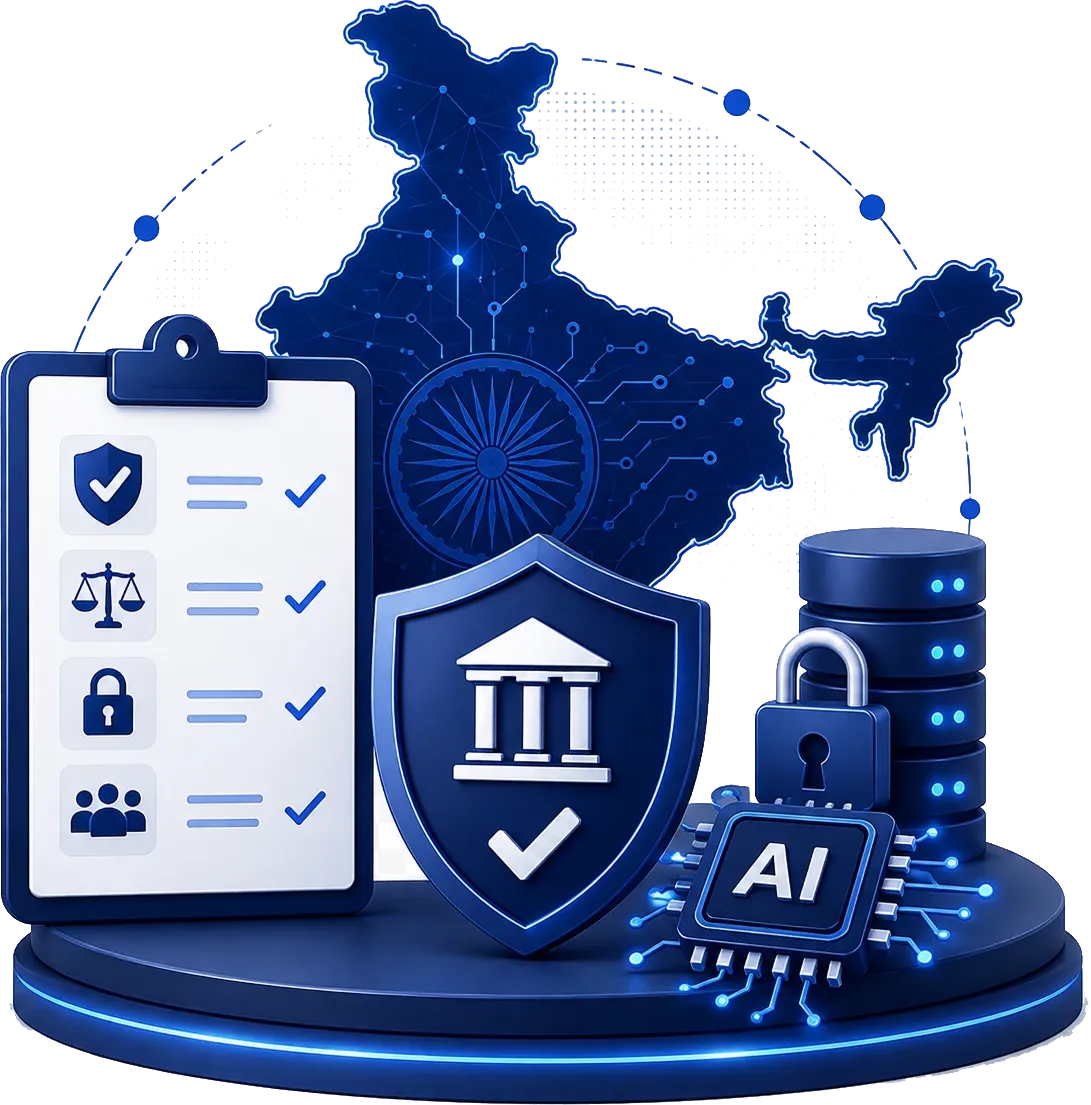
AI Management System Standard (ISO/IEC 42001)
Quality Management Systems (ISO 9001)
Information Security Management (ISO 27001)
Service Organization Control 2 Type II (SOC 2)
General Data Protection Regulation (GDPR)
Health Insurance Portability and Accountability Act (HIPAA)

OWASP Top 10 for Large Language Model Applications
Model explainability and algorithmic bias testing protocols
Data localization and cross-border data transfer compliance under the DPDP Act
AWS, Azure & GCP AI/ML Security Compliance Frameworks

 Python
 R
R Java
Java Scala
Scala C++
C++ TensorFlow
 PyTorch
  Scikit-learn
  Keras
Keras XGBoost
 OpenAI GPT
 Anthropic Claude
 LangChain
 LlamaIndex
 Stable Diffusion
 spaCy
spaCy NLTK
NLTK Hugging Face Transformers
 Gensim
  OpenCV
 YOLO
YOLO  Detectron
  MediaPipe
 MLflow
 Kubeflow
 DVC
DVC Weights & Biases
 Amazon SageMaker
 AWS
AWS Google Cloud
 Microsoft Azure
 IBM Cloud
 Snowflake
 Pinecone
 Weaviate
 Milvus
 Chroma
 FAISS
FAISSCase studies showcasing the value delivered to clients through our AI development
Explore how we partner with clients across industries to deliver tailored AI development that improve efficiency, enhance customer experiences, reduce costs, and drive long-term value.
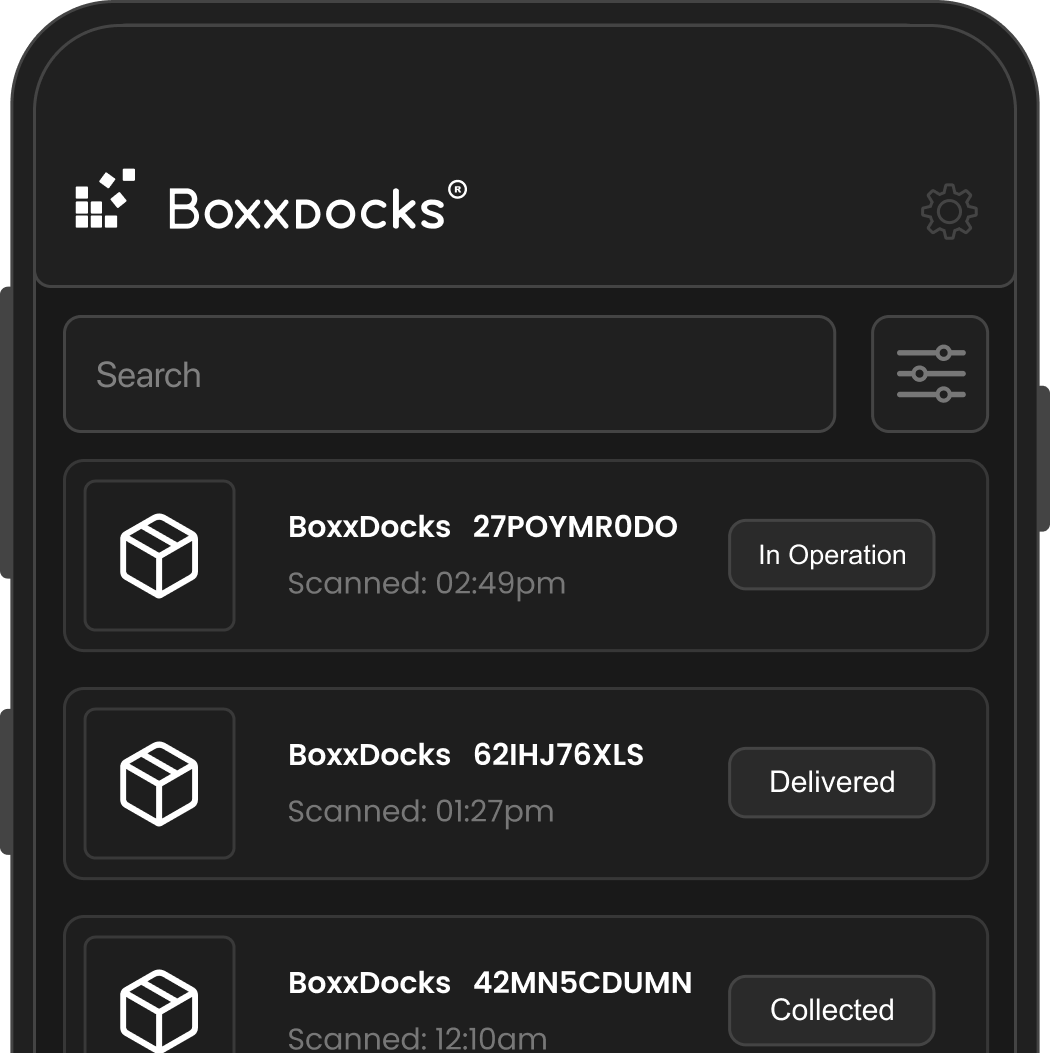
BoxxDocks AI Asset Tracking Platform
The Challenge
Asset tracking was manual, error-prone, and scattered across disconnected systems. The client had no centralized visibility into asset movement, no real-time location data, and no way to generate instant reports across multiple enterprise clients from a single platform.
Our Approach
We built BoxxDocks as an AI-enabled asset lifecycle platform using QR/NFC scanning, real-time dashboards, geolocation tracking, and a RAG-powered conversational engine that lets users query live operational data in plain English instead of navigating dashboards.
The Result
- Real-time inventory tracking across warehouses, transit, and delivery
- AI query engine for natural language insights
- LLM-powered reporting with anomaly detection
- Complete audit trail with location, timestamp, and status
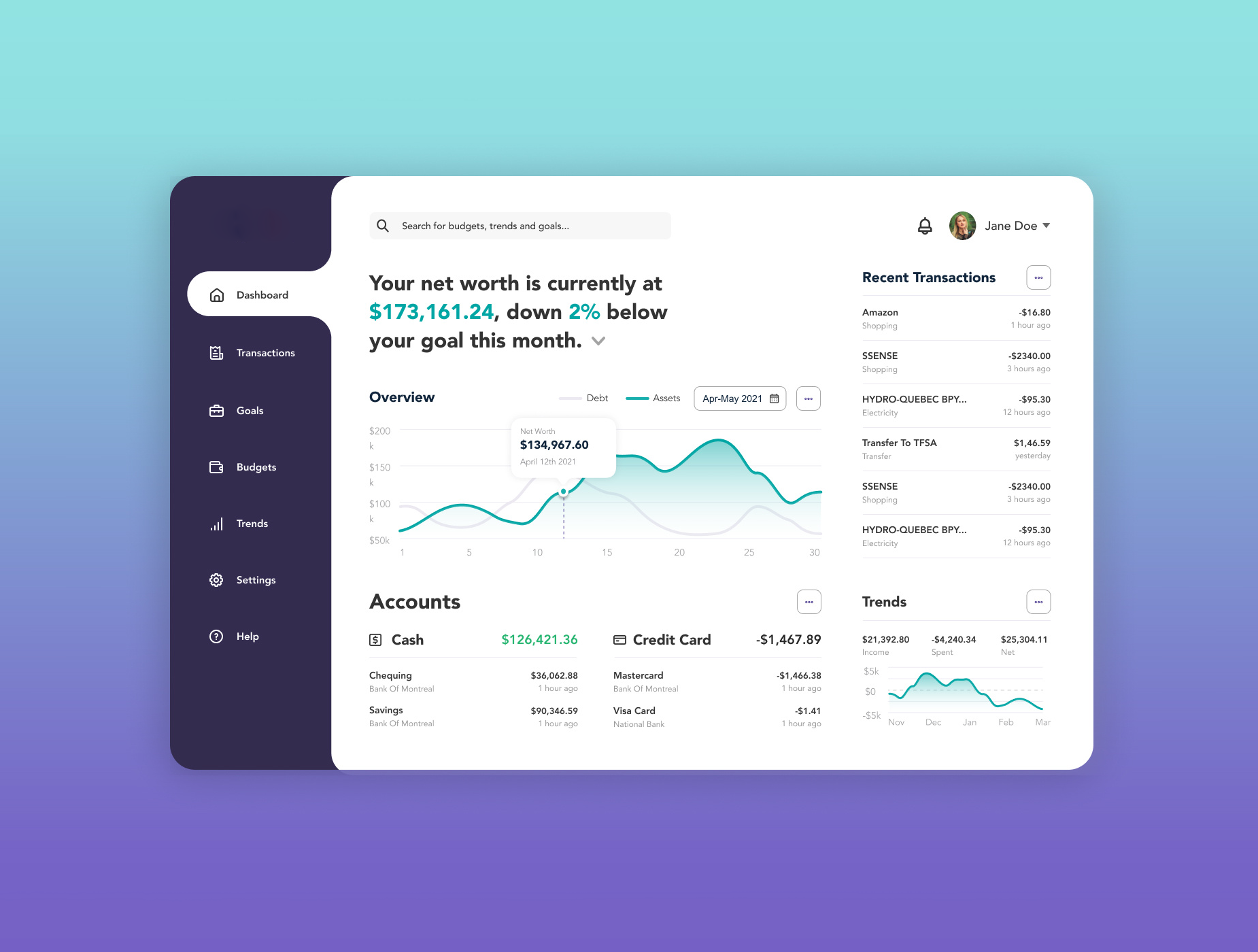
Parity AI AI Finance Platform
The Challenge
Personalized financial advice was expensive and limited to periodic meetings. Users had no way to consolidate banking, investments, debt, and insurance into one platform with real-time, AI-driven guidance.
Our Approach
We built Parity AI as an always-on financial wellness platform powered by AI. It securely pulls data from multiple sources, analyzes user behavior, forecasts outcomes, and delivers personalized recommendations — acting as a digital financial advisor, not a budgeting app.
The Result
- AI-powered financial planning across banking, investments, and debt
- Personalized recommendations based on life events and behavior
- Integrated financial education with actionable insights
IELTS AI-Powered Speaking Evaluator
The Challenge
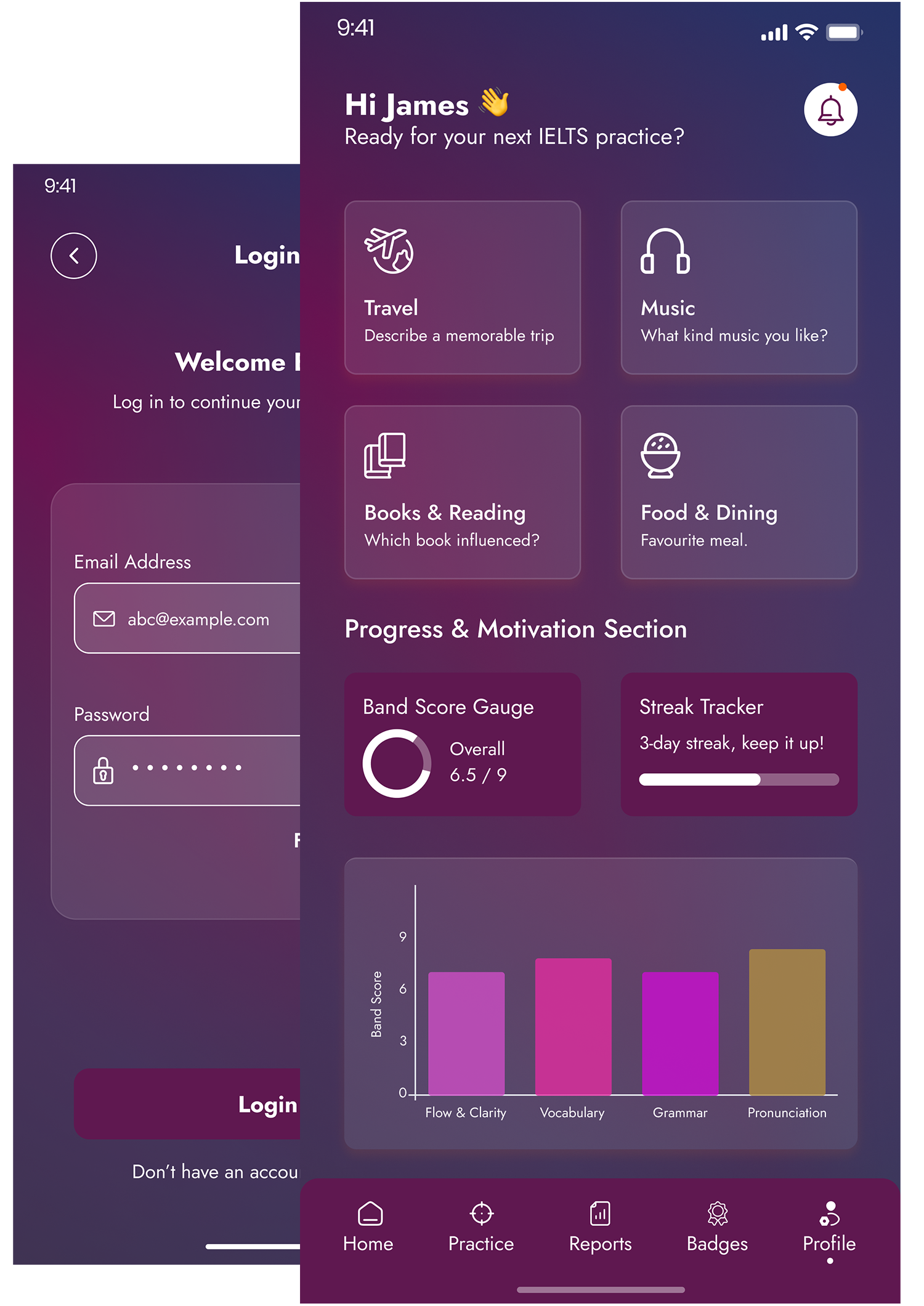
Human IELTS tutors cost $30-$80/hour with limited availability. Generic speaking apps lack authentic Part 1/2/3 exam structure, pronunciation feedback, and band-aligned scoring rubrics. Learners had no way to get unlimited, exam-authentic practice at scale.
Our Approach
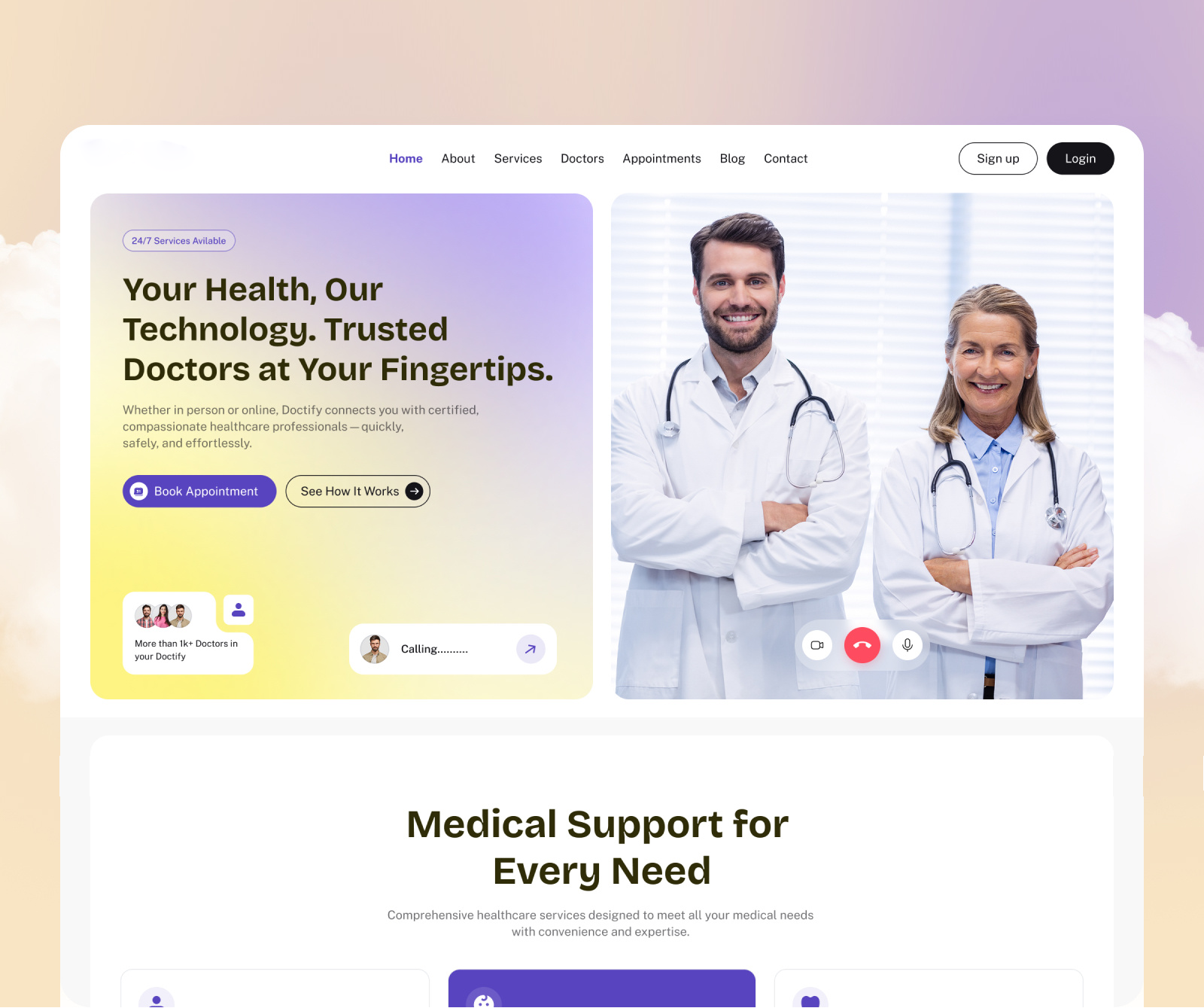
We built a full-stack AI platform with a lifelike AI Avatar Examiner using LangGraph + Gemini conversation engine, Google Cloud TTS with viseme lip-sync, Faster-Whisper ASR, and a 6-layer IELTS evaluation pipeline scoring all 4 criteria with ±0.5-1.0 band accuracy.
The Result
- 1,000+ concurrent users with 2–3s response latency
- 10x lower cost than human examiners
- 6-service AI microservice with model preloading
- No-code admin panel for rapid content updates
Health E Livin AI Wellness Platform
The Challenge
People struggling with mental health had no single platform to access trusted information, take confidential assessments, and find providers — all without stigma or privacy concerns.
Our Approach
We built HealtheLivin as an AI-powered mental wellness app with a conversational AI assistant, anonymous screenings, evidence-based resource library, and geolocation-based provider discovery — all on privacy-first cloud infrastructure.
The Result
- AI knowledgebase for natural language mental health support
- Confidential assessments with personalized wellness insights
- Location-based provider discovery for professional care
- Privacy-first architecture with encrypted data management
Today Fit Fitness App
The Challenge
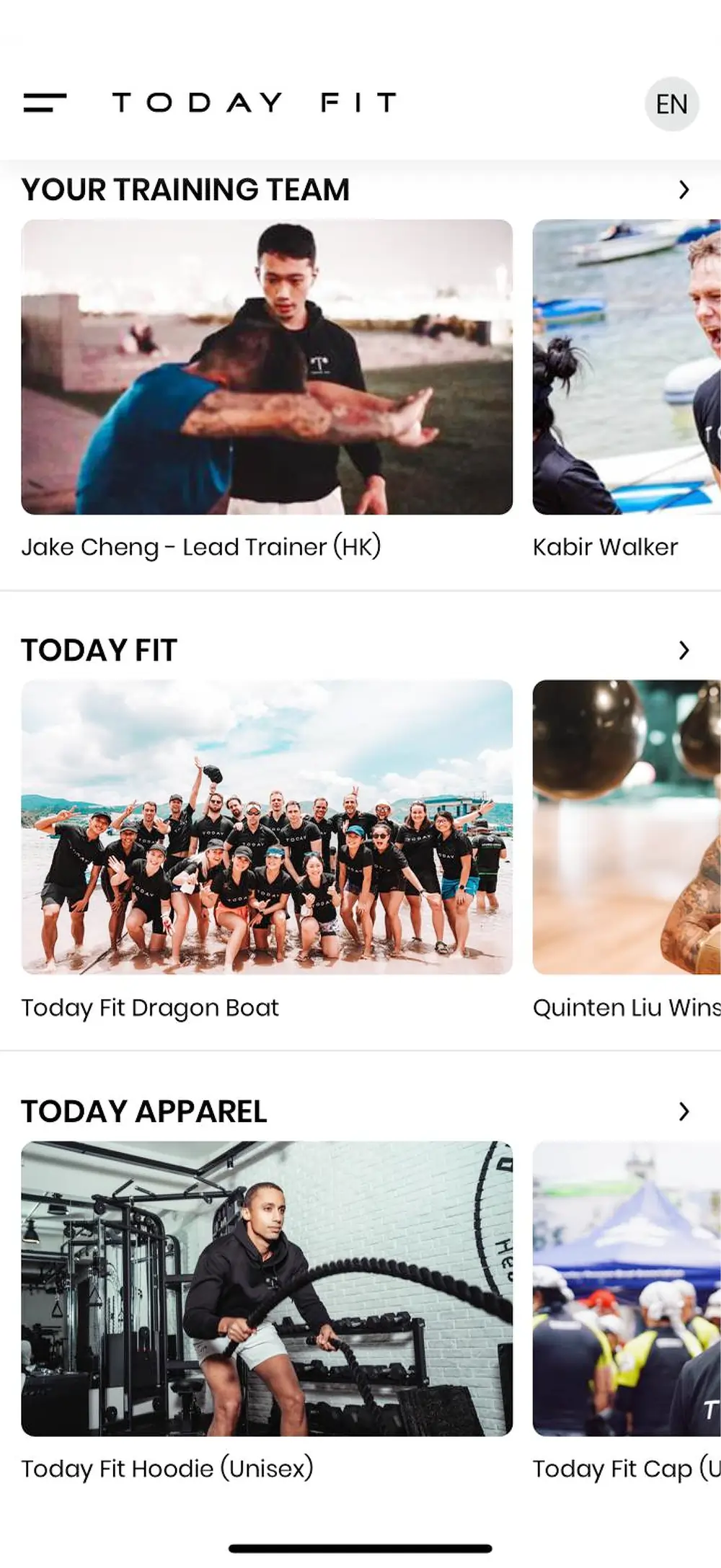
Gyms, trainers, and users were stuck with disconnected tools for scheduling, payments, and fitness tracking. There was no single platform that combined personalized fitness with business management.
Our Approach
We developed TodayFit as an AI-driven fitness platform with trainer booking, personalized tracking, community features, and a SaaS layer for gym and trainer business management.
The Result
- 30% increase in user engagement
- 4.7+ average rating on the App Store and Play Store
- 60% growth in trainer bookings
- 45% increase in subscription conversions

SmartVend AI Smart Vending Platform
The Challenge
Managing a distributed vending machine network meant manual inventory tracking, disconnected payment systems, no remote management capability, and zero real-time visibility into machine health or sales performance across locations.
Our Approach
We built SmartVend as a cloud-connected IoT platform combining an Android kiosk app, centralized web portal, real-time inventory sync, hardware integration for payments and dispensing, and a digital advertising layer — all managed from a single dashboard.
The Result
- Real-time inventory sync with low-stock alerts
- Remote machine management across unlimited locations
- IoT integration for payments, dispensing, and monitoring
- Centralized sales analytics and revenue reporting

Modernize Operations
Legacy processes often limit speed, visibility, and operational efficiency. AI modernizes enterprise operations by introducing intelligent automation, predictive analytics, and data-driven decision support that improve business performance, increase process consistency, and accelerate digital transformation initiatives.

Improve Business Visibility
AI brings together enterprise information from multiple business systems, creating a unified view of operations through intelligent dashboards, forecasts, and analytics. Enhanced visibility enables leaders to identify inefficiencies, monitor performance, and make faster, evidence-based decisions across the organization.

Enhance Customer Experiences
Modern customers expect faster, more personalized interactions across every touchpoint. AI helps enterprises analyze customer behavior, anticipate preferences, and deliver tailored recommendations, intelligent support, and responsive services that improve satisfaction, loyalty, and long-term customer relationships.
Optimize Resource Utilization
AI continuously evaluates operational workloads, resource availability, and business performance to identify opportunities for greater efficiency. Organizations can improve capacity planning, reduce waste, optimize asset utilization, and allocate resources more effectively across departments and business functions.

Enable Continuous Innovation
AI creates new opportunities for business innovation by uncovering operational improvements, supporting product development, and accelerating experimentation. Organizations can respond more effectively to changing market demands while introducing intelligent capabilities that strengthen long-term competitive advantage.

Build a Future-ready Enterprise
AI establishes a flexible technology foundation that supports evolving business priorities, growing operational complexity, and continuous digital transformation. Intelligent systems enable enterprises to adapt more quickly, scale efficiently, and remain competitive in rapidly changing business environments.
Our End-to-end AI development process for enterprise transformation
Every AI initiative follows a structured development process designed to reduce implementation complexity, maintain engineering quality, accelerate deployment, and ensure solutions integrate effectively with enterprise systems while supporting sustainable business growth and continuous improvement.
1
Assess
Our team studies your operations, data assets, and technology ecosystem to understand enterprise needs. The findings shape an AI strategy grounded in practical business priorities.
2
Architect
We design solution frameworks, integration plans, and scalable system architectures. Every design supports flexibility, interoperability, and future technology adoption.
3
Build
Our engineers develop custom AI solutions that align with your operational workflows. Quality assurance and technical validation are performed throughout the development lifecycle.
4
Enable
We deploy and integrate AI across enterprise applications, cloud platforms, and business processes. Knowledge transfer and user enablement support confident organizational adoption.
5
Optimize
Performance is continuously evaluated using monitoring, feedback, and operational insights. Ongoing refinements help sustain accuracy, reliability, and long-term business impact.
Our engagement models for AI development in India
We offer flexible engagement models for AI projects in India, tailored to your business needs. Whether you need a dedicated AI team for ongoing development or a fixed-scope project with defined deliverables, we provide options built around how your business works.

Fixed Price Model
Best for well-defined AI projects, this model ensures clear scope, budget predictability, and timely delivery without surprises.
- Upfront agreed cost and project scope
- Milestone-based progress tracking
- No hidden charges or overheads
- Reliable delivery timelines and outcomes
Most Popular

Dedicated Teams Model
Ideal for businesses seeking a long-term AI development partner, this model provides a dedicated team of AI engineers working exclusively on your project.
- Full control over team structure and workflows
- Highly scalable and cost-effective
- Direct communication with developers
- Increased focus and faster turnaround

Time & Material Model
Perfect for AI projects with dynamic requirements, this model offers agility, cost control, and adaptability to continuous innovation.
- Flexible billing based on actual efforts
- Adjust resources and scope anytime
- Ideal for iterative and evolving projects
- Faster implementation and continuous optimization
Client testimonials and reviews showcasing the value we consistently deliver
Explore how our clients describe their journey with us, reflecting strong collaboration, effective execution, and consistent outcomes delivered across engagements. See how our delivery framework ensures consistency from initiation through to successful completion.
❝
Parity AI
We came to Xicom with an ambitious goal: make institutional-grade financial planning accessible to everyone through AI. Xicom went beyond the brief, blending conversational AI and predictive analytics into an effortless platform. Parity AI is exactly what we envisioned.

❝
RadioFX
Xicom took the time to understand what our stations and listeners actually need, building something tailored rather than generic. Live chat and polls are now core to how we connect with our audience — the app has become a true extension of our on-air presence.


❝
StudyBuddy
Xicom built exactly what our students needed: a secure space to connect, collaborate, and find tutoring support in one place. Their understanding of student behavior shows in how naturally everything fits together — StudyBuddy is something students genuinely rely on.

❝
BoxxDocks
Xicom helped us bring BoxxDocks to life exactly as we envisioned it. Their team understood the complexity of AI powered real-time asset tracking and delivered a platform that's both powerful and genuinely easy to use.


❝
TodayFit
We are very happy with their services. I cannot recommend them highly enough. The value, ability, and delivery that we have seen has been superb, and we look forward to continuing this relationship.


❝
SmartVend AI
Their team built SmartVend from the ground up, combining hardware integration, real-time inventory sync, and a centralized dashboard that completely changed how we operate. We couldn't have asked for a more capable technical partner.

❝
Tap Retail
Partnering with Xicom to develop our Tap Retail app and website was one of the best decisions we made. Their team demonstrated exceptional professionalism, technical expertise, and a deep understanding of our business goals.


❝
GoGmGo
Partnering with Xicom was a game-changer for us. They didn't just build software, they helped us redefine how we run our business. Their proactive support and deep domain knowledge gave us the confidence to innovate faster.

❝
DENVEN
Working with Xicom has been a transformative experience. Their team quickly understood our challenges and delivered a scalable, intuitive solution. I highly recommend Xicom to any organization seeking future-ready, high-performance digital products.

Top tech insights of our blog
Explore latest tech stories & News
✦ AI-First Company
Deep Insights into Emerging Technology and Innovation!
Stay ahead in the digital world with our latest insights covering AI trends, industry developments, and expert advice on building smarter businesses.
1800+
Projects
20+
Years Experience
Frequently asked questions
What does Xicom do as an AI development company in India?
Xicom delivers AI consulting, generative AI development, AI design, AI software development, AI security solutions, and ongoing maintenance and support for Indian enterprises. Every engagement starts by mapping operational bottlenecks and data readiness before recommending an adoption path, so the AI solution fits how the business actually runs rather than a generic rollout plan.
Is Xicom's AI development compliant with Indian regulations?
Every AI system Xicom builds for Indian enterprises accounts for the Digital Personal Data Protection Act, 2023, CERT-In cybersecurity directions, and the IT Amendment Rules, 2026 on synthetically generated content — not retrofitted after build, but factored in from the data-readiness assessment stage onward, including data localization and cross-border transfer requirements under the DPDP Act.
How much does AI development cost with an India-based team?
AI development costs vary based on project scope, data complexity, and engagement model, a dedicated development team for ongoing work costs differently than a fixed-scope proof-of-concept. Xicom scopes each engagement after an initial consultation to match the model, whether staff augmentation, dedicated team, or project-based delivery, to the business outcome you're after.
How long does it take to build an AI solution with Xicom's India team?
Timelines depend on project scope and engagement model, typically a few weeks for a proof-of-concept and several months for a full enterprise rollout. Xicom's process moves through assessment, architecture, build, enablement, and optimization, with teams onboarded and operational within days once the engagement model is finalized.
What makes Xicom different from other AI development companies in India?
Xicom keeps business analysts and domain experts involved through the build rather than handing off a spec, builds AI components as reusable modules instead of one-off solutions, and assesses data readiness before writing any model code, catching gaps early instead of mid-project.
Can Xicom build AI security and fraud detection systems?
Xicom builds AI-powered security solutions including fraud detection systems, real-time transaction monitoring, and threat detection dashboards, with encryption, access controls, and continuous monitoring built in from the start.
Every award marks a milestone in our journey of excellence
As AI-first digital engineering company, Xicom has earned global recognition for delivering innovative, scalable, and high-performing technology solutions. Our awards reflect the trust of clients and industry leaders alike.