×

- 20+ Years in Business
- 350+ IT Experts
- 750+ Enterprise Clients
- CMMi Level 3 Certified
- ISO 9001:2015
- Top 1% on TrustPilot
-
 4.8 on Clutch
Our valued Brands & Agencies
















Our AI recommendation engine development services for personalized experiences
Our AI recommendation engine development services help enterprises turn user behavior, contextual signals, and business data into relevant recommendations. We design and develop systems that support personalization, ranking, discovery, and decision-making across ecommerce, content platforms, digital products, and other data-driven applications.

Strategy & Consulting
A recommendation engine needs to support a clear business purpose, whether that means improving product discovery, increasing content engagement, or helping users find relevant options. We examine business goals, user journeys, available data, existing systems, and measurable outcomes to define where recommendations can provide meaningful value across different enterprise applications and workflows.

Technical Solution Design
We design the technical foundation required to turn recommendation requirements into a working system. This includes data flows, recommendation approaches, model requirements, ranking logic, system architecture, integration points, and serving considerations. The resulting design provides a practical blueprint for developing a recommendation engine around the intended application and operating environment.

Recommendation Engine Development
We develop recommendation engines that use behavioral, contextual, transactional, and item-level information to determine what should be presented to each user. Depending on the application, the engine can incorporate collaborative filtering, content-based approaches, hybrid methods, or other techniques to generate relevant recommendations across different user and business scenarios.

Data Engineering
Recommendation systems require reliable data infrastructure to collect, process, organize, and deliver information efficiently. We design pipelines for handling catalogs, transactions, user records, event streams, and other data sources, considering data quality, processing frequency, scalability, and availability. This provides a dependable foundation for recommendation applications and their supporting components.

User Behavior Modeling
We model user preferences by examining how individuals interact with products, content, services, or digital experiences over time. We consider factors such as changing interests, repeated actions, preferences, and engagement patterns to develop representations of user affinity. These behavioral profiles can help recommendation systems distinguish individual preferences and deliver more personalized results.

System Integration
Recommendation engines need to operate within the applications and systems where users actually interact with them. We integrate recommendation capabilities with websites, mobile applications, ecommerce platforms, content systems, CRM environments, and other enterprise technologies, considering data exchange, APIs, authentication, response times, and the surrounding application architecture.

Ranking & Relevance Optimization
Producing a set of candidate items is only one part of recommendation. We refine how those candidates are ranked so that the most relevant options appear in appropriate positions. User behavior, item characteristics, context, business rules, and other signals can be considered to improve relevance and overall recommendation quality across different user segments and interaction scenarios.

Cold-start Solution Development
New users and newly introduced products or content often have little interaction history available for generating recommendations. We design approaches for these situations using information such as item attributes, contextual signals, user-provided preferences, popularity patterns, and other available data. This helps recommendation systems remain useful even when behavioral history is limited.

Testing & Validation
We evaluate recommendation systems using both technical and business-oriented measures. Testing can examine relevance, ranking quality, coverage, diversity, response time, and behavior across different user groups or scenarios. Controlled evaluations and real-world feedback provide a clearer understanding of how the system performs and where further refinement may be needed.

Performance Optimization
Recommendation engines must balance relevance with speed, scale, and resource requirements. We examine model performance, data processing, retrieval, ranking, response times, and system behavior under varying workloads. The findings help identify opportunities to improve efficiency and recommendation quality while keeping the system responsive as data volumes and usage increase.

Product Recommendation Engines
Our solutions analyze browsing behavior, purchase history, product attributes, and interaction patterns to identify relevant products. The system can support complementary suggestions, alternatives, personalized product discovery, and shopping journeys. We consider catalog structure, behavioral signals, ranking requirements, and application context when shaping the experience.

Content Recommendation Engines
We build content recommendation engines that help users discover articles, courses, resources, or other information relevant to their interests. We work with content attributes, reading behavior, engagement patterns, and contextual signals to determine what should be surfaced. The approach can adapt as users interact with and consume different types of content.

Media Recommendation Engines
We develop recommendation engines for media platforms that help users discover videos, music, podcasts, and other content. We consider viewing or listening history, engagement, content characteristics, session behavior, and changing preferences to determine relevant suggestions. The system can support discovery while accounting for continuously changing content libraries.

Job Recommendation Engines
We develop job recommendation engines that connect candidates with relevant opportunities based on skills, experience, preferences, job requirements, and interaction history. We work with structured and unstructured information from profiles and job listings, considering similarities and contextual factors to improve matching between candidates and available positions.

Travel Recommendation Engines
We build travel recommendation engines that help users identify destinations, accommodations, activities, and travel options suited to their preferences. Recommendations can consider previous searches, budgets, locations, interests, and contextual information. We account for changing availability and user requirements when designing systems for travel discovery and planning experiences.

Financial Recommendation Engines
We develop financial recommendation engines that help present relevant products, services, information, or actions based on available customer and contextual data. Depending on the application, systems can consider financial profiles, interaction history, preferences, eligibility criteria, and business rules while incorporating appropriate controls around data handling and recommendation logic.
Custom AI recommendation engines for every industry we serve
At Xicom, we build intelligent AI recommendation engines tailored to industry-specific data, customer journeys, and business workflows, helping organizations deliver personalized experiences, improve engagement, and make smarter recommendations at every stage of the customer lifecycle.

Banking & Finance
Personalized Banking Products, Next-Best Financial Products, Investment Suggestions, Credit Card & Loan Offers, Financial Content Personalization

Education
Personalized Course Discovery, Adaptive Learning Paths, Learning Resource Suggestions, Skill-Based Course Matching, Certification Suggestions

Healthcare
Personalized Health Content, Healthcare Provider Matching, Wellness Suggestions, Care Option Matching, Next-Best Care Actions

Retail
Personalized Product Discovery, Similar Product Suggestions, Frequently Bought Together, Personalized Offers & Discounts, Next-Best Product Selection

Logistics
Optimal Route Suggestions, Carrier Selection, Delivery Option Matching, Warehouse Allocation, Fleet Resource Planning

Travel & Tourism
Personalized Destinations, Hotel & Accommodation Suggestions, Activity & Attraction Discovery, Travel Package Personalization, Next-Best Travel Offers

Automotive
Personalized Vehicle Discovery, Vehicle Configuration Suggestions, Service & Maintenance Suggestions, Parts & Accessories Matching, Dealership Offer Personalization

Real Estate
Personalized Property Discovery, Buyer-Property Matching, Rental Property Suggestions, Neighborhood Matching, Investment Property Discovery

Entertainment
Personalized Movie & Show Discovery, Music Recommendations, Content Discovery, Game Suggestions, Event & Ticket Discovery

Manufacturing
Predictive Maintenance Suggestions, Spare Parts Matching, Equipment Configuration, Supplier Matching, Production Planning Suggestions

Insurance
Personalized Insurance Products, Coverage Suggestions, Policy Upgrade Opportunities, Add-On Coverage Matching, Next-Best Customer Actions

LET’S BUILD TOGETHER
Ready to Build an Intelligent AI Recommendation Engine?
Turn your business data into personalized, context-aware recommendations that improve customer experiences, increase engagement, and drive better business outcomes.
AI Solutions Engineered for Enterprise Scale
150+
AI Engineers & Data Scientists
300+
AI Solutions Delivered
ISO 9001 Certified
NASSCOM & STPI Accreditation
NASSCOM & STPI Accreditation
100+
AI Models in Production
30+
Industries Served

Collaborative Filtering
We work with collaborative filtering approaches that identify patterns across user interactions to determine potential preferences. Depending on the application, this can involve user-based, item-based, or interaction-based methods. We consider data volume, interaction sparsity, and behavioral patterns when shaping the approach for different recommendation scenarios and enterprise environments.
Content-based Filtering
We use content-based approaches where the characteristics of products, content, or services provide important signals for recommendations. Item attributes, descriptions, categories, and other available information can be used to identify similar options. This approach is particularly useful when item information is detailed or user interaction history is limited or unavailable altogether.

Hybrid Recommendation Algorithms
We combine multiple recommendation approaches when relying on a single method would leave important signals unused. Collaborative behavior, item characteristics, contextual information, and other inputs can be brought together to improve recommendation quality. The combination is shaped around the available data, application requirements, and behavior of the recommendation environment.

Matrix Factorization
We apply matrix factorization techniques to identify underlying relationships within user-item interaction data. By representing users and items through latent factors, these methods can uncover preference patterns that are difficult to observe directly. They remain useful for large interaction datasets where identifying meaningful relationships between users and items is important.
Deep Learning
We use deep learning approaches when recommendation problems involve complex behavioral patterns, high-dimensional data, or multiple interacting signals. Neural models can learn representations from user activity, item information, and contextual inputs. The architecture and training approach are selected according to the complexity of the recommendation task and available data.
Embeddings
We use embeddings to represent users, products, content, and other entities as numerical vectors that capture meaningful relationships. These representations can support similarity-based recommendations and retrieval across large datasets. Depending on the application, embeddings can incorporate behavioral, textual, or contextual info to improve how relevant items are identified.

Vector Similarity Search
We use vector similarity search to identify items that are closely related to a user, product, query, or other reference point. By comparing vector representations, the system can retrieve semantically or behaviorally similar options without relying entirely on exact attribute matches, supporting efficient recommendation and discovery across large and continuously changing enterprise collections.

Learning-to-rank
We use learning-to-rank techniques to determine how candidate recommendations should be ordered for individual users or contexts. Models can learn from interaction outcomes and ranking signals to distinguish more relevant options from less useful ones. This helps recommendation systems improve the position and visibility of items most likely to matter.

Knowledge Graphs
We use knowledge graphs when relationships between users, products, content, categories, and other entities provide valuable recommendation signals. Representing these connections explicitly can help identify related or complementary options and support recommendations where understanding relationships is important, particularly across complex product catalogs, or interconnected enterprise information.

Context-aware Recommendation
We incorporate contextual signals when recommendations need to reflect the circumstances surrounding an interaction. Factors such as time, location, device, session activity, current intent, or recent behavior can influence what is relevant. Context-aware approaches allow recommendation systems to respond to changing situations rather than relying exclusively on long-term user preferences.
Case studies showcasing the value delivered to clients through our solutions
Explore how we partner with clients across industries to deliver tailored AI solutions that improve efficiency, enhance customer experiences, reduce costs, and drive long-term value.
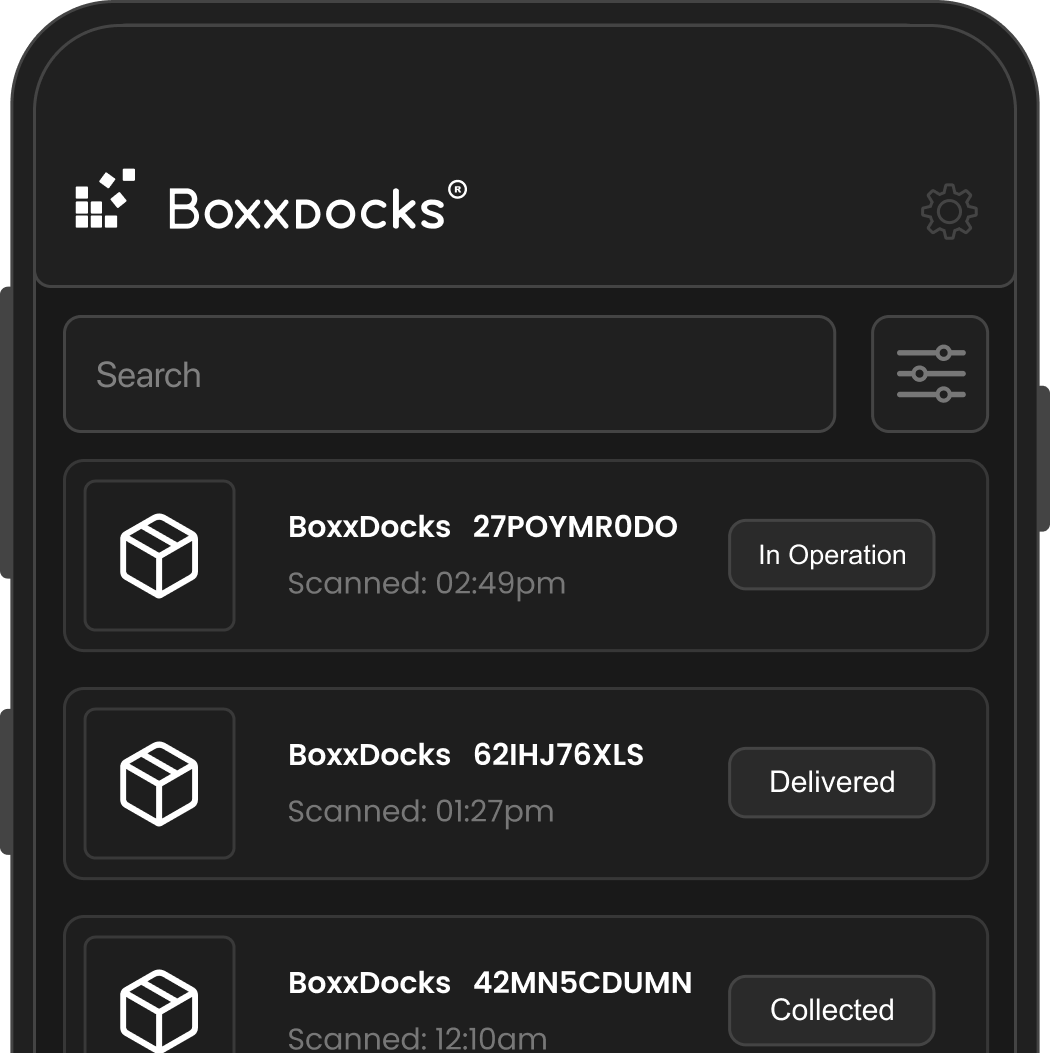
BoxxDocks AI Asset Tracking Platform
The Challenge
Asset tracking was manual, error-prone, and scattered across disconnected systems. The client had no centralized visibility into asset movement, no real-time location data, and no way to generate instant reports across multiple enterprise clients from a single platform.
Our Approach
We built BoxxDocks as an AI-enabled asset lifecycle platform using QR/NFC scanning, real-time dashboards, geolocation tracking, and a RAG-powered conversational engine that lets users query live operational data in plain English instead of navigating dashboards.
The Result
- Real-time inventory tracking across warehouses, transit, and delivery
- AI query engine for natural language insights
- LLM-powered reporting with anomaly detection
- Complete audit trail with location, timestamp, and status
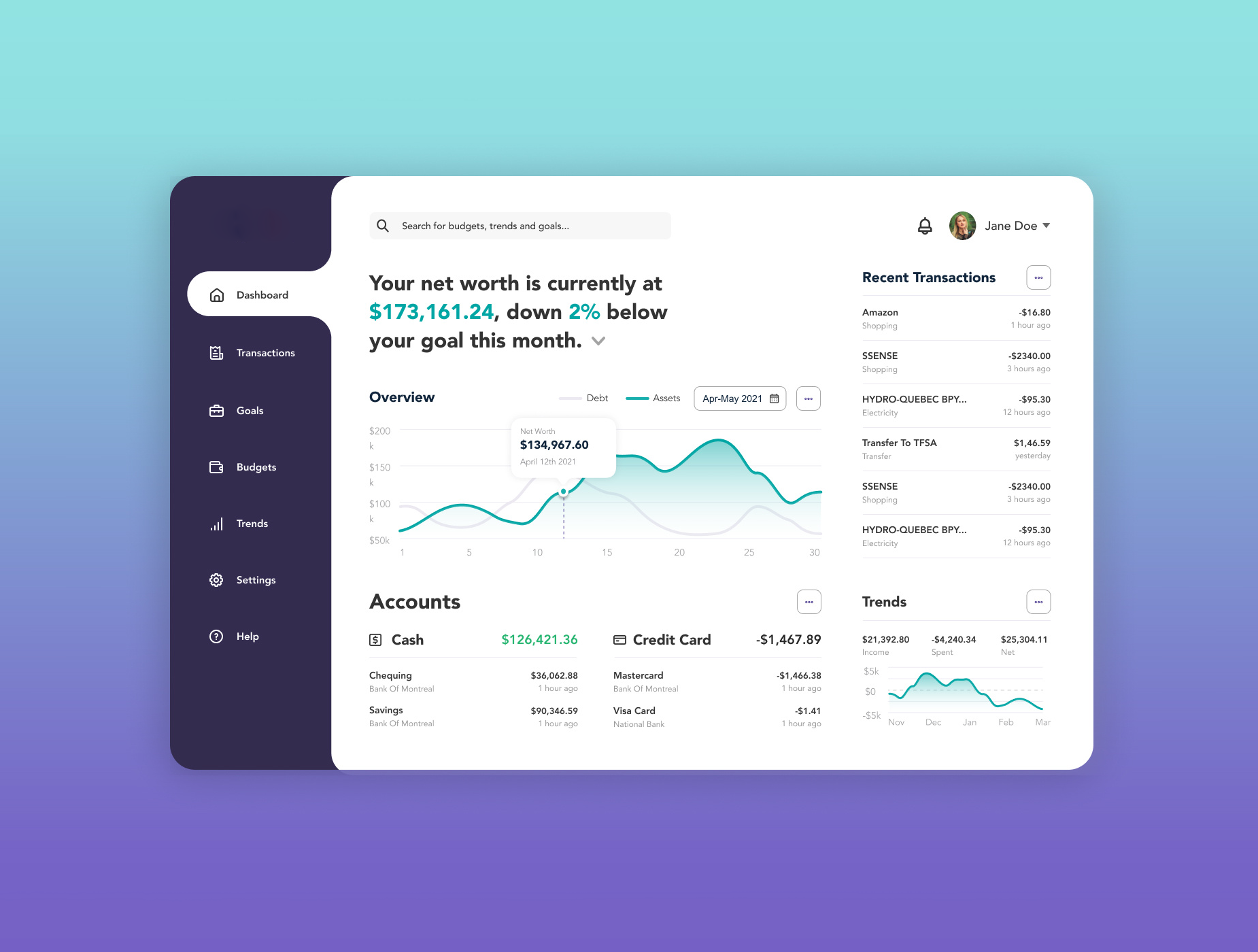
Parity AI AI Finance Platform
The Challenge
Personalized financial advice was expensive and limited to periodic meetings. Users had no way to consolidate banking, investments, debt, and insurance into one platform with real-time, AI-driven guidance.
Our Approach
We built Parity AI as an always-on financial wellness platform powered by AI. It securely pulls data from multiple sources, analyzes user behavior, forecasts outcomes, and delivers personalized recommendations — acting as a digital financial advisor, not a budgeting app.
The Result
- AI-powered financial planning across banking, investments, and debt
- Personalized recommendations based on life events and behavior
- Integrated financial education with actionable insights
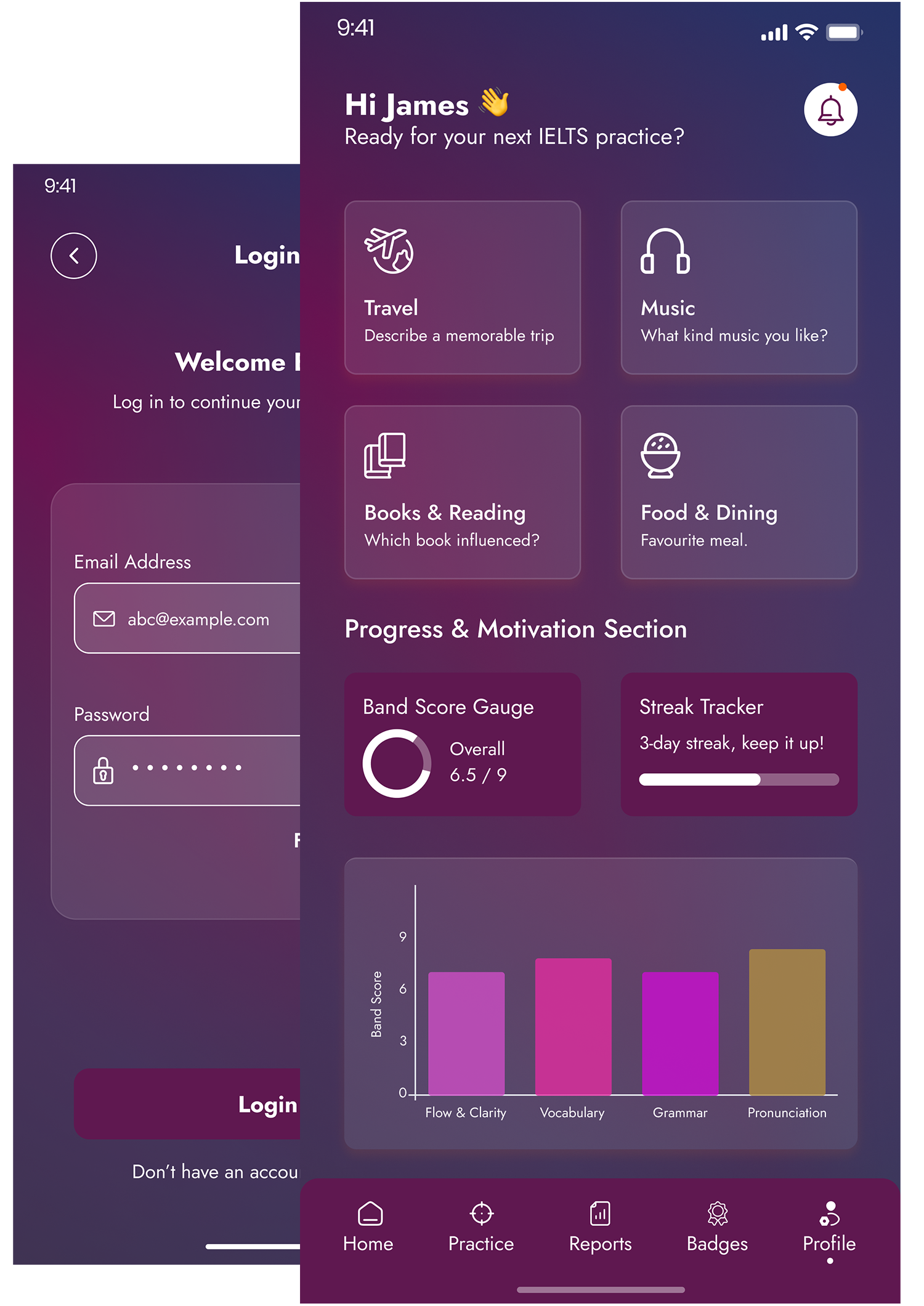
IELTS AI-Powered Speaking Evaluator
The Challenge
Human IELTS tutors cost $30-$80/hour with limited availability. Generic speaking apps lack authentic Part 1/2/3 exam structure, pronunciation feedback, and band-aligned scoring rubrics. Learners had no way to get unlimited, exam-authentic practice at scale.
Our Approach
We built a full-stack AI platform with a lifelike AI Avatar Examiner using LangGraph + Gemini conversation engine, Google Cloud TTS with viseme lip-sync, Faster-Whisper ASR, and a 6-layer IELTS evaluation pipeline scoring all 4 criteria with ±0.5-1.0 band accuracy.
The Result
- 1,000+ concurrent users with 2–3s response latency
- 10x lower cost than human examiners
- 6-service AI microservice with model preloading
- No-code admin panel for rapid content updates
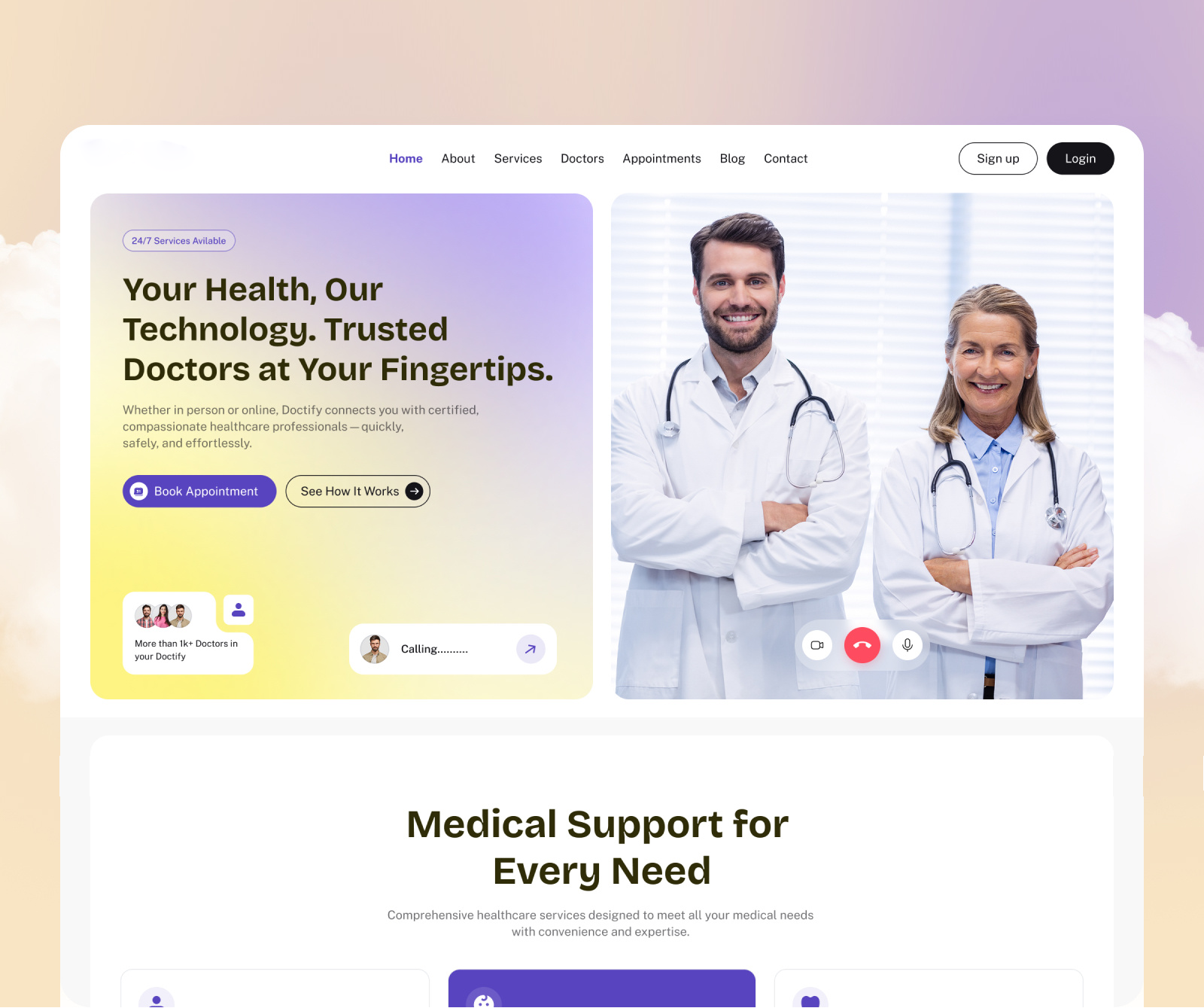
Health E Livin AI Wellness Platform
The Challenge
People struggling with mental health had no single platform to access trusted information, take confidential assessments, and find providers — all without stigma or privacy concerns.
Our Approach
We built HealtheLivin as an AI-powered mental wellness app with a conversational AI assistant, anonymous screenings, evidence-based resource library, and geolocation-based provider discovery — all on privacy-first cloud infrastructure.
The Result
- AI knowledgebase for natural language mental health support
- Confidential assessments with personalized wellness insights
- Location-based provider discovery for professional care
- Privacy-first architecture with encrypted data management
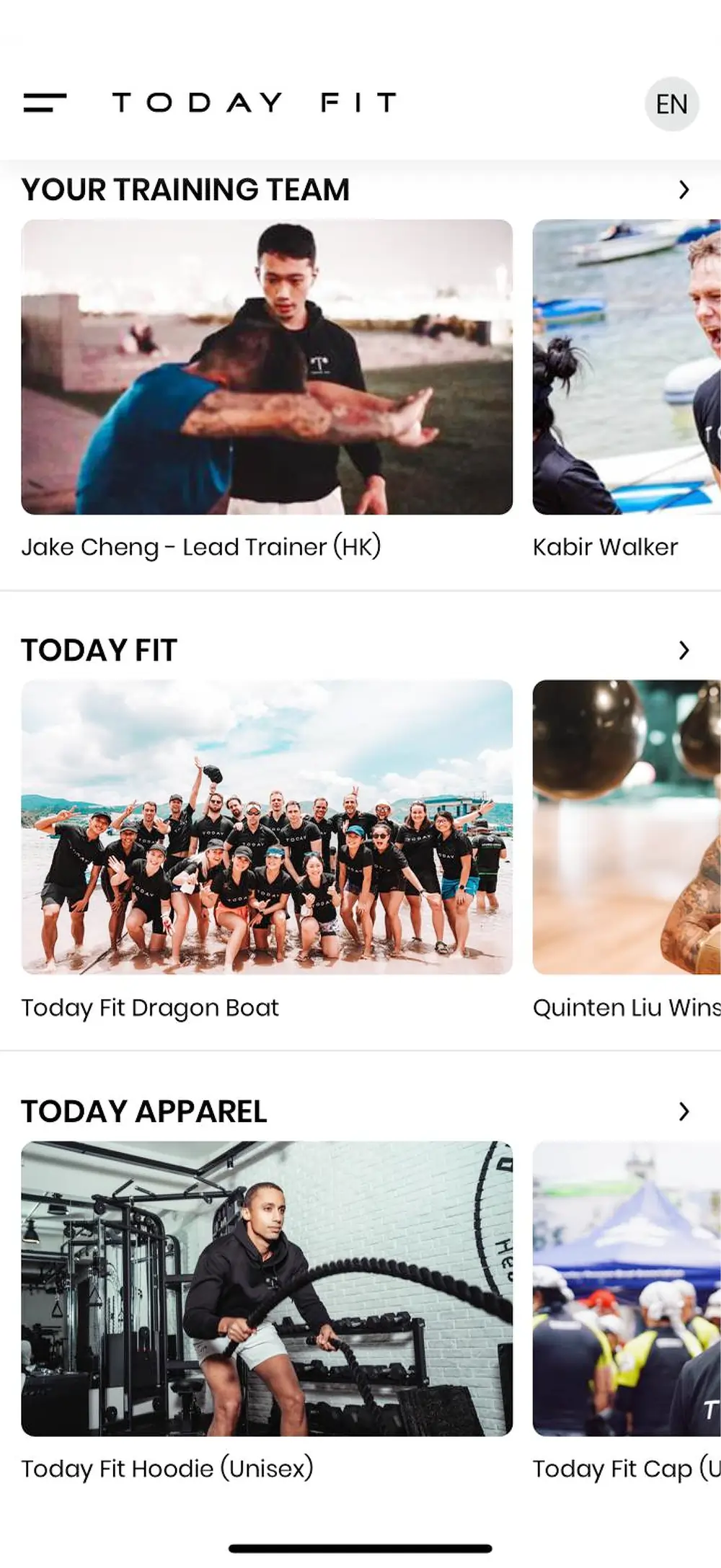
Today Fit Fitness App
The Challenge
Gyms, trainers, and users were stuck with disconnected tools for scheduling, payments, and fitness tracking. There was no single platform that combined personalized fitness with business management.
Our Approach
We developed TodayFit as an AI-driven fitness platform with trainer booking, personalized tracking, community features, and a SaaS layer for gym and trainer business management.
The Result
- 30% increase in user engagement
- 4.7+ average rating on the App Store and Play Store
- 60% growth in trainer bookings
- 45% increase in subscription conversions
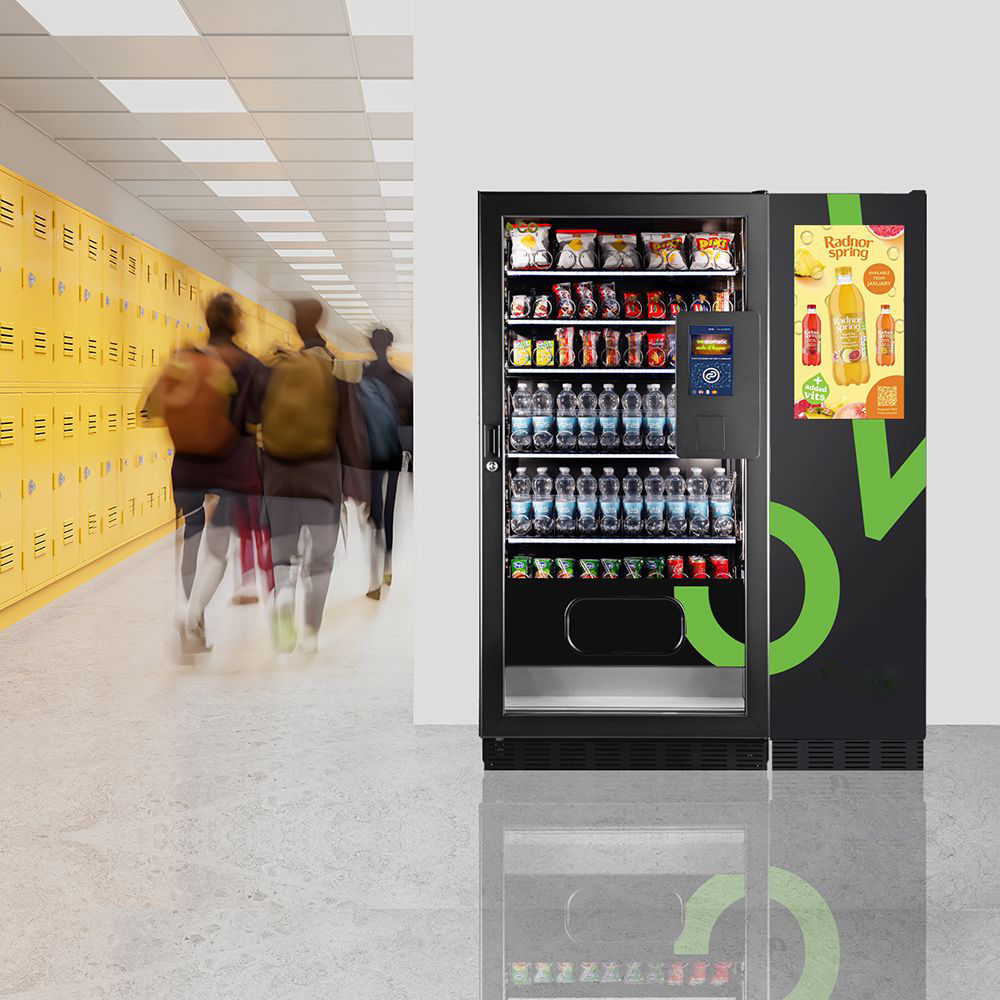
SmartVend AI Smart Vending Platform
The Challenge
Managing a distributed vending machine network meant manual inventory tracking, disconnected payment systems, no remote management capability, and zero real-time visibility into machine health or sales performance across locations.
Our Approach
We built SmartVend as a cloud-connected IoT platform combining an Android kiosk app, centralized web portal, real-time inventory sync, hardware integration for payments and dispensing, and a digital advertising layer — all managed from a single dashboard.
The Result
- Real-time inventory sync with low-stock alerts
- Remote machine management across unlimited locations
- IoT integration for payments, dispensing, and monitoring
- Centralized sales analytics and revenue reporting
AI recommendation engine technologies we use
From the ranking models that power personalization to the pipelines that manage real-time features and the infrastructure that keeps recommendations fast and accurate here's the stack we rely on to build recommendation engines that hold up in production.
 TensorFlow
 PyTorch
 Scikit-learn
 Keras
Keras XGBoost
 NVIDIA
 RecBole
 Apache Spark
 Apache Kafka
 Databricks
 Pandas
 Apache Airflow
 Pinecone
 Weaviate
 Redis
Redis Elasticsearch
 PostgreSQL
 MLflow
  Kubeflow
 Docker
 Kubernetes
  Evidently AI
 AWS
AWS Azure
Azure Google Cloud Platform
 Google Vertex AI
 Amazon SageMaker
Business-focused Design
Recommendations work best when they serve a clear purpose within the product or business experience. We examine user journeys, business objectives, available signals, and desired outcomes before shaping the solution. This helps determine what should be recommended, where recommendations belong, and which factors should influence their relevance.
Strong Data Understanding
Recommendation systems depend on behavioral and contextual information that can vary considerably across applications. We work with interaction data, transaction history, product attributes, content information, user profiles, and other relevant signals. This helps establish the data foundations needed to understand preferences and produce useful recommendations across different scenarios.

Multiple Recommendation Approaches
No single recommendation technique works equally well for every application. We work across collaborative filtering, content-based methods, hybrid approaches, similarity-based techniques, and contextual signals, selecting combinations according to the available data and recommendation requirements. This allows the system to adapt to different products, users, datasets, and operating conditions.
Relevance Beyond Popularity
Popular items are not necessarily the most useful recommendations for an individual user. We consider behavioral patterns, item characteristics, context, recency, and other relevant signals when shaping ranking and relevance. This supports recommendation experiences that reflect individual interests rather than relying solely on broad popularity or historical performance.
Practical System Integration
Recommendation engines need to work within the applications and workflows where users already interact with products or content. We consider existing platforms, data sources, APIs, databases, and application architecture when designing the solution, helping recommendations become part of the broader digital experience rather than operating as a separate capability.
Continuous Performance Improvement
Recommendation quality can change as user behavior, product catalogs, content, and business conditions evolve. We examine engagement patterns, ranking performance, recommendation coverage, response times, and other relevant measures to identify areas for refinement. This creates opportunities to adjust models, data signals, and ranking logic as the system gains real-world usage.
Our comprehensive AI recommendation engine development process
We follow a structured process that moves from understanding the recommendation problem and preparing relevant data to solution design, development, validation, and refinement. Each stage considers user behavior, business requirements, data characteristics, system performance, and the environment in which recommendations will operate.
1
Discovery
We define the recommendation objectives, target users, available data, business requirements, and expected outcomes to understand what the system needs to achieve.
2
Data Preparation
We collect, assess, clean, structure, and transform behavioral, transactional, contextual, and item-level data required to develop and evaluate the recommendation system.
3
Solution Design
We determine the recommendation approach, system architecture, ranking logic, integration points, and processing requirements based on the application and available data.
4
Development
We develop the recommendation engine and evaluate its relevance, accuracy, coverage, response time, and behavior across representative users, items, and interaction scenarios.
5
Deployment
Following validation, we integrate the system into the target environment, monitor its performance, and refine models, data signals, and ranking logic as requirements evolve.

Relevant User Experiences
Recommendation engines can help users find products, content, services, or information that match their interests and current context. By using behavioral and contextual signals, enterprises can reduce the effort involved in finding relevant options and create digital experiences that feel more useful without requiring users to search through large volumes of available choices.

Improved Product Discovery
Large catalogs can make it difficult for users to identify suitable products or content. Recommendation engines can surface relevant options based on previous interactions, item characteristics, and contextual signals. This creates additional paths to discovery and helps enterprises make more of their available products, services, or content visible to users.

Higher User Engagement
Relevant recommendations can encourage users to explore additional products, content, or features within a digital experience. By adapting suggestions to individual interests and interaction patterns, enterprises can create more opportunities for continued engagement. This can support metrics such as content consumption, session activity, product interaction, and repeat visits across different apps.

Better Conversion Opportunities
Recommendation engines can help present relevant options at points where users are already making decisions. Product suggestions, personalized content, and context-aware recommendations can influence what users consider next. When recommendations align with actual interests and intent, they can create additional opportunities for purchases, subscriptions, upgrades, or other desired actions.

Greater Use of Available Data
Enterprises often collect substantial amounts of information about user interactions, transactions, products, content, and digital activity. Recommendation engines provide a practical way to use these signals within customer and product experiences. Instead of leaving behavioral data isolated in analytical systems, organizations can apply it directly to real-time user interactions and decisions.

Scalable Personalization
Personalizing experiences manually becomes difficult as the number of users, products, and interactions increases. Recommendation engines provide a way to apply personalization across larger user populations using consistent decision logic and available data. This allows enterprises to deliver more tailored experiences without requiring individual recommendations to be created manually.
Our engagement models for AI recommendation engine development
We offer flexible engagement models for building AI recommendation engines fixed-price for one clearly scoped recommendation engine or personalization module, or pay-as-you-go while you figure out how much of your customer experience actually needs a recommendation layer matched to your workflow, not a generic package.

Fixed Price Model
Best for a recommendation engine with a clearly defined scope, this model locks in cost, timeline, and deliverables before work begins.
- Upfront agreed cost and project scope
- Milestone-based progress tracking
- No hidden charges or overheads
- Reliable delivery timelines and outcomes
Most Popular

Dedicated Teams Model
Ideal for businesses scaling personalization across multiple products, this model provides a dedicated team of AI engineers working exclusively on your recommendation systems.
- Full control over team structure and workflows
- Highly scalable and cost-effective
- Direct communication with developers
- Increased focus and faster turnaround

Time & Material Model
Perfect for recommendation engine projects with evolving data and algorithms, this model offers agility, cost control, and adaptability to continuous innovation.
- Flexible billing based on actual efforts
- Adjust resources and scope anytime
- Ideal for iterative and evolving projects
- Faster implementation and continuous optimization
Compliance we follow AI recommendation engine development
Every recommendation an AI engine makes carries sensitive signals purchase history, browsing behavior, personal preferences so security and privacy can't be an afterthought. We embed access controls, data protection, and frameworks like GDPR, CCPA, and the EU AI Act directly into the recommendation pipeline, backed by AI governance standards that keep model behavior transparent and accountable.










Client testimonials and reviews showcasing the value we consistently deliver
Explore how our clients describe their journey with us, reflecting strong collaboration, effective execution, and consistent outcomes delivered across engagements. See how our delivery framework ensures consistency from initiation through to successful completion.
❝
Parity AI
We came to Xicom with an ambitious goal: make institutional-grade financial planning accessible to everyone through AI. Xicom went beyond the brief, blending conversational AI and predictive analytics into an effortless platform. Parity AI is exactly what we envisioned.

❝
RadioFX
Xicom took the time to understand what our stations and listeners actually need, building something tailored rather than generic. Live chat and polls are now core to how we connect with our audience — the app has become a true extension of our on-air presence.


❝
StudyBuddy
Xicom built exactly what our students needed: a secure space to connect, collaborate, and find tutoring support in one place. Their understanding of student behavior shows in how naturally everything fits together — StudyBuddy is something students genuinely rely on.

❝
BoxxDocks
Xicom helped us bring BoxxDocks to life exactly as we envisioned it. Their team understood the complexity of AI powered real-time asset tracking and delivered a platform that's both powerful and genuinely easy to use.


❝
TodayFit
We are very happy with their services. I cannot recommend them highly enough. The value, ability, and delivery that we have seen has been superb, and we look forward to continuing this relationship.


❝
SmartVend AI
Their team built SmartVend from the ground up, combining hardware integration, real-time inventory sync, and a centralized dashboard that completely changed how we operate. We couldn't have asked for a more capable technical partner.

❝
Tap Retail
Partnering with Xicom to develop our Tap Retail app and website was one of the best decisions we made. Their team demonstrated exceptional professionalism, technical expertise, and a deep understanding of our business goals.


❝
GoGmGo
Partnering with Xicom was a game-changer for us. They didn't just build software, they helped us redefine how we run our business. Their proactive support and deep domain knowledge gave us the confidence to innovate faster.

❝
DENVEN
Working with Xicom has been a transformative experience. Their team quickly understood our challenges and delivered a scalable, intuitive solution. I highly recommend Xicom to any organization seeking future-ready, high-performance digital products.

Top tech insights of our blog
Explore latest tech stories & News
✦ AI-First Company
Deep Insights into Emerging Technology and Innovation!
Stay ahead in the digital world with our latest insights covering AI trends, industry developments, and expert advice on building smarter businesses.
1800+
Projects
20+
Years Experience
Frequently asked questions
What is an AI recommendation engine?
An AI recommendation engine is a system that analyzes user behavior, purchase history, and preferences to predict which products, content, or services a specific user is most likely to want next. It powers features like "customers also bought," personalized feeds, and dynamic content ranking.
How does an AI recommendation engine work?
It feeds user and item data through models such as collaborative filtering, content-based filtering, or a hybrid of both, then ranks possible recommendations by predicted relevance. The model retrains continuously as new behavior data comes in, so recommendations improve over time rather than staying static.
How much does it cost to build a custom AI recommendation engine?
Cost depends heavily on scope. A single, well-defined module, like "customers also bought" on one product page, is a fixed-price project on the smaller end. A full hybrid system with real-time serving and continuous retraining costs significantly more. The right way to size it is against your catalog size and data maturity, not a flat number.
How long does it take to build a recommendation engine?
A scoped, single-purpose recommendation module typically launches in 6–10 weeks. A full production system, including data pipeline setup, model training, and A/B testing, usually takes 3–6 months from kickoff to live traffic, longer if your data isn't yet centralized.
Should I build a custom recommendation engine or use an off-the-shelf tool?
If your catalog is standard and recommendations aren't yet revenue-critical, a platform-native or SaaS tool is usually enough. Custom development earns its cost once you need data ownership, have a non-standard catalog, or recommendations are already moving meaningful revenue, that's the point where the added investment pays back.
Which recommendation algorithm is best — collaborative filtering, content-based, or hybrid?
It depends on your data. Collaborative filtering performs well once you have dense user-item interaction history; content-based filtering handles new products better since it doesn't need prior interactions; hybrid models combine both and are the most common choice in production because they balance accuracy with cold-start resilience.
How do you handle the cold start problem for new users or products?
Cold start is handled by leaning on content-based signals, item attributes, category, metadata, until enough interaction data accumulates, backed by session-based and popularity-based fallbacks for first-time visitors. A well-built engine blends these so recommendations stay useful from day one instead of only after months of data collection.
Can a recommendation engine integrate with my existing platform?
Yes. Recommendation engines are typically built to integrate via API with existing e-commerce platforms (Shopify, Magento, custom stacks), CMSs, or mobile apps, so recommendations can appear on product pages, checkout, email, or in-app feeds without replacing your existing system.
How do you measure the ROI of a recommendation engine?
The reliable method is a randomized holdout test: route a small share of traffic to see no recommendations, then compare revenue-per-user against the group that does. This isolates true incremental lift, since customers who click recommendations were often high-intent buyers who would have converted anyway.
Every award marks a milestone in our journey of excellence
As AI-first digital engineering company, Xicom has earned global recognition for delivering innovative, scalable, and high-performing technology solutions. Our awards reflect the trust of clients and industry leaders alike.