×
Hire IoT Developers in India
20+Years Exp.
750+Clients
1800+Projects
65%Cost Saved
 ISO 9001 Certified
NASSCOM Member
NDA Protected
48hr Onboarding
ISO 9001 Certified
NASSCOM Member
NDA Protected
48hr Onboarding
Our valued Brands & Agencies
















Hire our IoT developers for services designed for enterprise applications
Our IoT developers provide engineering services across the connected-system lifecycle, from architecture and device connectivity to integration, testing, and ongoing support. They align IoT components with existing infrastructure and operational requirements to help organizations build connected applications that can collect, process, and act on device-generated data.

IoT Consulting
Our IoT developers assess your connected-device requirements, operational workflows, infrastructure, and business objectives to define an appropriate IoT approach. They help identify suitable devices, connectivity methods, data architectures, platforms, integration requirements, and security considerations while establishing a technical direction aligned with your intended IoT application.

IoT Technical Design
Our developers design IoT architectures covering devices, sensors, gateways, connectivity layers, data processing, cloud infrastructure, APIs, applications, and security controls. They define how these components communicate and exchange data, establishing technical workflows that support the required scale, reliability, processing requirements, and operational environment.

IoT Solution Development
Our IoT developers build connected solutions that collect, transmit, process, and analyze data from devices and sensors. They develop device-side software, communication workflows, backend components, APIs, dashboards, and application features according to project requirements, creating the technical foundation required for secure, scalable, and reliable connected enterprise operations.

IoT Testing & Evaluation
Our developers test IoT systems across devices, connectivity layers, data flows, applications, and backend infrastructure. They evaluate communication reliability, device behavior, data accuracy, system performance, and failure conditions to identify issues that could affect connected operations and address them before stable and reliable production deployment across connected enterprise environments.

IoT System Integration
Our developers integrate IoT devices and platforms with enterprise applications, cloud infrastructure, databases, APIs, business systems, and operational technologies. They establish communication between connected components and existing systems, enabling device-generated information to move into the applications and workflows where organizations need to use it.

IoT Maintenance & Support
Our IoT developers provide ongoing support for connected systems after deployment. They address device connectivity issues, software updates, integration changes, data-flow problems, performance requirements, and evolving application needs while helping maintain the functionality of connected devices and the systems that depend on their data across changing operational environments over time.

Industrial IoT Solutions
Our developers build IoT solutions that connect industrial equipment, machines, sensors, and operational systems to collect and exchange real-time data. These solutions can support equipment monitoring, production visibility, process analysis, condition tracking, and other industrial workflows where connected assets generate information required for operational management.
Predictive Maintenance Solutions
Our IoT developers connect equipment and sensors to collect operational parameters such as temperature, vibration, pressure, usage, and machine status. These solutions provide structured equipment data that can be analyzed to identify changing operating conditions and support maintenance planning before equipment issues result in unexpected downtime, production losses, or costly operational disruption.

Asset Tracking Solutions
Our developers build connected asset-tracking solutions that use devices, sensors, positioning technologies, and communication networks to monitor the location and status of physical assets. These systems can provide organizations with visibility into asset movement, utilization, availability, and location across distributed facilities, transportation networks, and operational environments.

Fleet Management Solutions
Our IoT developers connect vehicles and fleet assets to collect information related to location, movement, usage, vehicle conditions, and operating behavior. These solutions provide centralized visibility into distributed fleets and can support route analysis, asset utilization, maintenance planning, driver monitoring, and real-time fleet performance tracking across multiple vehicles.

Smart Building Solutions
Our developers build IoT systems that connect building equipment, environmental sensors, access systems, lighting, HVAC components, and other facility infrastructure. These solutions collect information about building conditions and equipment operation, supporting centralized monitoring, automated controls, resource management, and facility operations across connected buildings.

Remote Monitoring Solutions
Our IoT developers build solutions for remotely monitoring equipment, assets, environments, and physical processes through connected sensors and devices. These systems collect information continuously and make it available through applications or dashboards, helping operational teams observe distributed assets without requiring physical inspection at every location.
Hire dedicated IoT developers to design, build, and scale connected device solutions
Build secure, reliable IoT solutions with experienced IoT developers who bring hands-on expertise in embedded systems, sensor integration, device firmware, edge computing, cloud IoT platforms, and real-time data pipelines to turn connected devices and the data they generate into measurable business outcomes.
| Range of Developers | Junior Developers | Mid-Level Developers | Senior Developers |
|---|---|---|---|
| Hourly Rate | $25/hr | $35/hr | $45/hr |
| Years of Experience | 1–3 Years | 3–5 Years | 5+ Years |
| Project Manager Support | Yes | Yes | Yes |
| Time Zone Flexibility | Available | Available | Available |
| Quality Assurance | Included | Included | Included |
| Working Hours | 40 hours/Week | 40 hours/Week | 40 hours/Week |
Accelerating enterprise transformation through AI and digital engineering.
20+
Years in Business
350+
IT Professionals
ISO 9001 Certified
NASSCOM & STPI Accreditation
NASSCOM & STPI Accreditation
750+
Clients Worldwide
1800+
Projects Executed
Industry-specific IoT solutions engineered for real-world impact
Xicom's IoT developers combine embedded engineering, cloud architecture, and sector expertise to build connected solutions for manufacturing, logistics, healthcare, and energy. Each one is designed for security, scale, and measurable business outcomes.

Automotive

Real Estate

Entertainment

Retail & Ecommerce

Healthcare

Transportation

Manufacturing

Travel & Tourism

Professional Services

Software Vendors

Banking & Finance

Education
IoT Architecture
Our developers design architectures that connect devices, gateways, communication networks, processing environments, applications, and enterprise systems. They determine how data should move across these layers and account for device volumes, connectivity requirements, processing locations, scalability, reliability, and system dependencies when defining the overall IoT architecture.
Device Connectivity
Our developers work with connectivity technologies and communication protocols that allow devices and sensors to exchange data with gateways, platforms, and applications. They select communication approaches based on factors such as range, bandwidth, power consumption, network availability, device capabilities, and the operating environment of the connected system.
Edge Computing
Our IoT developers process selected device data closer to where it is generated rather than sending every operation to centralized infrastructure. They use edge computing where local processing can reduce latency, network dependency, data transfer, or cloud workload requirements for connected devices and operational environments.
IoT Data Engineering
Our developers build data pipelines that collect, transmit, process, store, and organize information generated by connected devices. They account for continuous data streams, device volumes, data structures, processing requirements, and downstream applications to ensure IoT data can be consumed effectively across enterprise systems.
IoT Device Management
Our developers implement capabilities for registering, monitoring, configuring, updating, and managing connected devices remotely. They account for device status, software versions, configuration changes, connectivity, and lifecycle requirements, helping organizations manage distributed device populations without relying on manual intervention at every physical location.
IoT Gateway Development
Our developers build and configure gateway components that connect devices and sensors with networks, cloud platforms, and enterprise applications. Gateways can aggregate device data, translate protocols, perform local processing, and manage communication between different system layers where direct device-to-cloud connectivity is not appropriate.
IoT Security
Our developers address security across connected devices, communication channels, applications, and supporting infrastructure. They work with authentication, authorization, encryption, secure communication, access controls, and device-management mechanisms to establish security measures appropriate to the architecture and operating requirements of connected enterprise environments.
IoT Cloud Integration
Our developers connect IoT devices and platforms with cloud infrastructure for data processing, storage, analytics, application services, and remote management. They establish communication between device environments and cloud components while accounting for data volumes, connectivity, processing requirements, scalability, and the organization's existing cloud architecture.
Case studies showcasing the value delivered to clients through our solutions
Explore case studies from clients with different challenges, priorities, and technology requirements. See how each engagement took a distinct approach, shaped around the client’s business context, objectives, and needs, resulting in solutions designed for the realities of their organization.
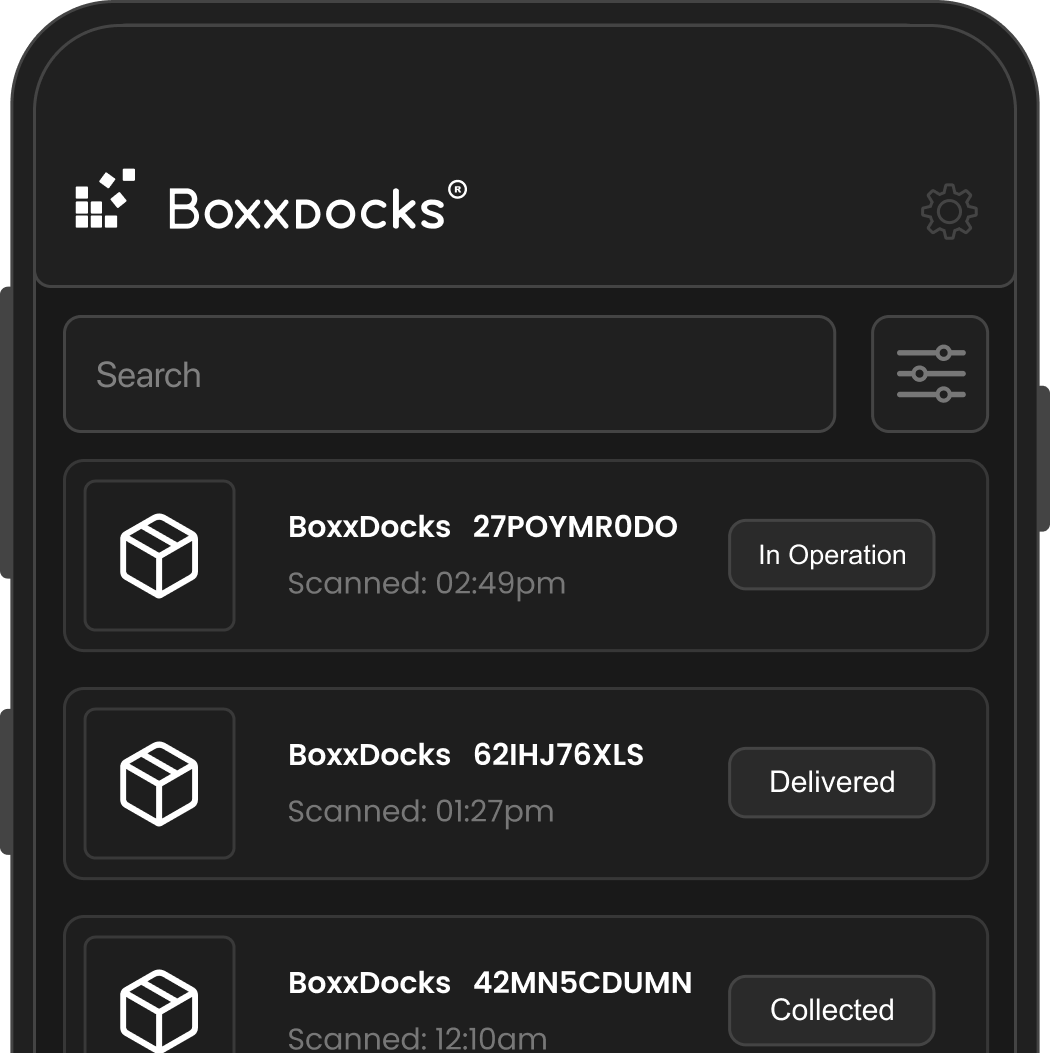
BoxxDocks AI Asset Tracking Platform
The Challenge
Asset tracking was manual, error-prone, and scattered across disconnected systems. The client had no centralized visibility into asset movement, no real-time location data, and no way to generate instant reports across multiple enterprise clients from a single platform.
Our Approach
We built BoxxDocks as an AI-enabled asset lifecycle platform using QR/NFC scanning, real-time dashboards, geolocation tracking, and a RAG-powered conversational engine that lets users query live operational data in plain English instead of navigating dashboards.
The Result
- Real-time inventory tracking across warehouses, transit, and delivery
- AI query engine for natural language insights
- LLM-powered reporting with anomaly detection
- Complete audit trail with location, timestamp, and status
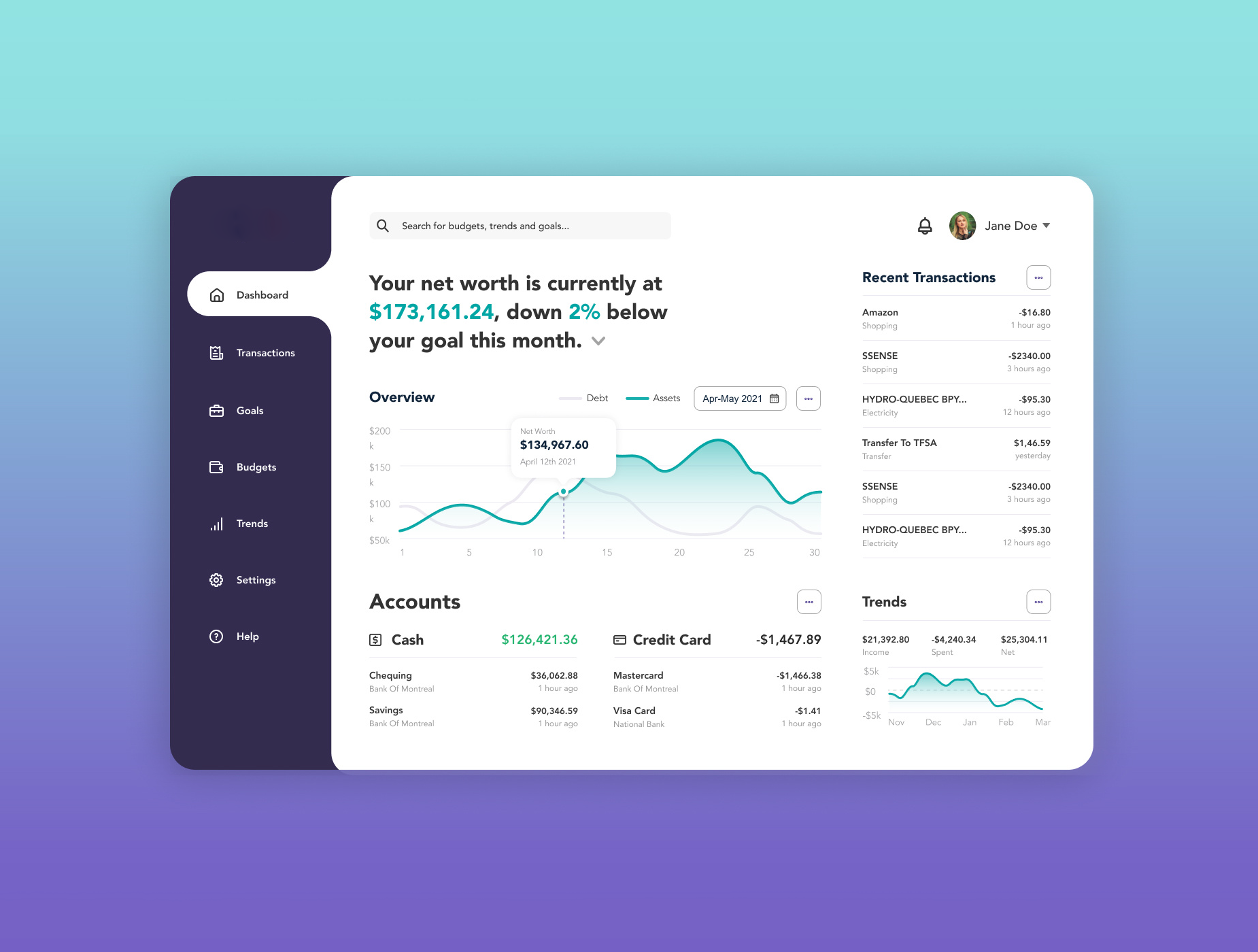
Parity AI AI Finance Platform
The Challenge
Personalized financial advice was expensive and limited to periodic meetings. Users had no way to consolidate banking, investments, debt, and insurance into one platform with real-time, AI-driven guidance.
Our Approach
We built Parity AI as an always-on financial wellness platform powered by AI. It securely pulls data from multiple sources, analyzes user behavior, forecasts outcomes, and delivers personalized recommendations — acting as a digital financial advisor, not a budgeting app.
The Result
- AI-powered financial planning across banking, investments, and debt
- Personalized recommendations based on life events and behavior
- Integrated financial education with actionable insights
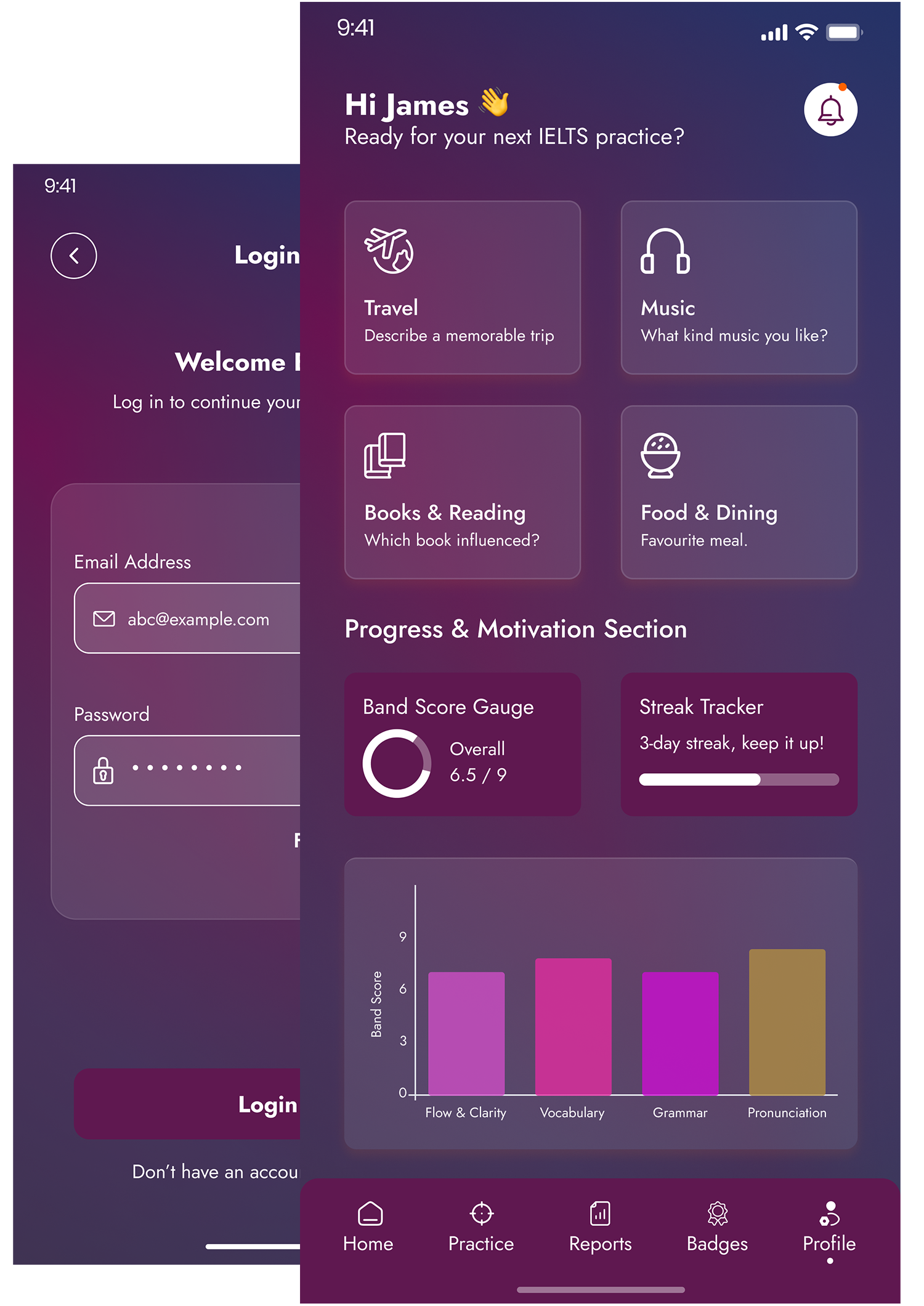
IELTS AI-Powered Speaking Evaluator
The Challenge
Human IELTS tutors cost $30-$80/hour with limited availability. Generic speaking apps lack authentic Part 1/2/3 exam structure, pronunciation feedback, and band-aligned scoring rubrics. Learners had no way to get unlimited, exam-authentic practice at scale.
Our Approach
We built a full-stack AI platform with a lifelike AI Avatar Examiner using LangGraph + Gemini conversation engine, Google Cloud TTS with viseme lip-sync, Faster-Whisper ASR, and a 6-layer IELTS evaluation pipeline scoring all 4 criteria with ±0.5-1.0 band accuracy.
The Result
- 1,000+ concurrent users with 2–3s response latency
- 10x lower cost than human examiners
- 6-service AI microservice with model preloading
- No-code admin panel for rapid content updates
Health E Livin AI Wellness Platform
The Challenge
People struggling with mental health had no single platform to access trusted information, take confidential assessments, and find providers — all without stigma or privacy concerns.
Our Approach
We built HealtheLivin as an AI-powered mental wellness app with a conversational AI assistant, anonymous screenings, evidence-based resource library, and geolocation-based provider discovery — all on privacy-first cloud infrastructure.
The Result
- AI knowledgebase for natural language mental health support
- Confidential assessments with personalized wellness insights
- Location-based provider discovery for professional care
- Privacy-first architecture with encrypted data management
Today Fit Fitness App
The Challenge
Gyms, trainers, and users were stuck with disconnected tools for scheduling, payments, and fitness tracking. There was no single platform that combined personalized fitness with business management.
Our Approach
We developed TodayFit as an AI-driven fitness platform with trainer booking, personalized tracking, community features, and a SaaS layer for gym and trainer business management.
The Result
- 30% increase in user engagement
- 4.7+ average rating on the App Store and Play Store
- 60% growth in trainer bookings
- 45% increase in subscription conversions

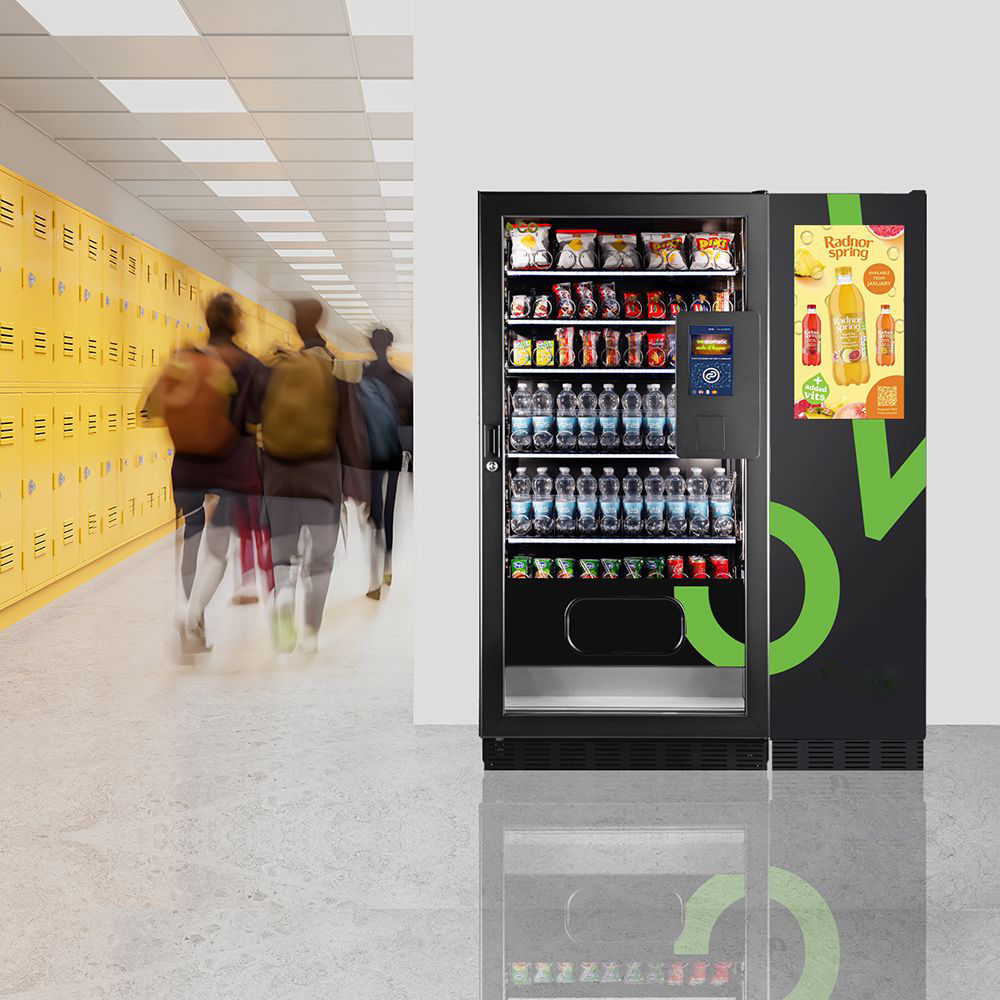
SmartVend AI Smart Vending Platform
The Challenge
Managing a distributed vending machine network meant manual inventory tracking, disconnected payment systems, no remote management capability, and zero real-time visibility into machine health or sales performance across locations.
Our Approach
We built SmartVend as a cloud-connected IoT platform combining an Android kiosk app, centralized web portal, real-time inventory sync, hardware integration for payments and dispensing, and a digital advertising layer — all managed from a single dashboard.
The Result
- Real-time inventory sync with low-stock alerts
- Remote machine management across unlimited locations
- IoT integration for payments, dispensing, and monitoring
- Centralized sales analytics and revenue reporting
Hire expert IoT developers, backed by a dedicated project manager
Onboard experienced IoT developers in days, with a dedicated project manager who owns delivery from device prototyping to full-scale deployment.
Tech stack our IoT developers use to build connected solutions
Hire IoT developers who work across embedded systems, connectivity protocols, cloud IoT platforms, and real-time data tooling to build device ecosystems that are secure, scalable, and reliable in production.
 C
C C++
C++ Python
 Rust
Rust Raspberry Pi
 Arduino
  ESP32
ESP32 STM32
STM32 NVIDIA
 AWS IoT Core
 Azure IoT Hub
 ThingsBoard
  Particle
 MQTT
MQTT CoAP
CoAP Bluetooth
 Zigbee
 LoRaWAN
 Wi-Fi
Wi-Fi Node-RED
 InfluxDB
  Grafana
 Apache Kafka
 Docker
Connected-System Expertise
Our developers understand how devices, connectivity, gateways, data platforms, applications, and enterprise systems depend on one another. They consider these relationships when developing IoT systems, helping organizations address technical dependencies across the connected environment rather than treating individual devices or applications as isolated components.

Multi-Device Environments
Our developers work with IoT environments involving different devices, sensors, hardware configurations, communication methods, and operating conditions. They account for variations across connected assets when designing data flows, communication mechanisms, and management processes, helping organizations accommodate heterogeneous device environments within a common IoT architecture.

Scalable IoT Architecture
Our developers design IoT systems with the expected growth of connected devices and generated data in mind. They consider device volumes, communication traffic, processing workloads, storage requirements, and infrastructure capacity to establish architectures that can accommodate expansion without requiring major redesigns or disruptive infrastructure changes to the connected system.

Device-to-Cloud Expertise
Our developers understand the complete path from physical devices and sensors to gateways, communication networks, cloud infrastructure, and enterprise applications. This allows them to address requirements across the entire data path and determine how device-generated information should be collected, processed, transmitted, stored, and consumed across distributed enterprise environments and applications.

Distributed Data Processing
Our developers work with IoT environments where data may need to be processed across devices, gateways, edge infrastructure, and cloud platforms. They determine appropriate processing locations based on latency, connectivity, resource availability, data volumes, and application requirements rather than sending every operation to a single centralized processing environment by default.
Enterprise IoT Integration
Our developers understand that IoT systems need to exchange information with existing enterprise technologies. They work with APIs, databases, cloud platforms, business applications, and operational systems to connect device-generated data with the processes and applications where organizations need to use that information within existing enterprise workflows and operational systems.
Hiring Xicom’s IoT developers through a selection process
We start by mapping the connected system rather than simply matching resumes to a job description. Our process examines the device layer, communication stack, data architecture, application environment, and engineering responsibilities to identify developers who can contribute where your IoT implementation actually needs expertise.
1
Mapping
We examine your devices, sensors, gateways, protocols, cloud infrastructure, applications, data flows, and existing engineering setup to establish the technical context.
2
Ownership
We identify which parts of the IoT stack require dedicated expertise, from firmware and connectivity to data processing, integration, and applications.
3
Expertise
We assess developers against the technologies your system uses, examining their experience with relevant devices, protocols, architectures, platforms, and integration requirements.
4
Validation
You interact with shortlisted developers to examine how they approach your specific IoT architecture, connectivity challenges, data requirements, and implementation constraints.
5
Onboarding
Selected developers are introduced to your repositories, devices, environments, documentation, and development practices, enabling them to begin contributing within the existing system.
Engagement models for hiring IoT developers from Xicom
The right IoT development setup depends on where the technical work sits within your existing engineering organization. Our engagement models accommodate projects that need targeted IoT expertise, sustained ownership of a connected platform, or engineering responsibility for a defined implementation.

Add IoT developers to your existing engineering team when you have the architecture, product direction, and core development process in place but need additional connected-systems expertise. Our developers can take responsibility for device integration, communication layers, data handling, or other defined areas while your team continues managing the overall product and its broader tech direction throughout development.
Build a dedicated IoT engineering capability around an ongoing product or connected-device program. Our developers remain focused on your environment, gaining working knowledge of device architectures, protocols, cloud infrastructure, data flows, and application dependencies. This model supports initiatives where IoT development continues beyond a single implementation or release.
Bring in our IoT developers for a clearly defined implementation when the required outcome, scope, and delivery boundaries are already established. They can take on the engineering work needed to develop a connected application, integrate devices and platforms, or implement a specific IoT capability through the agreed project lifecycle with defined responsibilities and tech ownership throughout delivery.
Client testimonials and reviews showcasing the value we consistently deliver
Explore how our clients describe their journey with us, reflecting strong collaboration, effective execution, and consistent outcomes delivered across engagements. See how our delivery framework ensures consistency from initiation through to successful completion.
❝
Parity AI
We came to Xicom with an ambitious goal: make institutional-grade financial planning accessible to everyone through AI. Xicom went beyond the brief, blending conversational AI and predictive analytics into an effortless platform. Parity AI is exactly what we envisioned.

❝
RadioFX
Xicom took the time to understand what our stations and listeners actually need, building something tailored rather than generic. Live chat and polls are now core to how we connect with our audience — the app has become a true extension of our on-air presence.


❝
StudyBuddy
Xicom built exactly what our students needed: a secure space to connect, collaborate, and find tutoring support in one place. Their understanding of student behavior shows in how naturally everything fits together — StudyBuddy is something students genuinely rely on.

❝
BoxxDocks
Xicom helped us bring BoxxDocks to life exactly as we envisioned it. Their team understood the complexity of AI powered real-time asset tracking and delivered a platform that's both powerful and genuinely easy to use.


❝
TodayFit
We are very happy with their services. I cannot recommend them highly enough. The value, ability, and delivery that we have seen has been superb, and we look forward to continuing this relationship.


❝
SmartVend AI
Their team built SmartVend from the ground up, combining hardware integration, real-time inventory sync, and a centralized dashboard that completely changed how we operate. We couldn't have asked for a more capable technical partner.

❝
Tap Retail
Partnering with Xicom to develop our Tap Retail app and website was one of the best decisions we made. Their team demonstrated exceptional professionalism, technical expertise, and a deep understanding of our business goals.


❝
GoGmGo
Partnering with Xicom was a game-changer for us. They didn't just build software, they helped us redefine how we run our business. Their proactive support and deep domain knowledge gave us the confidence to innovate faster.

❝
DENVEN
Working with Xicom has been a transformative experience. Their team quickly understood our challenges and delivered a scalable, intuitive solution. I highly recommend Xicom to any organization seeking future-ready, high-performance digital products.

Top tech insights of our blog
Explore latest tech stories & News
✦ AI-First Company
Deep Insights into Emerging Technology and Innovation!
Stay ahead in the digital world with our latest insights covering AI trends, industry developments, and expert advice on building smarter businesses.
1800+
Projects
20+
Years Experience
Frequently Asked Questions
What is the difference between hiring an IoT application developer and an embedded IoT developer?
An IoT application developer builds the web, mobile, and cloud software that users interact with, such as dashboards, alerts, and device controls. An embedded IoT developer writes the firmware that runs on the device itself and handles sensors, power, and connectivity. Most IoT products need both. Xicom lets you hire either role individually or as a combined team.
Should I hire a dedicated IoT team or a freelance IoT developer?
A dedicated IoT team is the better choice when your project spans hardware, firmware, cloud, and apps, or needs long-term support. A freelancer suits a small, well-defined task, such as fixing a firmware bug. A dedicated team gives you continuity, shared accountability, and project management, which IoT projects with many moving parts usually need.
Can Xicom's IoT developers take over an existing IoT project or codebase?
Yes. Xicom's IoT developers can take over an existing IoT project, even one started by another vendor or in-house team. They begin with a code and architecture audit of the firmware, cloud setup, and apps, document any gaps or risks, and then continue development without starting from scratch.
How do remote IoT developers test with physical hardware?
Remote IoT developers test with physical hardware by working with development kits and device samples shared by the client, or with the same boards set up at their own location. They also use simulators and emulators for early testing, plus remote debugging and secure OTA updates on deployed devices. Final validation happens on the actual hardware before release.
Can I start with a proof of concept before hiring a full IoT team?
Yes. Starting with an IoT proof of concept is a practical way to validate your idea, hardware choice, and connectivity approach before committing to full development. Once the PoC proves the concept works, you can scale the same IoT developers into a larger team for production.
Can Xicom's IoT developers work in my time zone?
Yes. Xicom's IoT developers can align their working hours with your time zone to ensure enough overlap for daily standups, reviews, and real-time collaboration. Xicom works with clients in more than 50 countries, including the USA, UK, and UAE.
Do I need to hire IoT developers with experience in my industry?
It helps, but it is not always essential. Industry experience matters most where regulations, safety, or specialized protocols are involved. Examples include healthcare devices, industrial automation using Modbus or OPC UA, and automotive systems. For general connected products, strong IoT engineering skills matter more than sector background.
Every award marks a milestone in our journey of excellence
As AI-first digital engineering company, Xicom has earned global recognition for delivering innovative, scalable, and high-performing technology solutions. Our awards reflect the trust of clients and industry leaders alike.