×

- 20+ Years in Business
- 350+ IT Experts
- 750+ Enterprise Clients
- CMMi Level 3 Certified
- ISO 9001:2015
- Top 1% on TrustPilot
-
 4.8 on Clutch
Our valued Brands & Agencies
















Our HIPAA compliance consulting services for healthcare software and AI
Our HIPAA compliance consulting services cover the technical layer where most compliance gaps actually sit. From a HIPAA compliance assessment and security risk analysis to cloud architecture, access controls, vendor readiness and remediation, each service maps to HIPAA safeguards and to the way your software really moves patient data.

HIPAA Compliance Assessment
Our HIPAA compliance assessment reviews your applications, APIs, databases and infrastructure against HIPAA safeguards and maps where PHI enters, moves, is stored and leaves your systems. Every finding is ranked by risk and paired with a clear fix, so your team knows exactly what to address first and why it matters.

Security Risk Analysis
The HIPAA Security Rule requires an accurate and thorough risk analysis of threats to electronic PHI. We identify threats and vulnerabilities across your systems, rate their likelihood and impact, and document the results in a form your compliance team can maintain, update and present when it is requested.

Vulnerability and Penetration Testing
Configuration reviews only show part of the picture. We run vulnerability scans, application and API penetration tests and secure code reviews on systems that handle PHI, then retest after fixes, giving you evidence that controls hold up against real attack techniques rather than only on paper.

HIPAA-Compliant Cloud Architecture
We design or rework cloud environments on AWS, Azure and Google Cloud using HIPAA-eligible services, encryption at rest and in transit, network segmentation, key management and secure backups. The result is an architecture where PHI protection is part of the foundation rather than a layer added after launch.

Access Control and Identity
Shared logins and broad admin roles are among the most common HIPAA gaps. We implement unique user identities, role-based access built on the minimum necessary principle, multi-factor authentication, session timeouts and emergency access procedures across clinician portals, admin panels, APIs and internal tools.

Audit Logging and Monitoring
HIPAA expects you to know who viewed, changed or exported a patient record. We build tamper-evident audit trails across applications and infrastructure, centralize logs, and set up alerts for unusual access patterns, so investigations and reviews rely on reliable evidence instead of guesswork.

Vendor and BAA Readiness
Every service that touches PHI becomes part of your compliance boundary. We inventory your vendors, SDKs and cloud services, identify which ones cannot sign a Business Associate Agreement, and recommend compliant alternatives or architecture changes that keep PHI away from services outside that boundary.

Secure SDLC and DevSecOps
Compliance drifts when new releases skip security checks. We add code scanning, dependency checks, secrets management and infrastructure policy checks to your CI/CD pipeline, and replace real patient data in development and testing with synthetic or de-identified datasets.

Technical Policies and Procedures
Controls need written procedures behind them. We draft and review the technical side of your HIPAA documentation, including access management, encryption, logging, backup, change management and incident response procedures, so what your policies say matches how your systems actually work.

Remediation Development
A report alone does not close a gap. Our engineers fix what the assessment finds, from insecure endpoints and unencrypted backups to missing audit events and weak session handling, then validate each control so your team receives working safeguards along with the documentation to show for them.

Breach Response Support
When a security incident involves PHI, speed and evidence matter. We help contain the issue, investigate logs to establish what data was accessed, close the vulnerability, and give your legal and compliance team the technical facts they need for their breach risk assessment and notification decisions.

HIPAA-Compliant IT Support
Systems that hold PHI need support that follows the same rules. Our HIPAA-compliant IT support covers patching, infrastructure monitoring, access reviews, backup checks and pre-release reviews of new features and vendors, keeping your environment compliant as your platform and team continue to grow.
Security Rule
The Security Rule requires administrative, physical and technical safeguards for electronic PHI. This is where most of our work sits: risk analysis, access control, audit controls, integrity, authentication, transmission security, encryption and contingency planning across your applications and infrastructure.
Privacy Rule
The Privacy Rule governs how PHI is used and disclosed and gives patients rights over their records. We support it in software through minimum necessary access, consent and authorization tracking, disclosure logging, and features that let patients request access to their own health information.
Breach Notification Rule
The Breach Notification Rule requires notice to affected individuals, HHS and in some cases the media after a breach of unsecured PHI. Encryption, detailed logging and tested incident procedures help you determine what was exposed quickly and, where data was properly encrypted, can reduce what must be reported.

PHI-Safe Model Selection
Not every AI provider or deployment option can receive PHI. We confirm which models, hosting options and enterprise plans support a Business Associate Agreement, document the boundary, and route PHI only to services that meet it, while keeping non-compliant tools limited to de-identified or non-clinical data.
De-identification and Redaction
We build pipelines that detect and mask names, dates, record numbers and other identifiers before data reaches prompts, training sets, analytics or evaluation datasets. De-identification lets teams use clinical data for AI work while reducing the volume of PHI flowing through every model call.
Secure RAG and Vector Stores
Embeddings built from clinical documents can still expose PHI. We apply encryption, document-level access controls, tenant isolation and retention rules to retrieval systems and vector databases, so an AI assistant only retrieves the records the requesting user is permitted to see.

Private AI Deployment
When PHI cannot leave your environment, we deploy and run models inside your own cloud account or on-premise infrastructure. This includes fine-tuned and open-weight models, with network isolation, encrypted storage and access controls that match the rest of your HIPAA-compliant architecture.

Healthcare Chatbots and Voice AI
Patient-facing assistants collect symptoms, insurance details and appointment data in every conversation. We review and secure conversational AI systems for identity verification, transcript storage, retention, escalation to staff and safe handling of PHI across chat and voice channels.
AI Audit Trails
AI-assisted decisions need the same accountability as any other access to patient data. We log prompts, retrieved records, model outputs and user actions in a reviewable format, giving compliance teams the evidence they need to investigate incidents and show how AI handles PHI.
HIPAA consulting for teams that handle PHI
HIPAA applies to covered entities and to the business associates that build and run their technology. We work with healthcare providers, insurers and the software companies that serve them, shaping each engagement around the PHI, systems and contracts specific to that business.
Hospitals & Providers
EHR Integrations, Patient Portals, Clinical Workflow Apps, Legacy System Modernization, AI Tools for Clinical Teams

Telemedicine
Video Consultation Platforms, Secure Patient Messaging, Remote Patient Monitoring, e-Prescription Workflows, Virtual Care Apps

Healthcare SaaS
Practice Management Software, Scheduling and Billing Platforms, Care Coordination Tools, Health Data APIs, Business Associate Readiness

Health Insurance
Claims Processing Systems, Member Portals, Benefits Platforms, Prior Authorization Workflows, AI Claims Review Tools
FIND THE GAPS FIRST
Find Your HIPAA Gaps Before an Auditor or Buyer Does.
Our HIPAA compliance consulting gives you a clear view of where PHI is exposed across your software, cloud and AI systems, along with a prioritized plan to fix it.
Compliance-Ready Engineering, Backed by Certified Processes
20+
Years of Enterprise Delivery
1800+
Projects Delivered
ISO/IEC 27001 & ISO/IEC 42001
SOC 2 Type II Certified
SOC 2 Type II Certified
750+
Clients Worldwide
50+
Countries Served
Access Control
Access control limits PHI to the people and services that need it. We implement unique user IDs, role-based permissions aligned to the minimum necessary standard, emergency access procedures and automatic logoff, then review admin, support and service accounts so no role sees more patient data than its job requires.
Audit Controls
Audit controls record activity in systems that contain PHI. We define which events must be logged, capture them consistently across applications and infrastructure, protect logs from tampering, and set retention periods, giving your team a dependable record of who accessed or changed patient data and when.
Integrity Controls
Integrity controls protect PHI from being altered or destroyed improperly. We add validation, versioning, checksums and change tracking to critical records and data pipelines, so your systems can detect unauthorized modifications and your team can trust that clinical and billing data remains accurate.
Person or Entity Authentication
Authentication confirms that anyone or anything requesting PHI is who it claims to be. We implement multi-factor authentication for users, single sign-on with your identity provider, and token-based authentication for APIs and service-to-service calls, replacing shared credentials and long-lived keys.
Transmission Security
Transmission security protects PHI as it moves between users, services and partners. We enforce modern TLS across web, mobile and API traffic, secure internal service communication, and review integrations such as HL7 and FHIR interfaces, email, file transfers and webhooks that frequently carry patient data.
Encryption at Rest
Encrypting stored PHI limits the damage if storage is ever exposed. We encrypt databases, object storage, backups, logs and mobile device storage, manage keys through a dedicated key management service, and separate key access from data access so a single compromised account cannot reach both.

Backup and Disaster Recovery
HIPAA requires that PHI stays available and recoverable. We design encrypted, access-controlled backups, define recovery objectives for critical systems, and test restoration procedures, so a ransomware event or infrastructure failure does not leave clinicians without access to patient information.
Security Incident Detection
Fast detection shortens the window between a security incident and your response. We configure alerts for unusual access, bulk exports and configuration changes, connect them to your monitoring tools, and document technical response steps that support your organization's breach assessment process.
Healthcare work built with privacy at the core
See how we build healthcare products where sensitive personal information is protected by design, from confidential assessments to encrypted data management on privacy-first cloud infrastructure.
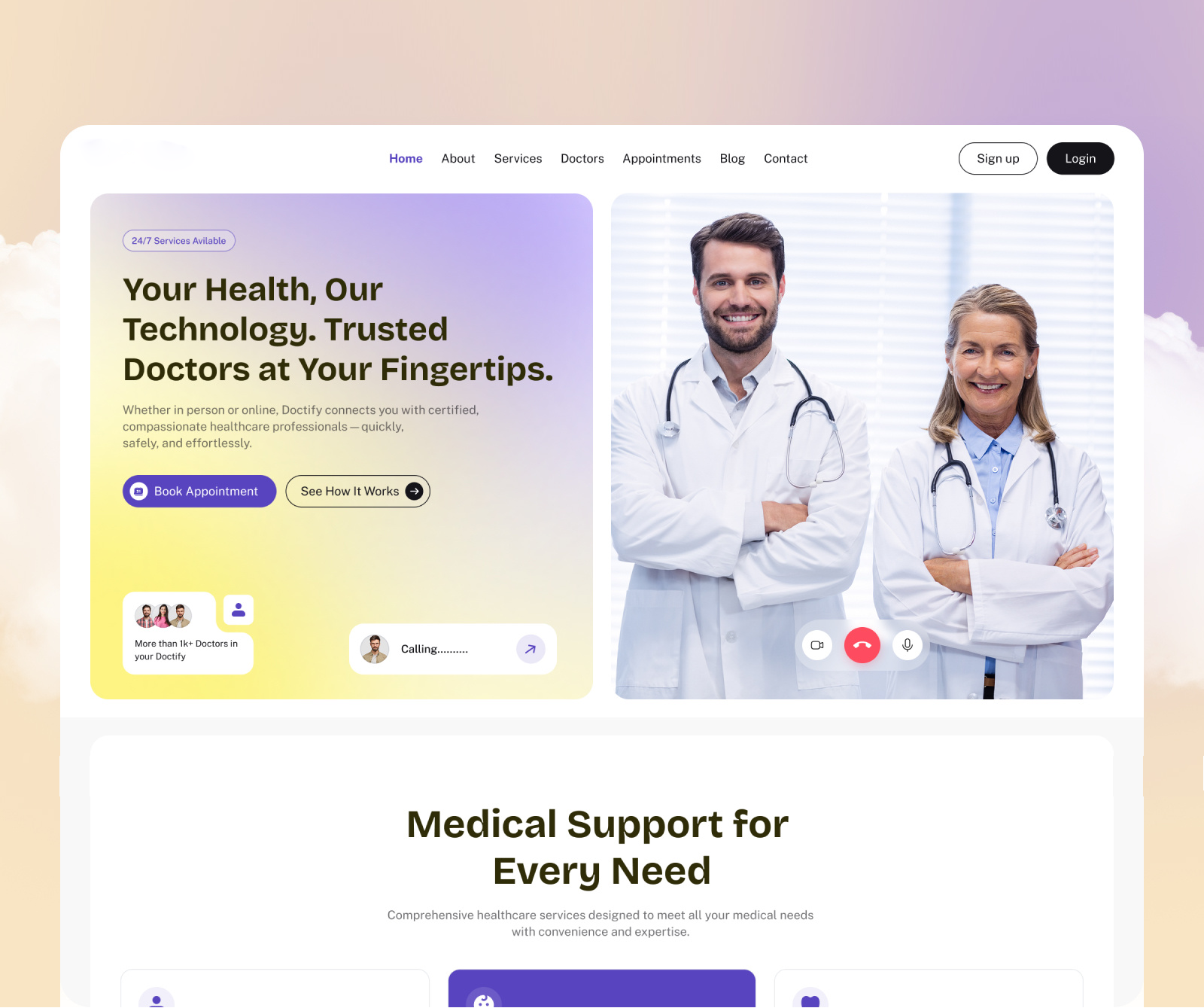
Health E Livin AI Wellness Platform
The Challenge
People struggling with mental health had no single platform to access trusted information, take confidential assessments, and find providers without stigma or privacy concerns.
Our Approach
We built HealtheLivin as an AI-powered mental wellness app with a conversational AI assistant, anonymous screenings, an evidence-based resource library, and geolocation-based provider discovery, all on privacy-first cloud infrastructure.
The Result
- AI knowledgebase for natural language mental health support
- Confidential assessments with personalized wellness insights
- Location-based provider discovery for professional care
- Privacy-first architecture with encrypted data management
Tools and platforms we use for HIPAA compliance
We work with the cloud services, security tools and healthcare standards your team already relies on, choosing HIPAA-eligible services wherever PHI is stored, processed or transmitted, and adding the monitoring and testing tools needed to keep controls verifiable.
 AWS
 Azure
 Google Cloud Platform
 PostgreSQL
 Amazon Bedrock
 Microsoft Foundry
 Google Vertex AI
Engineers Who Fix What They Find
The team that identifies a gap can also close it. Our consultants work alongside developers who build in your stack, so findings move directly into fixes without a handoff to another vendor, and every recommendation is grounded in what is realistic to implement in your product.
Certified Security Practices
Xicom operates under ISO/IEC 27001, ISO/IEC 42001 and SOC 2 Type II certified processes. The same information security and AI management disciplines we follow internally shape how we handle your systems, credentials and data throughout a HIPAA compliance engagement.
AI and LLM Expertise
We build, integrate and fine-tune AI models, including Claude, GPT and Gemini, so we understand exactly where PHI can slip through prompts, embeddings and model logs. That hands-on experience lets us secure healthcare AI without blocking the use cases your teams want to deliver.
Risk-Based Prioritization
Not every gap carries the same risk. We rank findings by the volume and sensitivity of PHI involved, the likelihood of exposure and the effort required to fix them, so your team spends its time on the issues that most reduce risk rather than working through a flat checklist.
Audit-Ready Technical Evidence
Enterprise buyers, partners and auditors ask for proof, not promises. We document architecture decisions, data flows, control configurations and test results in a form your compliance, legal and sales teams can share during security reviews, vendor questionnaires and audits.

Two Decades of Software Delivery
Since 2002, Xicom has completed more than 1,800 projects for over 750 clients across 50+ countries. That breadth of delivery experience helps us work within legacy systems, modern cloud platforms and fast-moving product teams without slowing your roadmap down.
Our HIPAA compliance consulting process, from discovery to ongoing support
Our process gives you a clear path from the first discovery call to controls that hold up under review. Each stage builds on the last, so your team always knows where PHI is exposed, what needs fixing, and what evidence exists to show it has been fixed.
1
Discover
We map where PHI enters, moves, is stored and leaves your systems, including vendors, AI services and the environments your engineering teams use.
2
Assess
We run a HIPAA compliance assessment, risk analysis and security testing, then rank every gap by risk, PHI exposure and effort to fix.
3
Plan
We build a remediation roadmap with owners, effort estimates and sequencing, so the highest-risk issues are addressed first.
4
Remediate
Our engineers implement the fixes or work alongside your team, then validate that each control behaves as intended in production.
5
Sustain
We document technical evidence and review new features, vendors and AI use cases so compliance keeps pace with your product.
Standards and frameworks we align with
Healthcare products rarely answer to HIPAA alone. Enterprise buyers ask for SOC 2 reports, international customers bring GDPR, and AI features raise governance questions. Our HIPAA compliance consulting aligns your controls with these related standards, so one set of safeguards supports several reviews.









Client testimonials and reviews showcasing the value we consistently deliver
Explore how our clients describe their journey with us, reflecting strong collaboration, effective execution, and consistent outcomes delivered across engagements. See how our delivery framework ensures consistency from initiation through to successful completion.
❝
Parity AI
We came to Xicom with an ambitious goal: make institutional-grade financial planning accessible to everyone through AI. Xicom went beyond the brief, blending conversational AI and predictive analytics into an effortless platform. Parity AI is exactly what we envisioned.

❝
RadioFX
Xicom took the time to understand what our stations and listeners actually need, building something tailored rather than generic. Live chat and polls are now core to how we connect with our audience — the app has become a true extension of our on-air presence.


❝
StudyBuddy
Xicom built exactly what our students needed: a secure space to connect, collaborate, and find tutoring support in one place. Their understanding of student behavior shows in how naturally everything fits together — StudyBuddy is something students genuinely rely on.

❝
BoxxDocks
Xicom helped us bring BoxxDocks to life exactly as we envisioned it. Their team understood the complexity of AI powered real-time asset tracking and delivered a platform that's both powerful and genuinely easy to use.


❝
TodayFit
We are very happy with their services. I cannot recommend them highly enough. The value, ability, and delivery that we have seen has been superb, and we look forward to continuing this relationship.


❝
SmartVend AI
Their team built SmartVend from the ground up, combining hardware integration, real-time inventory sync, and a centralized dashboard that completely changed how we operate. We couldn't have asked for a more capable technical partner.

❝
Tap Retail
Partnering with Xicom to develop our Tap Retail app and website was one of the best decisions we made. Their team demonstrated exceptional professionalism, technical expertise, and a deep understanding of our business goals.


❝
GoGmGo
Partnering with Xicom was a game-changer for us. They didn't just build software, they helped us redefine how we run our business. Their proactive support and deep domain knowledge gave us the confidence to innovate faster.

❝
DENVEN
Working with Xicom has been a transformative experience. Their team quickly understood our challenges and delivered a scalable, intuitive solution. I highly recommend Xicom to any organization seeking future-ready, high-performance digital products.

Top tech insights from our blog
Explore latest tech stories & News
✦ AI-First Company
Deep Insights into Emerging Technology and Innovation!
Stay ahead in the digital world with our latest insights covering AI trends, industry developments, and expert advice on building smarter businesses.
1800+
Projects
20+
Years Experience
Frequently asked questions
What is HIPAA compliance consulting?
HIPAA compliance consulting helps organizations find and close the gaps in how they protect PHI under HIPAA rules. Xicom focuses on the technical side: assessing applications, APIs, cloud infrastructure and AI systems against HIPAA safeguards, then designing and building the fixes.
Does HIPAA apply to software vendors and app developers?
Yes, when they act as a business associate. A software vendor, cloud host or app developer that creates, receives, maintains or transmits PHI on behalf of a covered entity must meet the HIPAA Security Rule and sign a Business Associate Agreement. Consumer health apps that do not handle PHI for a covered entity may fall outside HIPAA but can still be subject to FTC health privacy rules.
Is there an official HIPAA certification?
No. The US Department of Health and Human Services does not certify software or companies as HIPAA compliant. Compliance is demonstrated through safeguards, policies and documentation, which our consulting helps you put in place and evidence.
Can we use AI and LLMs with patient data and stay HIPAA compliant?
Yes, if the AI provider signs a Business Associate Agreement or the model runs inside your own controlled environment, and PHI is protected with de-identification, encryption, access controls and logging. We help you choose compliant options and build the safeguards around them, often alongside our AI governance consulting work.
How long does a HIPAA compliance assessment take?
It depends on the number of applications, integrations and environments in scope. We confirm the timeline after a short discovery call, once we understand where PHI lives in your systems.
Do you replace our legal or compliance team?
No. We handle the technical safeguards and produce the evidence your legal and compliance advisors need. Policy decisions, legal interpretation and breach notification decisions stay with them.
What is the difference between a HIPAA compliance assessment and a security risk analysis?
A HIPAA compliance assessment checks your systems and practices against HIPAA requirements and lists the gaps. A security risk analysis, which the HIPAA Security Rule specifically requires, identifies threats and vulnerabilities to electronic PHI and rates their likelihood and impact. Most organizations need both, and we usually deliver them together.
How do we choose between HIPAA compliance consulting firms?
Look at what the firm delivers after the assessment. Some HIPAA compliance service providers focus on policies and training, while others, like Xicom, focus on the technical safeguards inside your software and cloud and can implement the fixes. Ask whether they will sign a BAA, how they test controls, whether they understand AI and modern cloud platforms, and whether they offer HIPAA-compliant IT support after go-live.
Will Xicom sign a Business Associate Agreement?
Yes. When our work requires access to PHI, we sign a Business Associate Agreement before the engagement starts.
Every award marks a milestone in our journey of excellence
As an AI-first digital engineering company, Xicom has earned global recognition for delivering innovative, scalable, and high-performing technology solutions. Our awards reflect the trust of clients and industry leaders alike.