×
Cloud App Development Company
Xicom is a cloud app development company for SaaS founders and enterprise teams who need software that scales without surprise bills. We design cloud-native apps, migrate legacy systems, and build multi-tenant platforms on AWS, Azure, and Google Cloud, with security, observability, and cost controls set up before the first release.
Talk to Cloud Architects
- 20+ Years in Business
- 350+ IT Experts
- 750+ Enterprise Clients
- CMMi Level 3 Certified
- ISO 9001:2015
- Top 1% on TrustPilot
-
 4.8 on Clutch
Our valued Brands & Agencies















A cloud app that works in staging can still fail in production through a misconfigured bucket, an unbounded autoscaling rule, or a single-region dependency. Xicom builds security baselines, cost guardrails, and recovery plans into the architecture itself, so your platform stays available, compliant, and predictable to run.
Our Core Business-Driven Capabilities
- SOC 2 & ISO 27001 Controls: Maps access management, logging, and change control to audit-ready evidence from the first deployment.
- Infrastructure as Code: Provisions every environment through Terraform or CloudFormation, so configurations are reviewed, versioned, and repeatable.
- FinOps Cost Governance: Applies tagging, budget alerts, and rightsizing reviews that keep cloud spend tied to actual usage.
- Multi-Region Resilience: Designs failover, backups, and tested recovery runbooks so one zone outage does not become a customer outage.
Cloud compliance standards we follow

SOC 2

ISO 27001

GDPR

CCPA
HIPAA
(Health Workloads)

NIST CSF
Cybersecurity Framework
CIS Benchmarks
Secure Configuration
CSA STAR
Cloud Security Alliance
Well-Architected
AWS, Azure & GCP Frameworks

PCI DSS
(Payment Workloads)
Cloud app development services built for production scale
Every engagement starts with your workload profile, compliance scope, and cost targets. These are the cloud app development services we deliver most often.

Cloud-Native Application Development
Apps designed for a single server rarely survive their first traffic spike. We build cloud-native applications on containers and managed services, with stateless APIs, autoscaling groups, and event-driven components that grow with demand. Health checks, structured logging, and tracing ship with the first release, so your team sees problems before customers report them, and scaling becomes a configuration change instead of a rewrite.

Cloud Mobile App Development
Mobile users expect their data on every device, even on a weak connection. Our cloud mobile app development covers iOS and Android apps backed by managed APIs, offline-first sync, push notifications, and secure authentication through Cognito, Firebase Auth, or Azure AD B2C. The backend scales independently of app releases, so a feature launch or marketing campaign does not take your login service down.

SaaS & Multi-Tenant Platform Engineering
Multi-tenancy decides your margins long before it decides your features. We design tenant isolation models (pooled, siloed, or hybrid), per-tenant metering, subscription billing, and role-based access that holds up in enterprise security reviews. Tenant onboarding is automated end to end, so adding a customer becomes a workflow for your ops team, not an engineering ticket.

Legacy Application Migration & Modernization
Lift-and-shift often moves your problems to someone else's data center and adds a monthly bill. We assess each application and choose the right path: rehost, replatform, or refactor into microservices. Data migration runs with validation checks and rollback plans, and cutovers are scheduled around your business calendar, so modernization happens without a weekend of downtime.

Serverless & Event-Driven Development
Paying for idle servers is one of the most common sources of cloud waste. We build serverless backends on AWS Lambda, Azure Functions, and Google Cloud Run, connected through queues and event buses for workloads that spike unpredictably. You pay for execution time rather than reserved capacity, and each function deploys independently, which shortens release cycles for small teams.

Cloud DevOps & Managed Operations
A cloud platform without automated delivery slowly drifts into a collection of hand-configured servers. We set up CI/CD pipelines, infrastructure as code, automated security scanning, and monitoring dashboards with alerts that reach the right engineer. After launch, our team handles patching, cost reviews, and performance tuning, so your developers ship features instead of firefighting infrastructure.
Accelerating enterprise transformation through AI and digital engineering.
20+
Years in Business
350+
IT Professionals
ISO 9001 Certified
NASSCOM & STPI Accreditation
NASSCOM & STPI Accreditation
750+
Clients Worldwide
1800+
Projects Executed

B2B SaaS Products
Founders building B2B software need enterprise readiness earlier than they expect. We deliver SaaS platforms with SSO, audit logs, tenant-level data controls, and usage-based billing, so security questionnaires from larger customers become a sales asset during procurement rather than a reason a deal stalls.

Enterprise Internal Platforms
Internal tools often live on aging servers with no clear owner and no tested backups. We rebuild ERP extensions, employee portals, and reporting systems as cloud applications with directory-based access, centralized logging, and automated backups, giving IT teams one place to manage permissions and spend.

Data & Analytics Platforms
Reports that depend on overnight batch jobs slow every decision downstream. We build cloud data platforms with streaming ingestion, warehouses on Snowflake, BigQuery, or Redshift, and governed dashboards, so operations, finance, and product teams work from the same numbers at the same time.

IoT & Connected Device Backends
Large device fleets reporting every few seconds will overwhelm a traditional backend. We build IoT cloud platforms on AWS IoT Core or Azure IoT Hub with device provisioning, telemetry pipelines, remote commands, and alerting that scales with your installed base instead of against it.

AI-Enabled Cloud Applications
Adding AI to a cloud app means managing model costs, latency, and data privacy together. Alongside our AI development services, we integrate LLM APIs, retrieval pipelines, and model hosting on SageMaker, Microsoft Foundry, or Vertex AI, with usage controls that keep inference spend predictable.

Hybrid & Multi-Cloud Setups
Some workloads must stay on-premises for regulatory or latency reasons. We design hybrid and multi-cloud architectures with consistent identity, networking, and deployment tooling across environments, reducing vendor lock-in without doubling the operational overhead your team carries every day.
Case studies of cloud-connected platforms built to scale
This project shows what our cloud app development work looks like in production: distributed hardware, a central cloud platform, and one dashboard to run it all.

SmartVend Cloud-Connected IoT Platform
The Challenge
Managing a distributed vending network meant manual inventory tracking, disconnected payment systems, no remote management capability, and no live visibility into machine health or sales performance across locations.
Our Approach
We built SmartVend as a cloud-connected IoT platform combining an Android kiosk app, a centralized web portal, real-time inventory sync, hardware integration for payments and dispensing, and a digital advertising layer, all managed from a single cloud dashboard.
The Result
- Real-time inventory sync with automated low-stock alerts
- Remote machine management across every location from one cloud portal
- Centralized sales analytics and revenue reporting
Ready to build a Cloud App that scales without surprises?
From a first SaaS release to a full legacy migration, we build cloud applications with the architecture, security, and cost controls to hold up under real traffic. Tell us what you are running today, and we will map the path forward.
Core technologies and Cloud infrastructure we deploy
Cloud apps succeed or stall on the services underneath them. Here are the platforms, runtimes, databases, and delivery tools we use for app development for cloud environments, chosen for operational maturity, cost visibility, and portability across AWS, Azure, and Google Cloud.
 AWS
 Microsoft Azure
 Google Cloud
 Firebase
 Docker
 Kubernetes
 OpenShift
Amazon ECS
Google Cloud Run
AWS Lambda
Azure Functions
Google Cloud Functions
Amazon API Gateway
 Node.js
 Python
 Java
 Go
 .NET Core
 PostgreSQL
 MongoDB
 Amazon DynamoDB
 Redis
Amazon S3
 Terraform
 Packer
 Jenkins
 GitLab CI/CD
 ArgoCD
 Prometheus
 Grafana
 Datadog
Amazon CloudWatch
Our end-to-end process for cloud app development services
Cloud projects go wrong when architecture decisions get made under deadline pressure. Our process front-loads those decisions, so you know the provider, cost model, and migration plan before a single resource is provisioned.
1
Workload Assessment
We review your current applications, traffic patterns, data residency needs, and compliance scope, then deliver an architecture proposal with provider choice, estimated running cost, and a phased delivery plan.
2
Architecture & Landing Zone
Our architects set up accounts, network boundaries, identity policies, encryption, and logging through infrastructure as code, so every environment starts secure and identical to the last one.
3
Build & Integration
We build in short sprints with working software at the end of each one, wiring in managed databases, queues, third-party APIs, and CI/CD pipelines that deploy on every merge.
4
Load & Security Testing
We run load tests against production-like environments, chaos tests on failover paths, and automated security scans, so autoscaling and recovery are proven before launch rather than assumed.
5
Launch & Cloud Operations
We cut over with staged traffic shifting, then monitor uptime, patch dependencies, and review spend regularly, because most cloud cost and reliability issues appear only after real users arrive.
We Design for the Bill, Not Just the Build
Plenty of cloud apps are technically sound and financially painful. We model running costs during architecture, pick instance types and storage tiers deliberately, and set budget alerts before launch. Reserved capacity, autoscaling limits, and data transfer paths are reviewed as part of design, so the monthly invoice matches the forecast your finance team approved.
Security Controls Live in the Code
We hold ISO/IEC 27001 and SOC 2 Type II certifications, and the same discipline shapes how we build for clients. Access policies, encryption settings, and network rules are written as code, reviewed like code, and scanned on every change. That makes misconfigurations visible in a pull request instead of in an incident report.
No Lock-In You Did Not Choose
Managed services save time, but every proprietary dependency is a future switching cost. We document those trade-offs openly, use portable tooling like Kubernetes and Terraform where it makes sense, and keep your data in formats you can move. You decide how much lock-in is worth the convenience, with the costs laid out in front of you.
We Run What We Build
Launch is when cloud workloads start behaving unpredictably. Our team stays on for monitoring, incident response, patching, and cost reviews, and hands over runbooks your engineers can follow. You get one accountable partner from architecture through operations, not a vendor who disappears once the go-live email is sent.
Client testimonials and reviews showcasing the value we consistently deliver
Explore how our clients describe their journey with us, reflecting strong collaboration, effective execution, and consistent outcomes delivered across engagements. See how our delivery framework ensures consistency from initiation through to successful completion.
❝
Parity AI
We came to Xicom with an ambitious goal: make institutional-grade financial planning accessible to everyone through AI. Xicom went beyond the brief, blending conversational AI and predictive analytics into an effortless platform. Parity AI is exactly what we envisioned.

❝
RadioFX
Xicom took the time to understand what our stations and listeners actually need, building something tailored rather than generic. Live chat and polls are now core to how we connect with our audience — the app has become a true extension of our on-air presence.


❝
StudyBuddy
Xicom built exactly what our students needed: a secure space to connect, collaborate, and find tutoring support in one place. Their understanding of student behavior shows in how naturally everything fits together — StudyBuddy is something students genuinely rely on.

❝
BoxxDocks
Xicom helped us bring BoxxDocks to life exactly as we envisioned it. Their team understood the complexity of AI powered real-time asset tracking and delivered a platform that's both powerful and genuinely easy to use.

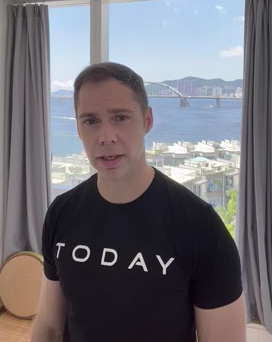
❝
TodayFit
We are very happy with their services. I cannot recommend them highly enough. The value, ability, and delivery that we have seen has been superb, and we look forward to continuing this relationship.


❝
SmartVend AI
Their team built SmartVend from the ground up, combining hardware integration, real-time inventory sync, and a centralized dashboard that completely changed how we operate. We couldn't have asked for a more capable technical partner.

❝
Tap Retail
Partnering with Xicom to develop our Tap Retail app and website was one of the best decisions we made. Their team demonstrated exceptional professionalism, technical expertise, and a deep understanding of our business goals.


❝
GoGmGo
Partnering with Xicom was a game-changer for us. They didn't just build software, they helped us redefine how we run our business. Their proactive support and deep domain knowledge gave us the confidence to innovate faster.

❝
DENVEN
Working with Xicom has been a transformative experience. Their team quickly understood our challenges and delivered a scalable, intuitive solution. I highly recommend Xicom to any organization seeking future-ready, high-performance digital products.

Top tech insights of our blog
Explore latest tech stories & News
✦ AI-First Company
Deep Insights into Emerging Technology and Innovation!
Stay ahead in the digital world with our latest insights covering AI trends, industry developments, and expert advice on building smarter businesses.
1800+
Projects
20+
Years Experience
Frequently Asked Questions
Do you build cloud app MVPs?
Yes. Xicom builds cloud MVPs on managed services so you can launch quickly without committing to heavy infrastructure. We scope the smallest feature set that proves demand, deploy it with production-grade security and monitoring, and design the architecture so it can scale into a full platform without a rebuild.
What does a cloud app development company do?
A cloud app development company designs, builds, and runs applications on platforms like AWS, Azure, and Google Cloud. That covers architecture, cloud-native development, legacy migration, DevOps automation, security configuration, and ongoing operations. Xicom handles the full lifecycle, from mobile apps to multi-tenant SaaS backends.
How much does cloud app development cost?
Cost depends on application complexity, the number of integrations, the cloud services involved, compliance requirements, and team composition. Running costs matter too, because architecture choices shape your monthly cloud bill for years. Share your requirements and we will provide a build estimate alongside a projected running cost.
How long does it take to build a cloud application?
Timelines depend on scope. A focused MVP on managed services moves faster than a multi-tenant platform or a legacy migration with data validation and phased cutovers. Compliance reviews and third-party integrations also affect the schedule. We share a detailed timeline after the workload assessment.
Which cloud platforms do you work with?
We build on AWS, Microsoft Azure, and Google Cloud, and design hybrid setups when some workloads must stay on-premises. Provider choice depends on your existing contracts, data residency rules, team skills, and the managed services your product needs most.
How do you keep cloud applications secure?
Security is set up through infrastructure as code: least-privilege identity policies, encryption at rest and in transit, private networking, and centralized logging. Every change is scanned for misconfigurations before deployment, and we align controls with SOC 2, ISO 27001, GDPR, and HIPAA where they apply to your workload.
Can you migrate our existing application to the cloud?
Yes. We assess each application and recommend rehosting, replatforming, or refactoring based on its business value and technical debt. Data migration includes validation and rollback plans, and cutovers are staged to keep downtime minimal. Integrations with your existing ERP, CRM, or identity systems are mapped before anything moves.
How do you control cloud costs?
We model running costs during design, apply resource tagging and budget alerts, rightsize instances after launch, and review spend with you on a regular schedule. Serverless and autoscaling are used where traffic is unpredictable, and reserved capacity where it is steady, so you pay for what you actually use.
What engagement models do you support?
Xicom offers three models: Fixed Price for well-defined projects with a clear scope, Time & Material for evolving builds and migrations, and Dedicated Team for ongoing platform development or managed cloud operations. We help you choose the model that fits your project stage and budget structure.
Do you provide support after launch?
Yes. Post-launch support covers monitoring and alerting, incident response, security patching, dependency updates, performance tuning, and regular cost reviews. We also hand over runbooks and documentation, so your internal team can take over operations whenever you are ready.
Every award marks a milestone in our journey of excellence
As an AI-first digital engineering company, Xicom has earned global recognition for delivering innovative, scalable, and high-performing technology solutions. Our awards reflect the trust of clients and industry leaders alike.