×
Education App Development Company
Learners close an app the moment it feels harder than the classroom. As an education app development company for schools, universities, coaching institutes, and EdTech startups, Xicom builds iOS, Android, and web learning apps with live classes, assessments, progress tracking, and dedicated portals for students, teachers, parents, and administrators.
Talk to Our App Experts
- 20+ Years in Business
- 350+ IT Experts
- 750+ Enterprise Clients
- CMMi Level 3 Certified
- ISO 9001:2015
- Top 1% on TrustPilot
-
 4.8 on Clutch
Our valued Brands & Agencies
















A learning app holds some of the most sensitive data an organization keeps: minors' profiles, grades, attendance, and exam results. It also faces sharp traffic spikes on exam days and at enrollment. Xicom plans for both from the first sprint, so privacy controls and capacity are part of the architecture rather than fixes added after launch.
What Every Education Platform We Build Gets Right
- Exam-Day Reliability Autoscaling services, cached course content, and load-tested assessment flows keep quizzes and live sessions stable when an entire cohort logs in at once.
- Student Data Privacy Role-based access, encryption, consent flows, and parental controls protect learner records and limit who can see grades and personal details.
- Accessible Learning Screen-reader support, captions, adjustable text, and offline access help learners with different needs, devices, and connection quality.
- Standards-Based Integration Connections to LMS, SIS, and single sign-on systems, using formats such as LTI, SCORM, and xAPI where needed, keep courses and grades in sync.
Education compliance standards we build to align with

FERPA
COPPA

GDPR

CCPA

SOC 2

ISO 27001

WCAG 2.2
OWASP MASVS
Education app development services built around how people learn
From a single course app to a campus-wide platform, these are the education app development services we deliver as an education mobile app development company, each scoped to your learners, content, and existing systems.
Custom Education Mobile App Development
A learning app competes with every other app on a student's phone. We build iOS, Android, and web apps with fast onboarding, course discovery, downloadable lessons, reminders, and progress views that make the next lesson easy to start. Depending on budget and feature depth, we use native iOS and Android development or a cross-platform build that keeps both stores in sync.
eLearning & Online Course Platforms
Course creators and training providers need more than a video player. We build eLearning platforms with course catalogs, video and audio lessons, downloadable resources, drip schedules, certificates, and subscription or one-time payments. Instructors get a simple authoring area to publish and update content, while learners get a clear path from enrollment to completion.
LMS Development & Integration
Some institutions need a learning management system built around their own workflows; others need a mobile layer on top of an LMS they already run. We do both. That covers course and curriculum management, enrollment, grading, attendance, and role-based dashboards, plus integration with platforms such as Moodle or Canvas and student information systems where APIs allow.
Virtual Classroom & Live Class Apps
Live teaching only works when joining is effortless and the stream holds up. We build virtual classrooms with scheduling, one-tap join, screen sharing, whiteboards, chat, polls, hand raising, attendance capture, and recordings students can replay later. Video can run through a third-party SDK or a custom WebRTC setup, depending on class size and cost targets.
Assessments, Exams & Progress Tracking
Assessment is where learning becomes measurable. We build quizzes, assignments, timed mock tests, question banks, and auto-grading for objective questions, with rubric-based grading for written work. Students see their progress, teachers see class-level gaps, and parents or managers get reports that show where support is needed.
AI Features for Personalized Learning
Every learner moves at a different pace. With our AI development team, we add adaptive learning paths, content recommendations, AI study assistants, automated feedback on written and spoken answers, and generated practice questions reviewed by your educators. Each feature ships with monitoring so you can check quality over time. Our guide to AI in the education industry covers more use cases.
Accelerating enterprise transformation through AI and digital engineering.
20+
Years in Business
350+
IT Professionals
ISO 9001 Certified
NASSCOM & STPI Accreditation
NASSCOM & STPI Accreditation
750+
Clients Worldwide
1800+
Projects Executed
Who We Build For
Education apps shaped around the people you teach.
A K-12 school, a test prep brand, and a corporate academy all deliver learning, but their users, workflows, and revenue models differ. As a custom education app development company, we start from your audience and build the features that audience actually uses.
Discuss Your Use CaseK-12 Schools & School Groups
Schools need one place for homework, attendance, timetables, report cards, fee payments, and announcements. We build school apps with separate student, teacher, parent, and admin views, plus age-appropriate privacy controls and parental consent for younger learners.
Universities & Higher Education
Campuses juggle courses, clubs, events, advising, and student services across many systems. We build university apps and portals that bring these together, connect to existing LMS and student records, and give each department the tools to manage its own content.
Coaching Institutes & Test Prep
Test prep lives on practice and feedback. We build apps with live and recorded classes, timed mock tests, question banks, doubt-solving chat, performance analytics, and batch management, so students know exactly which topics to work on before exam day.
EdTech Startups & Course Marketplaces
Startups need to validate fast without building something they will throw away. We build MVPs on architecture that scales, with instructor onboarding, course listings, reviews, subscriptions, and revenue sharing ready for when the marketplace grows.
Corporate Training & L&D Teams
Employee learning has to fit into a working day. We build training apps with onboarding paths, compliance modules, microlearning, skill assessments, certifications, and manager dashboards, connected to HR systems and single sign-on.
Tutoring & Language Learning Platforms
One-to-one learning depends on matching, scheduling, and practice between sessions. We build tutor marketplaces with verified profiles, booking, payments, and messaging, and language apps with speaking practice, vocabulary drills, and streaks.
Pick the learning model that fits your audience
Two questions shape most education apps: does learning happen live or at the learner's own pace, and who delivers it? Your answers decide which features and portals you need, what your infrastructure has to handle, and how you charge for access.
Self-paced courses
Recorded lessons, quizzes, and certificates that learners complete on their own schedule, common for course creators and corporate training.
You need: Learner app, content management, payments, admin analyticsLive, instructor-led classes
Scheduled sessions with real-time video and interaction, used by coaching institutes, schools running remote classes, and cohort programs.
You need: Learner app, teacher tools, video infrastructure, attendance, adminBlended learning
Classroom teaching supported by an app for homework, resources, assessments, and parent communication, typical for schools and universities.
You need: Student, teacher, parent, and admin portals, LMS or SIS integrationTutor or course marketplace
Independent tutors or instructors sell sessions and courses to learners, with the platform handling discovery, booking, and payouts.
You need: Learner and tutor apps, booking, split payments, reviews, adminReady to launch an education app learners come back to?
Whether you are moving a classroom program online, launching a test prep product, or replacing a dated student portal, we can turn your plan into a phased build. Share your goals, and our team will map the user roles, features, integrations, and launch steps.
The technical backbone behind every lesson your learners take
Learners only see the lesson, the quiz, and their score. Underneath, several systems have to work together to stream content, grade answers, and turn activity into useful reports. Expand each layer to see what runs behind the screen.
Recorded lessons are transcoded into adaptive streams and served through a CDN, so playback adjusts to each learner's connection instead of stalling on slower networks.
Live classes run on a video SDK or WebRTC setup sized to your class format, with recordings saved automatically for students who miss a session.
- Adaptive bitrate streaming
- Offline downloads for mobile
- Automatic class recordings
Timed tests save answers as students go, so a dropped connection does not wipe out an attempt. Question pools and randomized ordering make each attempt harder to share.
Objective questions are graded instantly, while written answers go to teachers with rubrics and, where you choose, AI-suggested feedback for review.
- Auto-save during timed tests
- Randomized question pools
- Rubric-based grading workflows
Every lesson view, quiz attempt, and login becomes data that shows how learners actually move through a course, not just whether they finished it.
Dashboards highlight students who are falling behind, lessons with high drop-off, and questions most learners get wrong, so teachers can act early.
- Course completion tracking
- At-risk learner alerts
- Exportable reports by class or cohort
Education app case study from Xicom
StudyBuddy shows our work as an EdTech app development company in production: a university-exclusive platform that combines student communities, a tutoring marketplace, messaging, events, and secure payments in one mobile ecosystem.
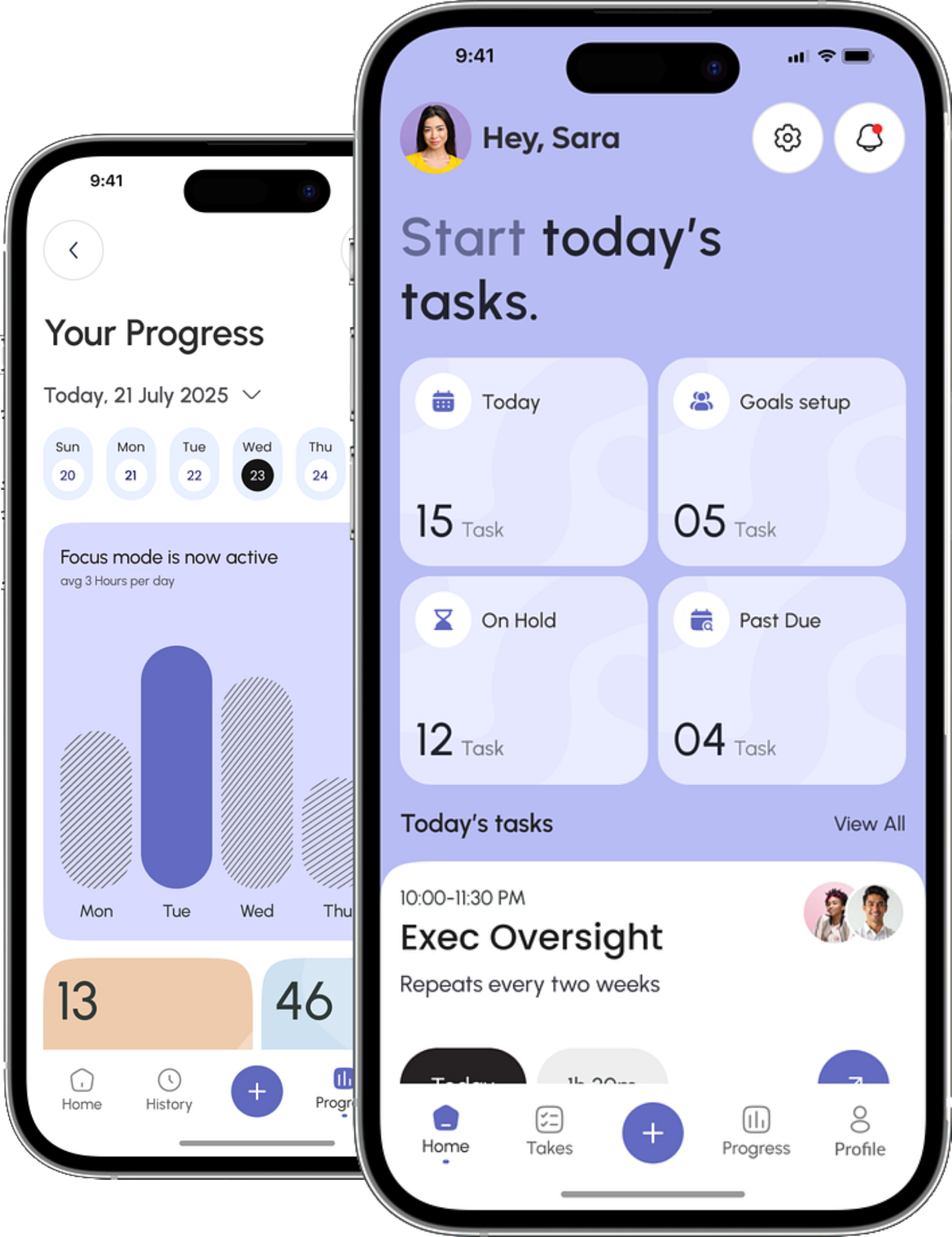
StudyBuddy Student Collaboration Hub
The Challenge
Students relied on separate apps for discussions, tutoring, file sharing, and campus events, and universities had no central way to verify tutors or manage student communities. The client needed one secure platform that could serve many universities while keeping each campus community private.
Our Approach
We built StudyBuddy with React Native and React.js on a Node.js, Express, and MongoDB backend hosted on AWS. WebSockets power real-time messaging, Stripe handles tutor payments and withdrawals, and an admin dashboard manages universities, tutor verification, moderation, and reporting.
The Result
- Private, verified communities for each university
- Tutor marketplace with scheduling and secure Stripe payments
- Multi-university admin dashboard with moderation and reporting
How one learner moves through your platform
Education app features make the most sense in the order a learner meets them. Here is a typical journey from sign-up to certificate, and which part of the platform does the work at each step.
1
Enroll & Onboard
Sign-up or single sign-on, a short placement quiz, and payment or institutional access in one flow.
2
Learn
Video lessons, readings, and live classes, available online or downloaded for offline study.
3
Practice & Assess
Quizzes, assignments, and mock tests with instant scores on objective questions.
4
Get Support
Teacher feedback, discussion threads, tutor sessions, or an AI study assistant when learners get stuck.
5
Complete & Improve
Certificates are issued, reports reach teachers and parents, and the data shows which lessons need work.
What shapes education app development cost
Education app development cost depends less on screen count and more on the number of user roles, the amount of live video, how deep assessments and analytics go, and which systems the app must connect to. Most clients build in phases. Here is what each phase typically adds, so you can see where scope and budget grow.
Phase 1
Launch
Prove learners will engage
- Learner app on one or two platforms
- Course catalog and video lessons
- Basic quizzes and progress tracking
- Payments or institutional sign-in
- Admin panel for content and users
Phase 2
Grow
Deepen the learning experience
- Live classes and recordings
- Teacher and parent portals
- Assignments, mock tests, and grading
- Gamification, streaks, and certificates
- Learning analytics dashboards
Phase 3
Scale
Serve many schools or markets
- LMS, SIS, and SSO integrations
- AI personalization and study assistants
- Multi-campus or white-label tenants
- Multilingual content and localization
- Advanced reporting and data exports
How we take an education app from idea to classroom
As an education application development company, we follow a delivery process that puts learner and teacher feedback into every stage, so the product you launch matches how your classes actually run and can handle enrollment and exam peaks from day one.
Discover
Learner Scoping
Learners, roles, content types, and LMS or SIS systems mapped.
1 to 2 Weeks
Design
Role-Based UX
Student, teacher, parent, and admin journeys tested with real users.
2 to 3 Weeks
Build
Learning Platform
Sprints for courses, assessments, live classes, and integrations.
Agile Sprints
Validate
Exam-Day QA
Device, accessibility, and exam-day load testing before UAT.
Pre-Launch
Launch
Cohort Pilot
Store release and a pilot with one course, cohort, or campus.
OngoingWhy choose Xicom as your education app development company
Education apps need consumer-grade usability, careful data handling, and integration with the systems schools already run. Xicom has delivered software for 20+ years, with 1,800+ projects for 750+ clients across 50+ countries, including EdTech platforms in production.
We Have Shipped EdTech in Production
Beyond StudyBuddy, we built an AI-powered IELTS speaking evaluator with an avatar examiner, speech recognition, and band scoring across the four IELTS criteria. That work covered real-time audio, LLM conversation flows, and a no-code admin panel for content teams. You start with a team that has already solved the hard parts of learning products.
We Design for Teachers, Not Just Students
Many learning apps look good to students while teachers struggle with clumsy grading and content tools. We treat teacher and admin workflows as core product, because a platform educators find easy to manage is one they keep using. Parents and managers get their own views too, so nobody has to ask for a report.
Certified Security Practices in Our Delivery
Xicom holds ISO/IEC 27001 and SOC 2 Type II certifications, and those controls shape how our teams handle your code, credentials, and test data. For your platform, we limit access to student records by role, encrypt sensitive data, and log admin actions so you can answer audit and parent questions with confidence.
Engagement That Matches Your Stage
EdTech startups often begin with a fixed-price MVP, then move to a dedicated team as courses and users grow. Institutions adding apps to existing systems usually prefer time and material. We support all three models, hold a 4.8 rating on Clutch, and stay on after launch to support your mobile apps and backend. For broader platform work, see our education software development services.
Education app development tech stack
Education apps lean heavily on media delivery, real-time interaction, and reliable data. We pair proven mobile and web frameworks with backends built for messaging and live classes, databases suited to course and learner records, and AI tooling where personalization is in scope. The final stack depends on your scale and existing systems.
 React Native
 Flutter
 Swift
 Kotlin
 React
 Next.js
 TypeScript
 Angular
 Node.js
 Python
 Express.js
 Firebase
WebSockets
 FastAPI
 PostgreSQL
 MongoDB
 Redis
LangGraph
Gemini
Whisper
 AWS
 Google Cloud
 Microsoft Azure
 Docker
 Kubernetes
 Terraform
Client testimonials and reviews showcasing the value we consistently deliver
Explore how our clients describe their journey with us, reflecting strong collaboration, effective execution, and consistent outcomes delivered across engagements. See how our delivery framework ensures consistency from initiation through to successful completion.
❝
Parity AI
We came to Xicom with an ambitious goal: make institutional-grade financial planning accessible to everyone through AI. Xicom went beyond the brief, blending conversational AI and predictive analytics into an effortless platform. Parity AI is exactly what we envisioned.

❝
RadioFX
Xicom took the time to understand what our stations and listeners actually need, building something tailored rather than generic. Live chat and polls are now core to how we connect with our audience — the app has become a true extension of our on-air presence.


❝
StudyBuddy
Xicom built exactly what our students needed: a secure space to connect, collaborate, and find tutoring support in one place. Their understanding of student behavior shows in how naturally everything fits together — StudyBuddy is something students genuinely rely on.

❝
BoxxDocks
Xicom helped us bring BoxxDocks to life exactly as we envisioned it. Their team understood the complexity of AI powered real-time asset tracking and delivered a platform that's both powerful and genuinely easy to use.


❝
TodayFit
We are very happy with their services. I cannot recommend them highly enough. The value, ability, and delivery that we have seen has been superb, and we look forward to continuing this relationship.


❝
SmartVend AI
Their team built SmartVend from the ground up, combining hardware integration, real-time inventory sync, and a centralized dashboard that completely changed how we operate. We couldn't have asked for a more capable technical partner.

❝
Tap Retail
Partnering with Xicom to develop our Tap Retail app and website was one of the best decisions we made. Their team demonstrated exceptional professionalism, technical expertise, and a deep understanding of our business goals.


❝
GoGmGo
Partnering with Xicom was a game-changer for us. They didn't just build software, they helped us redefine how we run our business. Their proactive support and deep domain knowledge gave us the confidence to innovate faster.

❝
DENVEN
Working with Xicom has been a transformative experience. Their team quickly understood our challenges and delivered a scalable, intuitive solution. I highly recommend Xicom to any organization seeking future-ready, high-performance digital products.

Top tech insights of our blog
Explore latest tech stories & News
✦ AI-First Company
Deep Insights into Emerging Technology and Innovation!
Stay ahead in the digital world with our latest insights covering AI trends, industry developments, and expert advice on building smarter businesses.
1800+
Projects
20+
Years Experience
Frequently Asked Questions
What does an education app development company build?
An education app development company builds the learner-facing app plus everything behind it: teacher and admin portals, course and content management, assessments, live or recorded classes, payments, notifications, and reporting. Xicom also connects these apps to existing LMS, student information, and identity systems, then supports the platform after launch.
How much does it cost to develop an education app?
Cost depends on the number of user roles, whether you need live video, how deep the assessment and analytics features go, which systems the app must integrate with, and whether AI features are included. A single-course MVP costs far less than a multi-campus platform. We share a written estimate after a short scoping phase based on your phase plan.
How long does it take to build an education app?
An MVP with enrollment, course content, quizzes, and progress tracking usually takes a few months. Platforms with live classes, multiple portals, LMS or SIS integration, and AI features take longer. We recommend piloting with one course, cohort, or campus first, because real learners reveal usability gaps that internal testing misses.
Can you build an education app like Coursera or Duolingo?
We can build a platform with the same core building blocks, such as course catalogs, video lessons, practice exercises, streaks, certificates, and subscriptions. We do not copy another company's design or code. Instead, we shape the product around your learners, your content, and your revenue model.
Should we build a native or cross-platform education app?
Cross-platform frameworks such as React Native or Flutter suit most learning apps, because one codebase serves iOS and Android and keeps updates in sync. Native Swift or Kotlin development makes sense when you need heavy offline media, advanced device features, or AR experiences. We recommend an approach after reviewing your feature list and budget.
Can the app integrate with our existing LMS or student information system?
Yes. We integrate with LMS platforms such as Moodle, Canvas, or Google Classroom, student information systems, single sign-on providers, video conferencing tools, and payment gateways where APIs allow. Where content standards matter, we work with formats such as LTI, SCORM, and xAPI so courses and grades move between systems without manual re-entry.
How do you keep student data secure and compliant?
We apply role-based access, encryption in transit and at rest, audit logs, and data minimization, and we design consent and parental controls for apps used by children. Platforms are built to align with requirements such as FERPA, COPPA, and GDPR. Xicom itself holds ISO/IEC 27001 and SOC 2 Type II certifications.
Can you add AI features such as personalized learning or AI tutors?
Yes. We add adaptive learning paths, content recommendations, automated grading and feedback, AI study assistants, and speech evaluation for language learning. Xicom built an AI-powered IELTS speaking evaluator with an avatar examiner and band scoring, so we have shipped AI in a production education product, not only in prototypes.
Which engagement models does Xicom offer?
We offer Fixed Price for well-defined MVPs, Time and Material for integration-heavy or evolving scopes, and Dedicated Team for long-term product development. Many EdTech clients start with a fixed-price MVP, then add dedicated mobile app developers as new courses, roles, and features are added.
Do you provide support after launch?
Yes. After launch we monitor uptime, crashes, and video performance, release OS and security updates, scale infrastructure ahead of exam and enrollment peaks, and ship new features. We also help with app store reviews, which can involve extra checks for apps aimed at children.
Every award marks a milestone in our journey of excellence
As an AI-first digital engineering company, Xicom has earned global recognition for delivering innovative, scalable, and high-performing technology solutions. Our awards reflect the trust of clients and industry leaders alike.