×
Manufacturing App Development Company
Xicom is a manufacturing app development company that builds custom mobile, tablet, and web apps for production, maintenance, quality, and inventory teams. Our apps replace paper forms and spreadsheets with real-time data, integrate with your ERP, MES, and IoT systems, and are designed for the realities of the factory floor.
Get a Free Consultation
- 20+ Years in Business
- 350+ IT Experts
- 750+ Enterprise Clients
- CMMi Level 3 Certified
- ISO 9001:2015
- Top 1% on TrustPilot
-
 4.8 on Clutch
Our valued Brands & Agencies
















Many manufacturers still depend on paper checklists, whiteboards, and disconnected spreadsheets to run daily operations, which delays decisions and hides problems until they become costly. Our custom manufacturing app development connects frontline workers, machines, and enterprise systems, supported by the engineering expertise behind our mobile app development services.
Core Capabilities We Bring to Every Manufacturing App
- Real-Time Operational Visibility Live production, machine, and inventory data on mobile devices and dashboards, so supervisors can act during the shift rather than after it.
- Enterprise System Integration Two-way integration with ERP, MES, CMMS, and WMS platforms keeps work orders, materials, and production records consistent.
- Secure Access and Audit Trails Role-based access, single sign-on, and time-stamped records support traceability, audits, and quality compliance.
- Built for Industrial Conditions Offline-first operation, rugged device support, and simple interfaces that workers can use quickly, even while wearing gloves.
Industry and security standards we build to align with

ISO 9001

GDPR

OSHA

SOC 2

ISO 27001

OWASP MASVS

GMP

ISO 14001
Manufacturing app development services we offer
Our manufacturing app development services digitize the workflows that run your plants every day. As a manufacturing mobile app development company, we design each app around specific roles, devices, and existing systems.
Shop Floor & Production Tracking Apps
We develop production tracking apps that let operators view work orders, record output, scrap, and downtime reasons, and follow digital work instructions at each station. Supervisors see line status, shift performance, and bottlenecks in real time instead of waiting for end-of-day reports.
Maintenance & Asset Management Apps
We build mobile maintenance apps for technicians, with QR-tagged asset lookup, preventive maintenance schedules, work order creation and closure, spare parts usage, photo capture, and equipment history. Integration with CMMS or EAM systems keeps maintenance records complete and accessible on the floor.
Quality Inspection & Compliance Apps
We develop digital inspection apps with configurable checklists, measurement capture, photo and video evidence, non-conformance reporting, and corrective action tracking. Every record is time-stamped and traceable, supporting quality audits and standards such as ISO 9001 and GMP.
Inventory & Warehouse Management Apps
We build inventory apps with barcode and RFID scanning for receiving, put-away, picking, cycle counts, and material transfers between stores and production lines. Real-time stock levels, low-stock alerts, and lot or serial tracking reduce shortages and improve traceability.
IoT Machine Monitoring Apps
Through our IoT development services, we connect machines and sensors to mobile apps and dashboards that show equipment status, cycle counts, temperatures, and alarms in real time. Automated alerts notify the right team when a machine stops or a parameter moves outside its limits.
AI-Powered Manufacturing Features
With our AI development team, we add predictive maintenance based on machine data, image-based defect detection, demand and inventory forecasting, and AI assistants that help technicians find procedures quickly. Each model includes monitoring to maintain accuracy over time. Our guide to AI in manufacturing covers more use cases.
Accelerating enterprise transformation through AI and digital engineering.
20+
Years in Business
350+
IT Professionals
ISO 9001 Certified
NASSCOM & STPI Accreditation
NASSCOM & STPI Accreditation
750+
Clients Worldwide
1800+
Projects Executed
Who We Build For
Custom manufacturing apps for every type of production environment.
Each manufacturing environment has different processes, regulations, and systems. As a custom manufacturing app development company, we tailor workflows, integrations, and device choices to your operations.
Discuss Your RequirementsDiscrete Manufacturers
Apps for automotive components, electronics, machinery, and assembly operations, covering work orders, serial tracking, assembly instructions, and line performance.
Process Manufacturers
Apps for food and beverage, chemicals, and pharmaceuticals, with batch records, recipe and lot tracking, environmental monitoring, and GMP-aligned documentation.
Industrial Equipment OEMs
Connected product apps for customers, plus service apps for installation, warranty registration, remote diagnostics, and spare parts ordering.
Contract Manufacturers
Multi-customer production visibility, job costing, quality documentation, and customer portals that share order status and certificates.
Distributors & Dealer Networks
B2B ordering apps with product catalogs, customer-specific pricing, order tracking, and sales rep tools connected to ERP inventory and pricing.
Field Service & Plant Maintenance Teams
Technician apps for scheduling, job details, checklists, parts usage, customer sign-off, and service reports, available online or offline.
Choosing the right type of manufacturing app
Manufacturing apps fall into four broad categories based on who uses them and what they connect to. Identifying the right category helps define scope, devices, and integrations from the start.
Frontline worker apps
Operators, technicians, and inspectors record work, follow instructions, and report issues from the floor.
Key build areas: Offline mode, scanning, digital forms, rugged device supportManagement and analytics apps
Plant managers and executives track KPIs, production performance, and quality trends across lines and sites.
Key build areas: Dashboards, ERP and MES data integration, role-based reportingCustomer and dealer apps
Distributors, dealers, and customers place orders, track shipments, and access documents and support.
Key build areas: Catalogs, pricing rules, order tracking, ERP integrationConnected machine apps
Machine and sensor data is monitored remotely to track performance, detect faults, and plan maintenance.
Key build areas: IoT gateways, real-time data streams, alerts, analyticsPlanning to digitize your manufacturing operations? Let's discuss your requirements
Share the processes you want to improve, the systems you use today, and your plant environment. Through our manufacturing app development services, our team will recommend the right workflows, devices, and integrations, and prepare a phased plan starting with a focused pilot.
Core architecture behind reliable manufacturing applications
Manufacturing apps must stay accurate and available in demanding environments. These three backend layers keep data consistent between the floor, machines, and enterprise systems.
An integration layer connects ERP, MES, CMMS, WMS, and quality systems through APIs, middleware, or database connectors, and maps their data into a consistent model.
Work orders, materials, and production records flow in both directions, with validation and error queues so no transaction is lost.
- Two-way ERP and MES sync
- Validation and error queues
- Consistent master data
Apps store work orders, checklists, and scans locally, so workers can continue in areas with poor connectivity.
Data syncs automatically when the connection returns, with conflict resolution rules that protect record accuracy.
- Local data storage
- Automatic background sync
- Conflict resolution rules
Machine and sensor data is collected through IoT gateways using industrial protocols such as MQTT, then processed in the cloud for dashboards and analytics.
Rules trigger alerts to the right team when machines stop, parameters drift, or maintenance thresholds are reached.
- Gateway-based data collection
- Real-time machine dashboards
- Threshold-based alerts
IoT, asset tracking, and inventory app case studies
These projects show how Xicom, as a manufacturing app development company, has delivered IoT hardware integration, real-time asset tracking, inventory control, and operational reporting for clients in industrial and multi-location environments.
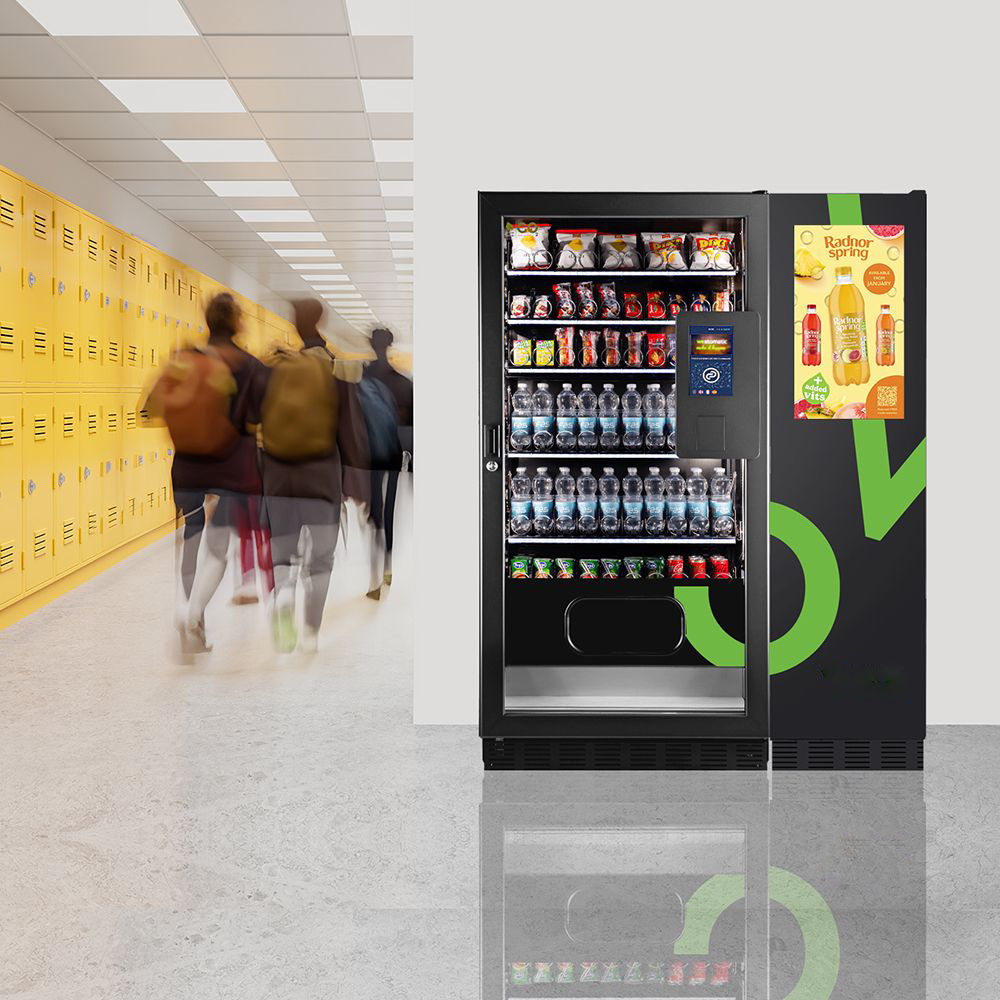
SmartVend AI Smart Vending Platform
The Challenge
Managing a distributed vending machine network meant manual inventory tracking, disconnected payment systems, no remote management capability, and zero real-time visibility into machine health or sales performance across locations.
Our Approach
We built SmartVend as a cloud-connected IoT platform combining an Android kiosk app, centralized web portal, real-time inventory sync, hardware integration for payments and dispensing, and a digital advertising layer, all managed from a single dashboard.
The Result
- Real-time inventory sync with low-stock alerts
- Remote machine management across unlimited locations
- IoT integration for payments, dispensing, and monitoring
- Centralized sales analytics and revenue reporting
BoxxDocks AI Asset Tracking Platform
The Challenge
Asset tracking was manual, error-prone, and scattered across disconnected systems. The client had no centralized visibility into asset movement, no real-time location data, and no way to generate instant reports across multiple enterprise clients from a single platform.
Our Approach
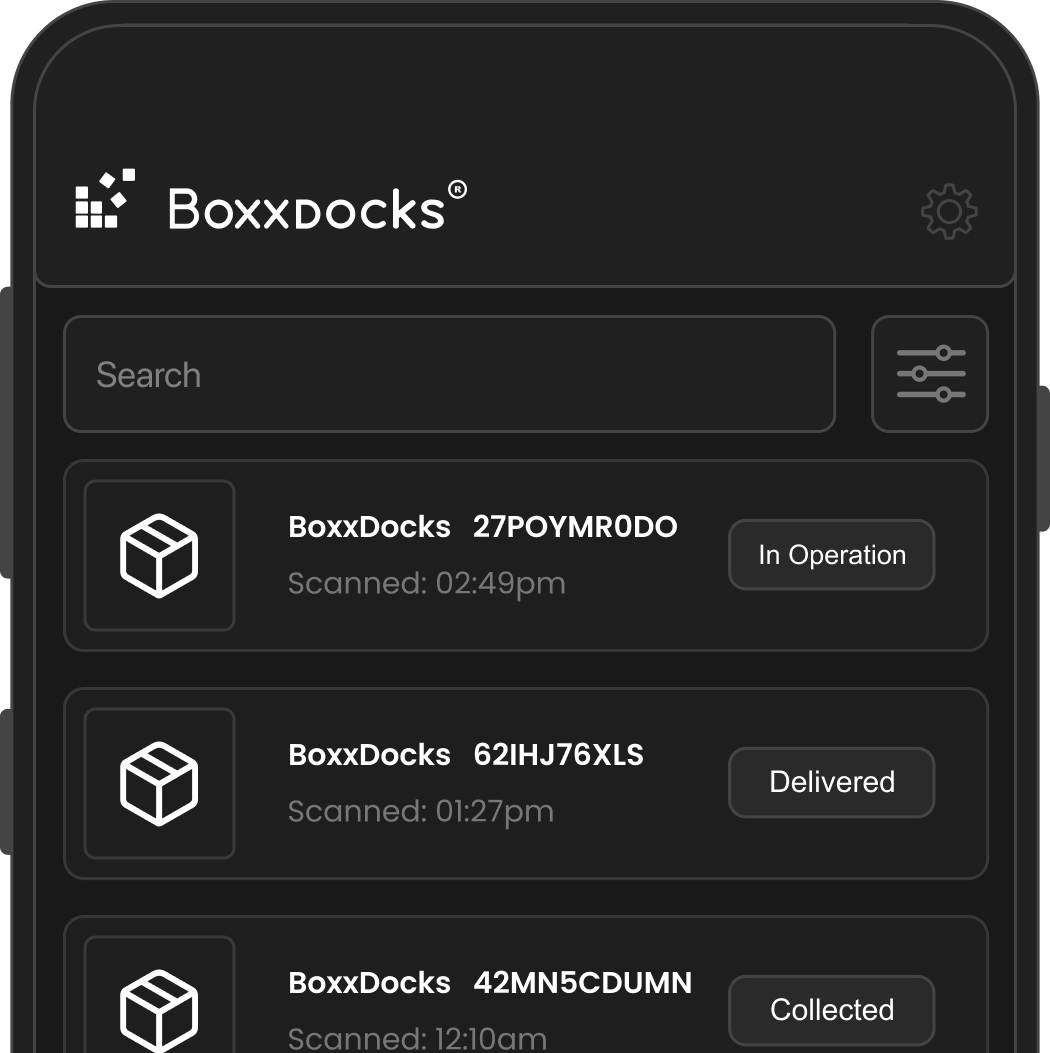
We built BoxxDocks as an AI-enabled asset lifecycle platform using QR/NFC scanning, real-time dashboards, geolocation tracking, and a RAG-powered conversational engine that lets users query live operational data in plain English instead of navigating dashboards.
The Result
- Real-time inventory tracking across warehouses, transit, and delivery
- AI query engine for natural language insights
- LLM-powered reporting with anomaly detection
- Complete audit trail with location, timestamp, and status
DENVEN Dental Management System
The Challenge
Dental practices relied on manual, error-prone inventory systems with no centralized tracking, no expiry alerts, no implant traceability, and zero real-time reporting, spread across multiple locations with non-technical staff.
Our Approach
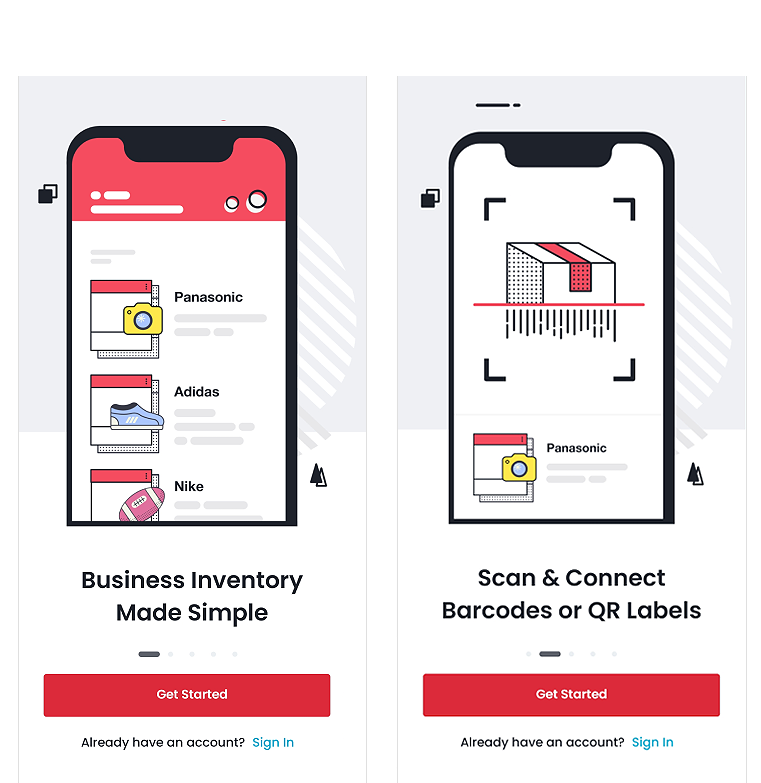
We built a cloud-native dental inventory platform with real-time stock tracking, barcode/QR scanning, automated low-stock and expiry alerts, supplier catalog integration, an implant-to-patient tracking module with downloadable implant passports, and role-based access across locations, developed iteratively using Agile methodologies.
The Result
- 250+ practices adopted within 12 months
- 40% reduction in inventory wastage
- 99.5% reorder accuracy
- 80% improvement in implant traceability
- 92% user satisfaction score
How a work order moves through your manufacturing app
A work order passes through five stages from planning to reporting. Each stage relies on specific app features and system integrations.
1
Plan
Work orders are released from ERP or MES with materials, routing, and target quantities.
2
Assign
Jobs appear on operator devices by line or station, with digital work instructions attached.
3
Execute
Operators scan materials, record output and downtime, and machine data is captured automatically.
4
Inspect
Quality checks are completed in the app, and non-conformances are logged with photos.
5
Report
Results sync back to ERP, and dashboards update production, quality, and efficiency metrics.
Factors that influence manufacturing app development cost
Manufacturing app development cost depends mainly on the number of workflows, system integrations, device types, IoT connections, and sites, rather than screen count. A phased approach validates value early. Here is what each phase typically includes.
Phase 1
Launch
Pilot one workflow
- One app for one workflow and line
- Digital forms and checklists
- Barcode or QR scanning
- Offline mode and data sync
- Basic supervisor dashboard
Phase 2
Grow
Expand across workflows
- ERP and MES integration
- Maintenance and quality modules
- Inventory and material tracking
- Alerts and notifications
- Production analytics
Phase 3
Scale
Scale across plants
- Multi-site rollout and administration
- IoT machine connectivity
- Predictive maintenance and AI
- Customer and dealer portals
- Enterprise reporting and KPIs
After a scoping session, we provide a detailed estimate for each phase. For broader benchmarks, refer to our mobile app development cost guide.
Our manufacturing app development process
As a manufacturing application development company, we follow a structured five-stage process that starts on the plant floor and keeps scope, integrations, and timelines transparent through launch.
Discover
Plant Floor Scoping
Workflows, machines, ERP and MES systems, and pilot line mapped.
1 to 2 Weeks
Design
Operator-First UX
Glove-friendly screens tested with operators, plus integration design.
2 to 3 Weeks
Build
Shop Floor Build
Sprints for apps, ERP and MES sync, IoT data, and dashboards.
Agile Sprints
Validate
Line Pilot & QA
Device, offline, and integration tests, then a pilot on one line.
Pre-Launch
Launch
Plant-Wide Rollout
Operator training, then phased rollout across lines and plants.
OngoingKey features we build into manufacturing apps
Barcode, QR & RFID Scanning
Fast scanning with device cameras or rugged scanners for materials, assets, and finished goods.
Digital Forms & Checklists
Configurable forms for inspections, safety checks, and shift handovers, with photos and signatures.
Offline Mode
Full functionality without connectivity, with automatic sync once the device reconnects.
Real-Time Alerts
Push notifications for machine stops, quality failures, low stock, and overdue maintenance.
Role-Based Dashboards
Tailored views for operators, supervisors, maintenance, quality, and plant management.
Device & Kiosk Management
Support for shared devices, kiosk mode, and mobile device management across sites.
Why choose Xicom as your manufacturing app development company
Manufacturing apps must work reliably on the floor, integrate with complex enterprise systems, and protect operational data. Xicom combines industrial software experience, IoT and integration expertise, and certified security practices to deliver apps that teams adopt and rely on.
Experience in IoT, Asset Tracking, and Operations Platforms
Our portfolio includes IoT-connected hardware platforms, real-time asset tracking systems, and multi-location inventory solutions. Our broader manufacturing software development and manufacturing AI development practices also cover ERP, MES, and predictive analytics.
Expertise in Enterprise and Industrial Integrations
Manufacturing apps deliver value only when they connect to the systems that run the business. Our engineers integrate ERP, MES, CMMS, and IoT platforms with validation and error handling, so data stays accurate across every system.
Certified Security Practices in Our Delivery
Xicom holds ISO/IEC 27001 and SOC 2 Type II certifications, and those controls shape how our teams handle your code, credentials, and test data. For your manufacturing apps, we apply role-based access, single sign-on, encryption, and audit logs, and keep production network access separated through secure gateways.
Engagement That Matches Your Stage
Most manufacturers begin with a fixed-price pilot for one workflow, then move to time and material or a dedicated team as the program expands across plants. We support all three models, hold a 4.8 rating on Clutch, and continue supporting your apps and integrations after rollout.
Manufacturing app development tech stack
Manufacturing apps require reliable offline sync, real-time data processing, and secure enterprise integration. We combine proven mobile frameworks with event-driven backends, IoT messaging, and analytics tools, then add the ERP, MES, and device integrations your operations need. The final stack depends on your scale and existing systems.
 React Native
 Flutter
 Swift
 Kotlin
 React
 Next.js
 TypeScript
 Angular
 Node.js
 Python
 Go
 Firebase
WebSockets
 Apache Kafka
 PostgreSQL
 MongoDB
 Redis
Elasticsearch
MQTT
Power BI
 AWS
 Google Cloud
 Microsoft Azure
 Docker
 Kubernetes
 Terraform
Client testimonials and reviews showcasing the value we consistently deliver
Explore how our clients describe their journey with us, reflecting strong collaboration, effective execution, and consistent outcomes delivered across engagements. See how our delivery framework ensures consistency from initiation through to successful completion.
❝
Parity AI
We came to Xicom with an ambitious goal: make institutional-grade financial planning accessible to everyone through AI. Xicom went beyond the brief, blending conversational AI and predictive analytics into an effortless platform. Parity AI is exactly what we envisioned.

❝
RadioFX
Xicom took the time to understand what our stations and listeners actually need, building something tailored rather than generic. Live chat and polls are now core to how we connect with our audience — the app has become a true extension of our on-air presence.


❝
StudyBuddy
Xicom built exactly what our students needed: a secure space to connect, collaborate, and find tutoring support in one place. Their understanding of student behavior shows in how naturally everything fits together — StudyBuddy is something students genuinely rely on.

❝
BoxxDocks
Xicom helped us bring BoxxDocks to life exactly as we envisioned it. Their team understood the complexity of AI powered real-time asset tracking and delivered a platform that's both powerful and genuinely easy to use.


❝
TodayFit
We are very happy with their services. I cannot recommend them highly enough. The value, ability, and delivery that we have seen has been superb, and we look forward to continuing this relationship.


❝
SmartVend AI
Their team built SmartVend from the ground up, combining hardware integration, real-time inventory sync, and a centralized dashboard that completely changed how we operate. We couldn't have asked for a more capable technical partner.

❝
Tap Retail
Partnering with Xicom to develop our Tap Retail app and website was one of the best decisions we made. Their team demonstrated exceptional professionalism, technical expertise, and a deep understanding of our business goals.


❝
GoGmGo
Partnering with Xicom was a game-changer for us. They didn't just build software, they helped us redefine how we run our business. Their proactive support and deep domain knowledge gave us the confidence to innovate faster.

❝
DENVEN
Working with Xicom has been a transformative experience. Their team quickly understood our challenges and delivered a scalable, intuitive solution. I highly recommend Xicom to any organization seeking future-ready, high-performance digital products.

Top tech insights of our blog
Explore latest tech stories & News
✦ AI-First Company
Deep Insights into Emerging Technology and Innovation!
Stay ahead in the digital world with our latest insights covering AI trends, industry developments, and expert advice on building smarter businesses.
1800+
Projects
20+
Years Experience
Frequently Asked Questions
What does a manufacturing app development company build?
A manufacturing app development company builds mobile, tablet, and web applications for factory and field operations, such as production tracking, maintenance, quality inspection, inventory, and machine monitoring. These apps connect to existing ERP, MES, and IoT systems so frontline workers and managers can capture and act on data in real time.
Can manufacturing apps integrate with our ERP and MES systems?
Yes. We integrate with ERP platforms such as SAP, Oracle, and Microsoft Dynamics 365, as well as MES, CMMS, WMS, and quality management systems, through their APIs, middleware, or database connectors where access allows. Work orders, inventory, and production data stay synchronized, so teams do not re-enter information across systems.
Do the apps work offline on the shop floor?
Yes. Many plants and warehouses have areas with weak or no connectivity, so we build offline-first apps that store work orders, checklists, and scans on the device and sync automatically when a connection returns, with conflict handling to keep records accurate.
Which devices do manufacturing apps support?
We develop apps for smartphones, tablets, rugged handheld devices with built-in scanners, shop floor kiosks, and large-screen displays, as well as web dashboards for managers. Interfaces are designed for industrial use, with large touch targets, high contrast, and support for barcode and RFID hardware.
Should we build native or cross-platform manufacturing apps?
Cross-platform app development with Flutter or React Native suits most frontline apps, because one codebase runs on iOS and Android devices across the plant. Native development is recommended when apps depend on specialized scanner SDKs, Bluetooth peripherals, or device-level performance. We recommend the approach after reviewing your devices and workflows.
Can you connect machines and IoT sensors to the app?
Yes. We connect machines, PLCs, and sensors through IoT gateways and industrial protocols such as MQTT, then stream data to cloud dashboards and mobile apps. Teams can monitor machine status, production counts, and alerts in real time, and use the data for maintenance and efficiency analysis.
How do you secure manufacturing apps and operational data?
We apply role-based access, single sign-on, encryption in transit and at rest, device management policies, and audit logs, and we keep IT and production network access separated through secure gateways. Security testing is part of every release, and Xicom holds ISO/IEC 27001 and SOC 2 Type II certifications.
Can you add AI features to manufacturing apps?
Yes. Through our AI development services, we add predictive maintenance based on machine data, image-based quality inspection, demand and inventory forecasting, and AI assistants that help technicians find procedures and troubleshooting steps. AI features can be added once enough operational data is available.
Can we start with a pilot before a full rollout?
Yes, and we recommend it. Most clients start with one workflow on one production line or site, measure the results, and then extend the app to more processes and plants. A pilot reveals practical issues such as connectivity gaps, device choices, and training needs before a wider rollout.
What engagement models and post-launch support do you offer?
Our manufacturing app development services are available as Fixed Price for defined pilots, Time and Material for evolving scopes, or a team of dedicated mobile app developers for long-term programs. After launch, we provide monitoring, OS and security updates, integration maintenance as connected systems change, and rollouts to new sites.
Every award marks a milestone in our journey of excellence
As an AI-first digital engineering company, Xicom has earned global recognition for delivering innovative, scalable, and high-performing technology solutions. Our awards reflect the trust of clients and industry leaders alike.