×
Travel App Development Company
Xicom is a travel app development company that builds secure, high-performance booking and trip management apps for online travel agencies, hotels, tour operators, and mobility providers. We develop custom iOS, Android, and web apps with real-time search, GDS and supplier integrations, secure payments, and itinerary management for travelers in the USA and worldwide.
Get a Free Consultation
- 20+ Years in Business
- 350+ IT Experts
- 750+ Enterprise Clients
- CMMi Level 3 Certified
- ISO 9001:2015
- Top 1% on TrustPilot
-
 4.8 on Clutch
Our valued Brands & Agencies
















Travel platforms operate on live inventory, changing prices, and multi-step bookings that must complete reliably across suppliers and payment systems. Our custom travel app development approach addresses accuracy, speed, and data protection from the architecture stage, supported by the engineering expertise behind our mobile app development services.
Core Capabilities We Bring to Every Travel App
- Accurate Real-Time Availability Live inventory and pricing from connected suppliers, with caching and revalidation at checkout to reduce booking failures and price mismatches.
- Secure Multi-Currency Payments Tokenized card and wallet payments, multi-currency pricing, refunds, and reconciliation with supplier settlements.
- Traveler Data Protection Encryption, role-based access, and consent management protect passport details, travel documents, and personal information.
- Seasonal Scalability Cloud infrastructure that scales for holiday peaks, flash sales, and high search volumes without slowing the booking experience.
Security and compliance standards we build to align with

PCI DSS

GDPR

CCPA

SOC 2

ISO 27001

OWASP MASVS

WCAG 2.2

OAuth 2.0
Travel app development services we offer
Our travel app development services cover the complete traveler journey, from search and booking to on-trip support. As a travel mobile app development company, we scope each solution to your inventory sources, audience, and business model.
Travel Booking App Development
We develop all-in-one travel booking apps that combine flights, hotels, packages, and activities in a single search and checkout. Features include smart filters, price comparisons, saved travelers, flexible date search, fare alerts, secure payments, and a booking management area for changes, cancellations, and refunds.
Hotel & Vacation Rental Apps
We build hotel booking and vacation rental apps with room and property search, photo galleries, maps, reviews, rate plans, and instant or request-to-book flows. For hotels and property managers, we integrate property management systems and channel managers, and add mobile check-in, digital keys, and guest messaging where supported.
Flight Booking & GDS Integration
We develop flight search and booking apps connected to GDS platforms such as Amadeus, Sabre, and Travelport, NDC airline APIs, or flight aggregators. Features include multi-city search, fare families, seat selection, baggage and ancillary sales, e-ticketing, and real-time flight status alerts.
Tour, Activity & Itinerary Planner Apps
We build apps for tour operators and travel planners with activity listings, availability calendars, group bookings, digital vouchers, and day-by-day itinerary builders. Travelers can organize all reservations in one place, share plans with companions, and access everything offline during the trip.
Car Rental & Ground Transport Apps
We develop car rental, airport transfer, and ride-booking apps with vehicle search, pickup and drop-off scheduling, digital agreements, real-time tracking, and driver apps. Our taxi booking app cost guide outlines the key factors for mobility platforms.
AI Travel Assistants & Personalization
With our AI development team, we add conversational trip planners, personalized destination and hotel recommendations, automated itinerary generation, demand and pricing insights, and multilingual support chatbots that handle booking questions and changes. Each AI feature includes monitoring to maintain accuracy as data grows.
Accelerating enterprise transformation through AI and digital engineering.
20+
Years in Business
350+
IT Professionals
ISO 9001 Certified
NASSCOM & STPI Accreditation
NASSCOM & STPI Accreditation
750+
Clients Worldwide
1800+
Projects Executed
Who We Build For
Custom travel apps for every segment of the travel industry.
Each travel business has different inventory sources, booking rules, and customer expectations. As a custom travel app development company, we tailor features, integrations, and revenue models to your segment.
Discuss Your RequirementsOnline Travel Agencies
Multi-supplier search across flights, hotels, and packages, with markup rules, promotions, booking management, and customer support tools for high-volume OTA operations.
Hotels, Resorts & Hospitality Groups
Direct booking apps with loyalty programs, mobile check-in, digital keys, in-stay services, and guest messaging, integrated with property management systems.
Tour Operators & Destination Management
Activity and package booking, guide and group management, digital vouchers, and supplier dashboards for tour operators and destination management companies.
Vacation Rental & Homestay Platforms
Host and guest apps with property listings, calendars, pricing rules, reviews, messaging, and secure payouts for rental marketplaces and property managers.
Corporate Travel Management
Business travel apps with policy rules, approval workflows, traveler profiles, centralized invoicing, expense integration, and duty-of-care tracking.
Car Rental & Mobility Providers
Vehicle booking, airport transfers, and ride-hailing apps with real-time tracking, driver management, and dynamic pricing for ground transport businesses.
Choosing the right travel business model
Your business model determines which inventory sources you need, how revenue is earned, and which features to prioritize. Most travel apps follow one of these four models.
OTA marketplace
Travelers compare and book inventory from many suppliers, and the platform earns commissions or markups.
Key build areas: GDS and aggregator APIs, search, pricing rules, booking managementDirect supplier app
Hotels, airlines, and tour brands sell their own inventory directly to build loyalty and reduce third-party fees.
Key build areas: PMS or reservation system integration, loyalty, guest servicesPeer-to-peer rental marketplace
Hosts or owners list properties, vehicles, or experiences, and the platform manages bookings and payouts.
Key build areas: Host apps, calendars, reviews, split payments, trust and safetyTrip planning and companion app
Travelers plan itineraries, store bookings, and access guides, with revenue from subscriptions, affiliates, or ads.
Key build areas: Itinerary builder, offline access, maps, affiliate integrationsPlanning to build a travel app? Let's discuss your requirements
Share your business model, target travelers, and inventory sources. Through our travel app development services, our team will recommend the right features, supplier integrations, and technology stack, and prepare a phased development plan with a detailed estimate.
Core architecture behind a reliable travel booking platform
Every search and booking depends on three backend layers working together. Expand each layer to see how we keep availability accurate, searches fast, and payments reliable.
An integration layer connects GDS platforms, NDC airline APIs, hotel bedbanks, channel managers, and local suppliers, and normalizes their data into one consistent format.
Booking requests are confirmed with each supplier in real time, and failures trigger automatic retries or alternatives before the traveler is affected.
- GDS and NDC connectivity
- Unified supplier data model
- Booking confirmation workflows
Search results are served from a smart cache to keep response times low and reduce supplier API costs, while prices are revalidated before checkout.
Pricing rules apply markups, discounts, taxes, and currency conversion consistently across every channel.
- Fare and rate caching
- Price revalidation at checkout
- Centralized pricing rules
Card and wallet payments are tokenized through PCI DSS validated gateways, with support for multiple currencies, partial payments, and deposits.
Cancellations and refunds follow each supplier's policy automatically, and settlements are reconciled for finance teams.
- Multi-currency payments
- Policy-based refunds
- Supplier settlement reports
Travel, mobility, and booking app case studies
These projects show how Xicom, as a travel app development company, has delivered real-time booking, location tracking, inventory management, and secure payments for clients in mobility and travel.
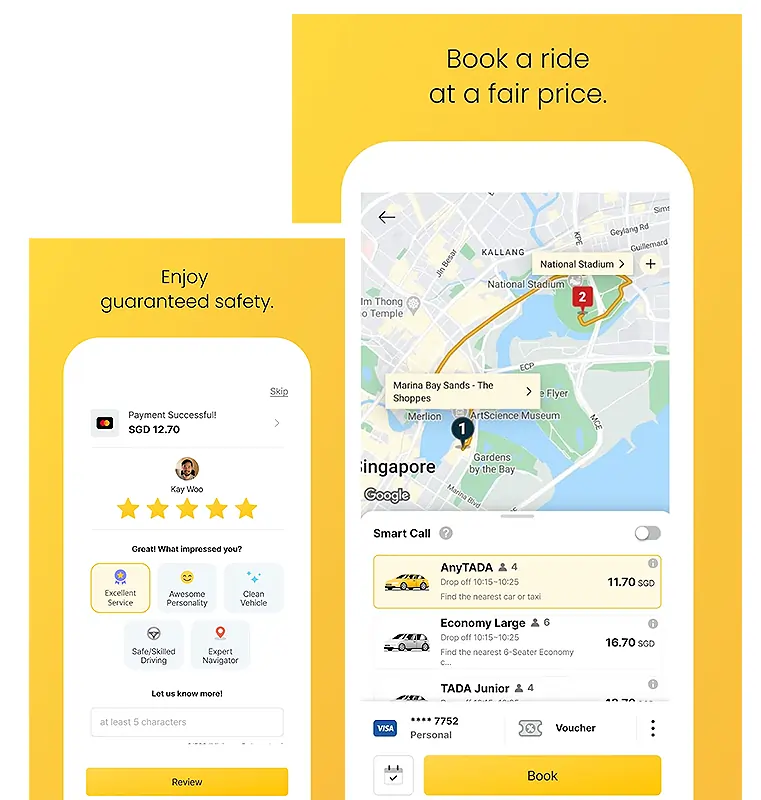
TADA Taxi Booking App
The Challenge
Unbalanced ride distribution, delayed driver matching during peak hours, no taxi option, limited suburban coverage, and backend scalability issues were driving high user drop-off and low booking volumes.
Our Approach
We built a multi-modal ride-hailing platform using Flutter and Node.js/MongoDB with a Smart Call feature using predictive analytics, real-time tracking via Google Maps API, taxi/EV/SUV modules localized per region, a dedicated driver portal, and dynamic load balancing for peak-hour scalability.
The Result
- 10x user growth in Singapore within 12 months
- 35% faster ride matching during peak hours
- 50% more successful matches with Smart Call
- 40% of ride requests from suburban areas
CampCrate Outdoor Rental Platform
The Challenge
CampCrate needed a booking platform for camping and festival trips that could manage customer data across regions, handle many simultaneous bookings, track gear inventory centrally, and process payments automatically, with most customers booking from mobile devices.
Our Approach
We built a responsive booking portal and shopping cart that combines customer management, gear booking, and inventory control in one system, with an integrated delivery management module, automated payments, and order tracking across desktop and mobile.
The Result
- Booking requests from 25,000+ customers within 3 months of launch
- Unified booking, inventory, and customer management
- Integrated delivery management for gear fulfillment
- Mobile-responsive booking with secure online payments

How a trip moves through your travel app
A travel booking passes through five stages from inspiration to post-trip engagement. Each stage relies on specific app features and backend services.
1
Search & Compare
Travelers search destinations, dates, and prices across connected suppliers with filters and sorting.
2
Book & Pay
Availability and price are confirmed, payment is processed, and tickets or vouchers are issued.
3
Prepare
The itinerary, documents, check-in reminders, and pre-trip offers are delivered in the app.
4
Travel
Real-time alerts, offline access, maps, and in-app support assist travelers during the trip.
5
Review & Return
Reviews are collected, loyalty points are credited, and trip data powers future recommendations.
Factors that influence travel app development cost
Travel app development cost depends mainly on the number of supplier integrations, booking types, markets, and real-time features, rather than screen count. A phased roadmap helps validate the product before expanding. Here is what each phase typically includes.
Phase 1
Launch
Validate the booking experience
- Traveler app on iOS, Android, or web
- One booking category, such as hotels
- One aggregator or supplier API
- Card and wallet payments
- Admin for bookings and refunds
Phase 2
Grow
Expand inventory and engagement
- Flights, packages, and activities
- Additional supplier integrations
- Itinerary management and alerts
- Loyalty, reviews, and promotions
- Booking and revenue analytics
Phase 3
Scale
Scale across markets
- Direct GDS or NDC connectivity
- Multi-language and multi-currency
- White-label or B2B agent portals
- AI trip planning and recommendations
- Advanced finance and settlement reports
After a scoping session, we provide a detailed estimate for each phase. For broader benchmarks, refer to our mobile app development cost guide.
Our travel app development process
As a travel application development company, we follow a structured five-stage process that keeps scope, integrations, and timelines transparent from discovery to launch.
Discover
Travel Scoping
Booking types, markets, and GDS or supplier APIs confirmed.
1 to 2 Weeks
Design
Trip Flow UX
Search, booking, and itinerary flows prototyped with traveler testing.
2 to 3 Weeks
Build
Booking Engine
Sprints for search, booking, payments, and supplier integrations.
Agile Sprints
Validate
Peak-Season QA
Fare changes, failed payments, and peak search load tested before UAT.
Pre-Launch
Launch
Market Launch
Store release, then supplier updates and new markets added.
OngoingKey features we build into travel apps
Smart Search & Filters
Destination, date, and price search with filters, sorting, maps, and saved searches for faster decisions.
Booking Management
Self-service changes, cancellations, refunds, and e-tickets or vouchers available in one place.
Itinerary & Trip Planner
A day-by-day view of flights, stays, transfers, and activities that travelers can edit and share.
Real-Time Alerts
Push notifications for price drops, flight status changes, check-in reminders, and booking updates.
Offline Access & Maps
Tickets, itineraries, and selected maps stored on the device for access without a connection.
Multi-Language & Multi-Currency
Localized content, local payment methods, and currency conversion for travelers across markets.
Why choose Xicom as your travel app development company
Travel apps combine consumer-grade user experience with complex supplier integrations and reliable payments. Xicom brings experience in booking platforms, real-time mobility apps, and secure payment systems to deliver travel products that perform under real-world demand.
Proven Experience in Booking and Mobility Platforms
Our portfolio includes TADA, a multi-modal ride-hailing platform with real-time tracking, and CampCrate, a booking and rental platform for outdoor travel. Our broader travel software development practice also covers booking engines, OTA platforms, and travel CRMs.
Expertise in Travel Integrations
Travel apps depend on accurate data from GDS platforms, airline APIs, hotel systems, and payment providers. Our engineers design integration layers that normalize supplier data, handle failures gracefully, and remain maintainable as providers update their APIs.
Certified Security Practices in Our Delivery
Xicom holds ISO/IEC 27001 and SOC 2 Type II certifications, and those controls shape how our teams handle your code, credentials, and test data. For your travel app, we tokenize payments through PCI DSS validated gateways, encrypt traveler documents and personal data, and log admin actions for audits.
Engagement That Matches Your Stage
Travel startups often begin with a fixed-price MVP for one booking category, while established travel businesses extending existing systems usually prefer time and material or a dedicated team. We support all three models, hold a 4.8 rating on Clutch, and continue supporting your apps and integrations after launch.
Travel app development tech stack
Travel apps require fast search, reliable integrations, and accurate location services. We combine proven mobile frameworks with scalable backends, search engines, geospatial databases, and mapping platforms, then add the GDS, supplier, and payment integrations your business needs. The final stack depends on your scale and existing systems.
 React Native
 Flutter
 Swift
 Kotlin
 React
 Next.js
 TypeScript
 Angular
 Node.js
 Python
 Go
 Firebase
WebSockets
 Apache Kafka
 PostgreSQL + PostGIS
 MongoDB
 Redis
Elasticsearch
Google Maps Platform
Mapbox
 AWS
 Google Cloud
 Microsoft Azure
 Docker
 Kubernetes
 Terraform
Client testimonials and reviews showcasing the value we consistently deliver
Explore how our clients describe their journey with us, reflecting strong collaboration, effective execution, and consistent outcomes delivered across engagements. See how our delivery framework ensures consistency from initiation through to successful completion.
❝
Parity AI
We came to Xicom with an ambitious goal: make institutional-grade financial planning accessible to everyone through AI. Xicom went beyond the brief, blending conversational AI and predictive analytics into an effortless platform. Parity AI is exactly what we envisioned.

❝
RadioFX
Xicom took the time to understand what our stations and listeners actually need, building something tailored rather than generic. Live chat and polls are now core to how we connect with our audience — the app has become a true extension of our on-air presence.


❝
StudyBuddy
Xicom built exactly what our students needed: a secure space to connect, collaborate, and find tutoring support in one place. Their understanding of student behavior shows in how naturally everything fits together — StudyBuddy is something students genuinely rely on.

❝
BoxxDocks
Xicom helped us bring BoxxDocks to life exactly as we envisioned it. Their team understood the complexity of AI powered real-time asset tracking and delivered a platform that's both powerful and genuinely easy to use.


❝
TodayFit
We are very happy with their services. I cannot recommend them highly enough. The value, ability, and delivery that we have seen has been superb, and we look forward to continuing this relationship.


❝
SmartVend AI
Their team built SmartVend from the ground up, combining hardware integration, real-time inventory sync, and a centralized dashboard that completely changed how we operate. We couldn't have asked for a more capable technical partner.

❝
Tap Retail
Partnering with Xicom to develop our Tap Retail app and website was one of the best decisions we made. Their team demonstrated exceptional professionalism, technical expertise, and a deep understanding of our business goals.


❝
GoGmGo
Partnering with Xicom was a game-changer for us. They didn't just build software, they helped us redefine how we run our business. Their proactive support and deep domain knowledge gave us the confidence to innovate faster.

❝
DENVEN
Working with Xicom has been a transformative experience. Their team quickly understood our challenges and delivered a scalable, intuitive solution. I highly recommend Xicom to any organization seeking future-ready, high-performance digital products.

Top tech insights of our blog
Explore latest tech stories & News
✦ AI-First Company
Deep Insights into Emerging Technology and Innovation!
Stay ahead in the digital world with our latest insights covering AI trends, industry developments, and expert advice on building smarter businesses.
1800+
Projects
20+
Years Experience
Frequently Asked Questions
What does a travel app development company build?
A travel app development company designs and builds the apps travelers use to search, book, and manage trips, along with the systems behind them: supplier and inventory integrations, pricing and availability engines, payment processing, booking management, notifications, and an admin panel. Xicom delivers these for iOS, Android, and web and supports them after launch.
Can you integrate GDS systems such as Amadeus, Sabre, or Travelport?
Yes. We integrate GDS platforms such as Amadeus, Sabre, and Travelport, NDC airline APIs, hotel bedbanks, channel managers, and activity and car rental supplier APIs, subject to your agreements and access with each provider. Many clients start with one or two aggregator APIs to launch faster, then add direct connections as volume grows.
Can you build an app like Booking.com, Airbnb, or Expedia?
We can build platforms with comparable capabilities, such as multi-supplier hotel and flight search, host and property listings, reviews, flexible booking rules, and secure payments. We do not copy another company's design or code. The platform is designed around your market, inventory sources, and business model.
How do travel apps generate revenue?
Common models include booking commissions, service and convenience fees, markups on net rates, subscription memberships, featured listings for suppliers, travel insurance and ancillary sales, and advertising. Supplier-owned apps such as hotels or airlines often focus on direct bookings and loyalty. We build fee, markup, and promotion settings that can be adjusted without a new release.
Should we build a native or cross-platform travel app?
Most travel apps are well suited to cross-platform app development with Flutter or React Native, which delivers iOS and Android from one codebase and keeps booking flows consistent. Native development is recommended for heavy offline maps, AR experiences, or deep device integration. We recommend the approach after reviewing your features and budget.
Can the app work offline while users are traveling?
Yes. Booking confirmations, tickets, vouchers, itineraries, and selected maps can be stored on the device so travelers can access them without a connection. Changes made offline sync automatically once the device reconnects, which is important for roaming users and international trips.
How do you keep traveler payments and personal data secure?
Card payments are tokenized through PCI DSS validated gateways, so card numbers never reach your servers. Passport details, travel documents, and personal data are encrypted in transit and at rest, access is restricted by role, and admin actions are logged. Platforms are built to align with GDPR and CCPA, and Xicom holds ISO/IEC 27001 and SOC 2 Type II certifications.
Do you support multiple languages and currencies?
Yes. We build multilingual interfaces, localized content, right-to-left language support where required, multi-currency pricing with exchange rate updates, local payment methods, and region-specific tax handling, so the app works for travelers and suppliers across markets.
Can you add AI features to a travel app?
Yes. Through our AI development services, we add conversational trip planning, personalized destination and hotel recommendations, dynamic pricing insights, automated itinerary creation, multilingual support chatbots, and review summarization. AI features can be added at launch or in later phases once enough booking data is available.
What engagement models and post-launch support do you offer?
Our travel app development services are available as Fixed Price for defined MVPs, Time and Material for evolving scopes, or a team of dedicated mobile app developers for long-term development. After launch, we monitor uptime and booking failures, keep supplier integrations current as APIs change, release security and OS updates, and scale infrastructure for seasonal peaks.
Every award marks a milestone in our journey of excellence
As an AI-first digital engineering company, Xicom has earned global recognition for delivering innovative, scalable, and high-performing technology solutions. Our awards reflect the trust of clients and industry leaders alike.