October 2026 – AI governance in the US is evolving, and expectations are moving just as fast.
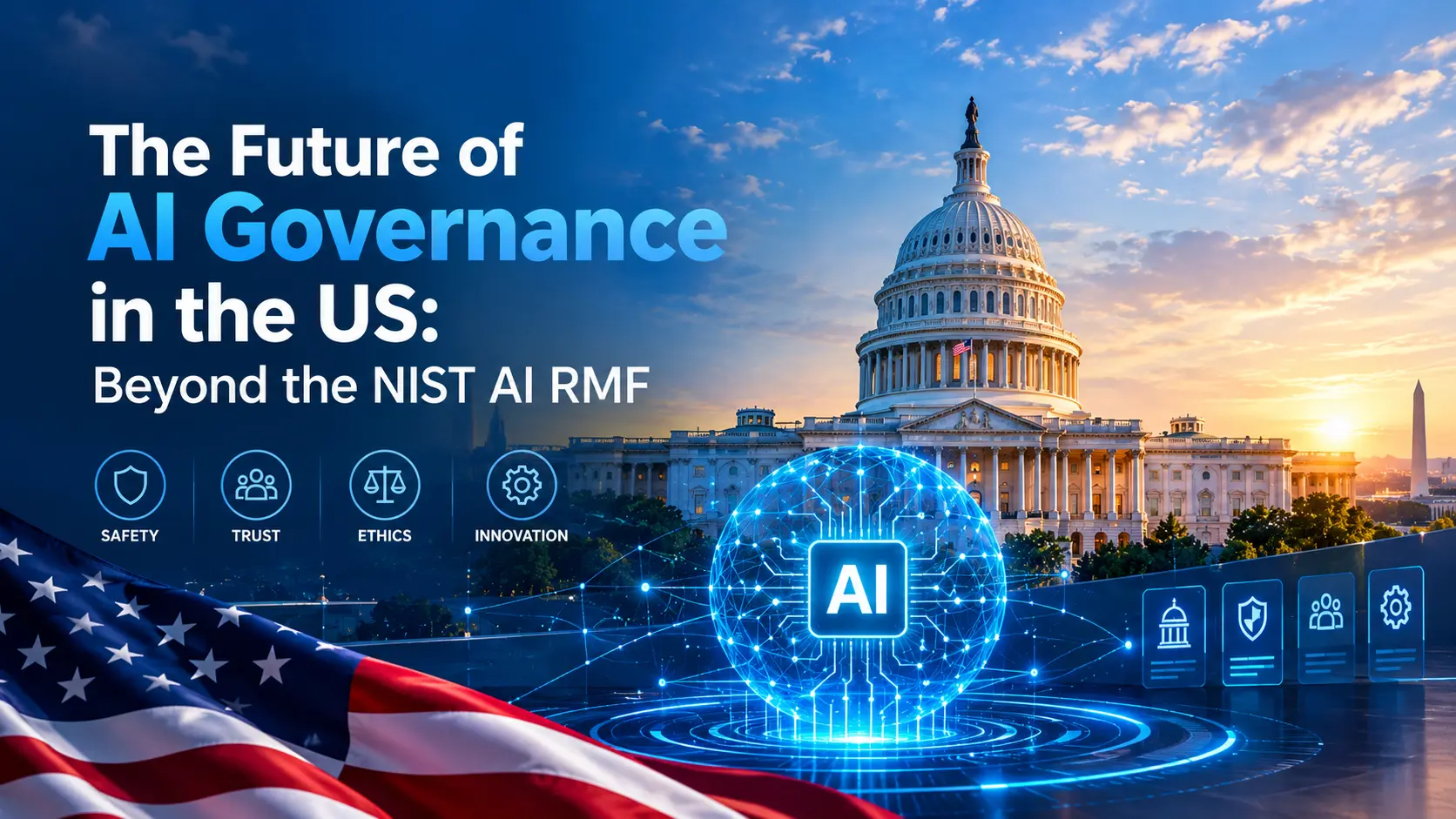
For years, the NIST AI Risk Management Framework was the reference point. It gave enterprises a voluntary way to think about AI risk: govern, map, measure and manage.
That was enough when most AI systems were pilots. It is not enough now.
AI is running inside hiring decisions, lending workflows, customer support and claims processing. At the same time, states are turning voluntary principles into enforceable rules, each with its own scope, deadlines and enforcers.
The question for US enterprises is no longer whether they have an AI policy. It is whether their AI systems can prove, in production, that they follow it.
How Xicom Is Engineering Governed AI Systems for Real-World Use
At Xicom, this shift is already shaping how AI systems are designed and delivered.
In AI implementations across customer service, HR, insurance and enterprise workflows, governance is not treated as a document produced after launch. It is built into the system architecture from the first sprint. This approach sits at the center of how we deliver AI governance consulting services for enterprises operating in the US, where audit readiness, data protection and explainability are non-negotiable.
That means model inventories that stay current, decision logs that can be traced, human review points where outcomes affect people, and access controls that match the sensitivity of the data.
It also means governing our own delivery the same way. Xicom holds ISO/IEC 42001 certification for AI management systems, alongside ISO/IEC 27001 and SOC 2 Type II.
Governance cannot work as a separate compliance layer. It has to operate as part of the system, where data flows, model behavior and decision logic stay visible and controlled at scale.
The Evaluation Criteria Have Changed
Earlier, AI governance was judged on paper. Did the company have a responsible AI policy? Had it mapped its practices to the NIST AI RMF? Was there an ethics committee?
That is no longer enough.
The conversation changes once AI systems start influencing real outcomes. Enterprises, regulators and customers now want different answers. Which models are running, and where? What data trained them? Why did the system make this decision about this person? If something goes wrong, who is accountable, and how quickly can it be traced?
Once AI affects hiring, credit, pricing or access to services, a policy becomes just one part of the equation. Systems need to be explainable, auditable and aligned with regulatory expectations in day-to-day operation.
This is where most implementations fall short. These capabilities cannot be added later. If they are not designed in early, fixing them usually means rebuilding core parts of the system.
Why This Shift Is Accelerating in the US
The pace of change in the US is not coming from one law.
The US still has no comprehensive federal AI statute. Instead, states are moving on their own, and the result is a growing patchwork that enterprises must navigate state by state.
Illinois HB 3773, covering AI use in employment decisions, has been in effect since January 1, 2026. Texas HB 149 took effect the same day. Connecticut SB 5, which covers AI-related layoff notices, chatbots and employment AI disclosure, began phasing in on October 1, 2026. Colorado's rewritten AI Act is scheduled to take effect on January 1, 2027.
Each law has its own definitions, obligations and enforcers.
At the same time, AI is moving deeper into products that serve US consumers and employees directly. When an AI decision sits inside a hiring flow or a loan application, a governance gap is no longer an internal issue. It becomes a legal, financial and reputational one.
That is why US enterprises are moving early. They are not waiting for a single federal standard. They are building systems now that can adapt to whichever rules apply.
What Comes After the NIST AI RMF in Practice
Most AI governance programs do not fail because the framework is wrong. They fail because the systems underneath were never built to support it.
The NIST AI RMF still matters. It remains a useful foundation. But the next phase moves governance from principles to engineering, where every requirement has to show up in how the system actually runs.
Governance needs to cover the full lifecycle, from data sourcing to model retirement. Controls need to map to multiple state laws at once, not one framework. Evidence needs to be produced continuously, not assembled before an audit.
In practice, this means:
- Black-box AI decisions become harder to defend, especially in hiring, lending and insurance.
- Continuous monitoring replaces one-time model validation.
- Traceability and human oversight become core system requirements.
- Agentic AI raises the bar further, because systems now take actions, not just make predictions.
This is not an incremental shift. If these capabilities are not built in early, adapting later becomes complex and expensive.
The Road Ahead
AI governance in the US has moved beyond voluntary frameworks. What matters now is how it is implemented.
As state laws take effect and AI systems take on more consequential decisions, the difference between AI that scales and AI that stalls will come down to how well governance is engineered into production.
The foundation already exists. The next phase will be defined by how it is built into the systems.
For more than 20 years, Xicom has worked with enterprises building software that runs under real-world conditions. Over that time, the company has delivered 1,800+ projects for 750+ clients across 50+ countries, including AI systems where security, reliability and compliance are non-negotiable.
With a team of 350+ IT professionals, and certifications including ISO/IEC 42001, ISO/IEC 27001 and SOC 2 Type II, the focus remains consistent: build AI systems that do not just follow a framework, but can prove it once they are live.
About Xicom
Founded in 2002, Xicom is an AI-first digital engineering company headquartered in New Delhi, India, with an office in San Francisco, USA. Xicom serves startups, mid-market companies, and enterprises across healthcare, fintech, retail, logistics, and other industries. Its services include AI development, Generative AI development, AI agent development, AI consulting, AI governance consulting, mobile app development, custom software development, and IT staff augmentation.