×
- 20+ Years in Business
- 350+ IT Experts
- 750+ Enterprise Clients
- CMMi Level 3 Certified
- ISO 9001:2015
- Top 1% on TrustPilot
-
 4.8 on Clutch
Our valued Brands & Agencies
















AI agent development services built for complex enterprise workflows
Our custom AI agent development services cover the full lifecycle, from identifying the right use cases to building, integrating, and maintaining agents in production. Whether you need a customer-facing assistant or an agent that runs internal data workflows, we build solutions that fit your existing systems and turn manual, multi-step processes into reliable automated ones.

AI Agent Strategy and Consulting
Before development begins, we identify where AI agents can add the most value to your business. Our team maps current workflows, reviews automation opportunities, and defines how agents should work alongside your people. We also help select the right LLMs and orchestration approach for each use case, so the solution starts on the right foundation.

Custom AI Agent Development
We develop custom AI agents designed around your specific business requirements, workflows, and operational objectives. We define agent behavior, connect relevant knowledge and capabilities, and implement the logic required to interpret inputs, determine actions, and complete assigned tasks. Our approach focuses on building agents that are reliable, maintainable, and aligned with defined business processes.

Multi-agent System Development
We develop multi-agent systems where specialized agents work together to handle complex tasks and workflows. We define individual agent responsibilities, communication patterns, coordination logic, and handoffs to create a structured system. This approach can help distribute complex processes across specialized capabilities while maintaining clear roles, execution paths, and operational control.

RAG-Powered AI Agent Development
We build RAG-powered AI agents that retrieve and use relevant information while performing tasks. We design retrieval workflows around enterprise data sources, establish how agents determine what information they need, and connect retrieved context to subsequent actions. This supports more informed responses and task execution across knowledge-intensive workflows.

Conversational AI Agent Development
We develop conversational agents that can understand user requests, maintain relevant context, retrieve information, and take actions across defined workflows. We design conversation flows around specific business needs and connect agents with required systems and knowledge sources. This enables more capable interactions than basic question and answer interfaces.

AI Agent Workflow Automation
We use AI agents to automate workflows that require interpretation, decisions, and actions across multiple steps. We identify suitable points for agent involvement, define workflow logic and approval requirements, and connect the required capabilities. This helps reduce repetitive manual work while allowing defined processes to adapt to changing inputs and operating conditions.

AI Agent Integration
We integrate AI agents with the enterprise systems, applications, APIs, databases, and data sources required for them to perform their assigned tasks. We establish appropriate communication between agents and existing tech environments while accounting for authentication, data handling, and system dependencies. This enables agents to operate within established business processes.

Security and Governance
We establish security and governance controls around AI agent behavior, access, data, and actions. We define permissions, authentication requirements, guardrails, monitoring, and audit trails based on the agent's role and risk level. These controls help organizations manage agent activity while supporting responsible use across enterprise environments and sensitive workflows.

Testing and Evaluation
We evaluate AI agents across the scenarios, tasks, and conditions they are expected to handle. We assess response quality, decision-making, tool usage, reliability, consistency, and adherence to defined constraints. Testing can include functional scenarios, edge cases, failure conditions, and performance measures to identify issues before agents are introduced into production environments.

Deployment and Optimization
We support the transition of AI agents from development environments into production systems and establish the operational practices needed to maintain them. We monitor agent performance, reliability, resource usage, and workflow outcomes to identify areas for improvement. Based on operational results, we refine configurations, workflows, integrations, and evaluation criteria over time.
Intelligent Customer Service Agents
We develop customer service agents that can understand requests, retrieve relevant information, resolve routine issues, and take defined actions across service workflows. They can support customers through conversational interfaces while maintaining context across interactions. This helps organizations handle higher volumes of inquiries, improve response consistency, and allow service teams to focus on more complex cases.

Sales and Revenue Agents
We develop sales agents that support prospect research, lead qualification, customer interactions, follow-ups, and other revenue-related activities. Agents can gather information from multiple sources, assess prospects against defined criteria, and initiate appropriate actions. This helps sales teams reduce administrative work, respond faster to opportunities, and maintain greater consistency across different stages of the sales process.
Enterprise Knowledge Agents
We develop knowledge agents that help employees find, interpret, and use information distributed across enterprise documents, databases, applications, and knowledge repositories. Agents can retrieve relevant context and provide responses based on available organizational information. This makes it easier for employees to access institutional knowledge without manually searching across multiple systems and sources.

IT Operations Agents
We develop IT operations agents that support activities such as issue investigation, system monitoring, troubleshooting, and service management. Agents can gather information from connected systems, analyze operational conditions, identify potential causes, and perform approved actions. This can help IT teams address routine operational issues faster while reducing the manual effort required for investigation and resolution.

Cybersecurity Agents
We develop cybersecurity agents that support security teams across activities such as alert analysis, incident investigation, threat intelligence, and response workflows. Agents can correlate information from multiple security sources, assess events against defined criteria, and recommend or perform approved actions. This helps security teams manage growing workloads while maintaining appropriate oversight and controls.
Business Process Automation Agents
We develop business process agents for workflows that involve multiple steps, systems, decisions, and changing inputs. Agents can interpret information, determine the appropriate next step, and coordinate defined actions across connected applications. This enables organizations to automate processes that are difficult to address through conventional rule-based automation while retaining required controls and approvals.
Custom AI agent development across industries
As an AI agent development company with cross-industry experience, Xicom builds AI agents tailored to industry-specific workflows, use cases, and compliance needs. From financial services to healthcare, we bring domain-aware agent development to every engagement.

Banking & Finance
AI Agents for KYC Automation, Fraud Detection, Compliance Monitoring, Customer Service Chatbots, Risk Assessment Automation, SOC 2-Aligned Data Handling

Education
AI Agents for Personalized Learning, Administrative Task Automation, Student Support Chatbots, Enrollment Assistance, EdTech Workflow Automation

Healthcare
AI Agents for Clinical Decision Support, Patient Scheduling Automation, Regulatory-Compliant Workflows, HIPAA-Aligned Workflows, Patient Engagement Chatbots

Retail
AI Agents for Customer Support, Inventory Management, Personalized Recommendations, Order Processing Automation, Retail Operations Assistance

Logistics
AI Agents for Supply Chain Automation, Route Optimization, Predictive Maintenance Alerts, Fleet Management Assistance, Shipment Tracking Automation

Travel & Tourism
AI Agents for Booking Automation, Personalized Travel Recommendations, Customer Support Chatbots, Itinerary Planning Assistance, Reservation Management

Automotive
AI Agents for Manufacturing Process Automation, Connected Vehicle Assistance, Supply Chain Coordination, Predictive Maintenance, Quality Control Automation

Real Estate
AI Agents for Property Management Automation, Customer Inquiry Handling, Market Analysis Assistance, Lead Qualification, Operations Automation

Entertainment
AI Agents for Content Recommendation, Audience Engagement Automation, Personalized Content Delivery, Media Operations Support, Customer Interaction Automation

Manufacturing
AI Agents for Smart Manufacturing Automation, Predictive Maintenance, Quality Control Automation, Supply Chain Coordination, Production Planning Assistance

Insurance
AI Agents for Claims Processing Automation, Risk Assessment, Customer Service Chatbots, Policy Management Assistance, Regulatory-Compliant Workflow Automation

eCommerce
AI Agents for Personalized Shopping Assistance, Customer Support Automation, Order Management, Inventory Automation, Technology Integration Support
LET'S BUILD TOGETHER
Transform Your Business with Custom AI Agents
Our AI agents go beyond simple responses. They act, adapt, and improve alongside your business, helping you execute faster, reduce bottlenecks, and see measurable results.
AI Agent Solutions Engineered for Enterprise Scale
150+
AI Engineers & Data Scientists
300+
AI Solutions Delivered
ISO 9001 Certified
NASSCOM & STPI Accreditation
NASSCOM & STPI Accreditation
50+
AI Adoption Programs
30+
Industries Served

Large Language Models (LLMs)
We work with large language models to build the reasoning and language capabilities required by AI agent systems. We assess model capabilities against specific use cases, design appropriate prompting and context strategies, and integrate models into agent architectures. Our approach considers accuracy, latency, cost, scalability, and task-specific performance requirements.

Generative AI
We apply generative AI technologies to enable agents to interpret information, generate responses, produce content, and support complex business tasks. We combine generative capabilities with structured workflows, enterprise data, and defined actions to create AI agents that can perform useful work while maintaining appropriate boundaries around their behavior and outputs.
Natural Language Processing (NLP)
We use NLP technologies to help AI agents process and interpret human language across business interactions and workflows. Our expertise covers language understanding, text classification, entity extraction, summarization, and semantic analysis. These capabilities help agents interpret unstructured information and translate natural-language inputs into meaningful tasks, decisions, or actions.
Retrieval-Augmented Generation (RAG)
We implement RAG architectures that allow agents to retrieve relevant information from enterprise knowledge sources before generating responses or performing tasks. We design retrieval strategies around the nature of available data, context requirements, and use cases, helping agents work with current, domain-specific information rather than relying solely on model knowledge.

Vector Search
We use vector search to help agents identify information based on semantic meaning rather than relying only on exact keyword matches. We design embedding and retrieval approaches suited to enterprise data and application requirements, enabling agents to locate relevant documents, records, and knowledge when responding to requests or completing information-intensive tasks.

Knowledge Graphs
We use knowledge graphs to represent relationships between entities, concepts, systems, and business information in a structured form. This can help agents understand connections across enterprise knowledge and support more contextual reasoning. We apply graph-based approaches where relationships and dependencies are important to the decisions or workflows an agent needs to handle.
Machine Learning
We apply machine learning techniques where AI agents require capabilities beyond general-purpose language models. These can include classification, prediction, anomaly detection, ranking, and pattern recognition. We determine where ML can complement agent reasoning and use it within broader architectures to support specific business requirements and operational objectives.

Natural Language Understanding (NLU)
We apply NLU technologies to help agents interpret user intent, context, entities, and meaning from natural-language inputs. This supports a more accurate understanding of requests before an agent determines how to respond or what action to take. We use NLU capabilities across conversational interfaces, workflow initiation, information processing, and task-oriented applications.

Computer Vision
We incorporate computer vision services where agents need to interpret visual information such as documents, images, diagrams, or other business content. Vision capabilities can help agents extract and understand relevant information before incorporating it into downstream workflows. We apply these technologies where visual inputs form an important part of the business process.

Cloud Computing
We use cloud computing technologies to provide the infrastructure required to develop, deploy, and scale AI agents. Cloud environments support access to computing resources, data services, storage, security controls, and distributed architectures. We design cloud-based implementations around workload requirements, scalability, reliability, and the organization's existing tech environment.
Case studies from our AI agent development projects
Explore how Xicom has helped businesses transform their operations and strengthen their market position. As a custom AI agent development company, we've documented real-world projects that show how our solutions solve practical business challenges.
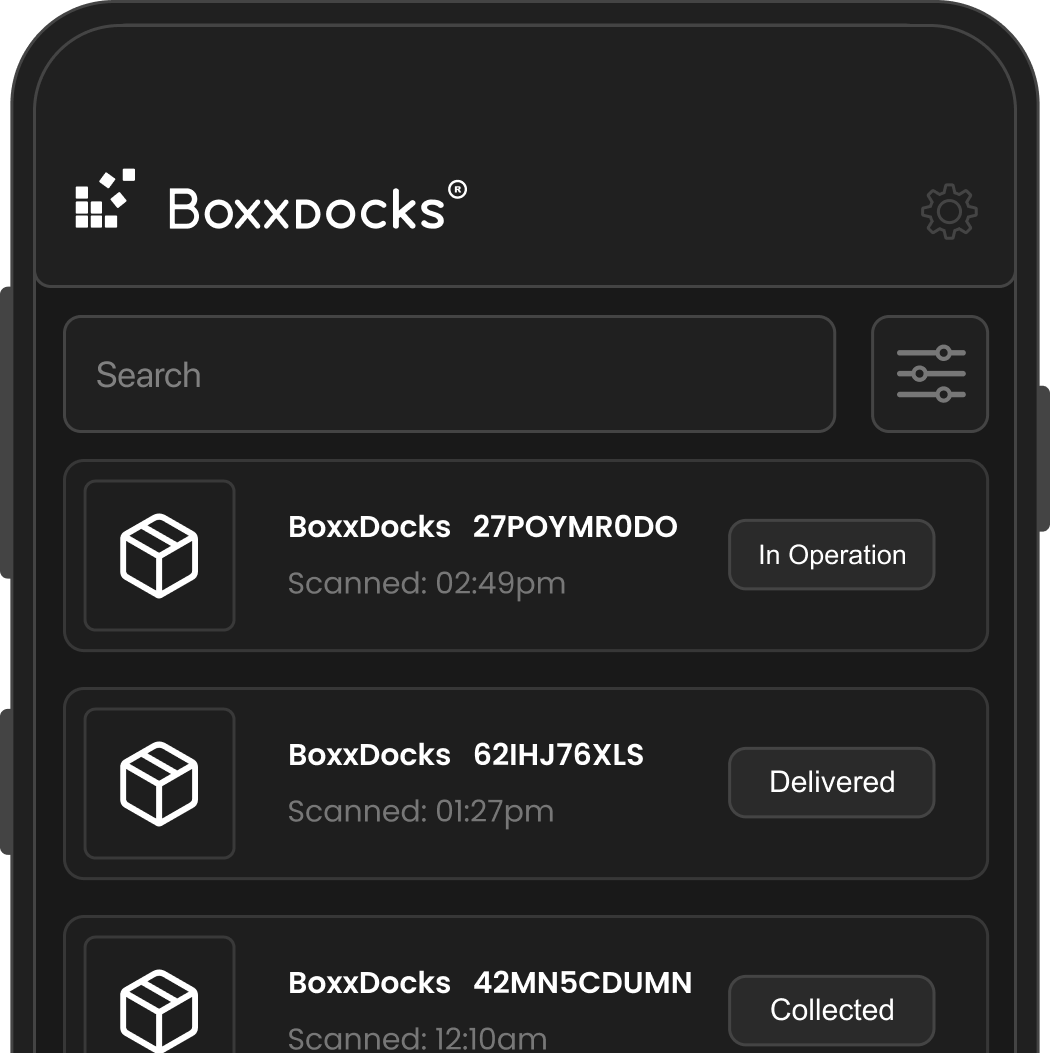
BoxxDocks AI Asset Tracking Platform
The Challenge
Asset tracking was manual, error-prone, and scattered across disconnected systems. The client had no centralized visibility into asset movement, no real-time location data, and no way to generate instant reports across multiple enterprise clients from a single platform.
Our Approach
We built BoxxDocks as an AI-enabled asset lifecycle platform using QR/NFC scanning, real-time dashboards, geolocation tracking, and a RAG-powered conversational engine that lets users query live operational data in plain English instead of navigating dashboards.
The Result
- Real-time inventory tracking across warehouses, transit, and delivery
- AI query engine for natural language insights
- LLM-powered reporting with anomaly detection
- Complete audit trail with location, timestamp, and status
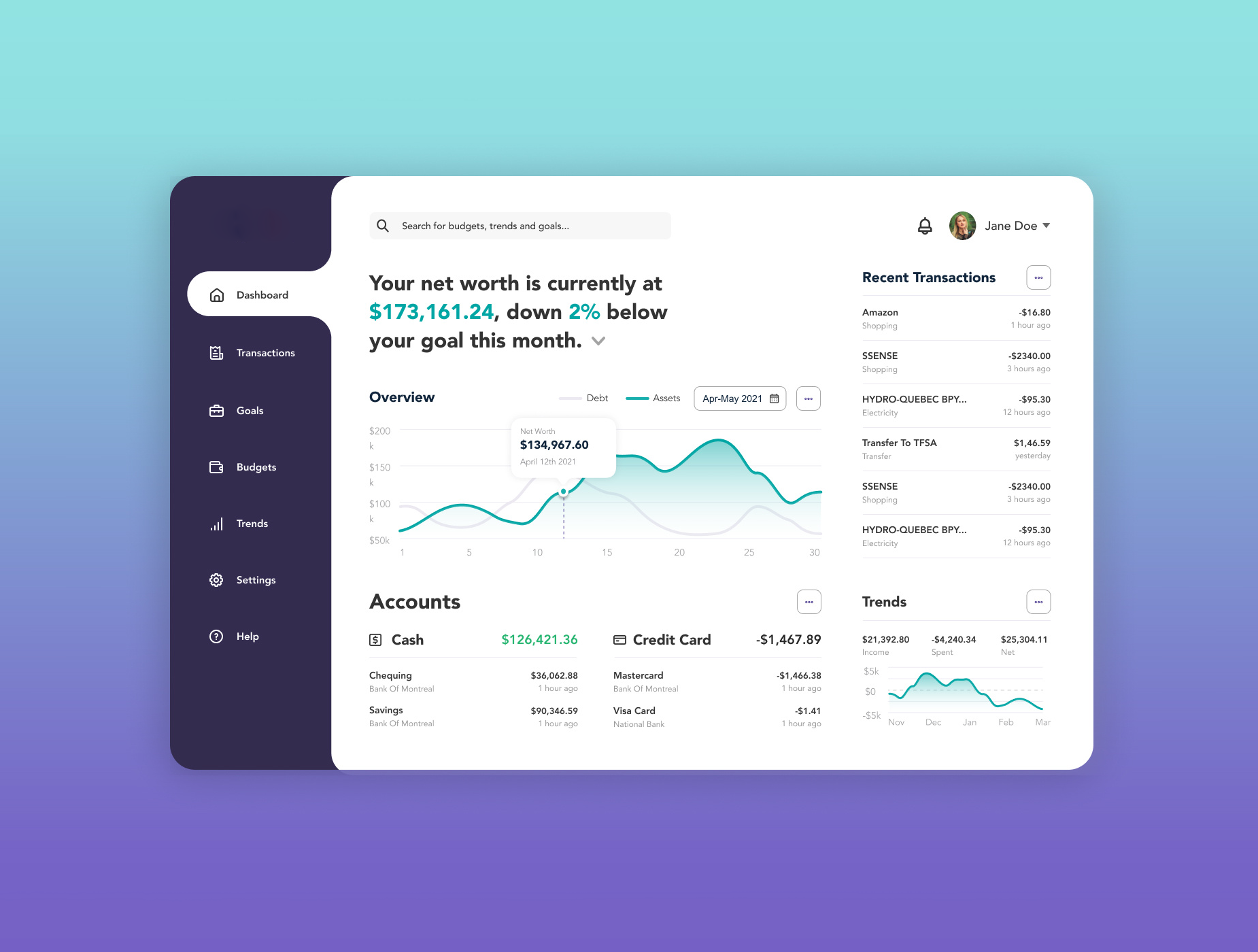
Parity AI AI Finance Platform
The Challenge
Personalized financial advice was expensive and limited to periodic meetings. Users had no way to consolidate banking, investments, debt, and insurance into one platform with real-time, AI-driven guidance.
Our Approach
We built Parity AI as an always-on financial wellness platform powered by AI. It securely pulls data from multiple sources, analyzes user behavior, forecasts outcomes, and delivers personalized recommendations, acting as a digital financial advisor rather than a budgeting app.
The Result
- AI-powered financial planning across banking, investments, and debt
- Personalized recommendations based on life events and behavior
- Integrated financial education with actionable insights
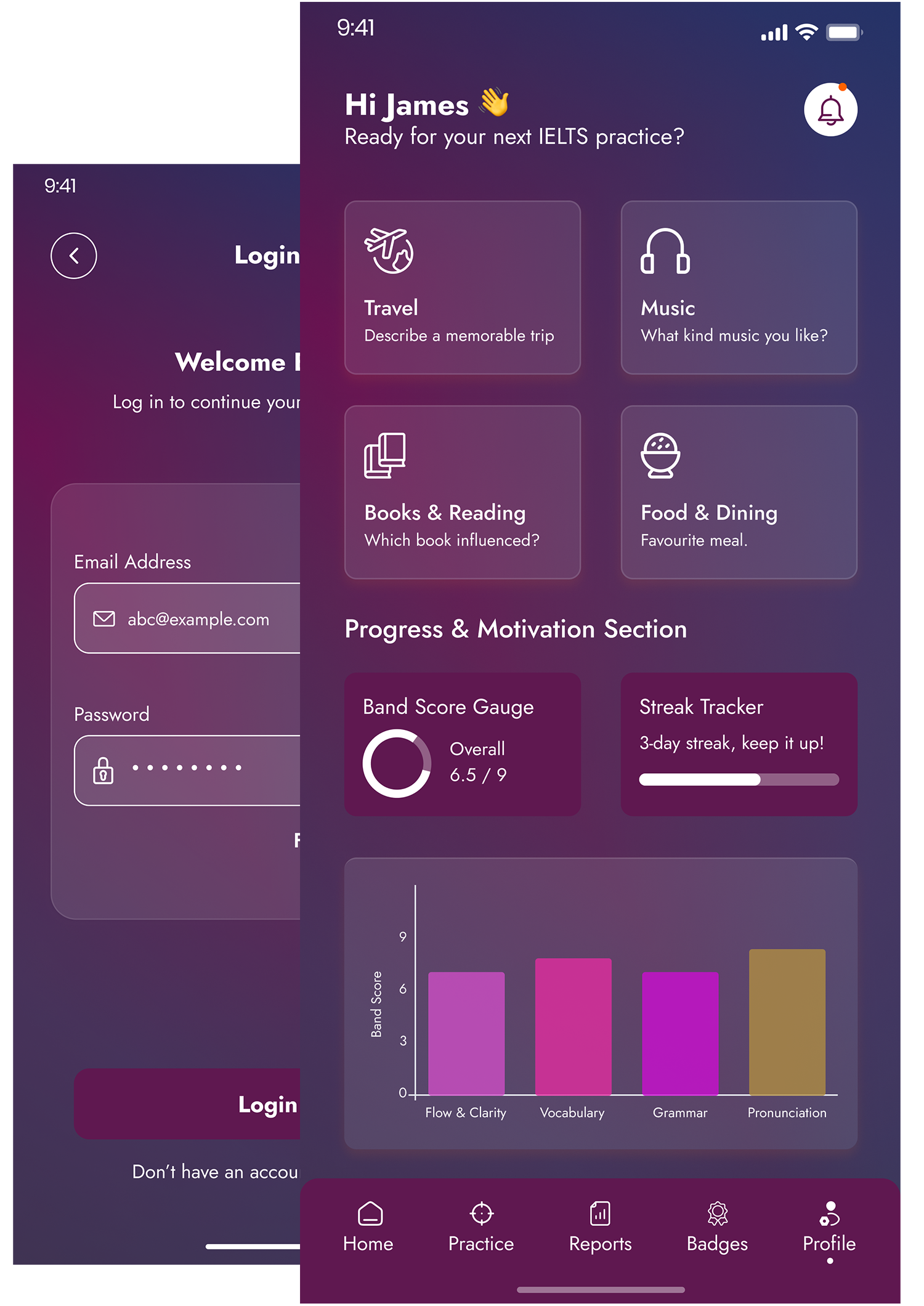
IELTS AI-Powered Speaking Evaluator
The Challenge
Human IELTS tutors cost $30-$80/hour with limited availability. Generic speaking apps lack authentic Part 1/2/3 exam structure, pronunciation feedback, and band-aligned scoring rubrics. Learners had no way to get unlimited, exam-authentic practice at scale.
Our Approach
We built a full-stack AI platform with a lifelike AI Avatar Examiner using a LangGraph and Gemini conversation engine, Google Cloud TTS with viseme lip-sync, Faster-Whisper ASR, and a 6-layer IELTS evaluation pipeline that scores all 4 criteria with ±0.5-1.0 band accuracy.
The Result
- 1,000+ concurrent users with 2-3s response latency
- 10x lower cost than human examiners
- 6-service AI microservice architecture with model preloading
- No-code admin panel for rapid content updates
HealtheLivin AI Wellness Platform
The Challenge
People struggling with mental health had no single platform to access trusted information, take confidential assessments, and find providers without stigma or privacy concerns.
Our Approach
We built HealtheLivin as an AI-powered mental wellness app with a conversational AI assistant, anonymous screenings, an evidence-based resource library, and geolocation-based provider discovery, all running on privacy-first cloud infrastructure.
The Result
- AI knowledge base for natural language mental health support
- Confidential assessments with personalized wellness insights
- Location-based provider discovery for professional care
- Privacy-first architecture with encrypted data management
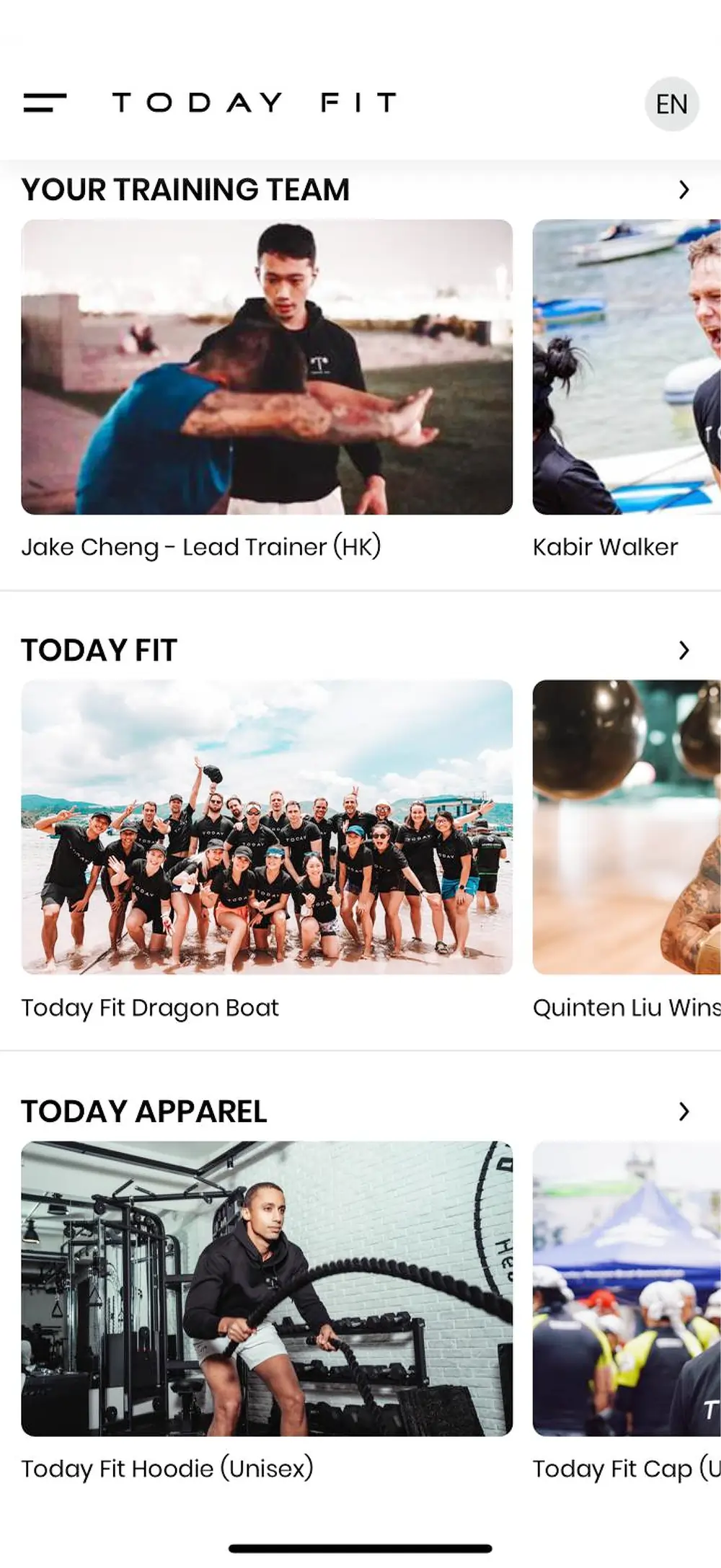
TodayFit Fitness App
The Challenge
Gyms, trainers, and users were stuck with disconnected tools for scheduling, payments, and fitness tracking. There was no single platform that combined personalized fitness with business management.
Our Approach
We developed TodayFit as an AI-driven fitness platform with trainer booking, personalized tracking, community features, and a SaaS layer for gym and trainer business management.
The Result
- 30% increase in user engagement
- 4.7+ average rating on the App Store and Play Store
- 60% growth in trainer bookings
- 45% increase in subscription conversions

SmartVend AI Smart Vending Platform
The Challenge
Managing a distributed vending machine network meant manual inventory tracking, disconnected payment systems, no remote management capability, and zero real-time visibility into machine health or sales performance across locations.
Our Approach
We built SmartVend as a cloud-connected IoT platform combining an Android kiosk app, centralized web portal, real-time inventory sync, hardware integration for payments and dispensing, and a digital advertising layer, all managed from a single dashboard.
The Result
- Real-time inventory sync with low-stock alerts
- Remote machine management across unlimited locations
- IoT integration for payments, dispensing, and monitoring
- Centralized sales analytics and revenue reporting
Technology stack used to build intelligent AI agents
Our AI agent developers work with a proven technology stack to build, orchestrate, and deploy AI agents that perform reliably, securely, and at scale.
 LangChain
 LangGraph
 AutoGen
 CrewAI
 Semantic Kernel
 OpenAI
 Claude
 Google Gemini
 Llama
Llama
 Mistral
 Pinecone
 Weaviate
 Chroma
 Qdrant
 Milvus
 AWS
AWS
 Azure
Azure
 Google Cloud Platform
 AWS Bedrock
 Vertex AI
 REST APIs
 FastAPI
 Zapier
 Model Context Protocol (MCP)
 Apache Kafka
 LangSmith
 MLflow
 Fiddler AI
 Microsoft Purview
Handle Complex, Multi-step Work
Enterprise processes often involve multiple steps, systems, decisions, and dependencies that are difficult to manage through isolated automation. AI agents can coordinate these activities, determine what needs to happen next, and continue working across a process. This makes them suitable for operational workflows that require more than simple rule-based task execution.
Work Across Disconnected Systems
Business processes frequently span applications, databases, documents, communication platforms, and specialized enterprise tools. AI agents can work across these environments by retrieving information and interacting with connected systems within defined permissions. This creates a more connected execution layer for processes that would otherwise require employees to move information manually.

Respond to Changing Conditions
Traditional automation generally follows predefined paths and can struggle when inputs or circumstances differ from expected conditions. AI agents can interpret changing information and select an appropriate next step based on the available context. This adaptability makes them useful for processes where exceptions, variable inputs, and changing business conditions are common.

Extend Employee Capacity
Employees spend significant time gathering information, coordinating activities, and completing repetitive decisions before higher-value work can begin. AI agents can take responsibility for suitable portions of these processes, allowing people to focus on activities requiring judgment, expertise, or accountability. This can increase the capacity of existing teams without simply adding headcount.

Support Faster Operational Decisions
Many enterprise decisions depend on information distributed across multiple sources and require considerable time to assemble and evaluate. AI agents can gather relevant information, analyze it against defined criteria, and present recommendations or initiate approved actions. This can shorten the time between an operational trigger and the response required to address it.
Build More Proactive Operations
AI agents can move enterprise automation beyond responding to requests toward continuously monitoring defined conditions and initiating appropriate actions. Agents can identify events, changes, or potential issues and trigger workflows based on established objectives and controls. This helps address operational needs earlier rather than waiting for employees to identify and initiate every response.
AI agent development process for enterprise solutions
Our AI agent development services follow a structured process, moving from understanding business requirements to designing, developing, testing, and deploying AI agents. Each stage addresses the technical and operational considerations needed to create reliable, scalable, and maintainable solutions.
1
Assess Requirements
We evaluate business objectives, workflows, data, systems, and operational constraints to identify suitable opportunities and define clear requirements for AI agent implementation.
2
Design Architecture
We design the agent architecture, defining models, knowledge sources, workflows, integrations, decision logic, permissions, and controls required for reliable solution execution.
3
Develop Agents
We build and configure agents around defined responsibilities, data sources, and enterprise systems while implementing the workflows and interactions required.
4
Test and Validate
We test agents across expected scenarios, edge cases, and failure conditions, evaluating accuracy, reliability, system interactions, and adherence to defined requirements.
5
Deploy and Optimize
We deploy validated agents into production environments, monitor performance, and refine workflows, configurations, integrations, and resource usage based on observed results.
Experienced Development Team
Our AI agent developers bring experience across AI engineering, software development, cloud technologies, and enterprise application development. This broader technical foundation helps us address the engineering considerations surrounding AI agents, from selecting suitable technologies to building dependable applications that fit established enterprise technology environments.
Technology-agnostic Approach
We work across leading AI models, frameworks, cloud platforms, databases, and supporting technologies rather than limiting implementations to a single technology stack. This gives organizations greater flexibility when evaluating technical options and allows solutions to be aligned with their existing infrastructure, technology preferences, and long-term architectural direction.
Strong Engineering Foundation
AI agents are ultimately software systems that must operate reliably within real applications and business environments. Our software engineering capabilities support the development of maintainable architectures, robust app components, and dependable integrations, providing a stronger engineering foundation for organizations moving AI agents from concepts into operational systems.

Scalable Development Practices
We apply structured development practices that support projects as their requirements evolve. Our teams can work across different project sizes and technical environments, helping organizations progress from focused agent implementations toward broader deployments without requiring an entirely different development approach as scope, users, or operational demands increase.

Flexible Engagement Models
We offer engagement approaches that can accommodate different project requirements, team structures, and stages of AI adoption. Organizations can involve us for a defined development requirement or engage our team across a broader initiative. This flexibility lets the scope of collaboration follow your actual project needs and changing business priorities, rather than a fixed delivery model.
US-Aligned Delivery
Our San Francisco office gives US clients a local point of contact, while our engineering teams in India work with overlapping hours for daily standups, reviews, and releases. This combines responsive communication with cost-efficient delivery for AI agent projects of any size.
Our engagement models for AI agent development
Our custom AI agent development services come with flexible engagement models: a fixed price for well-defined agent builds, a dedicated team for ongoing development, or time and material for evolving requirements.

Fixed Price Model
Best for well-defined agent development projects, this model ensures clear deliverables, predictable costs, and timely delivery without surprises.
- Upfront agreed cost and project scope
- Milestone-based progress tracking
- No hidden charges or overheads
- Reliable delivery timelines and outcomes
Most Popular

Dedicated Team
Ideal for organizations building and scaling multiple AI agents, this model provides a dedicated team of AI agent developers integrated into your workflows.
- Ongoing strategic support and guidance
- Flexible engagement as needs evolve
- Direct access to experienced AI agent developers
- Working hours overlap with US time zones

Time & Material Model
Perfect for agent development engagements with evolving requirements, this model offers flexibility to adapt scope and focus as new priorities emerge.
- Flexible billing based on actual efforts
- Adjust resources and scope anytime
- Ideal for iterative and evolving engagements
- Faster implementation and continuous optimization
Compliance & security standards we follow in AI agent development
We take a compliance-first approach to every AI agent we build, aligning with leading AI governance frameworks, global data privacy laws, and industry security standards to support ethical, transparent, and responsible AI deployment. For US enterprises, we align AI agent development with HIPAA, CCPA, SOC 2 Type II, and the NIST AI Risk Management Framework where they apply.










Client testimonials and reviews showcasing the value we consistently deliver
Explore how our clients describe their journey with us, reflecting strong collaboration, effective execution, and consistent outcomes delivered across engagements. See how our delivery framework ensures consistency from initiation through to successful completion.
❝
Parity AI
We came to Xicom with an ambitious goal: make institutional-grade financial planning accessible to everyone through AI. Xicom went beyond the brief, blending conversational AI and predictive analytics into an effortless platform. Parity AI is exactly what we envisioned.

❝
RadioFX
Xicom took the time to understand what our stations and listeners actually need, building something tailored rather than generic. Live chat and polls are now core to how we connect with our audience — the app has become a true extension of our on-air presence.


❝
StudyBuddy
Xicom built exactly what our students needed: a secure space to connect, collaborate, and find tutoring support in one place. Their understanding of student behavior shows in how naturally everything fits together — StudyBuddy is something students genuinely rely on.

❝
BoxxDocks
Xicom helped us bring BoxxDocks to life exactly as we envisioned it. Their team understood the complexity of AI powered real-time asset tracking and delivered a platform that's both powerful and genuinely easy to use.


❝
TodayFit
We are very happy with their services. I cannot recommend them highly enough. The value, ability, and delivery that we have seen has been superb, and we look forward to continuing this relationship.


❝
SmartVend AI
Their team built SmartVend from the ground up, combining hardware integration, real-time inventory sync, and a centralized dashboard that completely changed how we operate. We couldn't have asked for a more capable technical partner.

❝
Tap Retail
Partnering with Xicom to develop our Tap Retail app and website was one of the best decisions we made. Their team demonstrated exceptional professionalism, technical expertise, and a deep understanding of our business goals.


❝
GoGmGo
Partnering with Xicom was a game-changer for us. They didn't just build software, they helped us redefine how we run our business. Their proactive support and deep domain knowledge gave us the confidence to innovate faster.

❝
DENVEN
Working with Xicom has been a transformative experience. Their team quickly understood our challenges and delivered a scalable, intuitive solution. I highly recommend Xicom to any organization seeking future-ready, high-performance digital products.

Top tech insights of our blog
Explore latest tech stories & News
✦ AI-First Company
Deep Insights into Emerging Technology and Innovation!
Stay ahead in the digital world with our latest insights covering AI trends, industry developments, and expert advice on building smarter businesses.
1800+
Projects
20+
Years Experience
Frequently asked questions
How can AI agents benefit my business?
AI agents help enterprises automate repetitive work, accelerate information analysis, coordinate activities across systems, and improve the consistency of operational decisions. They can retrieve and compare records, summarize complex information, prepare recommendations, route tasks, manage routine exceptions, and initiate approved actions. Unlike isolated automation tools, AI agents maintain workflow context and adapt their next step based on new information or system outcomes. When implemented with appropriate review boundaries, they increase process capacity and responsiveness while allowing accountable employees to retain authority over financial, legal, compliance, customer, and other consequential decisions.
What AI agent development services does Xicom offer?
Xicom offers end-to-end AI agent development services, including use case discovery, agent architecture design, custom agent development, multi-agent system orchestration, integration with existing enterprise systems, testing and validation, deployment, and post-launch support. We build AI agents for tasks such as customer service automation, data retrieval and analysis, workflow orchestration, and decision support across industries.
Why choose Xicom as your AI agent development company?
Xicom combines AI engineering with more than two decades of software development experience, so the AI agents we build are designed as dependable software systems, not isolated experiments. We work across leading models and frameworks, integrate agents with your existing systems, and offer flexible engagement models, from a single agent build to a dedicated team of AI agent developers.
Do you provide AI agent development services for US companies?
Yes. We provide AI agent development services to companies across the United States through our San Francisco office. US clients get a dedicated point of contact, project updates during US business hours, and development practices aligned with US privacy and security requirements such as CCPA, HIPAA, and SOC 2.
How does your AI agent consulting service help enterprises get started with AI initiatives?
Our AI agent consulting service starts with identifying high-value use cases specific to your business, assessing your existing systems and data readiness, and designing an agent architecture aligned with your operational goals. We help enterprises prioritize quick-win opportunities, define success metrics, and build a phased implementation roadmap, reducing the risk of starting with the wrong use case or an unscoped pilot.
What AI agent development frameworks do you use to build AI agents?
We build AI agents using leading frameworks and tools, including LangChain, LangGraph, AutoGen, CrewAI, and Semantic Kernel for agent orchestration, combined with foundation models such as OpenAI GPT, Claude, and Google Gemini. We also use vector databases like Pinecone and Weaviate for agent memory, and the Model Context Protocol (MCP) for standardized tool and data integration.
Can you build multi-agent systems for complex workflows?
Yes. We design and build multi-agent systems where specialized agents collaborate to handle complex, multi-step workflows, such as one agent retrieving data, another validating it, and a third executing an approved action. Multi-agent architectures are particularly effective for enterprise workflows that span multiple departments, systems, or decision points, and we use frameworks like LangGraph and CrewAI to coordinate agent communication and task handoffs.
How do you ensure the security and integrity of AI agents?
We implement security and governance controls throughout the agent development lifecycle, including role-based access controls, audit logging, human-in-the-loop approval checkpoints for consequential actions, data encryption, and compliance with relevant industry regulations. Agents are designed with clear boundaries on what actions they can take autonomously versus what requires human review, reducing the risk of unintended or unauthorized actions.
How much does AI agent development cost?
The cost of AI agent development depends on the agent's scope, the number of systems it connects to, data preparation needs, and security and compliance requirements. A single-purpose agent costs significantly less than a multi-agent system working across departments. We share a detailed estimate after the discovery and scoping phase.
How long does it take to develop an enterprise AI agent?
Development timelines vary based on complexity, integration requirements, and the number of systems involved. A single-purpose AI agent with well-defined scope typically takes a few weeks from discovery to deployment, while multi-agent systems handling complex, cross-system workflows can take longer. We provide a detailed timeline estimate after the initial discovery and scoping phase.
What support is available after deployment?
We provide post-deployment support including performance monitoring, agent fine-tuning based on real-world usage, bug fixes, and iterative improvements as your workflows evolve. Ongoing support can be structured through a dedicated team or time-and-material engagement model, depending on your needs.
Every award marks a milestone in our journey of excellence
As an AI-first digital engineering company, Xicom has earned global recognition for delivering innovative, scalable, and high-performing technology solutions. Our awards reflect the trust of clients and industry leaders alike.