×

- 20+ Years in Business
- 350+ IT Experts
- 750+ Enterprise Clients
- CMMi Level 3 Certified
- ISO 9001:2015
- Top 1% on TrustPilot
-
 4.8 on Clutch
Our valued Brands & Agencies
















Our SLM development services for focused, efficient AI
Our custom SLM development services cover the full lifecycle of a small language model, from choosing the right base model to running it reliably in production. Whether you need a single task-specific model or small language models software development services for a larger product, we build models that match your data, hardware, and compliance requirements.

SLM Consulting & Model Selection
We assess your use case, data, latency targets, and hardware limits to decide whether a small language model is the right fit. Then we shortlist and benchmark candidate models on your own sample tasks, so the model you build on is chosen for measured performance on your work, not for its popularity or vendor relationships.

Custom SLM Development
Our custom SLM development builds a model around one clearly defined job, such as classifying tickets, extracting fields from documents, or answering policy questions. We design the training data, model setup, and output format together, so the finished model fits directly into your application and returns results your systems can use without extra cleanup.

Domain-Specific SLM Training
General models often miss industry terms, abbreviations, and internal formats. We prepare and label your domain data, then train the small model to understand your vocabulary and follow your rules. For projects focused only on adapting an existing large model, our LLM fine-tuning services are a closer match.

Model Distillation
Distillation transfers the behavior of a large teacher model into a compact student model. We generate and curate high-quality examples from the larger model for your specific tasks, then train the small model to reproduce that quality at a fraction of the size, giving you strong task accuracy with much lower running costs.

Quantization & Model Compression
We reduce model size and memory use through quantization, pruning, and efficient runtime formats, so the model runs on standard CPUs, smaller GPUs, or mobile chips. Every compression step is tested against your accuracy baseline, so you see exactly how much quality is retained before any change goes into production.

On-Premise SLM Deployment
For organizations that cannot send data to third-party AI providers, we deploy small language models inside your own data center or private cloud. We set up secure serving, access controls, and audit logging, so sensitive records in healthcare, finance, or legal workflows stay within infrastructure you own and control.

On-Device SLM Deployment
We package optimized small models to run directly on laptops, mobile apps, and embedded hardware, enabling AI features that work offline and respond instantly. For broader strategy across devices, sensors, and gateways, our edge AI consulting team plans the wider architecture.

High-Volume Repetitive Tasks
When the same type of request runs thousands of times a day, such as classifying emails, tagging documents, or summarizing tickets, a small model trained for that one job can match the accuracy you need while keeping the cost of each request low and response times consistent as volume grows.

Strict Data Privacy Requirements
Organizations handling patient records, financial data, or confidential contracts often cannot send that information to external AI services. A small model can run entirely inside your own infrastructure, so data never leaves your environment and compliance teams keep full visibility over where it is processed and stored.

Low-Latency Applications
Real-time features like in-app suggestions, live call assistance, or form autocomplete need answers in a fraction of a second. Small models process requests faster on modest hardware, which helps keep user-facing features responsive without investing in large GPU clusters or depending on network round trips.

Offline and On-Device AI
Field teams, factory floors, vehicles, and mobile apps often operate with weak or no connectivity. Compact models can run locally on phones, tablets, and edge hardware, keeping AI features available wherever work happens and reducing dependence on cloud services for everyday tasks.

Predictable AI Running Costs
Usage-based API pricing can grow quickly once AI features reach real users. Running your own small model on infrastructure you control turns AI into a more predictable operating cost, which makes it easier to plan budgets and scale adoption across departments without surprise bills.

Specialized Domain Language
Legal clauses, clinical notes, insurance codes, and engineering specifications follow their own vocabulary and structure. A small model trained on your domain data learns these patterns closely, often producing more consistent results on that narrow work than a general-purpose model that has to cover every subject.
Industry use cases for small language models
Small language models are well suited to industries with specialized vocabulary, sensitive data, or high transaction volumes. Here is how our SLM development work applies across sectors.

Banking & Finance
Transaction Categorization, KYC Document Extraction, Internal Policy Assistants, Compliance Report Drafting, Customer Query Routing

Education
Offline Tutoring Assistants, Assignment Feedback, Course Content Summarization, Multilingual Learning Support, Student Query Handling

Healthcare
On-Premise Clinical Note Summarization, Medical Coding Support, Patient Intake Processing, Clinical Guideline Q&A, Discharge Summary Drafting

Retail
Product Description Generation, Review Sentiment Tagging, In-Store Assistant Devices, Inventory Query Bots, Catalog Attribute Extraction

Logistics
Shipping Document Extraction, Driver Assistant Apps, Delivery Exception Classification, Warehouse SOP Q&A, Customs Data Processing

Travel & Tourism
Booking Request Parsing, Offline Travel Companion Apps, Itinerary Summaries, Multilingual Guest Support, Review Analysis

Automotive
In-Vehicle Voice Assistants, Service Manual Q&A, Diagnostic Log Analysis, Dealer Support Tools, Warranty Claim Processing

Real Estate
Lease Clause Extraction, Listing Description Drafting, Lead Inquiry Classification, Property Document Q&A, Tenant Request Routing

Entertainment
Content Tagging and Metadata, Subtitle Summaries, Content Moderation, Audience Comment Analysis, On-Device Recommendations
Manufacturing
Shop Floor Assistants, Maintenance Log Analysis, Quality Report Summaries, Technical Manual Q&A, Work Order Classification

Insurance
Claims Document Extraction, Policy Wording Q&A, Underwriting Note Summaries, Fraud Indicator Flagging, Agent Support Assistants

eCommerce
Product Search Understanding, Order Support Assistants, Return Reason Classification, Catalog Enrichment, Personalized Product Copy
LET’S BUILD TOGETHER
Paying large-model prices for small, repeatable tasks?
Share your use case with our team. We will tell you honestly whether a small language model fits, what accuracy to expect, and where it should run, before you commit to a full build.
AI Solutions Engineered for Enterprise Scale
150+
AI Engineers & Data Scientists
300+
AI Solutions Delivered
ISO 9001 Certified
NASSCOM & STPI Accreditation
NASSCOM & STPI Accreditation
100+
AI Models in Production
30+
Industries Served

Microsoft Phi
Microsoft's Phi family was trained with a strong focus on high-quality data, which gives it solid reasoning and language ability for its size. We often evaluate Phi models for enterprise assistants, document understanding, and on-device features where a compact footprint and dependable output quality both matter.
Google Gemma
Gemma is Google's family of open models, built from the same research behind Gemini and released in several sizes. Its range of model sizes makes it practical for teams that want to start small, measure results, and move to a larger variant only if the task genuinely needs it.

Meta Llama Compact Models
Meta's smaller Llama models were designed with mobile and edge devices in mind. Their wide community support and tooling make them a reliable base for on-device assistants, summarization features, and private deployments where teams want broad ecosystem compatibility.
Qwen
Alibaba's Qwen models are available in a wide range of sizes and offer strong multilingual coverage. We consider them for projects that serve users in several languages, or for structured tasks like extraction and classification where compact models with good instruction-following are needed.

Mistral
Mistral AI builds efficient open models with a focus on strong performance per parameter. Its smaller models suit private deployments and latency-sensitive applications, particularly for European clients who want an option developed with regional data and regulatory expectations in mind.

IBM Granite
IBM's Granite models are built for enterprise use, with attention to transparency about training data and business-friendly licensing. They are a sensible starting point for regulated organizations that need clear documentation of model origins as part of their governance and procurement processes.
Hugging Face SmolLM
SmolLM from Hugging Face includes some of the smallest capable open models available, designed to run on phones, browsers, and low-power hardware. We use them for very lightweight tasks where memory and battery use matter more than broad knowledge, such as on-device classification and short text generation.
Custom SLM Architectures
When no existing model fits your language, domain, size limits, or licensing needs, we design and train a compact model specifically for your use case. This route takes more data and time, so we recommend it only after testing shows that adapting an existing open model will not meet your requirements.
Case studies showcasing the value delivered to clients through our AI solutions
Explore how we partner with clients across industries to deliver tailored AI solutions that improve efficiency, enhance customer experiences, reduce costs, and drive long-term value.
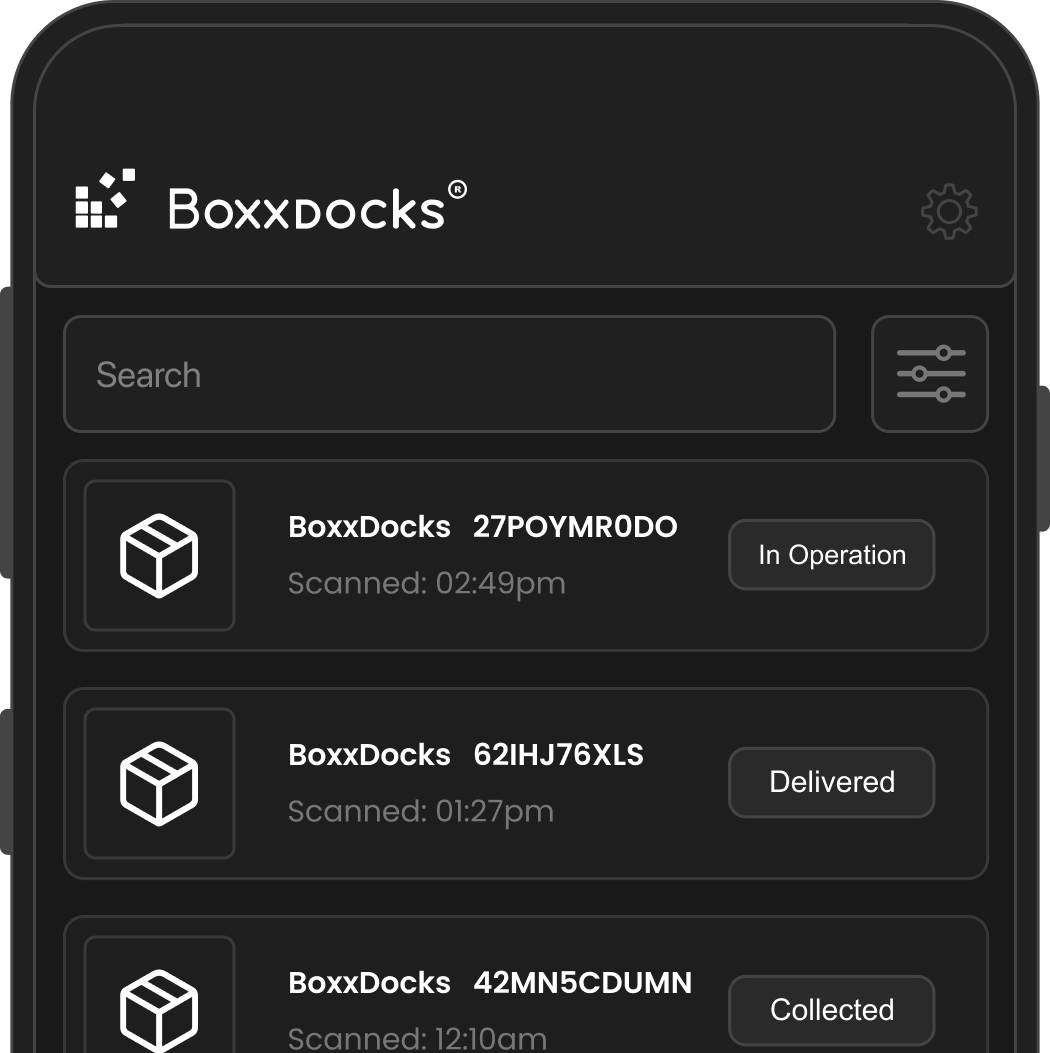
BoxxDocks AI Asset Tracking Platform
The Challenge
Asset tracking was manual, error-prone, and scattered across disconnected systems. The client had no centralized visibility into asset movement, no real-time location data, and no way to generate instant reports across multiple enterprise clients from a single platform.
Our Approach
We built BoxxDocks as an AI-enabled asset lifecycle platform using QR/NFC scanning, real-time dashboards, geolocation tracking, and a RAG-powered conversational engine that lets users query live operational data in plain English instead of navigating dashboards.
The Result
- Real-time inventory tracking across warehouses, transit, and delivery
- AI query engine for natural language insights
- LLM-powered reporting with anomaly detection
- Complete audit trail with location, timestamp, and status
Parity AI AI Finance Platform
The Challenge
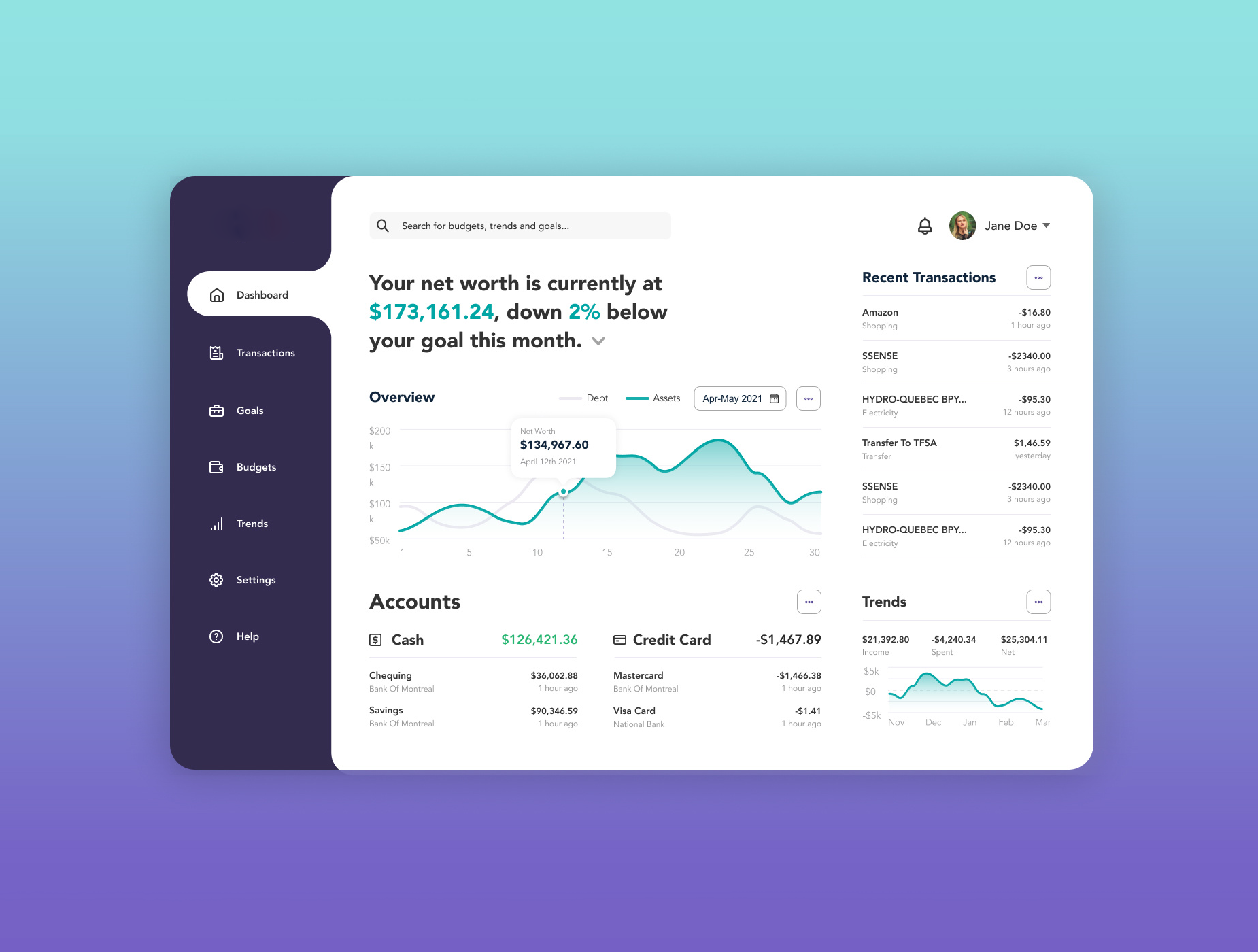
Personalized financial advice was expensive and limited to periodic meetings. Users had no way to consolidate banking, investments, debt, and insurance into one platform with real-time, AI-driven guidance.
Our Approach
We built Parity AI as an always-on financial wellness platform powered by AI. It securely pulls data from multiple sources, analyzes user behavior, forecasts outcomes, and delivers personalized recommendations, acting as a digital financial advisor rather than a budgeting app.
The Result
- AI-powered financial planning across banking, investments, and debt
- Personalized recommendations based on life events and behavior
- Integrated financial education with actionable insights
IELTS AI-Powered Speaking Evaluator
The Challenge
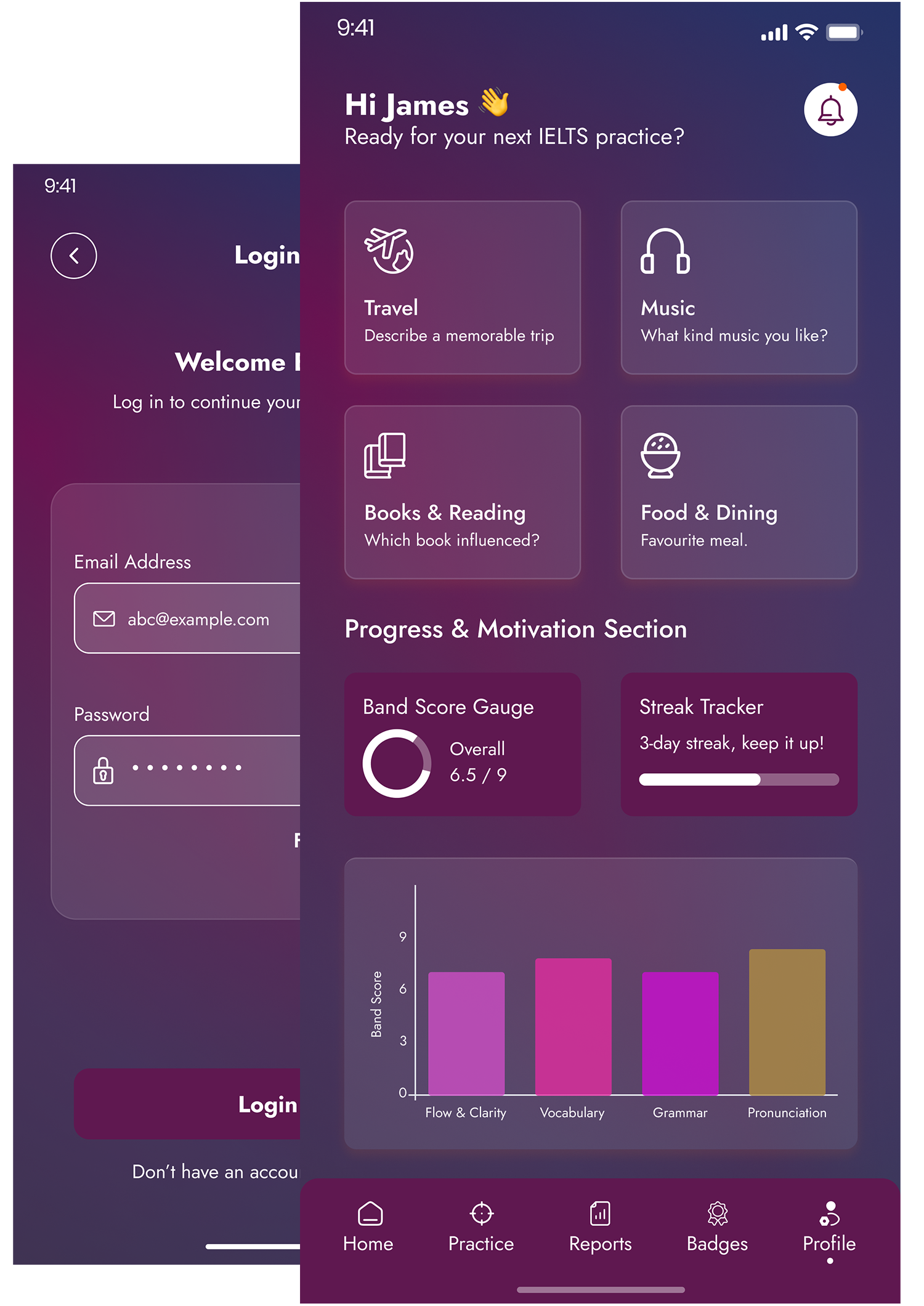
Human IELTS tutors cost $30-$80/hour with limited availability. Generic speaking apps lack authentic Part 1/2/3 exam structure, pronunciation feedback, and band-aligned scoring rubrics. Learners had no way to get unlimited, exam-authentic practice at scale.
Our Approach
We built a full-stack AI platform with a lifelike AI Avatar Examiner using LangGraph + Gemini conversation engine, Google Cloud TTS with viseme lip-sync, Faster-Whisper ASR, and a 6-layer IELTS evaluation pipeline scoring all 4 criteria with ±0.5-1.0 band accuracy.
The Result
- 1,000+ concurrent users with 2-3s response latency
- 10x lower cost than human examiners
- 6-service AI microservice with model preloading
- No-code admin panel for rapid content updates
Health E Livin AI Wellness Platform
The Challenge
People struggling with mental health had no single platform to access trusted information, take confidential assessments, and find providers, all without stigma or privacy concerns.
Our Approach
We built HealtheLivin as an AI-powered mental wellness app with a conversational AI assistant, anonymous screenings, evidence-based resource library, and geolocation-based provider discovery, all on privacy-first cloud infrastructure.
The Result
- AI knowledgebase for natural language mental health support
- Confidential assessments with personalized wellness insights
- Location-based provider discovery for professional care
- Privacy-first architecture with encrypted data management
Technology stack used for SLM development
Building a small model that performs well in production takes more than a base model. We use proven tools for training, compression, serving, on-device runtimes, and evaluation, selected to match your hardware, your deployment environment, and the skills of the team that will maintain the model after launch.
 Hugging Face Transformers
 PyTorch
 Triton Inference Server
 Python
 Pandas
 spaCy
 MLflow
 Prometheus
 Grafana
 AWS
 Microsoft Azure
 Google Cloud Platform
 Docker
 Kubernetes
Model-Agnostic Selection
We are not tied to any single model provider or hardware vendor. Base models are chosen by benchmarking them on your real tasks, so the recommendation reflects measured results on your data rather than a partnership or a preference our team happens to have.
Right-Sized Recommendations
If testing shows that a larger model, a retrieval system, or a simple rules-based approach would serve your use case better, we say so. Our goal is the smallest solution that reliably meets your accuracy target, not the largest project we can scope.
Your Data, Your Control
Training data, model weights, and deployment infrastructure stay under your ownership. We work within your security policies, sign NDAs as standard, and can train and deploy entirely inside your environment when data cannot leave it.

Accuracy Tested Before Launch
Every model is measured against a test set built from your real examples, including edge cases and known failure patterns. You see the results before deployment, so decisions about going live are based on evidence rather than a polished demo.

Built for Production
We plan for serving, scaling, monitoring, and retraining from the start, not after the pilot. Models are packaged with documentation and pipelines your team can run, and monitoring follows the practices our MLOps consulting team puts in place.

Connected to Your AI Stack
Because our teams also deliver RAG development services and AI agent development, your small model is designed to work with the rest of your stack. That reduces integration effort and avoids the gaps that appear when each piece is built by a different vendor.
Lower Running Costs
Small models need far less compute per request, so they can run on standard servers or smaller GPUs instead of expensive infrastructure. For high-volume workloads, this difference adds up quickly, making it practical to expand AI across more processes without a matching rise in your monthly bill.
Data Stays in Your Environment
Because a small model can be hosted on your own servers or devices, prompts and outputs never need to pass through an external AI provider. This removes a major concern for legal, security, and compliance teams and makes AI adoption easier to approve in sensitive departments.
Faster Responses
Fewer parameters mean less computation for every answer, and local hosting removes network delays. The result is AI that responds quickly enough for real-time features like live suggestions, voice interactions, and in-app assistance where users expect an instant reply.
Higher Accuracy on Focused Tasks
A model trained for one job on your own data learns your formats, terms, and rules in detail. On that narrow task, it often produces more consistent and predictable output than a general model that has to balance knowledge across every possible subject.
Simpler Compliance
A smaller model with a defined purpose is easier to document, test, and audit. You know what data it was trained on, what it is meant to do, and where it runs, which makes it simpler to meet requirements under frameworks like HIPAA, GDPR, and the EU AI Act.
Lower Energy Use
Running less compute per request also means using less energy. For organizations with sustainability goals or reporting obligations, moving routine AI tasks to small models is a practical way to reduce the environmental footprint of growing AI usage.
Our step-by-step SLM development process
Our SLM development services follow a clear, measurable process. Each stage has defined outputs and review points, so you can see progress, check results, and adjust direction before moving to the next step.
1
Model Selection
We define the task, success metrics, and deployment target, then benchmark candidate small models on your sample data.
2
Data Preparation
We collect, clean, label, and structure your domain data, adding synthetic examples where real data is limited.
3
Model Training
We adapt the selected model to your task through domain training or distillation, tracking results at each iteration.
4
Optimization & Testing
We compress the model for your hardware and test accuracy, speed, and edge cases against your agreed benchmarks.
5
Deployment & Monitoring
We deploy on-premise, in the cloud, or on device, then monitor quality and retrain as your data changes.
Engagement models for SLM development services
Choose the engagement model that matches your project stage, whether you need a fixed-scope proof of concept for one task, a dedicated team building several models, or flexible support while your requirements take shape.

Fixed Price Model
Best for a clearly scoped SLM project, such as a single-task model or proof of concept with defined accuracy targets and a fixed budget.
- Upfront agreed cost and project scope
- Milestone-based progress tracking
- No hidden charges or overheads
- Reliable delivery timelines and outcomes
Most Popular

Dedicated Teams Model
Ideal for organizations building several small models or an SLM-based product, with ML engineers and data specialists working exclusively on your roadmap.
- Full control over team structure and workflows
- Highly scalable and cost-effective
- Direct communication with engineers
- Increased focus and faster turnaround

Time & Material Model
Suited to SLM projects with evolving scope, where data availability, accuracy targets, or deployment needs may change as testing progresses.
- Flexible billing based on actual efforts
- Adjust resources and scope anytime
- Ideal for iterative and evolving projects
- Faster implementation and continuous optimization
Compliance we follow in SLM development
Small language models are often chosen because data cannot leave a controlled environment, so compliance is built into how we handle training data, model access, and deployment. We align each project with the security, privacy, and AI regulations that apply to your industry and region.











Client testimonials and reviews showcasing the value we consistently deliver
Explore how our clients describe their journey with us, reflecting strong collaboration, effective execution, and consistent outcomes delivered across engagements. See how our delivery framework ensures consistency from initiation through to successful completion.
❝
Parity AI
We came to Xicom with an ambitious goal: make institutional-grade financial planning accessible to everyone through AI. Xicom went beyond the brief, blending conversational AI and predictive analytics into an effortless platform. Parity AI is exactly what we envisioned.

❝
RadioFX
Xicom took the time to understand what our stations and listeners actually need, building something tailored rather than generic. Live chat and polls are now core to how we connect with our audience — the app has become a true extension of our on-air presence.


❝
StudyBuddy
Xicom built exactly what our students needed: a secure space to connect, collaborate, and find tutoring support in one place. Their understanding of student behavior shows in how naturally everything fits together — StudyBuddy is something students genuinely rely on.

❝
BoxxDocks
Xicom helped us bring BoxxDocks to life exactly as we envisioned it. Their team understood the complexity of AI powered real-time asset tracking and delivered a platform that's both powerful and genuinely easy to use.


❝
TodayFit
We are very happy with their services. I cannot recommend them highly enough. The value, ability, and delivery that we have seen has been superb, and we look forward to continuing this relationship.


❝
SmartVend AI
Their team built SmartVend from the ground up, combining hardware integration, real-time inventory sync, and a centralized dashboard that completely changed how we operate. We couldn't have asked for a more capable technical partner.

❝
Tap Retail
Partnering with Xicom to develop our Tap Retail app and website was one of the best decisions we made. Their team demonstrated exceptional professionalism, technical expertise, and a deep understanding of our business goals.


❝
GoGmGo
Partnering with Xicom was a game-changer for us. They didn't just build software, they helped us redefine how we run our business. Their proactive support and deep domain knowledge gave us the confidence to innovate faster.

❝
DENVEN
Working with Xicom has been a transformative experience. Their team quickly understood our challenges and delivered a scalable, intuitive solution. I highly recommend Xicom to any organization seeking future-ready, high-performance digital products.

Top tech insights of our blog
Explore latest tech stories & News
✦ AI-First Company
Deep Insights into Emerging Technology and Innovation!
Stay ahead in the digital world with our latest insights covering AI trends, industry developments, and expert advice on building smarter businesses.
1800+
Projects
20+
Years Experience
Frequently asked questions
What is SLM development?
SLM development is the process of building, adapting, and deploying small language models, which are compact AI models designed for specific tasks rather than general-purpose use. It covers choosing the right base model, training it on domain data, compressing it to run efficiently, and deploying it in the environment where it will be used, such as private servers, the cloud, or end-user devices.
What is the difference between an SLM and an LLM?
A small language model has far fewer parameters than a large language model, so it needs less compute, responds faster, and can run on modest hardware or on devices. LLMs handle broad, open-ended tasks and complex reasoning better, while SLMs perform well on focused, repeatable tasks within a defined domain. If your use case needs broad general capability, our LLM development services may be the better fit.
When should a business choose a small language model?
A small language model is a good choice when the task is narrow and repeated at high volume, when data must stay inside your own infrastructure, when response time matters, or when the model needs to run offline or on a device. Common examples include document classification, data extraction, internal knowledge assistants, and domain-specific support tools.
Do you build SLMs from scratch or adapt existing models?
In most projects, we start from a proven open small model and adapt it to your domain, because this delivers strong results faster and at lower cost. Adaptation can include supervised training on your data, distillation from a larger model, and compression for efficient deployment. Training a model from scratch is reserved for cases where no existing model fits your language, domain, or licensing needs.
Can small language models run on-premise or on devices?
Yes. Because of their compact size, small language models can run on your own servers, in a private cloud, or directly on laptops, mobile devices, and edge hardware after quantization. This keeps sensitive data within your environment and allows AI features to work with limited or no internet connection.
Can an SLM work with RAG and AI agents?
Yes. An SLM can serve as the language layer in a retrieval-augmented system, answering questions from your own documents with lower cost and latency. It can also handle focused, high-volume steps inside an agent workflow, while a larger model coordinates more complex reasoning where needed.
How long does custom SLM development take?
Timelines depend on data readiness, the complexity of the task, and the deployment target. A focused proof of concept on a single use case can often be delivered in a few weeks, while production systems with multiple data sources, compliance requirements, or on-device deployment take longer. We confirm the timeline after an initial discovery session.
How much do SLM development services cost?
The cost of SLM development services depends on the volume and condition of your training data, the level of model adaptation required, evaluation needs, and where the model will be deployed. We scope cost after a discovery conversation and offer fixed-price, dedicated team, and time and material engagement models.
Why choose Xicom as your SLM development company?
Xicom is an AI-first engineering company with over 20 years of software delivery experience. As an SLM development company, we stay model-agnostic, test accuracy against your real data before launch, and handle the full lifecycle from model selection to deployment and monitoring, so you get a small language model that works in production, not only in a demo.
Every award marks a milestone in our journey of excellence
As an AI-first digital engineering company, Xicom has earned global recognition for delivering innovative, scalable, and high-performing technology solutions. Our awards reflect the trust of clients and industry leaders alike.