×
eWallet App Development Company
Build secure, scalable eWallet apps for iOS, Android, and web tailored to your business needs. From KYC onboarding and P2P transfers to QR code payments, card integration, and transaction tracking, create seamless digital payment experiences under your own brand.
Plan Your Wallet
- 20+ Years in Business
- 350+ IT Experts
- 750+ Enterprise Clients
- CMMi Level 3 Certified
- ISO 9001:2015
- Top 1% on TrustPilot
-
 4.8 on Clutch
Our valued Brands & Agencies
















A wallet holds customer money, so a rounding error, a duplicate transfer, or a weak login is never just a bug. It becomes a balance dispute, a fraud loss, or a question from your partner bank. Xicom designs controls for funds, identity, and data into the architecture, then tests them before your first user tops up.
Our Core Business-Driven Capabilities
- Ledger Integrity: Double-entry accounting, idempotent APIs, and scheduled reconciliation keep wallet balances matched to settlement accounts.
- Identity & Fraud Controls: KYC tiers, device binding, velocity limits, and risk scoring catch account takeover and mule activity early.
- Card Data Protection: Tokenization through PCI DSS validated processors keeps raw card numbers out of your app and your servers.
- Audit-Ready Records: Immutable transaction logs, role-based admin access, and maker-checker approvals give compliance teams the evidence they need.
eWallet compliance standards we build to align with

PCI DSS
v4.0.1

PSD2 SCA
Strong Customer Authentication

KYC / AML
BSA & FATF Guidance

GDPR

CCPA

SOC 2

ISO 27001

NIST CSF
Cybersecurity Framework

OWASP MASVS
Mobile App Security
EMV 3DS
Card Authentication

Regulation E
US Electronic Fund Transfers

OAuth 2.0
Secure API Access
eWallet app development services for every layer of your wallet
A working wallet is several products at once: a consumer app, a ledger, a payments hub, and a back office. These are the eWallet app development services we deliver across that whole stack.

Custom eWallet App Development
Off-the-shelf wallet templates rarely match your fee model, limits, or brand. We build custom wallet apps for iOS, Android, and web with tiered onboarding, top-ups from cards and bank accounts, P2P transfers, bill payments, and spending insights. Native or cross-platform delivery is chosen around your security needs and budget, and every screen keeps the path from sign-up to first payment short.

Wallet Ledger & Core Backend Engineering
Most wallet failures start in the backend, not the app. We build the core as a double-entry ledger with idempotent transaction APIs, holds and reversals, fee and limit engines, and automated reconciliation against bank or processor statements. Balances are derived from journal entries rather than overwritten fields, so your finance team can trace any figure back to the events that created it.

Payment Gateway, Card & Bank Integrations
A wallet earns trust by connecting smoothly to money already in the system. We integrate card processors such as Stripe, Adyen, and Braintree, bank linking through Plaid or open banking APIs, ACH and real-time rails your partner bank supports, and Apple Pay and Google Pay. Card data stays tokenized with the processor, which keeps your PCI DSS scope as small as possible.

KYC, AML & Fraud Prevention
Onboarding that is too strict loses users, and onboarding that is too loose invites fraud. We integrate identity verification providers like Onfido, Sumsub, or Persona, sanctions and PEP screening, tiered limits by verification level, and transaction monitoring rules. With our AI development team, we can add a risk model that scores transfers in real time and routes suspicious cases to review.

Merchant, QR & Contactless Payments
For retail, transit, and marketplace wallets, the merchant side matters as much as the consumer app. We build merchant onboarding, static and dynamic QR payments, payment links, refunds, and settlement reports. On Android, tap-to-pay can use host card emulation. On iPhone, contactless options depend on Apple's NFC platform terms in your market, so we plan the right mix of QR, Apple Pay, and NFC during scoping.

Admin Console & Compliance Back Office
Operations and compliance teams spend their day in the back office, not the app. We build admin consoles with customer and merchant management, case handling for disputes and chargebacks, limit and fee configuration, maker-checker approvals, and exportable reports for auditors and partner banks. Every admin action is logged with who, what, and when, so investigations never depend on screenshots.
Accelerating enterprise transformation through AI and digital engineering.
20+
Years in Business
350+
IT Professionals
ISO 9001 Certified
NASSCOM & STPI Accreditation
NASSCOM & STPI Accreditation
750+
Clients Worldwide
1800+
Projects Executed

Closed-Loop Brand & Loyalty Wallets
Retailers, restaurant chains, and campuses use closed-loop wallets for stored balances, gift cards, and rewards spent only inside their own ecosystem. We build prepaid top-ups, auto-reload, loyalty points, and offers tied to purchase history. Licensing is usually simpler because funds stay with one merchant, though gift card and unclaimed property rules still need review.

P2P & Social Payment Apps
Peer-to-peer apps live or die on speed and trust. We build transfers by contact or username, payment requests, bill splitting, and instant notifications, backed by a licensed banking partner that holds customer funds. Fraud rules focus on new device logins, first-time payees, and unusual velocity, the patterns behind most scams in P2P products.

Remittance & Multi-Currency Wallets
Cross-border wallets handle exchange rates, corridor rules, and payout partners that differ by country. We build multi-currency balances, FX quotes with locked rates, beneficiary management, and payouts to bank accounts and mobile money. Corridor-specific checks such as sanctions screening and transfer limits are configured in the admin console rather than hard-coded.

Embedded Wallets for Marketplaces
Ride-hailing, gig, and marketplace platforms often need a wallet inside an existing app rather than a standalone product. We embed balances, split payouts, escrow-style holds, and instant earnings withdrawal for drivers, sellers, or freelancers, connected through a payments or banking-as-a-service provider so your platform does not hold customer funds itself.

Bank & Neobank Wallets
Banks and credit unions add wallet features to keep everyday spending inside their own app. Building on our banking app development work, we extend mobile banking with card provisioning to Apple Pay and Google Pay, P2P, savings pockets, and spending insights, integrated with core banking through APIs or middleware your IT team already supports.

White-Label Wallet Platforms
Some businesses want to offer a wallet to their own clients, such as regional banks, telecom operators, or loyalty programs. We build multi-tenant white-label wallet platforms with per-tenant branding, configurable fees and limits, separated ledgers, and tenant admin consoles, so each client launches under its own name while you maintain one codebase.
Fintech case study from Xicom
Parity AI is part of our fintech app development portfolio. It shows how we handle the foundations a wallet depends on: secure aggregation of financial accounts, real-time data, and an experience users trust.
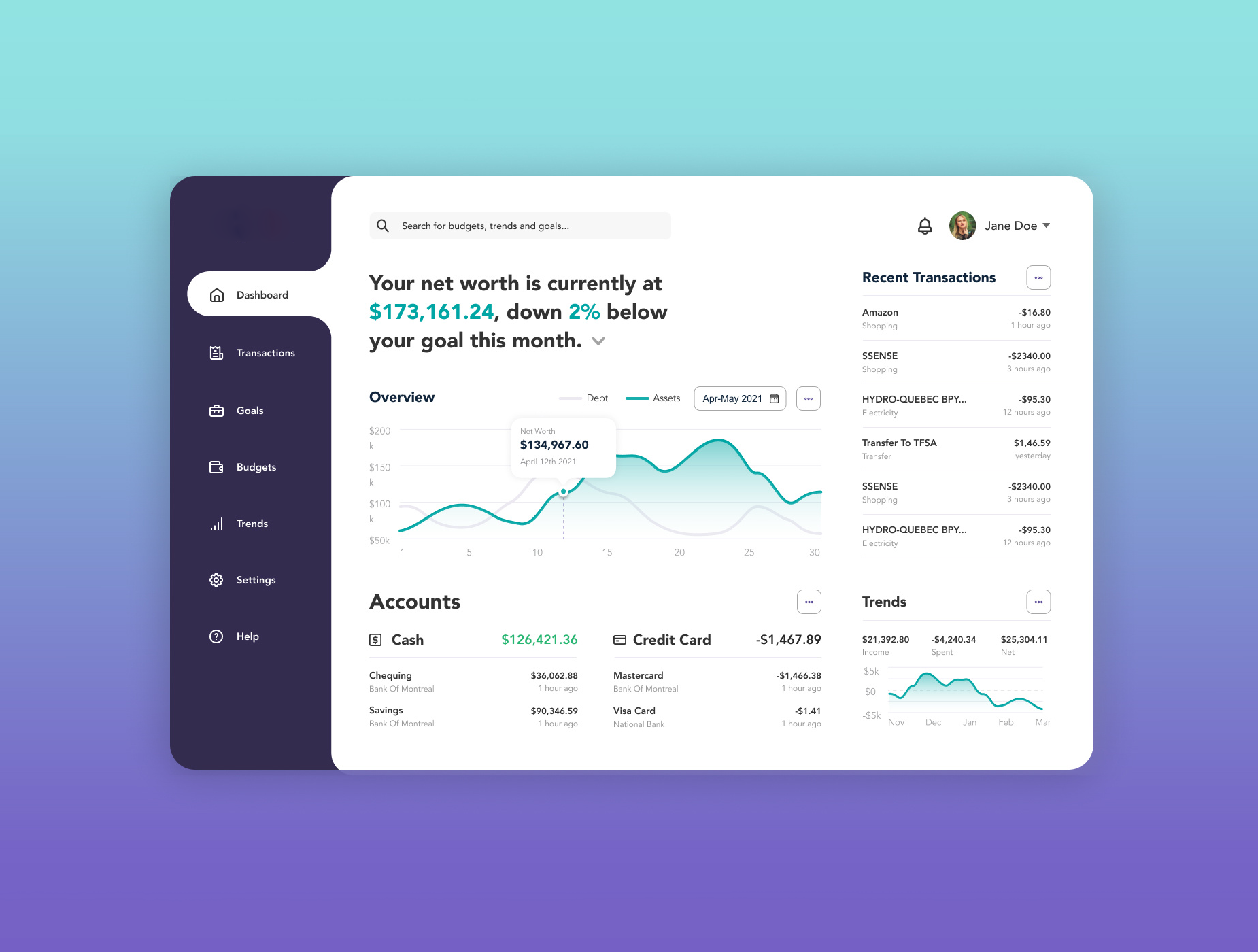
Parity AI AI Finance Platform
The Challenge
Users had no single place to see banking, investments, debt, and insurance together. Existing advisory tools were fragmented, expensive, and lacked real-time intelligence, leaving people to manage their money across disconnected apps.
Our Approach
We built Parity AI as a full-stack financial wellness platform with secure multi-source data aggregation, behavioral analytics, predictive forecasting, and an AI recommendation engine that delivers personalized financial guidance in real time.
The Result
- Unified dashboard covering banking, investments, debt, and insurance data
- AI-driven recommendations triggered by user behavior and life events
- Secure multi-source aggregation built for sensitive financial records
Ready to launch an eWallet users trust with their money?
Whether you are validating a closed-loop wallet or building on a banking partner's license, we can turn your features, integrations, and compliance tasks into a phased plan. Share your use case, and our fintech team will come back with an architecture outline and next steps.
eWallet app development tech stack we work with
Wallet stacks are judged on consistency first and speed second. We favor proven languages, relational databases with strong transaction guarantees, and managed security services, then add payment, identity, and messaging providers that fit your markets. The final stack depends on your partner bank, regions, and team.
 Swift
 Kotlin
 Flutter
 React Native
 React
 TypeScript
 Java (Spring Boot)
 Go
 Node.js
 Python
 .NET Core
 PostgreSQL
 Redis
 Apache Kafka
 MongoDB
 Stripe
 Plaid
Adyen
Braintree
Apple Pay
Google Pay
OAuth 2.0
 AES-256
 TLS
AWS KMS
HashiCorp Vault
Onfido / Sumsub
 AWS
 Microsoft Azure
 Google Cloud
 Docker
 Kubernetes
 Terraform
 GitLab CI/CD
 Prometheus
 Grafana
 Datadog
 Twilio
 Firebase Cloud Messaging
8 features
Customer App
- Tiered sign-up with ID and selfie verification
- Top-up by card, bank transfer, or cash-in partner
- P2P transfers and payment requests
- QR payments and bill pay
- Multi-currency balances
- Biometric login and device binding
- Statements and spending categories
- Real-time push alerts
6 features
Merchant Tools
- Merchant onboarding with KYB checks
- Static and dynamic QR codes
- Payment links and invoices
- Full and partial refunds
- Settlement and payout reports
- Staff roles and outlet management
8 features
Admin & Compliance
- Customer and merchant management
- KYC review and case queues
- Transaction monitoring alerts
- Limits, fees, and FX configuration
- Dispute and chargeback handling
- Reconciliation dashboards
- Maker-checker approvals
- Audit log exports
Our eWallet app development process, from model to launch
Wallet projects slip when licensing, partner bank, and ledger decisions are made late. Our process settles those first, so design and engineering build on fixed ground instead of moving requirements.
1
Model & Compliance
We map money flows, choose the wallet model, list licensing or partner bank requirements, and define KYC tiers, limits, and markets. You receive a scoped feature list, an architecture outline, and a phased delivery plan.
2
UX & Flow Design
Designers prototype onboarding, top-up, transfer, and dispute flows, including declined and error states. Prototypes are tested with real users before development, because confusing money screens create support tickets and abandoned sign-ups.
3
Ledger & Integration
Engineers build the ledger, transaction APIs, and admin console in sprints, then connect payment processors, identity verification, and banking partners. Each sprint ends with working software in a staging environment you can review.
4
Security & Testing
We run functional, load, and penetration tests, plus reconciliation tests that replay large transaction batches to confirm balances match. Partner bank and processor certification steps are completed before launch.
5
Launch & Operations
We release in stages with feature flags and conservative transaction limits, watch fraud signals and failed payments, and handle app store reviews. After launch, we ship updates, rotate keys, and support audits as volumes grow.
-
01Wallet modelLower effortClosed-loop balance for one brandHigher effortOpen wallet with transfers to any user or bank
-
02PlatformsLower effortOne cross-platform appHigher effortNative iOS and Android, web, and a merchant app
-
03Ledger & currenciesLower effortSingle currency with simple feesHigher effortMulti-currency, FX, holds, and split payouts
-
04IntegrationsLower effortOne processor and one KYC providerHigher effortSeveral banks, payout corridors, and core banking
-
05Compliance scopeLower effortPartner bank runs most controlsHigher effortOwn license with full monitoring and reporting
-
06Contactless paymentsLower effortQR paymentsHigher effortNFC tap-to-pay and card provisioning
-
07Back officeLower effortBasic user managementHigher effortDisputes, maker-checker, and audit exports
-
08After launchLower effortBug fixes and OS updatesHigher effortRound-the-clock monitoring, scaling, and new markets
TipStarting with an MVP for one market and one core use case keeps early spend down and gives you real transaction data before you expand. For broader benchmarks, read our mobile app development cost guide.
We Start With Money Flows, Not Screens
Before wireframes, we diagram where funds enter, sit, and leave, who holds them, and which partner or license covers each step. That exercise exposes compliance gaps and integration needs early, when changing direction is cheap. It also gives your partner bank or legal team a clear document to review, which tends to shorten the approval cycle that slows many wallet launches.
Certified Security Practices in Our Delivery
Xicom holds ISO/IEC 27001 and SOC 2 Type II certifications, and those controls shape how our teams handle your code, credentials, and test data. Access is role-based, secrets live in managed vaults, and production data is masked in lower environments. For your product, we design to PCI DSS, PSD2, and partner bank requirements, while formal assessments stay with your auditors.
Fintech and AI Skills in One Team
Wallets increasingly rely on machine learning for fraud scoring, support automation, and spending insights. Our engineers work alongside Xicom's AI team, so a risk model or support assistant is planned into the architecture instead of bolted on later. You get one partner for the mobile app, the ledger, and the intelligence layer around them.
Engagement That Matches Your Stage
Early-stage teams often start with a fixed-price MVP for one market, then move to a dedicated team as the roadmap grows. Enterprises sometimes prefer time and material for integration-heavy work. We support all three models, hold a 4.8 rating on Clutch, and stay on after launch for monitoring, updates, and new releases.
Client testimonials and reviews showcasing the value we consistently deliver
Explore how our clients describe their journey with us, reflecting strong collaboration, effective execution, and consistent outcomes delivered across engagements. See how our delivery framework ensures consistency from initiation through to successful completion.
❝
Parity AI
We came to Xicom with an ambitious goal: make institutional-grade financial planning accessible to everyone through AI. Xicom went beyond the brief, blending conversational AI and predictive analytics into an effortless platform. Parity AI is exactly what we envisioned.

❝
RadioFX
Xicom took the time to understand what our stations and listeners actually need, building something tailored rather than generic. Live chat and polls are now core to how we connect with our audience — the app has become a true extension of our on-air presence.


❝
StudyBuddy
Xicom built exactly what our students needed: a secure space to connect, collaborate, and find tutoring support in one place. Their understanding of student behavior shows in how naturally everything fits together — StudyBuddy is something students genuinely rely on.

❝
BoxxDocks
Xicom helped us bring BoxxDocks to life exactly as we envisioned it. Their team understood the complexity of AI powered real-time asset tracking and delivered a platform that's both powerful and genuinely easy to use.


❝
TodayFit
We are very happy with their services. I cannot recommend them highly enough. The value, ability, and delivery that we have seen has been superb, and we look forward to continuing this relationship.


❝
SmartVend AI
Their team built SmartVend from the ground up, combining hardware integration, real-time inventory sync, and a centralized dashboard that completely changed how we operate. We couldn't have asked for a more capable technical partner.

❝
Tap Retail
Partnering with Xicom to develop our Tap Retail app and website was one of the best decisions we made. Their team demonstrated exceptional professionalism, technical expertise, and a deep understanding of our business goals.


❝
GoGmGo
Partnering with Xicom was a game-changer for us. They didn't just build software, they helped us redefine how we run our business. Their proactive support and deep domain knowledge gave us the confidence to innovate faster.

❝
DENVEN
Working with Xicom has been a transformative experience. Their team quickly understood our challenges and delivered a scalable, intuitive solution. I highly recommend Xicom to any organization seeking future-ready, high-performance digital products.

Top tech insights of our blog
Explore latest tech stories & News
✦ AI-First Company
Deep Insights into Emerging Technology and Innovation!
Stay ahead in the digital world with our latest insights covering AI trends, industry developments, and expert advice on building smarter businesses.
1800+
Projects
20+
Years Experience
Frequently Asked Questions
What does an eWallet app development company do?
An eWallet app development company designs and builds the complete wallet product: the customer app, the transaction ledger, payment and banking integrations, KYC and fraud checks, and the admin console. Xicom also helps you choose a wallet model and partner setup, then supports the product after launch. The license to hold funds comes from you or a regulated partner, not the developer.
How much does it cost to build an eWallet app?
Cost depends on the wallet model, number of platforms, currencies, integrations, and how much compliance work sits with you rather than a banking partner. A closed-loop MVP on one platform costs far less than a multi-currency open wallet with its own license. We share a detailed estimate after a short scoping phase based on your actual feature list.
How long does eWallet app development take?
An MVP with core wallet features usually takes a few months. Full products with multiple currencies, merchant tools, and several bank integrations take longer. Partner bank onboarding and processor certification often run in parallel with development and can decide the launch date, so we plan those tasks from the first week.
Do I need a license to launch an eWallet?
It depends on who holds customer funds. Closed-loop wallets used with a single business are often treated differently from wallets that move money between users or to banks. Many companies launch through a licensed bank or e-money partner instead of getting their own license. Confirm your model with payments counsel early, and we will build to the requirements that apply.
What is the difference between closed, semi-closed, and open wallets?
A closed wallet works only with the business that issued it. A semi-closed wallet can be used at a defined network of merchants. An open wallet also supports cash withdrawal and transfers to bank accounts. Exact categories differ by country and have changed over time, so the label matters less than who holds the funds and which license covers them.
How do you keep an eWallet app secure?
We combine biometric or multi-factor login, device binding, encrypted storage, certificate pinning, and tokenized card data that never touches your servers. On the backend, idempotent APIs and a double-entry ledger prevent duplicate or lost transactions. Penetration testing, dependency scanning, and audit logs are part of every release, aligned with PCI DSS and OWASP mobile guidance.
Can you integrate Apple Pay, Google Pay, and existing bank systems?
Yes. We integrate Apple Pay and Google Pay for checkout and card provisioning, card processors such as Stripe and Adyen, bank linking through Plaid or open banking APIs, and core banking systems through APIs or middleware. Tap-to-pay from your own wallet on iPhone depends on Apple's NFC platform terms in your country, so we confirm it during scoping.
Should I build a custom eWallet or use a white-label platform?
White-label platforms reach the market faster but give you less control over the ledger, fees, and roadmap. Custom development costs more upfront and lets you own the user experience, the data, and the features that set you apart. Some companies start on a platform for speed and move to a custom core once volumes justify it. We help you compare both against your roadmap.
Which engagement models does Xicom offer for wallet projects?
We offer Fixed Price for well-defined MVPs, Time and Material for integration-heavy or evolving scopes, and Dedicated Team for long-term product development. Many wallet clients start with a fixed-price first release and move to dedicated mobile app developers as features and regions expand.
Do you provide support after the wallet goes live?
Yes. After launch we monitor uptime, failed payments, and fraud alerts, release OS and security updates, and add features as your roadmap grows. We also help with partner bank reviews, audit evidence requests, and app store policy changes, which come up often for financial apps.
Every award marks a milestone in our journey of excellence
As an AI-first digital engineering company, Xicom has earned global recognition for delivering innovative, scalable, and high-performing technology solutions. Our awards reflect the trust of clients and industry leaders alike.