×
Healthcare App Development Services
As a healthcare app development company, we build mobile health apps for organizations that can't afford to get security or compliance wrong. Our work spans clinical workflow tools, patient engagement platforms, and the backend architecture that keeps sensitive health data locked down across every device it touches.
Consult Our Experts
- 20+ Years in Business
- 350+ IT Experts
- 750+ Enterprise Clients
- CMMi Level 3 Certified
- ISO 9001:2015
- Top 1% on TrustPilot
-
 4.8 on Clutch
Our valued Brands & Agencies
















Modern healthcare mobile app development requires strict alignment with global security frameworks and privacy laws. Data breaches in the medical sector expose organizations to severe regulatory penalties and reputational loss. As a custom healthcare mobile app development company, we build against the frameworks that actually get enforced during audits:
Our Core Business-Driven Capabilities
- Remote care and monitoring platforms built for continuous patient engagement and real-time health tracking
- AI-enabled diagnostics and clinical assistance tools designed to support faster, more accurate patient assessments
- Connected wearable health platforms engineered to securely capture and process patient-generated health data
- Multilingual patient engagement applications that improve accessibility across diverse patient populations
Healthcare compliance standards we follow
HIPAA

HL7

FHIR

GDPR

DICOM

HITECH

ICD10

SNOMEDCT

SOC2

ISO/IEC 9001

CCPA

ECAT
Healthcare App development services we deliver
Xicom delivers end-to-end custom healthcare app development services designed to address specific operational bottlenecks across clinical, administrative, and patient touchpoints.

Custom Healthcare App Development
We build patient-facing and provider-facing applications around your actual clinical or business workflow, not a generic template. Our custom healthcare app development includes native iOS and Android builds, cross-platform delivery where it fits, and backend architecture designed to scale with patient volume. Every engagement starts with a discovery phase mapping data flows, user roles, and integration points.
HIPAA Compliant App Development
Encryption, access controls, breach notification protocols, and audit trails get built into the architecture from the first sprint. Our HIPAA compliant app development process includes a Business Associate Agreement, data mapping documentation, and a pre-launch compliance review, so gaps surface before users are on the platform. We also support ongoing access log reviews and security assessments, since compliance is a maintained state.
Telehealth & Virtual Care Platforms
We build video consultation apps, asynchronous care platforms, and hybrid telehealth systems that integrate with scheduling, e-prescribing, and billing. Our builds account for connection drops and bandwidth constraints common among rural and mobile patient populations, not just ideal demo conditions. Integration with existing EHR systems means visit notes and prescriptions land where your clinical staff already work.
Remote Patient Monitoring (RPM)
We connect wearables, glucometers, blood pressure cuffs, and other medical devices to a central dashboard that flags anomalies before they escalate. Our remote patient monitoring and healthcare IoT solutions handle the practical details: reliable device pairing, stable data transmission under poor connectivity, and alert thresholds tuned to reduce false positives that cause clinician alert fatigue over time.
EHR/EMR Integration
Most healthcare software projects stall at integration, not development. We work with HL7 v2, FHIR, and vendor-specific APIs to connect custom medical app development projects with major EHR systems used across hospital networks. If your application needs to pull or push patient data into an existing system, this is where most of the real engineering effort goes.
Healthcare Practice Management
We build appointment scheduling, insurance verification, billing workflows, and staff coordination tools that reduce administrative overhead pulling time away from clinical care. These systems are designed to reconcile data across scheduling, billing, and clinical modules cleanly, so your admin staff aren't chasing duplicate records or manual reconciliation across disconnected platforms.
AI-Enabled Clinical Decision Support
We build machine learning models that flag risk factors, support diagnostic workflows, or triage patient intake, deployed as tools that augment clinician judgment rather than replace it. Explainability is a core requirement in how we design these models, since a recommendation a physician cannot explain in a chart note has limited value in real clinical practice.
Legacy Healthcare System Modernization
Many hospital networks and clinics run software built a decade ago on infrastructure nobody wants to touch. We handle phased modernization: API layers over legacy systems, incremental data migration, and running new and old systems in parallel, so you're not forcing a hospital to go dark during a full rip-and-replace migration.
Accelerating enterprise transformation through AI and digital engineering.
20+
Years in Business
350+
IT Professionals
ISO 9001 Certified
NASSCOM & STPI Accreditation
NASSCOM & STPI Accreditation
750+
Clients Worldwide
1800+
Projects Executed
Post-Operative Readmission Risk
Readmission rates climb when patients lose track of discharge instructions, miss medications, report unreported symptoms, and have no clear channel back to their care team. We engineered an automated post-op monitoring app with interactive care schedules, daily symptom loggers, medication push notifications, and asynchronous messaging directly with care managers.
EHR Documentation Burnout
Physicians spend nearly two hours on EHR and desk work for every hour of direct patient care, a leading driver of burnout. We built an AI-assisted ambient clinical documentation tool that transcribes consultations into structured SOAP notes and pushes them directly into the clinic's EHR system.
On-Call Staffing Chaos
Multi-facility health systems struggle with manual scheduling, delayed specialist call-outs, and bottlenecked patient transfers between locations. We built a real-time hospital resource and scheduling app giving visibility into specialist availability, bed capacity, and on-call schedules across 12 regional facilities, cutting coordination delays between care teams.
Front-Desk Intake Errors
Manual paper registration creates longer wait times and data entry errors that surface downstream as denied billing claims, where one mistyped insurance ID can delay reimbursement by weeks. We built a self-service digital intake portal with ID scanning, insurance card OCR verification, and real-time eligibility checks before the visit.
Fragmented Device Data
Home-care patients using multiple connected devices, glucose monitors, BP cuffs, and pulse oximeters generate data across disconnected, device-specific apps. We developed an aggregated platform that normalizes data feeds from diverse Bluetooth and cellular medical devices into a single unified clinician dashboard, replacing manual status reconstruction with real-time monitoring.
Medication Adherence Gaps
Chronic disease patients on multi-drug regimens frequently miss doses or stop refills, driving up complication rates and avoidable ER visits. We built a medication adherence app with smart reminders, refill tracking, pharmacy integration, and care team alerts triggered when a patient misses scheduled doses.
Proven results with our Healthcare app development services
Explore how our custom healthcare app development services empower healthcare organizations with secure, scalable, and innovative digital solutions that drive better patient and business outcomes.
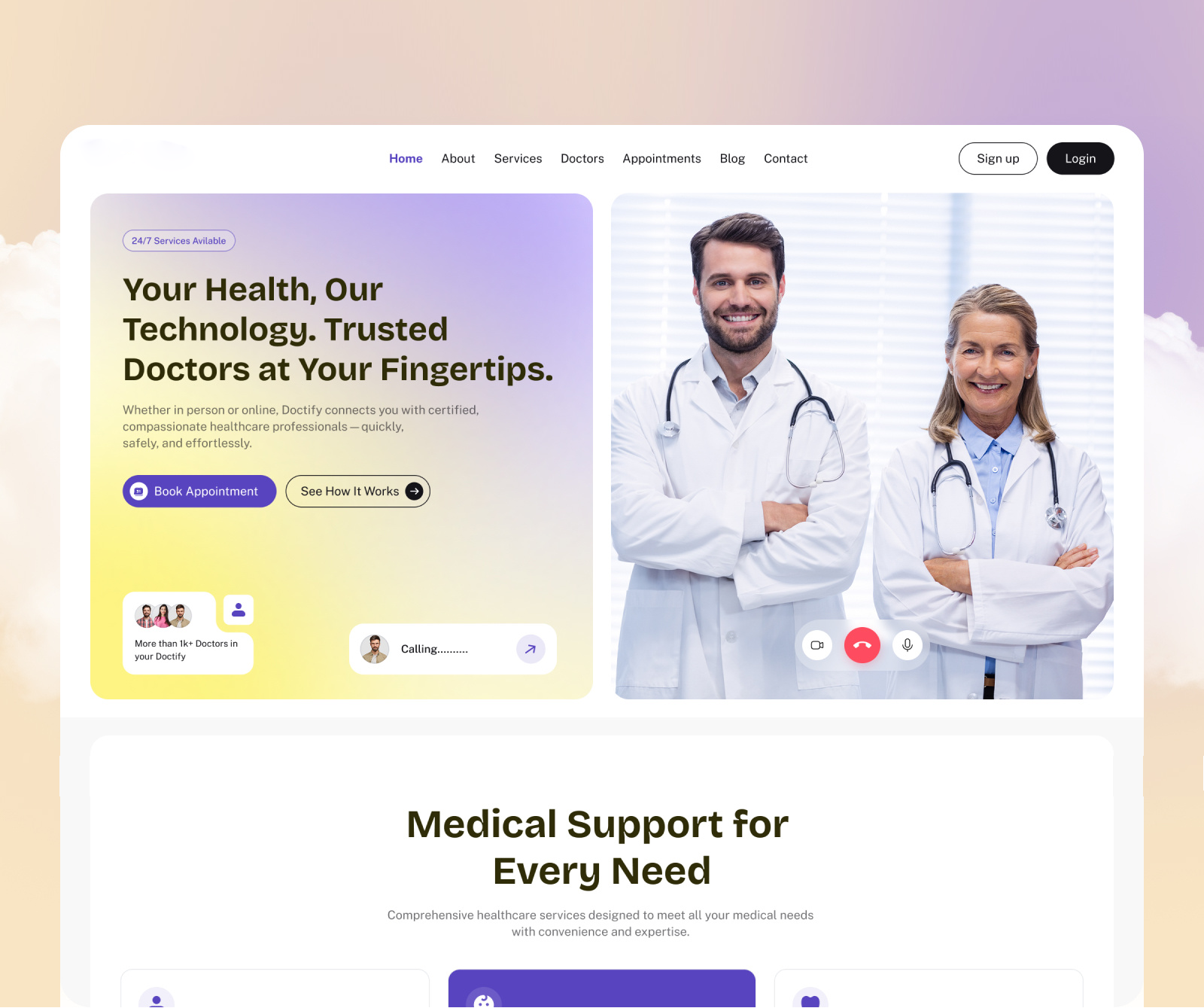
Health E Livin AI Wellness Platform
The Challenge
People struggling with mental health had no single platform to access trusted information, take confidential assessments, and find providers — all without stigma or privacy concerns.
Our Approach
We built HealtheLivin as an AI-powered mental wellness healthcare app with a conversational AI assistant, anonymous screenings, evidence-based resource library, and geolocation-based provider discovery — all on privacy-first cloud infrastructure.
The Result
- AI knowledgebase for natural language mental health support
- Confidential assessments with personalized wellness insights
- Location-based provider discovery for professional care
- Privacy-first architecture with encrypted data management
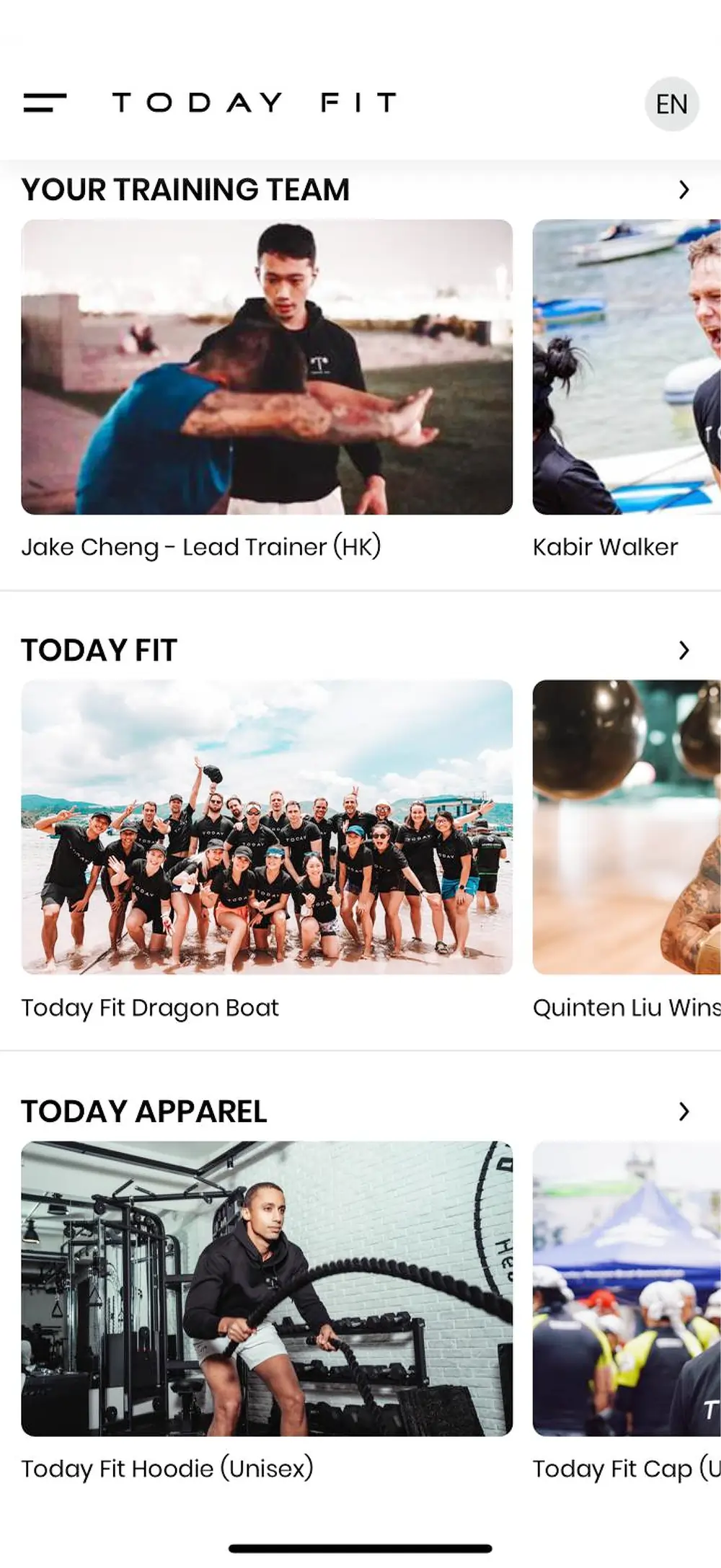
Today Fit Fitness App
The Challenge
Gyms, trainers, and users were stuck with disconnected tools for scheduling, payments, and fitness tracking. There was no single platform that combined personalized fitness with business management.
Our Approach
We developed TodayFit as an AI-driven health & fitness platform with trainer booking, personalized tracking, community features, and a SaaS layer for gym and trainer business management.
The Result
- 30% increase in user engagement
- 4.7+ average rating on the App Store and Play Store
- 60% growth in trainer bookings
- 45% increase in subscription conversions
GoSupps Custom eCommerce Solution
The Challenge
Selling fitness supplements across 20+ countries required handling multiple currencies, shipping rules, and tax laws from a single platform — while supporting 25,000+ daily customers and keeping mobile apps fully synced with the core e-commerce system.
Our Approach
We built three connected platforms — iOS app, Android app, and Magento e-commerce website — hosted on AWS with database indexing and caching, integrated with ODOO, Stripe, PayPal, UPS, and regional shipping providers, all supporting 20+ countries with auto-adjusted currency, tax, and shipping.
The Result
- 25,000+ users registered in the first month
- Multi-country e-commerce across 20+ countries
- Native iOS and Android apps with Magento integration
- AWS infrastructure built for high-traffic scalability

Ready to build a Healthcare App that passes audits and scales with your patient base?
Xicom's healthcare app developers handle the compliance, integration, and architecture work that's often treated as an afterthought late in development. Whether you're validating an MVP or modernizing a legacy clinical system, we scope the engagement around your actual regulatory and operational requirements.
Technology stacks and trends we use for Healthcare development services
As a healthcare app development company, we work with proven, HIPAA-compliant technology stacks across healthcare apps, clinical software, and AI-driven healthcare solutions. Our teams select programming languages, frameworks, and cloud platforms based on the compliance, interoperability, and scalability requirements specific to each healthcare engagement, rather than a one-size-fits-all stack.
 TensorFlow
 PyTorch
 Keras
Keras Scikit-Learn
  XGBoost
 LightGBM
 OpenCV
 SpaCy
SpaCy NLTK
NLTK FastAI
 OpenAI
 Hugging Face
 Google AI
 Azure AI
 AWS AI/ML
 IBM Watson
 Vertex AI
 SageMaker
 HIPAA
HIPAA GDPR
GDPR HL7
HL7 FHIR
FHIR Data Encryption
 Secure APIs
 CSS
CSS React.js
 Vue.js
 Dojo
Dojo Bootstrap
 HTML5
HTML5  Angular.js
 Next.js
  UI/UX
UI/UX  JavaScript
  iOS
iOS Android
 Flutter
 Kotlin
  Xamarin
  Ionic
Ionic  PhoneGap
  NativeScript
  Swift
Swift  Node.js
 Java
Java Dot Net
 PHP
PHP Laravel
  CodeIgniter
  Go
Go  Google Cloud
 Firebase
 My SQL
  MongoDB
  PostgreSQL
  SQL Server
 Kubernetes
 Openshift
 Packer
 Terraform
 Apache Mesos
 Docker
 TeamCity
 Jenkins
 Chef
Chef GitLab CI/CD
 Google Fit
 HealthKit
 Fitbit Alta HR
 Fitbit
 Garmin Watch
 Tom Tom Watch
 Fitbit charge
 Samsung Watch
 Fitbit surge
 MI Watch
Our end-to-end process for Healthcare App development services
We don't run every client through the same four boxes on a slide. But the shape of the work is consistent enough that it's worth walking through, so you know what you're actually signing up for before the first sprint starts.
1
Discovery & Roadmap
We audit your existing systems, clinical data flows, and regulatory requirements, such as HIPAA, GDPR, or HL7/FHIR, then deliver a real spec document with architecture, APIs, timeline, and team size mapped out.
2
Architecture & Security
Our architects design the data models, isolate how PHI is stored and transmitted, lock down encryption at every layer, and build access controls so nothing is trusted by default.
3
Development & Integration
We build in two-week sprints with working software delivered weekly, integrating EHR systems, e-prescription platforms, and third-party APIs to handle real clinical workflows from day one.
4
Testing
We test alongside development, not after, validating every integration against real usage patterns and compliance checkpoints so it holds up in production, not just in a demo.
5
Launch & Support
We deploy with minimal disruption, then monitor infrastructure, patch vulnerabilities, and update the platform as FHIR standards and HIPAA guidance shift, since a healthcare app's hardest problems surface months after launch.
Healthcare Domain Depth
Our healthcare app developers aren't generalists assigned to a healthcare project. The team has shipped RPM platforms, telehealth systems, and EHR integrations across provider, payer, and medtech clients.
Compliance-First Architecture
HIPAA, HL7/FHIR, and SOC 2 requirements shape the technical design from discovery onward, not a checklist reviewed before launch.
Rapid MVP to Enterprise Scale
We can scope a lean MVP to validate your model with real users, then architect for the scale a full hospital network deployment demands, without a rebuild in between.
Full Lifecycle Delivery
Discovery, design, development, deployment, and post-launch monitoring under one team, so accountability doesn't disappear at handoff.
Flexible Engagement Models
Dedicated development teams, staff augmentation for in-house teams that need specialized healthcare compliance expertise, or full outsourced delivery are structured around how your organization actually works.
Client testimonials and reviews showcasing the value we consistently deliver
Explore how our clients describe their journey with us, reflecting strong collaboration, effective execution, and consistent outcomes delivered across engagements. See how our delivery framework ensures consistency from initiation through to successful completion.
❝
Parity AI
We came to Xicom with an ambitious goal: make institutional-grade financial planning accessible to everyone through AI. Xicom went beyond the brief, blending conversational AI and predictive analytics into an effortless platform. Parity AI is exactly what we envisioned.

❝
RadioFX
Xicom took the time to understand what our stations and listeners actually need, building something tailored rather than generic. Live chat and polls are now core to how we connect with our audience — the app has become a true extension of our on-air presence.


❝
StudyBuddy
Xicom built exactly what our students needed: a secure space to connect, collaborate, and find tutoring support in one place. Their understanding of student behavior shows in how naturally everything fits together — StudyBuddy is something students genuinely rely on.

❝
BoxxDocks
Xicom helped us bring BoxxDocks to life exactly as we envisioned it. Their team understood the complexity of AI powered real-time asset tracking and delivered a platform that's both powerful and genuinely easy to use.

❝
TodayFit
We are very happy with their services. I cannot recommend them highly enough. The value, ability, and delivery that we have seen has been superb, and we look forward to continuing this relationship.


❝
SmartVend AI
Their team built SmartVend from the ground up, combining hardware integration, real-time inventory sync, and a centralized dashboard that completely changed how we operate. We couldn't have asked for a more capable technical partner.

❝
Tap Retail
Partnering with Xicom to develop our Tap Retail app and website was one of the best decisions we made. Their team demonstrated exceptional professionalism, technical expertise, and a deep understanding of our business goals.


❝
GoGmGo
Partnering with Xicom was a game-changer for us. They didn't just build software, they helped us redefine how we run our business. Their proactive support and deep domain knowledge gave us the confidence to innovate faster.

❝
DENVEN
Working with Xicom has been a transformative experience. Their team quickly understood our challenges and delivered a scalable, intuitive solution. I highly recommend Xicom to any organization seeking future-ready, high-performance digital products.

Top tech insights of our blog
Explore latest tech stories & News
✦ AI-First Company
Deep Insights into Emerging Technology and Innovation!
Stay ahead in the digital world with our latest insights covering AI trends, industry developments, and expert advice on building smarter businesses.
1800+
Projects
20+
Years Experience
Frequently AskedQuestions
How much does healthcare app development cost?
Cost depends heavily on scope. A simple mHealth app or booking portal sits at the lower end of the investment range, while a complex enterprise platform with deep EHR integrations, real-time telemetry, or custom hardware sync requires significantly more engineering time and budget. We scope actual numbers after the discovery phase.
How long does it take to build a healthcare application?
Timeline scales with complexity. A straightforward MVP or patient-facing app moves faster through development, while a full-scale hospital system with multi-layer access, heavy backend integrations, and extensive security testing takes considerably longer to engineer and test properly. We provide a firm timeline after mapping your requirements.
How do you ensure security and compliance in medical application development?
We build zero-trust architecture directly into the initial codebase, applying AES-256 encryption for stored data, TLS 1.3 for data in transit, strict role-based access, automatic session timeouts, and full HIPAA and GDPR audit trails from day one of development.
Will you create prototypes for testing before starting actual healthcare app development?
Yes. We design interactive, clickable wireframes first. This lets your doctors, nurses, and administrative staff test actual screen flows and give feedback early, saving you from expensive code revisions later in the build.
What type of healthcare application development services do you offer for large-scale hospitals and enterprise systems?
We build custom middleware for legacy EHR systems, remote patient monitoring platforms, cross-facility staff schedulers, emergency bed trackers, and automated intake engines, all engineered to handle heavy user traffic and large volumes of clinical data without performance loss.
What security standards do you follow for healthcare app development?
Do you offer real-time analytics and dashboards within your healthcare apps?
Yes. We build custom operational and clinical dashboards that pull live data, letting your team track active patient vitals, monitor room turnover, review billing queues, and check daily staffing ratios through clean, visual charts with export functionality.
Do you provide post-launch support and maintenance services?
Yes. Launch is just the starting point. We offer ongoing support plans covering server monitoring, timely bug fixes, mobile OS updates, and adjustments whenever healthcare data regulations or FHIR specifications change down the line.
Can we hire dedicated healthcare mobile app developers for an ongoing project?
Yes. You can bring on our mobile developers, backend engineers, or QA specialists on a flexible monthly basis. They integrate directly into your internal team to help plug skill gaps, hit launch deadlines, or scale your existing platform.
What sets your healthcare mobile app development company apart from others?
We bring 20+ years of hands-on software engineering experience to the table. We know how to integrate with complex hospital EHR systems without breaking existing workflows, and we skip the corporate fluff to deliver reliable, compliant tech that works.
Every award marks a milestone in our journey of excellence
As AI-first digital engineering company, Xicom has earned global recognition for delivering innovative, scalable, and high-performing technology solutions. Our awards reflect the trust of clients and industry leaders alike.