Online Medicine Delivery App Development: A Complete Cost & Feature Breakdown
Oct 29, 2026 App Development
Oct 29, 2026 App Development
Oct 29, 2026 App Development
People now expect to order prescriptions the same way they order groceries: from a phone, with live tracking and a delivery slot that fits their day. For pharmacies, healthcare startups and retail chains, medicine delivery app development has moved from a nice-to-have to a core growth channel.
Building one is not the same as building a food or grocery app, though. A pharmacy app handles prescriptions, protected health information and, in some cases, controlled substances. That brings licensing, privacy and verification rules that shape every screen and every line of backend code.
This guide covers what it costs to build a medicine delivery app today, the business models that work, the features users and pharmacists need, the AI capabilities worth adding, the compliance rules to plan for, and the step-by-step development process.
Most medicine delivery apps cost between USD 30,000 and USD 300,000+ to build, depending on features, platforms, integrations and compliance scope. A basic single-pharmacy app sits at the lower end. A multi-vendor marketplace with telemedicine, AI features and full HIPAA-ready infrastructure sits at the top.
The detailed breakdown, cost drivers and ways to reduce your budget are covered further down.
Demand for digital pharmacy services keeps climbing. According to IMARC Group, the global e-pharmacy market reached USD 121.58 billion in 2025 and is projected to hit USD 343.75 billion by 2034, growing at a CAGR of 12.24%. North America led the market with a share of over 40.7% in 2025.
Three shifts are driving this growth:
For pharmacies, that means a well-built app is now one of the most direct ways to protect existing customers and reach new ones beyond the store’s local area.
Your business model decides your feature list, your compliance scope and a large part of your budget. Here are the five models that work best for pharmacy delivery app development.
A single pharmacy or pharmacy chain launches its own branded app to sell and deliver to its customers. The pharmacy controls inventory, pricing and the customer relationship.
Key features: real-time inventory sync, local courier or in-house delivery, loyalty programs.
Best suited for: independent and chain pharmacies that want to move their existing customers online.
The app lists multiple partner pharmacies. Customers upload a prescription, compare prices and availability, and order from the pharmacy that suits them.
Key features: multi-vendor onboarding, commission-based revenue, pharmacy ratings and reviews.
Best suited for: startups that want to scale a healthcare platform without owning inventory.
Users subscribe to receive their regular medicines on a fixed schedule, such as a monthly refill for blood pressure or diabetes medication.
Key features: automated recurring orders, refill reminders, subscriber discounts.
Best suited for: businesses focused on patients with chronic conditions and long-term prescriptions.
A digital pharmacy that operates entirely online, selling directly to customers through its app and fulfilling orders from its own warehouse.
Key features: direct-to-consumer sales, e-pharmacy licensing built into operations, warehouse and last-mile delivery management.
Best suited for: well-funded startups ready to run their own fulfillment.
Patients consult a doctor by video inside the app, receive an e-prescription and get the medicine delivered, all in one flow.
Key features: video consultations, e-prescription integration, connected patient records.
Best suited for: healthcare providers and startups building a full virtual care experience. If this is your direction, see our guide on telemedicine app development cost.
Still exploring which idea to pursue? Our list of healthcare business ideas can help you compare options.
A complete medicine delivery platform usually has four connected parts: a customer app, a pharmacy panel, a delivery app and an admin panel. Here is what each one needs.
AI is where newer medicine delivery apps pull ahead of older ones. Used carefully, it speeds up operations and improves the patient experience without replacing the pharmacist’s judgment.
Any AI feature that touches health data must follow the same privacy and access rules as the rest of the app, and clinical decisions should always stay with licensed pharmacists. Xicom’s AI development services cover these features as part of the app build.
Compliance shapes the architecture of a medicine delivery app, so it belongs in the plan from day one. For the US market, these are the main rules to account for.
Outside the US, plan for GDPR in Europe and the local e-pharmacy and data protection laws of each country you serve.

A structured process keeps the build on budget and avoids expensive rework later. These are the steps that matter most in online pharmacy app development.
Study competing apps, their reviews and their gaps. Define your target users, their locations and their most common needs, such as chronic care refills or same-day delivery.
Choose your model and decide why users should pick you. Common differentiators include express delivery, built-in doctor consultations, 24/7 ordering and access to hard-to-find medicines.
List the licenses, privacy laws and prescription rules that apply in each market. This step decides how you store prescriptions, verify users and handle restricted medicines.
Map the full journey, from sign-up and prescription upload to checkout, tracking, refills and support. Clear flows at this stage also define which APIs you need to integrate.
Flutter or React Native work well for cross-platform apps, while Swift and Kotlin suit fully native builds. Node.js, Python (Django) or Laravel handle the backend, with PostgreSQL or MongoDB for data and AWS, Azure or Google Cloud for HIPAA-eligible hosting.
Many pharmacy users are older or managing illness, so clarity matters more than visual flair. Use large tap targets, readable text, simple search and a checkout that takes as few steps as possible.
Build the four app components and connect them to payment gateways, maps, inventory systems, e-prescription services and any AI features. Real-time order tracking usually relies on WebSockets and push notifications.
Run functional, usability, performance and security testing, with special attention to payments, prescription uploads and data access. A security audit before launch helps confirm HIPAA readiness.
Launch is the start, not the finish. Onboard pharmacy partners, upload inventory, market the app, and use analytics and user feedback to plan each new release.
Development rates, AI integrations and compliance requirements have all shifted in recent years, so older cost estimates no longer reflect what it takes to build a market-ready app. Here are realistic ranges for the cost to develop a medicine delivery app today.
| App Type | What It Includes | Estimated Cost (USD) | Timeline |
|---|---|---|---|
| Basic (MVP) | Single pharmacy, customer app, prescription upload, payments, order tracking, basic admin panel | 30,000 to 60,000 | 3 to 4 months |
| Mid-level | Customer, pharmacy, delivery and admin apps, refill reminders, analytics, multiple payment options, HIPAA-ready security | 60,000 to 150,000 | 4 to 6 months |
| Advanced | Multi-vendor marketplace, telemedicine, AI features, insurance integration, multi-state or multi-country compliance | 150,000 to 300,000+ | 7 to 10+ months |
Development companies usually calculate the final quote with a simple formula:
Total cost = development hours x hourly rate + third-party and compliance costs
Third-party costs include services such as maps, SMS, cloud hosting, e-prescription APIs and security audits. Also budget for ongoing maintenance, security updates and OS upgrades after launch.
Several factors move the final budget up or down. Most of them also apply to the broader cost of healthcare app development.
Every feature adds design, development and testing time. Prescription verification, live tracking, pharmacist chat and refill automation all raise the budget compared with a simple ordering app.
Separate native apps for Android and iOS cost more than a single cross-platform app. Flutter or React Native can cut development time significantly for most pharmacy apps.
HIPAA-ready infrastructure, encryption, audit logging, secure prescription storage and security testing add to the budget. They also protect you from far larger costs if something goes wrong.
Payment gateways, GPS and maps, pharmacy management systems, e-prescription networks and insurance verification each add development and testing effort.
AI prescription reading, demand forecasting and AI support assistants add data, model and integration work. Starting with one or two high-value AI features keeps costs controlled.
Custom, accessible design for users of all ages takes more design and testing time than template-based screens, but it directly improves conversion and retention.
US and Western European teams charge the highest hourly rates. Working with an experienced offshore team, such as one in India, can lower costs considerably while keeping quality and compliance standards high.
A well-built pharmacy app pays back through new revenue, lower operating costs and stronger customer loyalty.
A medicine delivery app is a digital platform that lets users order prescription and over-the-counter medicines from their phone and get them delivered to their door. Users upload prescriptions, pay securely and track orders in real time, while pharmacies use the app to verify prescriptions and manage orders.
Medicine delivery app development typically costs between USD 30,000 and USD 300,000 or more. A basic app costs about USD 30,000 to 60,000, a mid-level app USD 60,000 to 150,000, and an advanced platform with telemedicine and AI features USD 150,000 to 300,000 or more.
A basic medicine delivery app takes about 3 to 4 months. A mid-level app takes 4 to 6 months, and an advanced multi-vendor platform with telemedicine and AI features can take 7 to 10 months or more.
The five most common models are pharmacy-to-consumer, marketplace aggregator, subscription and refill, online-only pharmacy, and the telemedicine and pharmacy hybrid. The right choice depends on whether you own inventory, your budget and the patients you want to serve.
In the US, a pharmacy delivery app needs HIPAA-compliant handling of health data, state pharmacy licenses for each state it ships to, and controls for prescription verification. Apps that dispense controlled substances must follow DEA rules, and pharmacies must meet DSCSA drug tracing requirements.
AI can read uploaded prescriptions, predict refill dates, forecast inventory demand, optimize delivery routes, flag suspicious orders and power a support assistant for order questions. Clinical decisions should always stay with licensed pharmacists.
Start with an MVP and add features in phases, use a cross-platform framework like Flutter or React Native, rely on proven third-party services for payments and maps, build compliance in from the start, and work with an experienced offshore development team.

Hotel booking app development cost runs $21,000 to $200,000+ offshore. See costs by app type and phase, PMS integration, running costs and OTA savings.
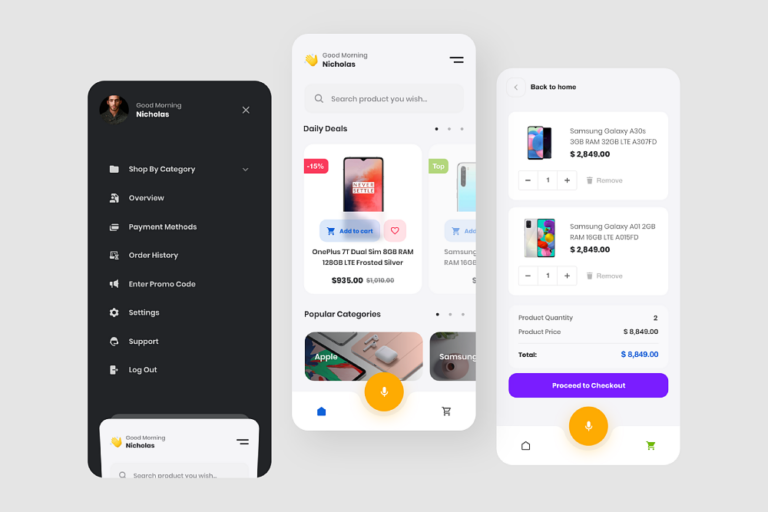
Marketplace app development cost ranges from $40,000 to $300,000+. See costs by tier and feature, AI add-ons, payment fees, and how to build an app like Amazon.
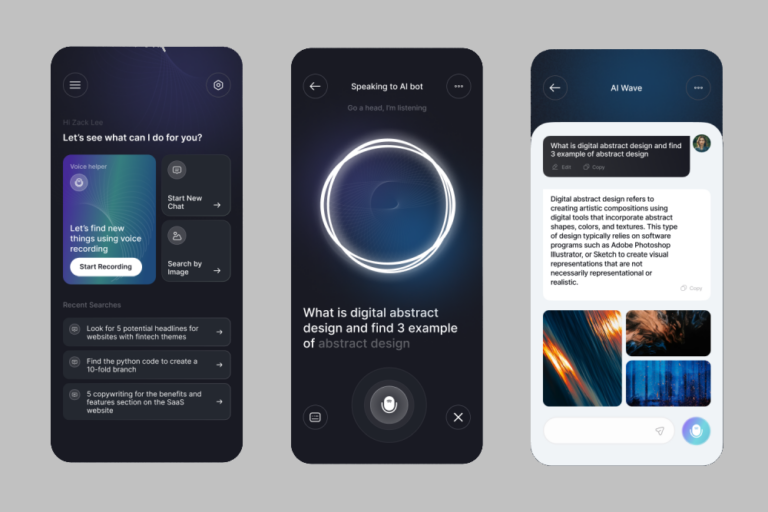
Explore top mobile app development trends for 2027, from on-device AI and in-app agents to passkeys, foldables and cross-platform builds, with current data.