×
- 20+ Years in Business
- 350+ IT Experts
- 750+ Enterprise Clients
- CMMi Level 3 Certified
- ISO 9001:2015
- Top 1% on TrustPilot
-
 4.8 on Clutch
Our valued Brands & Agencies
















Comprehensive Flutter app development services that we offer
We offer a complete suite of Flutter app development services, covering everything from consulting, UI/UX design and backend integration to testing, deployment, and ongoing maintenance, delivered under one accountable team throughout the project lifecycle.

Flutter App Consulting
Our consultants define app architecture, estimate engineering scope, evaluate Flutter suitability, and establish implementation strategies based on business objectives, regulatory obligations, and anticipated traffic patterns. Decisions are documented through solution blueprints, delivery milestones, and technology recommendations grounded in measurable engineering criteria.
Custom Flutter App Development
Every app is engineered around distinct operational requirements rather than predefined frameworks. Our development teams construct maintainable Flutter solutions using Dart, layered architecture, reusable components, and secure coding standards. Source code remains structured for controlled expansion, simplifying future feature delivery.
Cross-platform App Development
One codebase governs app behaviour across multiple operating systems. Our engineers implement adaptive layouts, platform-aware navigation, and device-specific capabilities while preserving consistent business logic. Development effort is provisioned against long-term maintainability instead of maintaining separate Android and iOS codebases.
Flutter UI/UX Design
Our designers establish navigation hierarchies, interaction patterns, typography systems, spacing rules, and component libraries before visual production begins. Every screen follows documented usability principles and accessibility standards, producing interfaces that remain coherent as products expand over successive releases.
Flutter App Migration
Legacy applications frequently outgrow their original technology foundations. Our migration specialists assess source code, isolate reusable business logic, map platform dependencies, and reconstruct application layers within Flutter while preserving operational continuity. Validation encompasses data integrity, functional parity, and controlled deployment.
Flutter Web & Desktop Development
Flutter supports far more than mobile deployment. Our architects deliver browser, Windows, macOS, and Linux applications using shared domain logic, responsive rendering techniques, desktop interaction models, and keyboard-first workflows. Platform behaviour remains aligned with established operating system conventions instead of relying on generic interface patterns.
Backend & API Integration
Reliable communication between applications depends upon disciplined interface design. Engineers integrate REST, GraphQL, WebSocket, payment, authentication, notification, and cloud services through documented API contracts, OAuth 2.0, JWT, and structured error handling. Integration layers withstand audit as readily as sustained production traffic.
Flutter App Testing & QA
Software quality emerges through repeatable verification. We execute unit, widget, integration, regression, compatibility, and performance testing using Flutter Test, integration_test, Firebase Test Lab, and automated validation pipelines. Release candidates progress only after predefined acceptance criteria and measurable quality benchmarks have been satisfied.
Flutter App Modernization
Established apps benefit from periodic architectural refinement. Our app development team replaces obsolete libraries, restructures legacy modules, introduces current Flutter capabilities, optimizes rendering pipelines, and aligns projects with contemporary Dart language practices. Modernized codebases accommodate future engineering disciplines with greater predictability.
Flutter Maintenance & Support
Production software demands continuous technical stewardship. Dedicated engineers monitor application stability, resolve defects, manage framework upgrades, review dependency health, and introduce approved enhancements through governed release cycles. Operational continuity is sustained without disrupting established user workflows or business-critical functionality.
Accelerating enterprise transformation through AI and digital engineering.
20+
Years in Business
350+
IT Professionals
ISO 9001 Certified
NASSCOM & STPI Accreditation
NASSCOM & STPI Accreditation
750+
Clients Worldwide
1800+
Projects Executed
Industries we build flutter apps for
We deliver cutting-edge Flutter app development solutions, ensuring seamless performance, scalability, and innovation. Leverage our expertise to build high-performing, user-centric applications that ensure digital transformation by addressing industry-specific challenges.

Automotive

Real Estate

Entertainment

Retail & Ecommerce

Healthcare

Transportation

Manufacturing

Travel & Tourism

Professional Services

Software Vendors

Banking & Finance

Education
Artificial Intelligence / AI
Our engineers integrate predictive analytics, recommendation engines, anomaly detection, and intelligent automation into Flutter apps using TensorFlow Lite, Vertex AI, Azure AI, and custom ML pipelines. Model deployment, inference optimization, and lifecycle management are governed through architectures that sustain consistent performance across mobile, web, and desktop environments.
Generative AI
Enterprise-grade generative capabilities are incorporated through large language models, multimodal systems, retrieval-augmented generation, and prompt orchestration. We develop AI assistants, document intelligence platforms, conversational interfaces, and content generation workflows by integrating OpenAI, Gemini, Claude, and open-source models within secure application architectures.
Computer Vision
Image processing capabilities encompass object detection, OCR, facial recognition, pose estimation, barcode scanning, and visual quality inspection. Our specialists integrate OpenCV, MediaPipe, TensorFlow Lite, and cloud vision services while optimising inference latency, memory utilisation, and model accuracy across diverse hardware configurations.
Internet of Things
Flutter applications are engineered to communicate with connected devices through MQTT, BLE, Zigbee, Modbus, HTTP, and industrial communication protocols. Device provisioning, telemetry collection, remote command execution, and real-time monitoring are architected for dependable operation across consumer, enterprise, and industrial IoT ecosystems.
Augmented Reality
Interactive AR experiences are developed through ARCore, ARKit, and platform-native rendering frameworks integrated with Flutter. Solutions encompass product visualization, equipment guidance, indoor navigation, and remote assistance, with rendering pipelines engineered for stable tracking, realistic object placement, and responsive user interaction.
Mixed Reality
Our architects develop Flutter apps that interact with mixed reality environments by combining spatial mapping, environmental understanding, gesture recognition, and persistent digital content. Integration with enterprise XR platforms supports collaborative visualization, guided maintenance, immersive learning, and industrial inspection across advanced computing devices.
Cloud Computing
Cloud-native architectures form the foundation of scalable Flutter applications. We provision distributed backends using AWS, Microsoft Azure, Google Cloud, Firebase, Kubernetes, and serverless services, incorporating managed databases, event-driven processing, container orchestration, and infrastructure automation governed by operational and security standards.
Embedded Systems
Specialised hardware integration encompasses microcontrollers, embedded processors, industrial controllers, and edge devices operating alongside Flutter applications. Communication interfaces are implemented through UART, SPI, I2C, CAN, Bluetooth, and serial protocols, producing dependable interaction between software systems and resource-constrained hardware platforms.
Blockchain
Distributed ledger integration encompasses smart contracts, decentralised identity, digital wallets, tokenisation, and secure transaction processing. Our blockchain architects work with Ethereum, Hyperledger, Polygon, and Solidity-based ecosystems, implementing cryptographic verification, immutable record management, and enterprise-grade security mechanisms within Flutter applications.
Spatial Computing
Three-dimensional digital experiences are engineered through spatial mapping, depth sensing, object anchoring, gesture interaction, and environment-aware rendering. Flutter applications integrate with modern XR frameworks and spatial computing platforms to support immersive collaboration, industrial simulation, digital twins, and context-aware visualisation across next-gen devices.
Case Studies: Flutter apps built for real business problems
See how our Flutter apps have solved real problems for businesses across social, travel, and other industries, not just how they look in a portfolio.
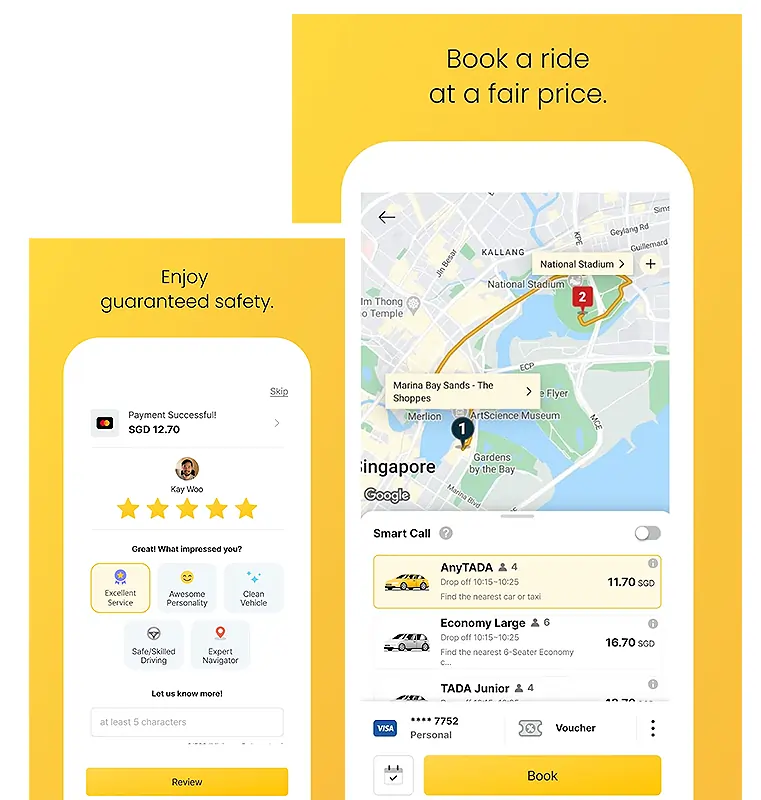
TADA Taxi Booking App
TADA is a next-generation ride-hailing application designed to provide a fairer and more efficient transportation service for drivers and passengers. With increasing traffic congestion and surging ride requests during peak hours, the client to looking forward to creating a platform that prioritizes earnings for drivers, faster ride matching, and extended ride options for users.
Industry
Transportation / Mobility
Technologies
Flutter, Node.js, MongoDB, AWS
FlirtFlex Social Networking
FlirtFlex is a next-gen social and content engagement platform born in the vibrant city of Austin, Texas, carefully designed to redefine the experience of how users and content creators interact online. Going beyond the traditional dating or subscription platforms' concepts that often prioritize profits over people, FlirtFlex champions authenticity, real-time conversations, and content creation facilities for the creators.
Industry
Social Networking
Technologies
Flutter, Node.js, MongoDB, WebRTC

Ready to build a Flutter app that actually performs?
Let's talk about what you're building and whether Flutter is the right fit for it, as an flutter mobile app development company, we'll map out a plan that works for your timeline and budget.
Powering your Flutter applications with modern tools and frameworks
We leverage Flutter's robust toolkit and widget-driven framework to engineer secure, high-performing applications built for scale. This stack streamlines development, simplifies integration, boosts performance, and keeps every application easy to maintain long-term.
 Flutter SDK
 Dart SDK
 FlutterFlow
 Android Studio
 Visual Studio Code
 Git
Git GitLab
 Bit Bucket
 Travis
 Cirrus
 AWS
AWS Microsoft Azure
  Google Cloud
 Firebase
 My SQL
 MongoDB
  PostgreSQL
 SQL Server
  Selenium
 Postman
 Test Rail
 Apache JMeter
 Fastlane
 Bitrise
Why built with Flutter?
With 20+ years of enterprise experience, Xicom delivers high-performance, compliance-ready mobile applications built specifically for Dubai's fast-growing digital economy.
Single Codebase Across Platforms
Flutter enables developers to build apps for Android, iOS, web, desktop, and embedded platforms from a unified codebase, reducing duplicated engineering effort.
Faster Development Cycles
Hot Reload, reusable widgets, and a rich development framework accelerate feature implementation, testing, and iteration, enabling shorter release cycles.
Native-like Performance
Flutter compiles directly to native machine code and renders its own interface, delivering responsive interactions, smooth animations, and consistent performance.
Consistent User Experience
A comprehensive widget library allows applications to maintain a uniform visual identity while adapting appropriately to platform-specific design conventions and screen sizes.
Cost-efficient Development
Developing and maintaining a single application for multiple platforms lowers engineering costs, reduces testing effort, and minimizes ongoing maintenance.
Scalable Architecture
Flutter supports modular application architecture, making it easier to expand functionality, integrate new technologies, and accommodate evolving business requirements.
Backed by a Mature Ecosystem
Backed directly by Google and a large open-source community, Flutter gets continuous framework updates and a growing pub.dev package library covering everything from payment gateways to analytics.
Built-in Testing Support
Flutter includes unit, widget, and integration testing tools built in, so teams can verify functionality and UI across platforms without separate testing stacks.
Why choose Xicom as your Flutter app development company
With 20+ years of engineering depth and 1,800+ projects delivered across 50+ countries, our Flutter work goes beyond a single shared codebase. We build apps engineered to hold their own against fully native builds, while meeting the compliance and scale requirements enterprise clients actually need.

A single Dart codebase only stays maintainable if it's structured properly from the start. We organize Flutter projects around clean state management and modular widget architecture, so adding a feature six months in doesn't mean untangling a mess of tightly-coupled screens.
- State management using Bloc, Riverpod, or Provider, chosen based on your app's actual complexity
- Feature-based folder architecture that keeps modules independently testable and deployable
- Custom platform channels for the native functionality Flutter doesn't cover out of the box
- Codebase structured to support new features without rewriting existing screens
Flutter's Skia rendering engine already draws every pixel directly rather than relying on native UI components, but that advantage only shows up if the app is built to use it properly. We tune widget rebuilds, animation performance, and asset loading so the app doesn't feel like a compromise on either platform.
- Widget tree optimization to prevent unnecessary rebuilds and frame drops
- Impeller and Skia rendering tuned for consistent 60fps+ animations
- Deferred loading and asset optimization for faster cold-start times
- Performance profiling on real Android and iOS devices before every release, not just emulators
Regulatory requirements are easy to overlook in a cross-platform app until an audit catches them. We build HIPAA, GDPR, and PCI DSS requirements into the architecture from the first sprint, across both the Flutter layer and any native modules it connects to.
- End-to-end encryption for data at rest and in transit, verified on both platforms independently
- Secure local storage using platform-level keychains and keystores, not just Flutter's default storage
- Role-based access control and biometric authentication built into the app layer
- Security testing and vulnerability assessments before every production release
Our agile Flutter application development process that we abide
A successful Flutter application depends heavily on sound architectural decisions made early in the engagement, well before coding starts. Our methodology is structured to establish that foundation first, reducing rework and delays later on.
-
Discovery
We review your commercial objectives, examine the intended user base, and catalog technical constraints, producing a defined scope and timeline.
-
Design
Working within Flutter's widget architecture, our design team builds cohesive Material and Cupertino interfaces and validates them through clickable, testable prototypes.
-
Development
A single Dart codebase drives implementation across every target platform, with automated and manual testing embedded directly into each development iteration.
-
Deployment
We prepare build artifacts, satisfy platform-specific compliance checks, and coordinate simultaneous submission to both the App Store and Play Store.
-
Release and Support
Following release, our team monitors performance metrics, addresses defects as they arise, and delivers incremental feature updates over time.
Client testimonials and reviews showcasing the value we consistently deliver
Explore how our clients describe their journey with us, reflecting strong collaboration, effective execution, and consistent outcomes delivered across engagements. See how our delivery framework ensures consistency from initiation through to successful completion.
❝
Parity AI
We came to Xicom with an ambitious goal: make institutional-grade financial planning accessible to everyone through AI. Xicom went beyond the brief, blending conversational AI and predictive analytics into an effortless platform. Parity AI is exactly what we envisioned.

❝
RadioFX
Xicom took the time to understand what our stations and listeners actually need, building something tailored rather than generic. Live chat and polls are now core to how we connect with our audience — the app has become a true extension of our on-air presence.


❝
StudyBuddy
Xicom built exactly what our students needed: a secure space to connect, collaborate, and find tutoring support in one place. Their understanding of student behavior shows in how naturally everything fits together — StudyBuddy is something students genuinely rely on.

❝
BoxxDocks
Xicom helped us bring BoxxDocks to life exactly as we envisioned it. Their team understood the complexity of AI powered real-time asset tracking and delivered a platform that's both powerful and genuinely easy to use.


❝
TodayFit
We are very happy with their services. I cannot recommend them highly enough. The value, ability, and delivery that we have seen has been superb, and we look forward to continuing this relationship.


❝
SmartVend AI
Their team built SmartVend from the ground up, combining hardware integration, real-time inventory sync, and a centralized dashboard that completely changed how we operate. We couldn't have asked for a more capable technical partner.

❝
Tap Retail
Partnering with Xicom to develop our Tap Retail app and website was one of the best decisions we made. Their team demonstrated exceptional professionalism, technical expertise, and a deep understanding of our business goals.


❝
GoGmGo
Partnering with Xicom was a game-changer for us. They didn't just build software, they helped us redefine how we run our business. Their proactive support and deep domain knowledge gave us the confidence to innovate faster.

❝
DENVEN
Working with Xicom has been a transformative experience. Their team quickly understood our challenges and delivered a scalable, intuitive solution. I highly recommend Xicom to any organization seeking future-ready, high-performance digital products.

Top tech insights of our blog
Explore latest tech stories & News
✦ AI-First Company
Deep Insights into Emerging Technology and Innovation!
Stay ahead in the digital world with our latest insights covering AI trends, industry developments, and expert advice on building smarter businesses.
1800+
Projects
20+
Years Experience
Frequently Asked Questions
As a Flutter application development company, we've gathered a list of frequently asked questions from our partners based on our extensive experience. Our aim is to help you get closer to your goals.
Why you should choose Flutter for app development?
Choosing to Flutter for the app development can be a worthy decision as it ensures various benefits to the businesses, including:
- Cross-Platform Compatibility
- Fast Development Cycle
- Flexible and Customizable
- Seamless Integration with Existing Code
- Rich and Diverse Library of Widgets
- Single Codebase
- Lower Maintenance Costs
Can you migrate my existing app into Flutter?
Yes, being a leading Flutter mobile app development company, our team can help you migrate your app from any platform to Flutter. We ensure app transition in a quick time frame with minimal data loss risk.
How much does it cost to develop a flutter mobile application?
The average cost of Flutter mobile app development ranges from $20,000 to $25,000+ for the basic app version, whereas the complex app version would take around $30,000 to $45,000+.
How much time does it take to develop a Flutter app?
The average time to build an app would range from 4 to 5 months, whereas the app with complex needs would take around 6 to 9 months.
Do You Provide Post-Development Support and Maintenance for my Flutter apps?
Yes, we are backed by a highly experienced team of Flutter app developers that go above and beyond in providing post-development support and keep your app running smoothly and remain updated with the latest app versions.
How Can I Check The Work Progress of the Flutter App Development Project?
We keep our clients aligned with us as we assign a dedicated project manager who will be responsible for communicating your requirements with the team and keeping you updated with reports biweekly.
Can You Provide Remote Flutter App Development Teams For My Project?
Yes, we help you hire a remote Flutter App team for your project, who will be flexible and remain available as per your time zones.
After launch, what kind of support and maintenance does a Flutter app require?
Post-launch maintenance typically includes updates for dependencies/API-integrations, bug-fixes, performance optimizations, and compatibility with evolving OS versions. Good planning and oversight help ensure the app remains stable and scalable.
Every award marks a milestone in our journey of excellence
As AI-first digital engineering company, Xicom has earned global recognition for delivering innovative, scalable, and high-performing technology solutions. Our awards reflect the trust of clients and industry leaders alike.