Key Takeaways AI chatbot development cost in 2026 runs from a few thousand dollars for a scripted FAQ bot to well over $100,000 for an enterprise chatbot connected to several systems and channels. The spread is wide because the word “chatbot” covers products with very different architectures, and each step up adds engineering effort, data work and running cost. Most published estimates give one range per chatbot type and leave out the hours, the hourly rate and the run cost behind it. Two quotes for the same chatbot can therefore differ several times over without either being wrong. This guide shows the effort behind each range, models token spend using published model prices, and compares building with buying through a break-even calculation. Figures from outside Xicom are linked to their sources. Planning ranges are built from a stated effort and a stated hourly rate, so readers can rerun the numbers with their own inputs. Xicom, an AI development company with 20+ years of enterprise delivery experience, uses the same approach to help businesses scope, build and run chatbots within a defined budget. What Type of AI Chatbot Do You Need Four architectures account for most chatbot projects. A fifth, the agentic assistant, behaves differently enough that it is priced as an AI agent. Type How it responds Typical use Main cost driver Rule-based Follows a scripted decision tree Opening hours, return policy, simple forms Number of flows and branches Intent-based (NLP) Classifies what the user wants and returns a mapped
Read MoreSep 22, 2026 Artificial Intelligence Comments Off on AI Chatbot Development Cost in 2026: Pricing by Type, Token Costs, and Total Cost of Ownership
Sep 22, 2026 Artificial Intelligence Comments Off on AI Chatbot Development Cost in 2026: Pricing by Type, Token Costs, and Total Cost of Ownership
AI Chatbot Development Cost in 2026: Pricing by Type, Token Costs, and Total Cost of Ownership
Sep 22, 2026 Artificial Intelligence Comments Off on What is Conversational AI? How It Works, Use Cases, Benefits & Challenges
Sep 22, 2026 Artificial Intelligence Comments Off on What is Conversational AI? How It Works, Use Cases, Benefits & Challenges
What is Conversational AI? How It Works, Use Cases, Benefits & Challenges
Conversational AI is technology, built on natural language processing (NLP), machine learning, and large language models (LLMs), that lets software understand human speech or text, hold a real back-and-forth conversation, and respond or take action in a natural, context-aware way. It powers chatbots, voice assistants, and AI agents used in customer service, banking, healthcare, retail, and beyond. Every business with a website, a support line, or a mobile app has run into the same question at some point: should we build a chatbot, or something smarter? That “something smarter” is conversational AI, and in 2026 it looks very different from the scripted bots of five years ago. Modern systems remember past interactions, pull live data from CRMs and ERPs, and complete entire tasks, not just answer FAQs. This guide breaks down what conversational AI actually is, how it works under the hood, where it’s being used today, and how to evaluate a development partner if you’re planning to build one. What Is Conversational AI? Conversational AI refers to systems that combine NLP, machine learning, and speech or text processing to simulate human-like conversation. Instead of following a fixed decision tree, a conversational AI system: It shows up in text form (website chat widgets, WhatsApp bots, in-app assistants) and in voice form (IVR replacements, phone-based support agents, smart speakers). How Does Conversational AI Work? A conversational AI system is really a pipeline of five components working together in real time: A sixth layer, memory and context retrieval, has become table stakes
Read MoreSep 21, 2026 Artificial Intelligence Comments Off on Conversational AI Development Cost in 2026: Build Cost, Per-Conversation Pricing, and Cost Savings
Sep 21, 2026 Artificial Intelligence Comments Off on Conversational AI Development Cost in 2026: Build Cost, Per-Conversation Pricing, and Cost Savings
Conversational AI Development Cost in 2026: Build Cost, Per-Conversation Pricing, and Cost Savings
Conversational AI development cost in 2026 ranges from about $31,500 for a single-channel text assistant to more than $300,000 for an enterprise platform that serves web, messaging and voice from one dialogue layer. The range is wide because the term covers text assistants, voice agents and multi-channel platforms, and each adds different engineering work and a different running cost. Most published estimates quote a build range and stop. The larger part of the bill often arrives after launch, when every conversation is billed by the message, the token or the minute. This guide separates the build from the run cost, models both with published vendor prices, and shows how to calculate the cost savings that decide whether the project pays for itself. Figures from outside Xicom are linked to their sources. Planning ranges are built from a stated effort and a stated hourly rate, so readers can rerun the arithmetic with their own inputs. Xicom, an AI development company with 20+ years of enterprise delivery experience, applies the same method to help businesses scope, build and run conversational AI within a defined budget. Quick Answer: How Much Does It Cost to Build a Conversational AI Platform? At a planning rate of $35 per hour, the cost to build conversational AI ranges from about $31,500 to $70,000 for a single-channel text assistant, and $35,000 to $84,000 for a voice agent covering one use case. An omnichannel assistant costs about $84,000 to $157,500, and an enterprise conversational AI platform $157,500 to $315,000.
Read MoreSep 18, 2026 Artificial Intelligence Comments Off on Conversational AI in HR (2026): 15 Use Cases, Benefits, and Implementation
Sep 18, 2026 Artificial Intelligence Comments Off on Conversational AI in HR (2026): 15 Use Cases, Benefits, and Implementation
Conversational AI in HR (2026): 15 Use Cases, Benefits, and Implementation
Key Takeaways Most HR teams already know their helpdesk is overloaded with the same handful of questions on repeat: how many leave days are left, when payroll runs, how to update a benefits election. None of it needs a person to answer. It needs a system that already knows the answer and can say it in plain language. That’s the entire premise behind conversational AI in HR, and it’s why the function is one of the fastest-growing areas of enterprise AI adoption right now. The bigger question for most HR and IT leaders isn’t whether to use Conversational AI in Human Resources. It’s where to draw the line between what should be automated and what still genuinely needs a human, and how to build or buy something that actually integrates with the systems already in place. This guide covers how conversational AI in HR actually works, where it delivers real value, where it commonly falls short, and how to approach implementation without over-promising what a chatbot can do. Why Conversational AI in HR Is Accelerating Now Conversational AI in Human Resources refers to AI systems, built on NLP and increasingly on large language models, that let employees, managers, and candidates interact with HR systems in plain language instead of forms or ticket queues. It’s a meaningful step beyond the rule-based HR chatbot most people picture. Instead of matching keywords to a canned response, it understands intent, holds context across a conversation, and, when paired with retrieval-augmented generation (RAG), pulls the
Read MoreSep 15, 2026 Artificial Intelligence Comments Off on Conversational AI in Insurance in 2026: Use Cases, Benefits, and Key Considerations
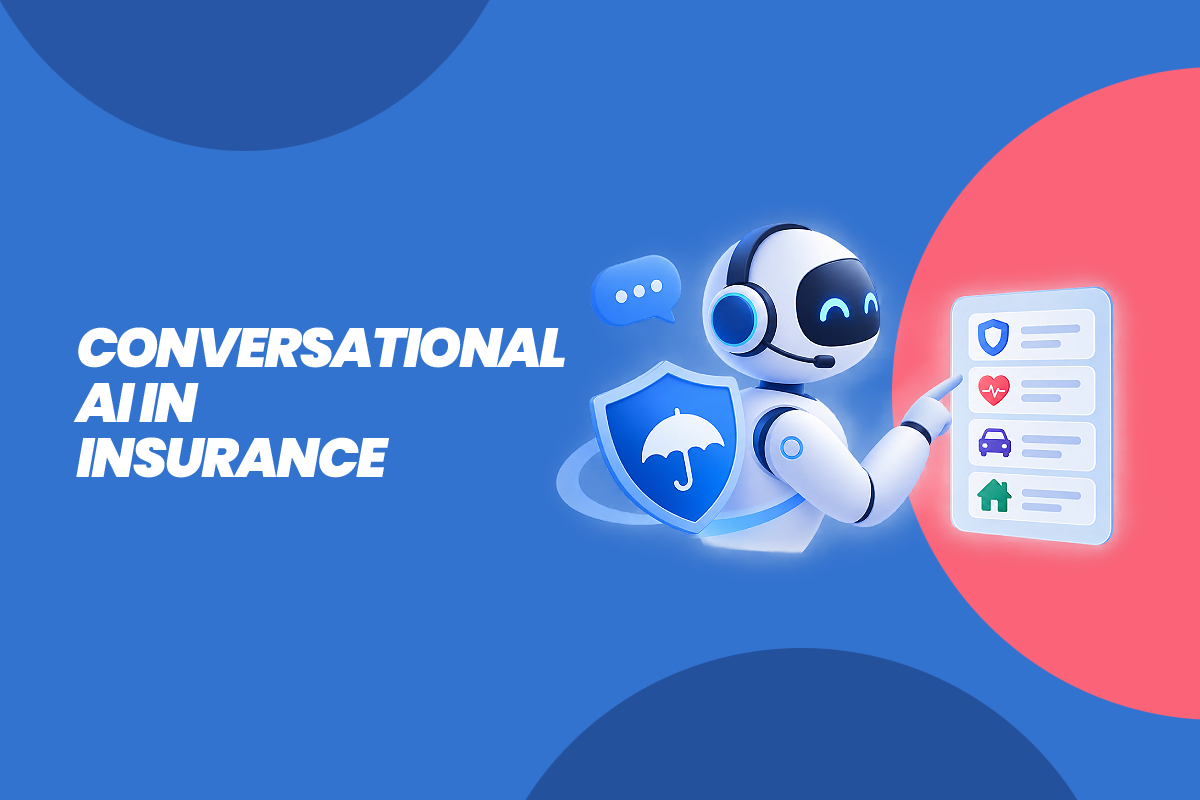
Sep 15, 2026 Artificial Intelligence Comments Off on Conversational AI in Insurance in 2026: Use Cases, Benefits, and Key Considerations
Conversational AI in Insurance in 2026: Use Cases, Benefits, and Key Considerations
Ask any claims operations lead what breaks first during a bad week, and the answer is rarely the claim itself, it’s the phone queue. A hailstorm hits a metro area, FNOL volume triples overnight, and a call center built for average-day traffic collapses under peak-day demand. Multiply that by renewal season, open enrollment, or a data breach notification, and the pattern repeats: insurance demand is spiky, but insurance staffing isn’t. That mismatch, more than any abstract technology trend, is why conversational AI in insurance has moved from pilot budgets to core operating plans. That’s the operational reality conversational AI is actually solving for in insurance, more than any abstract “digital transformation” narrative. It’s not a chatbot bolted onto a homepage. In production, it’s a natural-language layer connected directly to policy administration, claims, and CRM systems, handling structured, high-volume conversations-quoting, FNOL, billing, status checks, renewal outreach-either by talking to the customer directly or by quietly guiding a live agent through the call in real time. This piece covers where that’s actually deployed today, what results are publicly documented (not vendor-estimated), where it still fails, and what US insurance regulators now expect before you put it into production. Put simply, conversational AI for insurance means giving policyholders and agents a natural-language front end to the systems that already run the business, rather than asking them to learn a new one. What Conversational AI in Insurance? Three technologies get conflated under this label, and the distinction matters for anyone evaluating vendors. The practical
Read MoreSep 14, 2026 Artificial Intelligence Comments Off on Conversational AI in Healthcare: Benefits and Use Cases
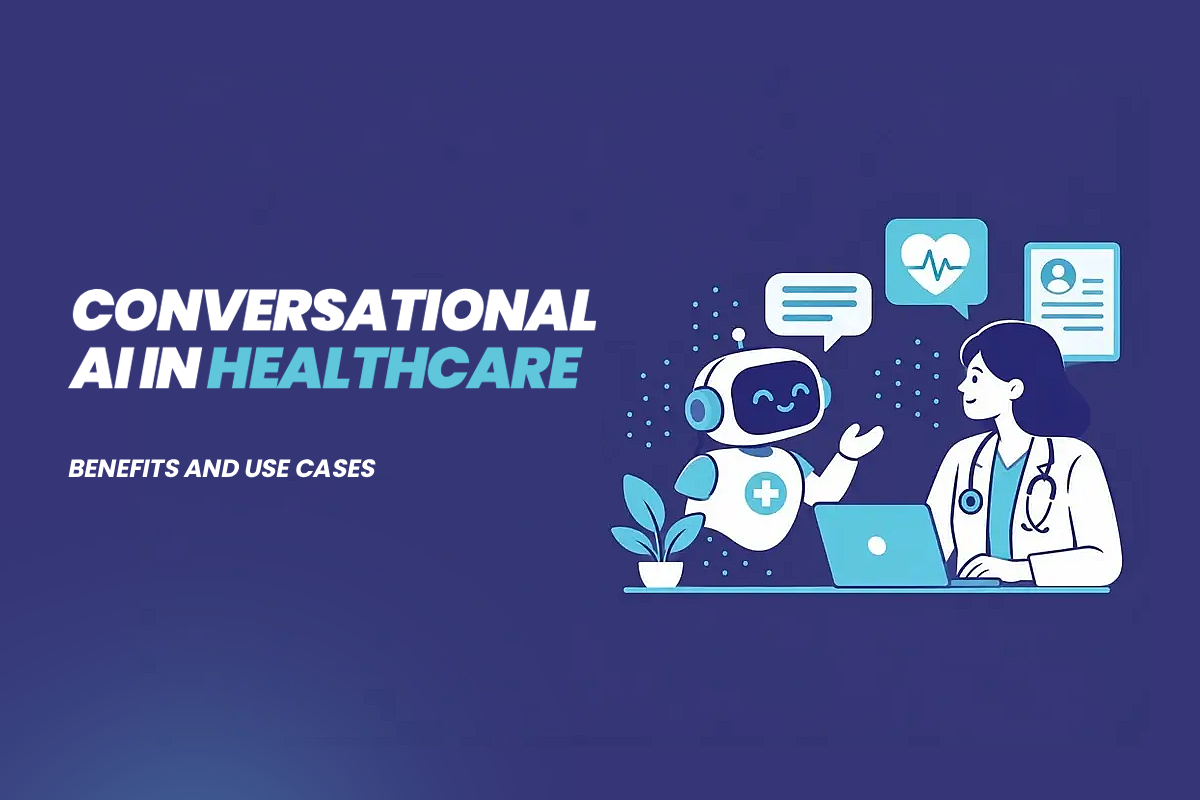
Sep 14, 2026 Artificial Intelligence Comments Off on Conversational AI in Healthcare: Benefits and Use Cases
Conversational AI in Healthcare: Benefits and Use Cases
TL;DR: Conversational AI in healthcare uses NLP and, increasingly, LLMs with retrieval-augmented generation to handle patient scheduling, symptom triage, clinical documentation, and follow-up communication inside connected EHR and practice management systems. The global conversational AI in healthcare market was valued at $18.83 billion in 2025, projected to reach $59.12 billion by 2030 at a 25.7 percent CAGR. McKinsey’s Q4 2024 survey of 150 US healthcare leaders found 85 percent already exploring or using generative AI. The fastest-moving use case is ambient AI scribes, and the hardest part of any deployment is EHR integration and clinical safety guardrails, not the conversational layer itself. Key Takeaways Conversational AI in healthcare is now handling a large share of the patient interactions that used to sit on hold queues and front-desk phone lines, from appointment booking to symptom triage to post-discharge follow-up. This is one of the fastest-growing applications of conversational AI for healthcare across US, UK, and Middle East health systems today. This guide covers what the technology actually does, where healthcare organizations are seeing real value, the compliance requirements that come with handling patient data, and the sequence recommended for taking a use case from pilot to production. What Is Conversational AI in Healthcare? Conversational AI in healthcare refers to systems that use natural language processing (NLP), machine learning, and increasingly large language models (LLMs) to understand and respond to patient or clinician input in text or voice. Unlike a static FAQ widget, these systems interpret intent, hold context across multiple turns,
Read MoreSep 4, 2026 Artificial Intelligence 0

Sep 4, 2026 Artificial Intelligence 0
AI Agents for Cybersecurity: Use Cases, Architecture and More
Cybersecurity teams operate across increasingly complex environments, with security data distributed across endpoints, identities, applications, cloud infrastructure, networks, and multiple security platforms. Organizations using AI and automation extensively in security reported average breach costs $1.93 million lower than organizations using neither, according to IBM’s 2026 Cost of a Data Breach Report. AI agents build on these capabilities by bringing data analysis, contextual investigation, reasoning, and controlled actions together within defined security workflows. Rather than limiting AI to individual detection or classification tasks, agents can work through multiple stages of a security investigation and support response activities based on available evidence. This article examines AI agents for cybersecurity, key use cases, differences from traditional security automation, agent-based architectures, multi-agent approaches, security risks and controls, human oversight, and the technologies supporting their use in enterprise security operations. What Are AI Agents for Cybersecurity? An AI agent is a software system that can receive information, determine what needs to be done, use available tools, and perform actions according to a defined objective. In cybersecurity, these capabilities can be applied to activities such as alert investigation, threat intelligence analysis, vulnerability assessment, incident response, and security monitoring. A typical security agent operates through a sequence such as: Stage Agent activity Example Observe Collect relevant security information SIEM alert, endpoint event, identity activity Understand Interpret the available information Determine whether activity appears suspicious Enrich Retrieve additional context Asset details, user history, threat intelligence Reason Assess possible explanations Correlate multiple events into an incident Plan Determine the
Read MoreAug 27, 2026 Artificial Intelligence 2
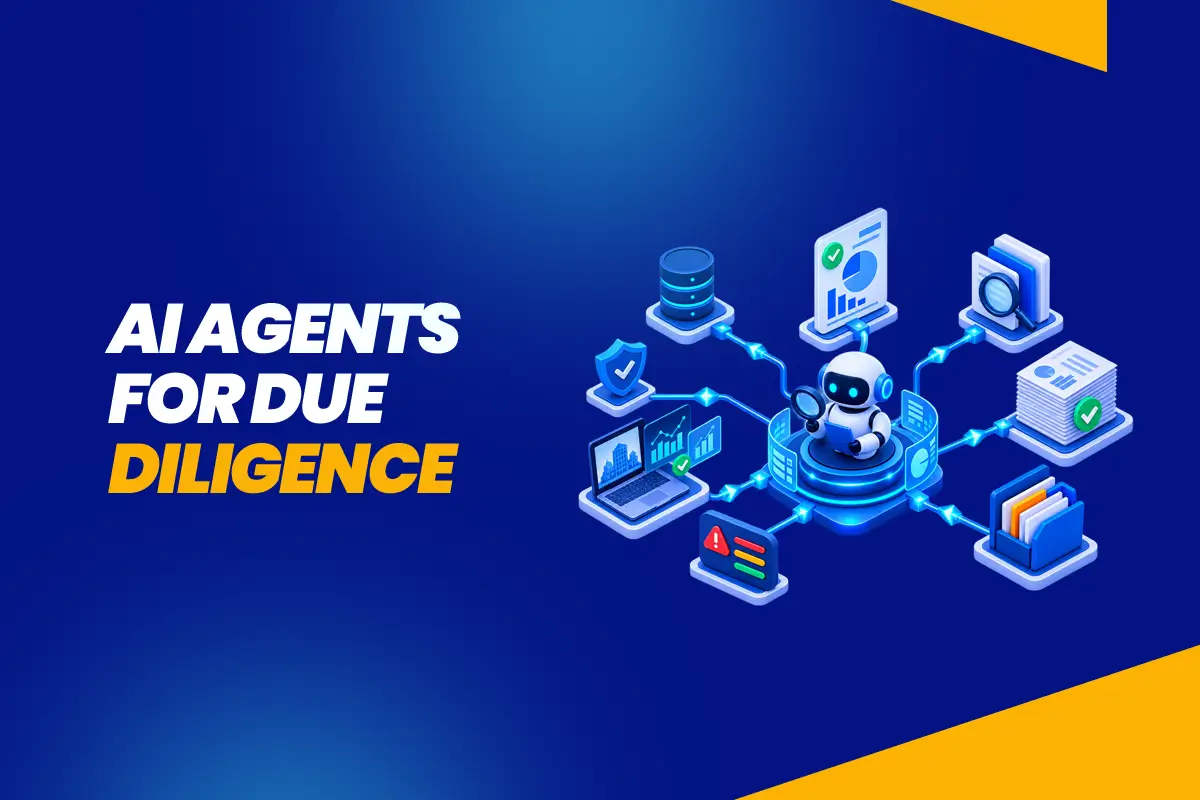
Aug 27, 2026 Artificial Intelligence 2
AI Agents for Due Diligence: Role, Use Cases, and How to Build One
Key Takeaways Due diligence has historically been defined by an uncomfortable trade-off, i.e., speed vs. depth. Investors, private equity firms, and corporate mergers and acquisitions (M&A) teams often spend weeks sifting through thousands of unstructured documents. These include financial statements, employment contracts, environmental impact reports, and proprietary source code bases. As deal velocity increases and regulatory frameworks evolve rapidly, manual review methods hit clear scaling limits. Data volumes inside modern virtual data rooms (VDRs) are growing exponentially. Recent studies from Research and Markets indicate that the due diligence investigation market size will grow to $11.83 billion in 2030 at a CAGR of 7.6%. This is precisely where AI agents change the game. Unlike passive retrieval systems or basic chatbots, AI agents break down complex workflows, plan analytical steps, cross-reference external regulatory databases, execute code verification, and reason through conflicting metrics. We design and deploy AI agents for due diligence that function as continuous digital analysts. These agentic workflows streamline M&A audits, financial risk modeling, legal contract scrutiny, and anti-money laundering (AML) protocols. What Is Due Diligence? Due diligence is the investigation you run before you commit to something big, such as an acquisition, a new vendor, a customer relationship in a regulated industry, or an investment. Instead of just taking pitch decks or seller statements at face value, deal teams dig through contracts, audit trails, and data rooms to verify claims, unearth hidden risks, and ensure the asset is actually worth the asking price. What is an AI Agent for
Read MoreAug 27, 2026 Artificial Intelligence 1
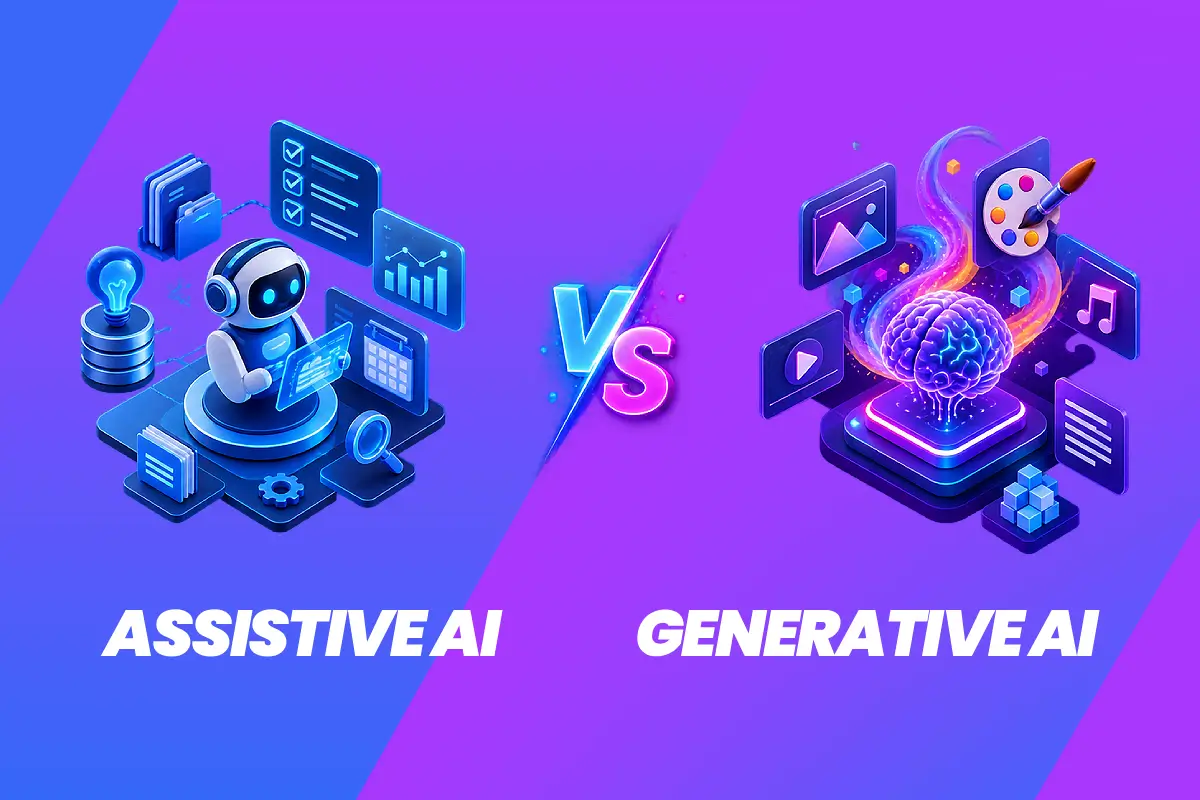
Aug 27, 2026 Artificial Intelligence 1
Assistive AI vs Generative AI: Deploying Responsible Intelligence in Production
Key Takeaways An executive decision on artificial intelligence architecture dictates not just operational efficiency but long-term regulatory compliance, infrastructure cost, and system reliability. While consumer narrative focuses on text and image generation, enterprise engineering requires a clearer choice. The division between assistive AI vs generative AI isn’t about which technology sounds more innovative. It comes down to deterministic process optimization versus non-deterministic output generation. At Xicom, we partner with enterprise teams, mobile app founders, and engineering leaders to navigate these core trade-offs. The wrong choice introduces hallucinations, escalating compute costs, and liability exposure. The right choice creates scalable, secure digital assets that drive real business value. Core Architectural Mechanics: Assistive AI vs Generative AI Understanding the functional boundary between assistive AI vs generative AI requires examining their underlying model design, probabilistic bounds, and system behavior. What Is Assistive AI? Assistive AI systems optimize human execution without replacing human judgment. These architectures operate within predefined operational boundaries, using machine learning, natural language processing (NLP), and predictive algorithms to analyze structured and unstructured data in real time. When engineered correctly, these solutions integrated via professional AI development services improve human efficiency while preserving structural guardrails. What Is Generative AI? Generative AI builds entirely new data artifacts based on probabilistic predictions from large training sets. Using foundation models like Transformer architectures, Generative Adversarial Networks (GANs), and Variational Autoencoders (VAEs), these systems map inputs to multi-modal latent spaces to generate text, synthetic media, voice, or custom application code. Deploying these engines requires a dedicated
Read MoreAug 26, 2026 Artificial Intelligence 1
Aug 26, 2026 Artificial Intelligence 1
AI Agents for Compliance: Building Autonomous Governance in 2026
Key Takeaways Compliance teams are buried under manual reviews while new regulations keep piling on. Most are trying to fix this with headcount, and it isn’t working. Agentic AI is the first approach that actually changes the math, but only when it’s built with the right guardrails, and that’s the part most vendors skip over. Compliance was never supposed to scale this badly. A mid-sized fintech now tracks obligations across a dozen jurisdictions. A healthcare provider juggles HIPAA, state privacy statutes, and payer-specific audit requirements at the same time. A SaaS company selling into Europe has to account for the EU AI Act on top of GDPR. Every one of these obligations used to mean another analyst, another spreadsheet, another day spent reconciling logs before the final audit. AI agents are changing that equation, not by replacing the compliance function, but by giving it the operating leverage it has never had. We’ve spent the past several years building agentic systems for regulated clients, and we want to walk through what these agents actually do, where they earn their keep, and where teams get tripped up when they treat agentic AI compliance as a plug-and-play fix. What Are AI Agents for Compliance? How Are They Different From Old Compliance Software? Traditional compliance software follows rules someone wrote down. If a transaction crosses a threshold, it gets flagged. If a document is missing a signature, it gets rejected. That’s useful, but it’s static. Every new regulation means someone has to go back
Read MoreAug 20, 2026 Artificial Intelligence 0
Aug 20, 2026 Artificial Intelligence 0
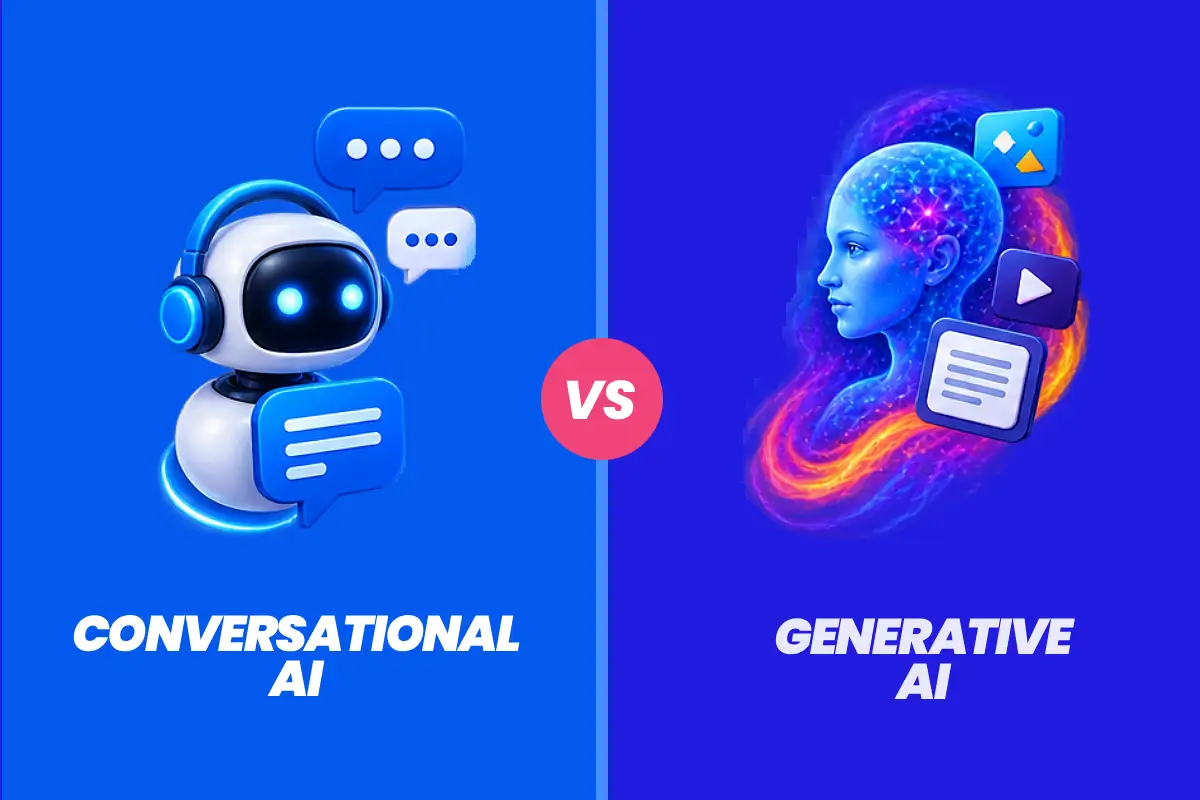
Conversational AI vs Generative AI: Which One Does Your Business Need
Key Takeaways While most tech executives treat conversational systems and generative models as competing software options, deployment data reveals a completely different reality. Selecting between these frameworks without evaluating intent recognition, deterministic routing, and foundational model generation directly impacts software reliability and operating margins. We see that modern enterprise architectures achieve peak unit economics not by picking a single side, but by orchestrating both under unified data governance. Our team builds scalable enterprise systems every day. We see business leaders struggle with a common architectural dilemma: Should you invest in structured, rule-bound systems that prioritize exact compliance, or should you deploy open-ended foundation models that synthesize raw data into original outputs? Understanding the core mechanical differences between conversational AI vs generative AI is no longer a theoretical debate. It is a core engineering requirement for companies who want to build systems that handle real-world scale, lower cost per transaction, and protect customer trust. What is Conversational AI? It is a system engineered specifically for structured, multi-turn human-to-machine dialogue. The primary goal of a conversational engine is state tracking and task execution. It ingests raw speech or text, isolates user intent, extracts named entities, passes those variables into structured business logic, and executes an action, such as querying an inventory database or booking a medical appointment. The core stack behind conversational AI includes: Because these systems rely on verified backend pathways, conversational architectures provide extreme predictability, low latency, and full auditability; making them important for transactional workflows. What is Generative AI?
Read MoreAug 17, 2026 Artificial Intelligence 0

Aug 17, 2026 Artificial Intelligence 0
AI Data Security Platform: How to Secure Enterprise LLMs and AI Agents with Zero-Trust Architecture
Key Takeaways When enterprise engineering teams move generative models and autonomous agents from sandbox environments into live infrastructure, traditional network perimeter security breaks down. The dynamic, non-deterministic nature of large language models (LLMs), Retrieval-Augmented Generation (RAG) pipelines, and multi-agent workflows creates entirely new attack vectors. The AI data security platform decides whether an enterprise can let the LLMs, newly constructed pipelines, and AI agents touch customer records, financial data, or clinical information without creating a liability nobody signed up for. According to IBM’s 2025 Cost of a Data Breach Report, the global average cost of a breach sits at $4.44 million, and in the United States it has climbed past $10.22 million. IBM also found that 13% of organizations reported breaches tied specifically to AI models or applications, and 97% of those breached organizations admitted they lacked proper AI access controls. At Xicom, we see this transition firsthand when helping global organizations modernize their core systems. Building high-performing AI applications requires a fundamental shift in how we approach cybersecurity. You cannot secure non-deterministic workloads with static firewall rules or legacy Data Loss Prevention (DLP) tools. Anatomy of a Secure AI Data Platform Architecture: 5 Essential Infrastructure Layers A secure AI data platform is not a single point product or a superficial API wrapper. It is an end-to-end architectural framework that sits between your data sources, model registries, orchestration frameworks, and downstream applications. To achieve true enterprise-grade protection, your system must incorporate five foundational layers: 1. Dynamic Ingestion and Anonymization Layer
Read MoreAug 14, 2026 Artificial Intelligence 0
Aug 14, 2026 Artificial Intelligence 0
AI Agent for Marketing: Use Cases and Enterprise Benefits
Key Takeaways For years, organizations relied on rigid rule-based marketing workflows. Most marketing teams already run a stack full of automation. Email sequences on schedule, ad bids adjust within set rules, and CRM workflows move leads from one stage to the next. Companies create an IF/THEN condition, and make sure the prospect follows the exact linear path. When customer behavior diverged, those systems broke. That static approach no longer works. What’s changed is the coming of an AI agent for marketing. AI agents used in marketing don’t just follow a fixed script. It decides what to do next based on several different things, such as live data, and then acts on that decision without waiting for someone to approve every step. Modern consumer journeys span dozens of touchpoints across digital products, mobile apps, web properties, and direct messaging channels. At Xicom, we construct custom architectures that move directly into your marketing data pipelines. When you transition toward agentic AI, your growth strategy moves away from reactive batch execution toward continuous, hyper-personalized orchestration. What Is an AI Agent for Marketing? An AI agent in marketing is a software system built to pursue a defined marketing goal with limited human input. Instead of executing a fixed rule, such as if a user abandons a cart, sends an email; it evaluates context, chooses an action, measures the outcome, and refines its next move. The building blocks that make this possible: That last point is what separates a real agent from a rules engine
Read MoreAug 13, 2026 Artificial Intelligence 0
Aug 13, 2026 Artificial Intelligence 0
How to Build an AI Voice Agent for Enterprise Operations
Key Takeaways Legacy IVR infrastructure is burning engineering bandwidth and driving up customer support overhead every single quarter. If your company is still relying on rigid, pre-recorded DTMF phone trees, you are losing valuable ground to competitors running real-time, context-aware voice systems. For over a decade, enterprise call centers relied heavily on basic Interactive Voice Response (IVR) systems. You know the model: press “1” for billing, press “2” for technical support, and spend ten minutes navigating a dead-end menu tree. These legacy systems were designed for routing, not resolution. When a customer speaks with a human agent, they expect context, empathy, and immediate action. Static scripts simply cannot handle complex, multi-turn conversations. Enterprise leaders are no longer asking if they should upgrade. Rather, they are asking how to build an AI voice agent that integrates directly into their core databases without crashing system latency or breaching regulatory guidelines. We work directly with product heads, engineering leads, and CTOs to engineer full-stack, autonomous voice architectures. Building voice AI agents requires far more than dropping a simple LLM wrapper over a web socket. It demands low-latency audio pipelines, robust security frameworks, and seamless connections to internal software systems. Key Components of an Enterprise AI Voice Agent Platform To deliver a natural voice conversation, keeping total latency below 800 milliseconds is non-negotiable. Anything longer creates weird pauses and causes callers to speak over the system. When we build these conversational AI voice agents, we break the voice pipeline down into four distinct, highly
Read MoreJul 30, 2026 Artificial Intelligence 0
Jul 30, 2026 Artificial Intelligence 0
AI Agent Development Cost in 2026: Pricing Tiers, Token Economics, and 3-Year TCO
AI agent development cost in 2026 depends less on the build itself and more on what the agent consumes once it runs in production. A prototype that takes a few weeks of engineering can become a recurring monthly expense once real users, tool calls and retries enter the picture. Most published estimates quote a single range and stop there. Buyers end up comparing figures built on different hourly rates, different scope and different definitions of what an “agent” is. This guide separates the cost by delivery tier, build phase and use case, and then models run cost and three-year total cost of ownership on their own. Figures from outside Xicom are linked to their sources. Planning ranges built from Xicom’s own method are labelled as estimates, with the assumptions shown so they can be reproduced and adjusted. Xicom, an AI development company with 20+ years of enterprise delivery experience, applies the same method to help enterprises scope, build and govern AI agents within a defined budget. Quick Answer: How Much Does It Cost to Build an AI Agent? At a blended delivery rate of $50 per hour, the cost to build an AI agent runs from about $15,000 for a proof of concept to $400,000 or more for an enterprise multi-agent system. At $100 per hour, the same scope costs roughly twice as much. Running costs (model usage, infrastructure, monitoring and maintenance) come on top and, in the illustrative model in section 7, make up about 70% of three-year spend.
Read MoreMar 6, 2026 Artificial Intelligence 0
Mar 6, 2026 Artificial Intelligence 0
Xicom’s AI center of excellence for enterprises: Framework, structure, roles, and business impact
Xicom’s AI Center of Excellence (CoE) provides enterprises with a structured framework to design, deploy, and scale AI initiatives. It defines governance, roles, and processes that align AI strategy with business goals, accelerate innovation, ensure responsible AI adoption, and deliver measurable business value.
Read MoreJan 28, 2026 App Development 0
Jan 28, 2026 App Development 0
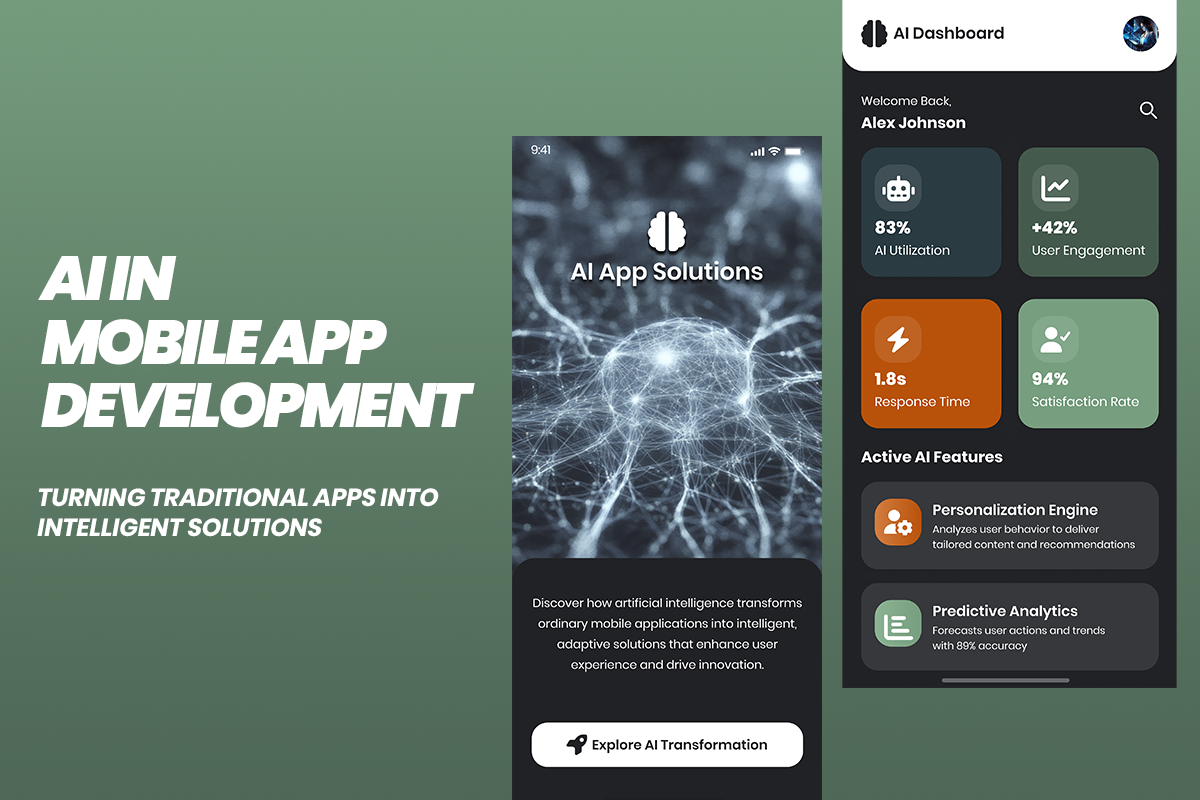
AI in Mobile App Development: Complete Guide
In 2026, AI is redefining mobile app development by transforming traditional apps into intelligent, data-driven solutions. From personalization and predictive analytics to automation and smarter UX, AI empowers apps to adapt, learn, and deliver real business value at scale.
Read MoreDec 24, 2025 Software Development 0
Dec 24, 2025 Software Development 0
IT Staff Augmentation for Startups in 2026
IT Staff Augmentation for Startups in 2026 is poised to become a significant turning point. Wondering why? As per reports, 90% of startups fail within five years, despite having a strong business idea. Because this is where they started struggling to execute their idea with a limited budget. To get started with the project, startups need skilled developers, a cloud specialist, a QA testing team, and product-focused engineers- all at once. Source: explodingtopics.com Finding the right IT talent is rarely quick, and it’s rarely cheap. A single wrong hire can delay product launches by months, put your funding at risk, and create technical debt that’s too hard to survive with. On the other hand, the right team can move fast, build smarter, and push your startup back on a growth track. Here’s the real problem. Traditional hiring doesn’t work at startup speed. Recruitment cycles stretch for weeks. Salaries keep rising. Competition from well-funded tech companies pulls top talent away. According to recent studies, over 65% of startups report major delays in hiring, which leads to missed product deadlines. On the other hand, 40% admit that one poor technical hire significantly slowed their growth. When your runway is limited, that’s a risk you can’t afford. This is exactly where IT Staff Augmentation for Startups steps in as a practical alternative. Instead of spending months hiring full-time employees, startups can quickly add an experienced IT professional team that aligns with their project needs. Whether you need extra hands for a critical development
Read MoreDec 17, 2025 Software Development 0
Dec 17, 2025 Software Development 0
Benefits of IT Staff Augmentation for Startups & Enterprises in 2026
Benefits of IT Staff Augmentation empower startups and enterprises in 2026 to scale quickly, reduce hiring costs, access global talent, improve flexibility, minimize risk, and accelerate project delivery while maintaining control, quality, and long-term business agility.
Read MoreOct 20, 2025 App Development 0

Oct 20, 2025 App Development 0
Top 15 Free Fitness and Workout Apps to Watch Out in 2026
Are you still in doubt that free fitness and workout apps do really exist? Well, the fitness industry has gone digital, and mobile apps are leading this revolution. With so many emerging technologies entering the app development industry, it has become possible to access every type of workout or fitness session online, on your mobile app. From strength training to pilates, and from calorie tracking to meditation, fitness apps are aiding millions to adopt healthier lifestyles with just a smartphone. According to Statista, the global fitness app market is projected to reach over $14 billion by 2026, with the USA being one of the biggest contributors. Though people were fitness freaks earlier as well, but now the trend has clearly changed- people want fitness on demand. Gym memberships are becoming expensive, schedules are busier, and not everyone has access to personal trainers. This is where free fitness and workout apps in the USA are making a difference. From guided workouts, progress tracking, to having live sessions with trainers and even AI-powered recommendations, all is easily available without heavy subscription costs. Another reason for their rising popularity of fitness and workout apps is their “Uniqueness”. Many platforms now provide free workout apps without a subscription for women, seniors, and beginners, making fitness accessible to all age groups and demographics. Whether you’re at home, in a park, or traveling, these apps ensure your workout plan never pauses. The best part? Some of the best free workout apps without subscription in USA deliver
Read MoreSep 25, 2025 Software Development 0
Sep 25, 2025 Software Development 0
Chatbots vs Conversational AI: Which One is Right for Your Business?
Chatbots Vs Conversational AI- which one would you prefer to integrate in your business system? Are you still confused about choosing between these options? If yes, then let’s get into the depth of the concept. Have you ever accessed customer support of any brand and find yourself stuck with a chatbot that repeats the same script? If yes, then you are not alone. A survey report revealed that 30% of customers abandon a brand, and 73% cancel ongoing purchases, after a negative chatbot experience. With repeated scripts, customers started feeling that chatbots cannot resolve their issues effectively. And for businesses, this means lost sales, frustrated customers, and a low brand experience. This growing gap has fueled the rise of Conversational AI. This is a next-gen intelligent system powered by NLP, machine learning, and large language models that can understand the intent of the queries, customer’s context and even emotions. Unlike traditional chatbots, AI-Powered conversational bots transform the experience with customers and allow businesses to turn conversations into meaningful conversions. However, the central question that arises here is, do you really need conversational AI? Or you will manage with a chatbot? Well, both are great in their own ways, so the ultimate decision is depending upon your goals, scale, and customer expectations. Let’s get into detail…. Understanding the Basics: Chatbots vs. Conversational AI So finally you made a decision to include AI bots to your ecosystem. But what to integrate under what situation matters the most. Though both AI chatbot and
Read MoreAug 4, 2025 Artificial Intelligence 0
Aug 4, 2025 Artificial Intelligence 0
How Much Does it Cost to Hire AI Developer?
Exploring the actual cost to hire AI developers in 2026? From chatbots to personalized recommendation engines and predictive analytics to integrating advanced algorithms- AI is reshaping the world at a fast pace. Due to that the demand worldwide for AI development is increasing. But is it easy to find the right AI developers? And how much does it cost to hire an AI developer? Let’s get into it… In early 2025, a mid-sized eCommerce company set out to integrate an AI-powered recommendation engine into their existing ecommerce platform. They budgeted for it, assembled a production team, and hired an AI developer from a top-rated hiring platform. However, three months later, the project scattered. Their existing e-commerce platform started to underperform. Their sales are quickly dropping, facing cart abandonments and more. The reason being, AI integration was chaotic, and they ended up starting from scratch—with double the cost and half the momentum. Well, that becomes the story of every second enterprise that quickly falls for the fancy credentials of AI developers. They were impressed by how AI developers talked about neural technology, but practically they lacked the right execution. In a world where AI determines who gets funded, who scales faster, and who stays competitive, hiring the right AI developer is no longer optional – it’s a strategic move. Yet most businesses dive in without knowing what it actually costs to hire AI developers or how those costs vary depending on region, skill level, and project complexity. A McKinsey study recently
Read MoreJul 25, 2025 Artificial Intelligence 0
Jul 25, 2025 Artificial Intelligence 0
Agentic AI for Businesses: Definition, Benefits, and Use Cases
As the demand for intelligent, adaptive systems increases, it is important to understand the role and the ability of agentic AI for businesses. This blog explains what agentic AI is, its main advantage, and how it is used to provide average value in real world scenarios.
Read MoreJul 1, 2025 Artificial Intelligence 0
Jul 1, 2025 Artificial Intelligence 0
Top AI Business Ideas for Startups and Enterprises in 2026
Explore 25 top AI business ideas for startups and enterprises that can drive innovation and growth. From automation and predictive analytics to smart applications, discover opportunities to build scalable, efficient, and future-ready AI-powered solutions. Stay ahead of the competition by leveraging cutting-edge technologies across industries.
Read MoreJun 24, 2025 App Development 0
Jun 24, 2025 App Development 0
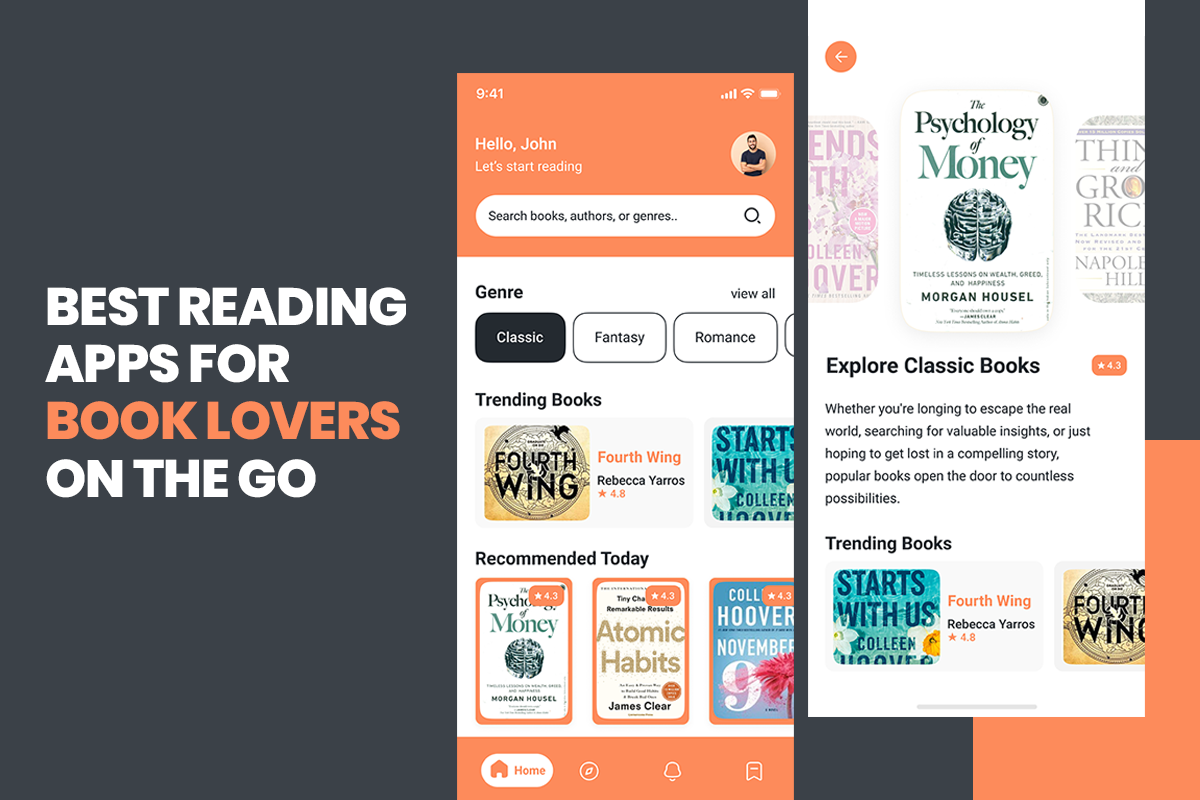
20 Best Reading Apps in 2026 for Book Lovers on the Go
In a world where everything is fitting into a palm-sized device, reading has been redefined, too. It is now available as an app on your smartphone. Here is a list of the 20 best reading apps for 2026, serving the diverse needs of readers.
Read MoreJun 9, 2025 App Development 0

Jun 9, 2025 App Development 0
Live streaming app development cost: Guide to build an app like twitch
Considering live streaming app development, just like the Twitch App? Find out everything, from features to cost, ETA, and factors affecting the cost of development inside the blog. Learn how to launch your app profitably.
Read MoreJun 2, 2025 App Development 0

Jun 2, 2025 App Development 0
AI in Sports: Market Projection, Benefits, and Use Cases
AI in sports is helping in enhancing athletes’ performance, preventing injuries, automating strategies, and boosting fans’ engagement. From wearables to predictive analytics, AI is driving innovation and unlocking new business opportunities.
Read MoreMay 28, 2025 App Development 0
May 28, 2025 App Development 0
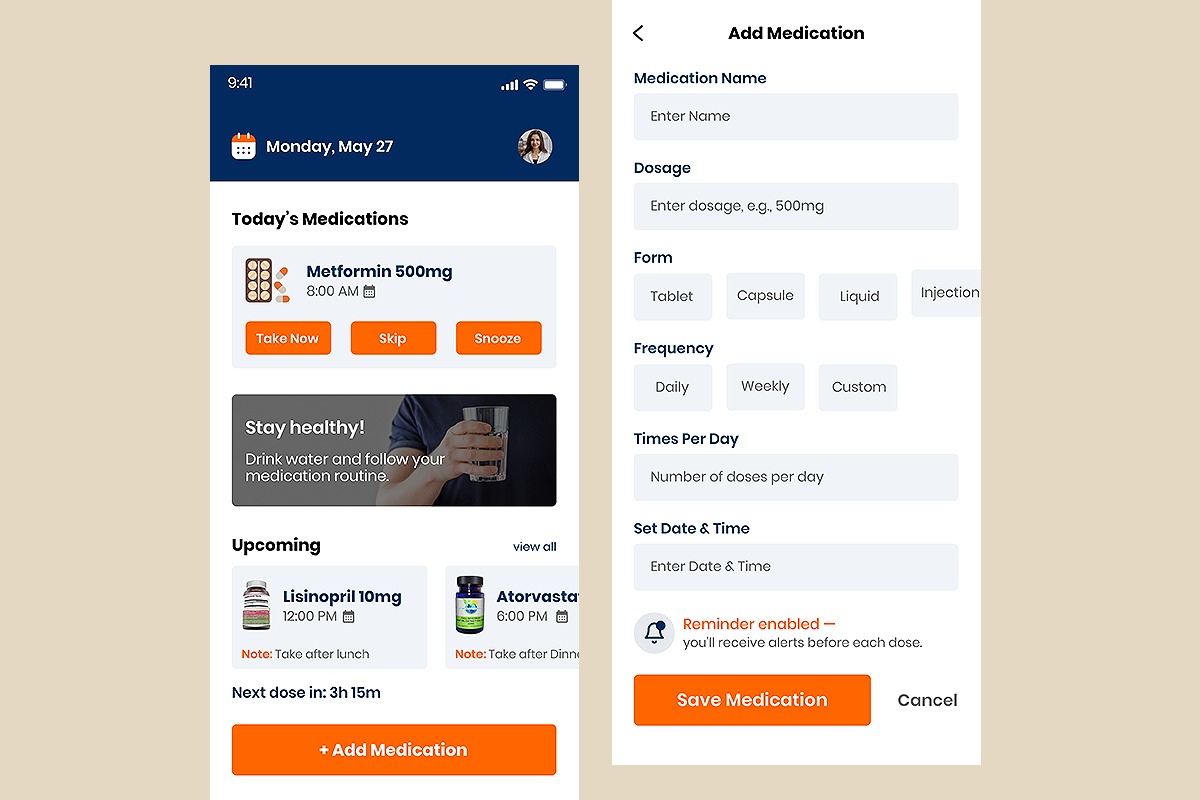
Medication Management App Development: Cost Features, and Types
Here is our comprehensive blog on medication management app development that offers insights into key features, benefits, development costs, and app types to help you create effective, user-friendly medication tracking solutions for better patient care and health outcomes.
Read MoreMay 23, 2025 Artificial Intelligence 0
May 23, 2025 Artificial Intelligence 0
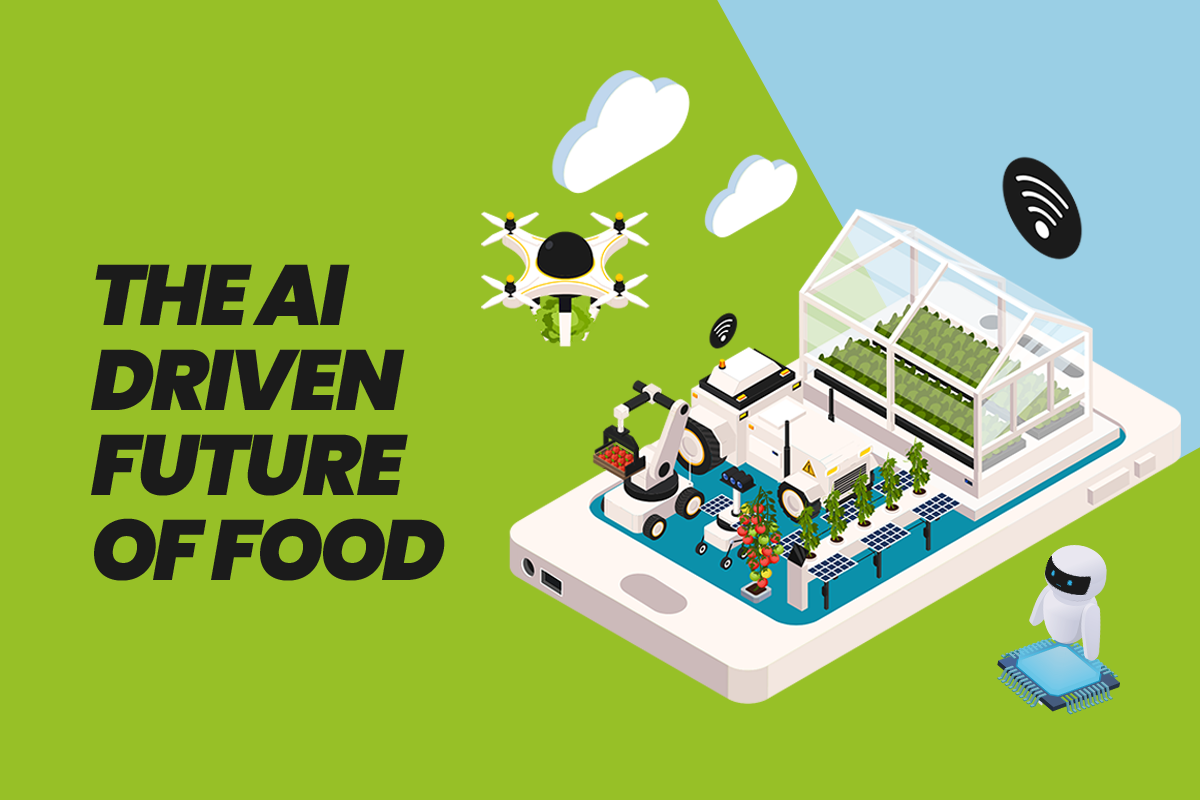
AI in Food Industry: Transforming the Food From Farms to Forks
AI is revolutionizing the scope of the food industry end-to-end By leveraging the power of machine learning, robotics, and predictive analytics, brands like Tyson and Keeta are using AI to enhance efficiency, and attain sustainability. Discover the future of AI in the food industry in this blog.
Read MoreMay 15, 2025 App Development 0
May 15, 2025 App Development 0
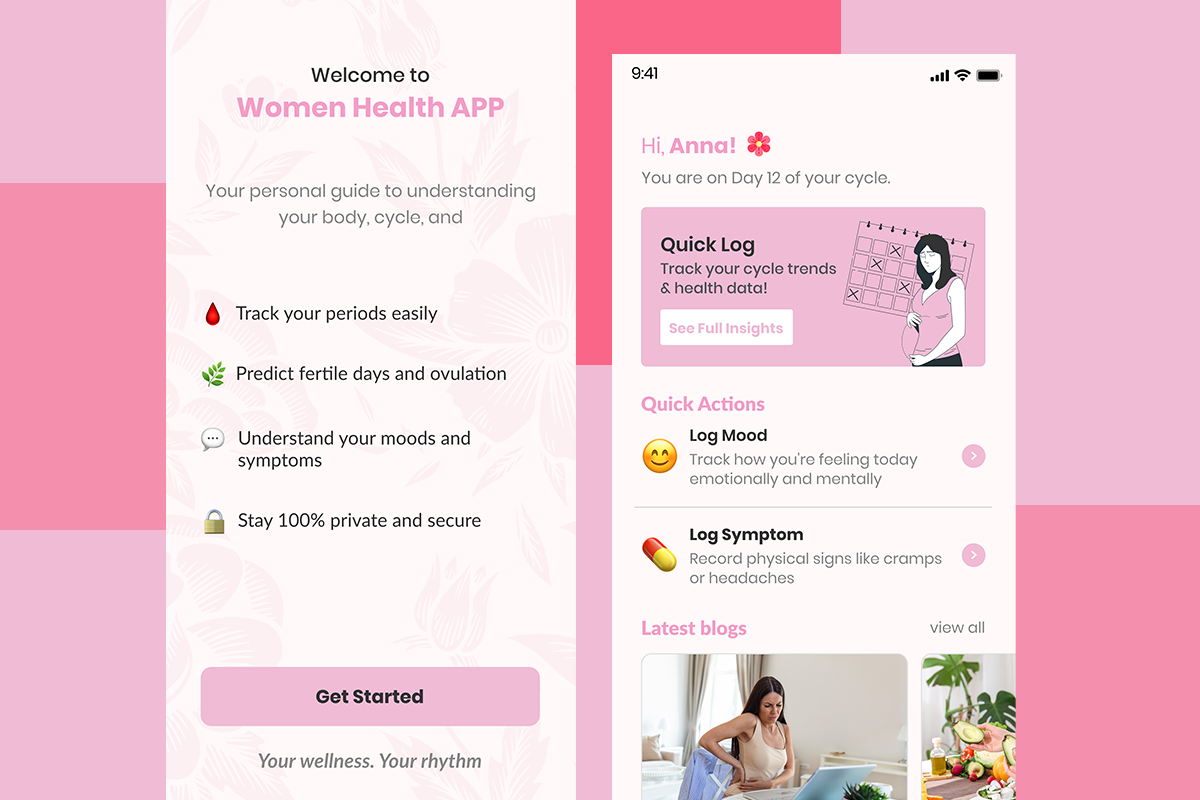
Women health tracking app development: A complete guide
Women's Health Tracking app development is transforming the way females manage their health. With multiple apps in the market, for tracking periods to pregnancy and fitness, women are now able to leverage personalized insights and take control of their health like never before.
Read More