
AI in Procurement: Use Cases, Benefits, and Enterprise Integration
Explore 12 AI in procurement use cases, from spend analysis and supplier risk to invoice matching, plus benefits and how to integrate AI with ERP systems.
Nov 23, 2026 Artificial Intelligence
Pharmaceutical research involves investigating disease mechanisms, identifying therapeutic targets, designing drug candidates, and establishing their safety and efficacy through successive stages of scientific evaluation. These activities generate extensive datasets from genomics, proteomics, molecular biology, chemical libraries, laboratory experiments, and clinical studies. Interpreting this information requires researchers to establish relationships between biological processes, molecular structures, and therapeutic outcomes. Artificial intelligence (AI) is expanding these analytical capabilities by identifying patterns across complex datasets, predicting molecular behaviour, and supporting research decisions that would otherwise require extensive experimental investigation. A 2025 study examining pharmaceutical R&D programmes reported an average 14.3% likelihood of progressing from Phase I to first FDA approval across 18 leading pharmaceutical companies, highlighting the difficulty of translating drug candidates into approved treatments (research findings).
AI is increasingly being incorporated into pharmaceutical research to improve the selection of promising targets, explore chemical compounds, assess potential toxicity, and strengthen the design of clinical studies. Machine learning, deep learning, natural language processing, and generative models can examine different forms of scientific evidence and help researchers prioritize investigations. Rather than replacing laboratory experiments or clinical expertise, these technologies provide additional computational capabilities for evaluating hypotheses, narrowing research options, and directing experimental resources towards candidates with stronger scientific justification.
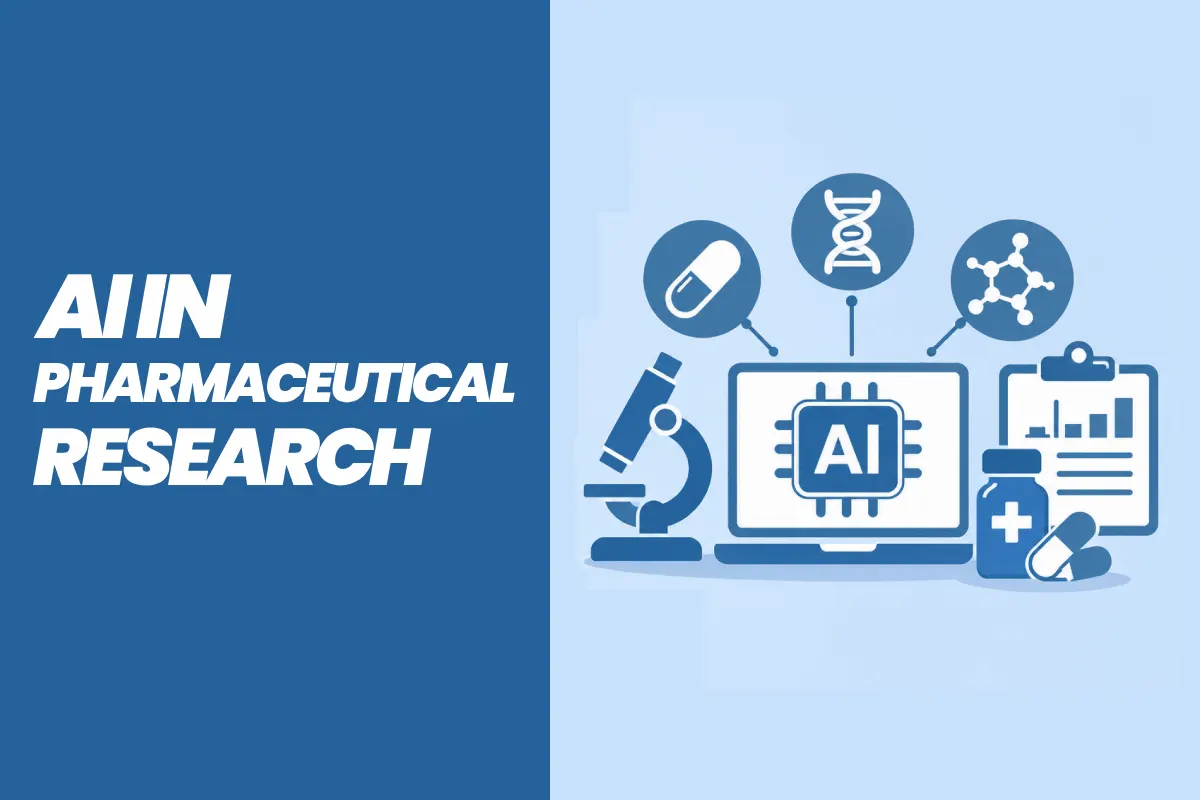
Traditional pharmaceutical research relies on an iterative process in which researchers formulate hypotheses, conduct experiments, interpret results, and refine their understanding of a disease or therapeutic candidate. Although computational tools have supported this process for decades, modern AI systems can examine larger and more diverse datasets while identifying relationships that may not be apparent through conventional analytical methods.
For example, a research team investigating a neurological disorder may need to examine genetic variations, protein expression, cellular pathways, molecular interactions, and published studies. AI models can analyze these information sources collectively to identify biological relationships associated with disease progression. Researchers can then investigate the most relevant findings through laboratory experiments.
The contribution of AI varies across research stages. Some applications support the interpretation of existing scientific evidence, while others generate new molecular structures or predict the behaviour of compounds under specific biological conditions.
| Research stage | Role of AI |
|---|---|
| Disease investigation | Identifies biological patterns and disease-associated mechanisms |
| Target discovery | Prioritizes proteins, genes, and molecular pathways |
| Drug discovery | Screens compounds and predicts molecular interactions |
| Molecular development | Generates and optimizes candidate structures |
| Preclinical research | Estimates toxicity, pharmacokinetics, and biological activity |
| Clinical research | Supports patient stratification and trial design |
| Research documentation | Extracts scientific evidence and organizes research findings |
Identifying a suitable biological target is an important early decision in pharmaceutical research. A target may be a protein, gene, receptor, enzyme, or molecular pathway involved in a disease process. AI models analyze genomic, proteomic, transcriptomic, and clinical datasets to identify biological entities associated with particular conditions.
Machine learning algorithms can examine genetic variations, gene expression patterns, protein interactions, and disease-associated pathways to identify potential therapeutic targets. Knowledge graphs can connect findings from scientific publications, biological databases, and experimental records, helping researchers understand how different molecular components influence disease mechanisms.
AI can also support target validation by examining whether a proposed target has a plausible relationship with disease progression and whether its activity may be modified therapeutically.
| Research activity | AI application |
|---|---|
| Genetic analysis | Identifies disease-associated genetic variations |
| Protein analysis | Detects proteins linked to disease mechanisms |
| Pathway investigation | Identifies relevant biological pathways |
| Network analysis | Maps relationships between genes, proteins, and cellular processes |
| Target prioritization | Ranks potential targets using biological evidence |
For example, researchers investigating inflammatory diseases can use AI to analyze gene expression and protein interaction datasets to identify pathways associated with excessive immune responses. The resulting target candidates can then undergo experimental validation.
Genomic and proteomic investigations generate large datasets that help researchers understand the molecular mechanisms underlying diseases. However, identifying meaningful relationships across thousands of genes and proteins can be computationally demanding.
AI models analyze sequencing data, gene expression profiles, protein abundance, and molecular interaction networks to identify patterns associated with disease development. Deep learning can also help classify biological samples according to molecular characteristics and detect variations between healthy and diseased tissues.
In proteomic research, AI can support protein identification, structural analysis, and the interpretation of interactions between proteins and other biological molecules. These findings help researchers investigate disease pathways and identify potential therapeutic opportunities.
| Research area | AI contribution |
|---|---|
| Genomic sequencing | Identifies genetic variations and expression patterns |
| Transcriptomics | Examines differences in RNA expression |
| Proteomics | Detects protein patterns associated with diseases |
| Protein interaction analysis | Predicts relationships between biological molecules |
| Multi-omics analysis | Combines genomic, transcriptomic, and proteomic evidence |
For example, an oncology research team can integrate genomic and proteomic information from tumour samples to identify molecular characteristics associated with treatment resistance. This may help researchers investigate alternative therapeutic targets.
Understanding protein structure is essential for investigating biological activity and designing molecules that interact with specific proteins. Experimental techniques such as X-ray crystallography, nuclear magnetic resonance, and cryo-electron microscopy provide structural information, but obtaining and interpreting these structures can require substantial research effort.
AI-based structural prediction models estimate three-dimensional protein structures using amino acid sequences and other biological information. These predictions can help researchers investigate protein folding, molecular interactions, and potential binding regions.
Structural insights are particularly useful during early drug discovery, when researchers need to understand how a compound might interact with a biological target. AI can also support the analysis of protein complexes and help identify regions that may be suitable for therapeutic intervention.
| Structural research activity | AI application |
|---|---|
| Protein folding | Predicts possible three-dimensional structures |
| Binding-site analysis | Identifies potential molecular interaction regions |
| Protein interaction research | Estimates interactions between proteins |
| Structural comparison | Examines similarities between protein structures |
| Mutation analysis | Assesses potential structural effects of genetic changes |
For example, researchers studying a cancer-associated protein can use predicted structural information to investigate its binding pockets and identify regions suitable for small-molecule intervention. Computational predictions still require experimental confirmation.
Pharmaceutical researchers may need to evaluate thousands or millions of chemical compounds to identify candidates with promising biological activity. Testing every compound experimentally can consume considerable time and laboratory resources.
AI-powered virtual screening evaluates chemical structures and predicts their likelihood of interacting with a selected biological target. Machine learning models use information from previously tested compounds, molecular descriptors, chemical fingerprints, and biological activity records to rank potential candidates.
Deep learning and molecular docking techniques can further support the examination of compound-target interactions. Researchers can use these predictions to prioritize a smaller set of compounds for laboratory screening.
| Screening activity | AI contribution |
|---|---|
| Compound classification | Groups molecules according to chemical properties |
| Activity prediction | Estimates potential biological activity |
| Binding affinity prediction | Assesses likely target-compound interactions |
| Similarity analysis | Identifies compounds with comparable structures |
| Candidate ranking | Prioritizes molecules for experimental testing |
For example, a research team investigating an enzyme involved in cardiovascular disease can screen a large chemical library computationally and select compounds with predicted binding potential for further laboratory evaluation.
Conventional drug discovery often begins with existing chemical libraries or known molecular structures. Generative AI expands this process by creating new molecular candidates based on learned chemical patterns and specified design requirements.
Generative models can propose molecular structures with desired characteristics, such as target affinity, solubility, stability, and molecular weight. Researchers can define constraints based on the intended biological target and use the model to generate alternative structures for evaluation.
The generated molecules can subsequently undergo computational assessment to estimate their binding properties, toxicity risks, and developability. Researchers may also refine candidate structures through repeated optimization cycles.
| Molecular design requirement | AI application |
|---|---|
| Target affinity | Generates structures with predicted binding potential |
| Solubility | Estimates physicochemical properties |
| Molecular stability | Evaluates structural characteristics |
| Selectivity | Helps distinguish desired from unwanted interactions |
| Lead optimization | Proposes modifications to existing compounds |
For example, researchers developing a molecule against a specific cancer-related protein can use generative models to explore alternative chemical structures that may improve binding affinity while maintaining suitable physicochemical properties. Generated molecules remain research candidates until synthesized and experimentally evaluated.
Drug repurposing involves investigating whether an existing medicine can be used to treat a different disease or condition. Since these compounds already have established research histories, identifying additional therapeutic applications may offer an alternative to developing entirely new molecules.
AI models analyze scientific publications, clinical trial records, molecular databases, gene expression datasets, and disease-associated pathways to identify possible relationships between existing medicines and new indications.
Knowledge graphs can connect drugs, proteins, diseases, biological pathways, and clinical outcomes. Machine learning models can then rank potential drug-disease relationships for further investigation.
| Research activity | AI application |
|---|---|
| Drug-disease association | Identifies possible new therapeutic indications |
| Molecular similarity analysis | Compares compounds with known therapeutic agents |
| Literature analysis | Extracts evidence from published research |
| Pathway analysis | Identifies shared biological mechanisms |
| Candidate prioritization | Ranks repurposing opportunities |
For example, researchers investigating an autoimmune disorder may use AI to examine existing medicines that influence related immune pathways. Potential candidates can then undergo laboratory studies and appropriately designed clinical investigations.
A promising drug candidate must demonstrate acceptable absorption, distribution, metabolism, excretion, and toxicity (ADMET) characteristics. Compounds with strong biological activity may still fail during development because of poor absorption, rapid metabolism, organ toxicity, or other safety concerns.
AI models analyze molecular structures and experimental datasets to estimate these properties. Predictive models can assess solubility, permeability, metabolic stability, plasma protein binding, and potential toxicity. These predictions help researchers identify undesirable characteristics before committing to more extensive experimental studies.
| ADMET parameter | AI application |
|---|---|
| Absorption | Predicts intestinal permeability and bioavailability |
| Distribution | Estimates tissue distribution and protein binding |
| Metabolism | Identifies potential metabolic pathways |
| Excretion | Assesses possible clearance characteristics |
| Toxicity | Predicts potential organ toxicity and adverse effects |
| Drug interactions | Estimates possible interactions with other compounds |
For example, an AI model can evaluate a candidate molecule for potential liver toxicity and metabolic instability. Researchers can use these findings to modify the molecular structure or investigate alternative candidates before proceeding with further testing.
Preclinical research examines the biological activity, pharmacological properties, and potential safety of drug candidates before human clinical trials. It involves laboratory experiments, cell-based assays, animal studies where appropriate, and other experimental methods.
AI can analyze microscopy images, histopathology slides, laboratory measurements, and experimental observations to identify patterns associated with treatment response or toxicity. Computer vision models can classify cellular changes, quantify tissue abnormalities, and compare samples across experimental groups.
Predictive models can also help researchers select experimental conditions and interpret results from repeated studies. These capabilities support research analysis but do not eliminate the need for appropriate experimental controls and scientific validation.
| Preclinical activity | AI application |
|---|---|
| Cell-based assays | Classifies cellular responses to compounds |
| Histopathology | Identifies tissue abnormalities |
| Microscopy analysis | Detects morphological changes |
| Dose-response analysis | Models relationships between dosage and biological effects |
| Toxicity assessment | Identifies potential safety signals |
For example, a pharmaceutical research team can use computer vision to analyze tissue images from a preclinical study and identify changes associated with compound exposure. Researchers can then compare these observations with laboratory measurements and pathology assessments.
Biomarkers provide measurable indicators of biological processes, disease conditions, or responses to treatment. Identifying reliable biomarkers can help pharmaceutical researchers understand disease subtypes and investigate which patient populations may respond to a particular therapy.
AI models analyze genomic, proteomic, metabolomic, imaging, and clinical datasets to identify biological features associated with treatment response or disease progression. Clustering algorithms can group patients according to shared molecular characteristics, while predictive models can examine relationships between biomarkers and clinical outcomes.
These findings can support the development of companion diagnostics and inform clinical trial strategies.
| Research activity | AI application |
|---|---|
| Biomarker identification | Detects molecular features associated with disease |
| Patient clustering | Groups patients by biological characteristics |
| Treatment response analysis | Identifies markers associated with therapeutic outcomes |
| Disease classification | Distinguishes molecular disease subtypes |
| Companion diagnostic research | Supports biomarker-based treatment selection |
For example, researchers developing an oncology medicine can analyze tumour genomic profiles to identify biomarkers associated with treatment sensitivity. These findings can inform the selection of patient populations for subsequent clinical studies.
Clinical trials require careful planning to establish whether a drug candidate is safe and effective in human participants. Selecting appropriate patient populations, identifying suitable trial sites, defining endpoints, and maintaining participant engagement are important considerations.
AI can analyze epidemiological datasets, electronic health records, clinical trial registries, and historical study information to support trial planning. Predictive models can estimate recruitment feasibility, identify suitable trial locations, and help researchers understand factors associated with participant retention.
Natural language processing can also examine clinical records to identify patients who may satisfy specific eligibility criteria, subject to appropriate consent, privacy, and data-access requirements.
| Clinical research activity | AI application |
|---|---|
| Trial feasibility | Estimates recruitment potential |
| Site selection | Identifies suitable research locations |
| Patient recruitment | Matches available records against eligibility criteria |
| Patient stratification | Groups participants according to relevant characteristics |
| Trial monitoring | Identifies unusual patterns in study data |
| Endpoint assessment | Supports analysis of clinical outcomes |
For example, a research organization conducting a clinical trial for a rare disease can use AI to analyze available disease registries and identify regions with potentially eligible participants. Clinical teams must still verify eligibility and ensure that recruitment follows applicable ethical and regulatory requirements.
Developing a pharmaceutical formulation requires balancing drug stability, solubility, bioavailability, release characteristics, and manufacturing suitability. The selection of excipients, processing conditions, and delivery mechanisms can influence the performance of the final dosage form.
AI models can analyze formulation datasets to identify relationships between ingredient proportions, processing parameters, and product characteristics. Predictive models can estimate dissolution behaviour, stability, and other formulation attributes, helping researchers prioritize experimental combinations.
Generative and optimization algorithms can also explore alternative formulations under specified constraints.
| Formulation parameter | AI application |
|---|---|
| Excipient selection | Identifies suitable ingredient combinations |
| Solubility | Predicts formulation-related solubility |
| Dissolution | Estimates drug release behaviour |
| Stability | Assesses potential degradation patterns |
| Process optimization | Evaluates relationships between process variables |
| Delivery systems | Supports investigation of alternative drug delivery approaches |
For example, researchers developing an oral formulation of a poorly soluble compound can use AI to evaluate excipient combinations and identify promising formulations for laboratory testing.
Pharmaceutical research requires AI technologies capable of interpreting different forms of scientific information, including molecular structures, biological sequences, experimental measurements, images, and unstructured literature. The choice of technology depends on the research question, the available evidence, and the level of scientific interpretation required.
| Technology | Role in pharmaceutical research |
|---|---|
| Machine learning | Predicts compound activity, toxicity, and biological outcomes |
| Deep learning | Analyzes complex biological and molecular datasets |
| Natural language processing | Extracts information from publications and research documents |
| Generative AI | Produces molecular structures and supports research synthesis |
| Graph neural networks | Models molecular structures and biological interaction networks |
| Computer vision | Analyzes microscopy, histopathology, and cellular images |
| Knowledge graphs | Connects drugs, targets, diseases, and scientific evidence |
| Molecular simulation | Supports computational investigation of molecular behaviour |
These technologies often operate together. For example, a drug discovery workflow may use knowledge graphs to identify a target, deep learning to predict molecular interactions, generative models to propose compounds, and machine learning to estimate ADMET properties.
Pharmaceutical AI depends on the scientific quality and context of the information used to train and evaluate models. Research datasets may originate from sequencing platforms, laboratory information management systems (LIMS), electronic laboratory notebooks, chemical databases, clinical trial repositories, and published studies.
Unlike conventional business datasets, scientific information must retain its experimental context. A molecular measurement, for instance, may be meaningful only when accompanied by details about the assay, biological sample, experimental conditions, measurement method, and reference controls. Combining results without accounting for these differences can introduce misleading relationships into a model.
Organizations therefore need research data practices that preserve experimental provenance and make scientific findings reproducible.
| Data consideration | Research requirement |
|---|---|
| Experimental provenance | Record the origin and conditions of each observation |
| Data consistency | Standardize molecular identifiers, units, and assay formats |
| Annotation quality | Maintain reliable labels and reference measurements |
| Dataset representation | Include relevant biological and chemical diversity |
| Reproducibility | Preserve model versions, parameters, and experimental records |
| Access controls | Protect proprietary research and sensitive participant information |
A well-governed research data foundation allows AI models to produce findings that can be traced, examined, and compared with experimental evidence.
AI-generated predictions are not equivalent to experimentally established scientific findings. A model may identify a promising drug target or predict that a molecule has favourable binding characteristics, but these outputs require further investigation before they can support decisions about drug safety or efficacy.
Pharmaceutical organizations must establish validation procedures appropriate to the intended use of each model. This includes evaluating predictive performance against independent datasets, assessing the representation of relevant biological populations, examining model limitations, and documenting the evidence supporting its use.
Regulatory expectations are also evolving. In January 2026, the FDA and European Medicines Agency (EMA) jointly published ten guiding principles for good AI practice in drug development. These principles emphasize human oversight, risk-based assessment, data governance, multidisciplinary expertise, model evaluation, and lifecycle management. The guidance is relevant to AI applications across research, clinical development, manufacturing, and safety monitoring.
Research governance should address several considerations:
The level of validation should reflect the potential consequences of an incorrect prediction. A model used to organize scientific literature does not require the same evidence as one supporting a decision about clinical trial eligibility or drug safety.
The value of AI in pharmaceutical research is not limited to reducing the time required for computational analysis. Its contribution also lies in improving how research organizations allocate experimental resources, compare candidate molecules, and make decisions under scientific uncertainty.
By prioritizing investigations with stronger supporting evidence, AI can help researchers avoid spending disproportionate resources on candidates with unfavourable predicted characteristics. It can also make previously disconnected datasets more useful by identifying relationships across research disciplines.
Key areas of value include:
| Business and research objective | Potential contribution of AI |
|---|---|
| Research prioritization | Ranks targets and compounds for further investigation |
| Experimental efficiency | Helps narrow the number of candidates requiring testing |
| Research productivity | Automates selected data analysis and documentation tasks |
| Candidate quality | Identifies potential weaknesses earlier in development |
| Scientific collaboration | Makes findings accessible across research disciplines |
| Portfolio decisions | Provides additional evidence for evaluating research programmes |
| Research innovation | Enables exploration of molecular structures and biological relationships |
These outcomes depend on the scientific relevance of the models, the quality of available data, and the organization’s ability to translate computational findings into validated research activities. AI can improve decision support, but it cannot guarantee that a drug candidate will succeed in clinical development.
AI is expanding the analytical capabilities available to pharmaceutical researchers across target identification, molecular design, compound screening, preclinical evaluation, and clinical research. By combining machine learning, generative models, scientific language processing, and computational biology, pharmaceutical organizations can investigate complex biological questions and prioritize promising research directions with greater precision. Realizing this potential requires more than deploying advanced algorithms; it depends on reliable scientific data, integration with laboratory workflows, rigorous experimental validation, and appropriate regulatory oversight. Organizations that establish these foundations can use AI to strengthen research decisions and support the development of safer and more effective medicines.
Transform pharmaceutical research with AI solutions designed around your scientific objectives, research infrastructure, and data requirements. Xicom’s AI development services help organizations build scalable capabilities for molecular analysis, research intelligence, evidence-driven drug development, and more.
AI in pharmaceutical research is used to identify disease targets, screen chemical compounds, design new molecules, predict toxicity, and plan clinical trials. Machine learning, deep learning, natural language processing, and generative models analyze genomic, chemical, experimental, and clinical data. This helps researchers decide which candidates are worth testing in the lab.
The main benefit of AI in drug discovery is better prioritization. Researchers can narrow down large sets of targets and compounds before committing laboratory resources. AI also flags weak candidates earlier, for example those with poor absorption or likely toxicity. It can also link datasets that were stored separately across research teams, so they become useful together.
No. Predictions from AI models are hypotheses, not proven scientific findings. Every target, generated molecule, or toxicity estimate still has to be confirmed through laboratory experiments, preclinical studies, and clinical trials. AI’s job is to help researchers choose which experiments to run, so time and resources go to the candidates with stronger evidence.
Generative AI designs new drug molecules by learning chemical patterns from existing compounds and proposing new structures that meet the requirements researchers set. These can include target affinity, solubility, stability, and molecular weight. The proposed molecules are then scored computationally for binding, toxicity, and developability. They stay research candidates until they are synthesized and tested.
AI-based ADMET prediction estimates a compound’s absorption, distribution, metabolism, excretion, and toxicity from its molecular structure and from past experimental data. It helps researchers spot problems such as poor permeability, metabolic instability, or liver toxicity early. They can then change the molecule or drop it before running expensive studies.
AI helps with drug repurposing by finding links between existing medicines and new diseases. It analyzes scientific literature, clinical trial records, gene expression data, and biological pathways. Knowledge graphs connect drugs, proteins, and diseases, and machine learning ranks the most likely drug-disease matches. Those matches then go on to laboratory and clinical investigation.
The biggest challenges are data quality, scientific validation, and governance. Models need consistent data with clear provenance. They have to be tested against independent datasets, and they need to be documented so results can be reproduced. Organizations also have to protect sensitive participant data and make sure qualified scientists stay responsible for important research decisions.

Explore 12 AI in procurement use cases, from spend analysis and supplier risk to invoice matching, plus benefits and how to integrate AI with ERP systems.
Agentic AI vs RPA explained for enterprises. Compare differences, costs, use cases, and risks, plus when to use each, a hybrid model, and a migration roadmap.
Compare the best AI automation tools for enterprises in 2027. See features, pricing models, limitations, build vs buy guidance, and a security checklist.