Customer success teams operate at the intersection of customer relationships, product adoption, service delivery, and revenue performance. They must understand customer requirements, resolve recurring issues, coordinate with sales and support teams, and help customers achieve measurable value from a product or service. As customer portfolios grow, maintaining this level of attention through manual account reviews, spreadsheets, meetings, and disconnected customer records becomes increasingly difficult. Artificial intelligence (AI) offers enterprises a way to analyze customer information, reduce repetitive work, and give customer success professionals better information for their decisions. Enterprise investment in AI is also accelerating across customer-facing functions. According to Gartner’s February 2026 survey, 91% of surveyed customer service and support leaders reported pressure from executive leadership to implement AI. Although customer service and customer success have different responsibilities, both depend on timely customer information, coordinated action, and consistent interactions. AI can help customer success teams move beyond reactive account management toward more informed decisions, efficient workflows, and measurable customer outcomes. Why Enterprises Are Integrating AI into Customer Success Customer success is increasingly important to enterprise revenue models, particularly in subscription businesses, SaaS companies, technology services, and organizations that depend on long-term customer relationships. Acquiring a customer is only one part of the commercial equation. Customers must continue using the product, realize its intended value, and have sufficient reasons to maintain or expand the relationship. AI can support these objectives by improving how organizations interpret customer information and allocate their customer success resources. Managing growing customer portfolios Customer success managers
Read MoreOct 23, 2026 Artificial Intelligence Comments Off on AI in Customer Success: Solutions, Use Cases, Technologies, and Implementation Costs
Oct 23, 2026 Artificial Intelligence Comments Off on AI in Customer Success: Solutions, Use Cases, Technologies, and Implementation Costs
AI in Customer Success: Solutions, Use Cases, Technologies, and Implementation Costs
Oct 23, 2026 Software Development Comments Off on PHP Vulnerability 2026: PHP2Shell Explained and How to Patch It

Oct 23, 2026 Software Development Comments Off on PHP Vulnerability 2026: PHP2Shell Explained and How to Patch It
PHP Vulnerability 2026: PHP2Shell Explained and How to Patch It
The latest PHP vulnerability is one of the most serious the language has faced. On October 20, 2026, the PHP security team announced an emergency security release for two critical flaws in the PHP runtime, and patches went out the next day. Tracked as CVE-2026-109618 and CVE-2026-109619, the flaws are together known as the PHP2Shell vulnerability. Both are rated 9.2 (Critical) under CVSS v4.0, and both allow unauthenticated remote code execution. An attacker doesn’t need a login, a password or any access to your application to run code on a vulnerable server. If your business runs a website, customer portal, CMS or internal application on PHP, this PHP security vulnerability needs your attention today. This guide explains what PHP2Shell is, who is affected, and how to apply the PHP patch. What Is a PHP Vulnerability? A PHP vulnerability is a security flaw in the PHP runtime, its extensions, or in applications written in PHP that an attacker can exploit. Depending on where it sits, a flaw can let attackers read sensitive data, crash a server, or in the worst cases run their own code on it. PHP vulnerabilities generally fall into two groups: The PHP2Shell vulnerability is a runtime-level flaw, which is why it affects so many businesses at once. Is Your PHP Server at Risk? Our engineers find, patch and verify every vulnerable PHP installation. Talk to Our PHP Expert! PHP Vulnerability October 2026: Timeline What Is the PHP2Shell Vulnerability? PHP2Shell is the name given to two separate flaws
Read MoreOct 22, 2026 Artificial Intelligence Comments Off on Conversational AI in Finance: Applications, Technologies, and Business Impact
Oct 22, 2026 Artificial Intelligence Comments Off on Conversational AI in Finance: Applications, Technologies, and Business Impact
Conversational AI in Finance: Applications, Technologies, and Business Impact
Financial institutions and corporate finance teams handle a constant flow of questions about transactions, account balances, invoices, payments, financial reports, lending requirements, and internal policies. Employees and customers often need information from multiple systems, documents, and service channels, making traditional interfaces cumbersome. They may need to navigate dashboards, search knowledge bases, or contact support teams to obtain answers that should be readily accessible. Conversational AI offers a more direct way to interact with financial information. Users can ask questions in natural language, clarify requests, retrieve relevant records, and receive contextual explanations. According to Interactions’ 2025 State of the Industry report on AI and customer experience in financial services, more than 90% of surveyed organizations with large contact centers already used AI-powered solutions and planned further investment. Beyond answering frequently asked questions, conversational AI can support financial analysis, account servicing, payment inquiries, and lending processes. Its effectiveness depends on response accuracy, reliable financial systems, and controls governing data access and automated actions. Understanding Conversational AI in Finance Conversational AI enables people to interact with software through natural language, using text or voice. In finance, it interprets a question, identifies the user’s intent, retrieves or processes relevant information, and generates a response appropriate to the request. A customer might ask why a transaction was declined, while a finance manager might ask why operating expenses increased compared with the previous quarter. Although both requests use conversational interfaces, they require different capabilities. The first may involve retrieving a transaction status and explaining a predefined
Read MoreOct 21, 2026 Artificial Intelligence Comments Off on Enterprise AI Cost: A Complete TCO Breakdown for Infrastructure, Agents, Data and Teams
Oct 21, 2026 Artificial Intelligence Comments Off on Enterprise AI Cost: A Complete TCO Breakdown for Infrastructure, Agents, Data and Teams
Enterprise AI Cost: A Complete TCO Breakdown for Infrastructure, Agents, Data and Teams
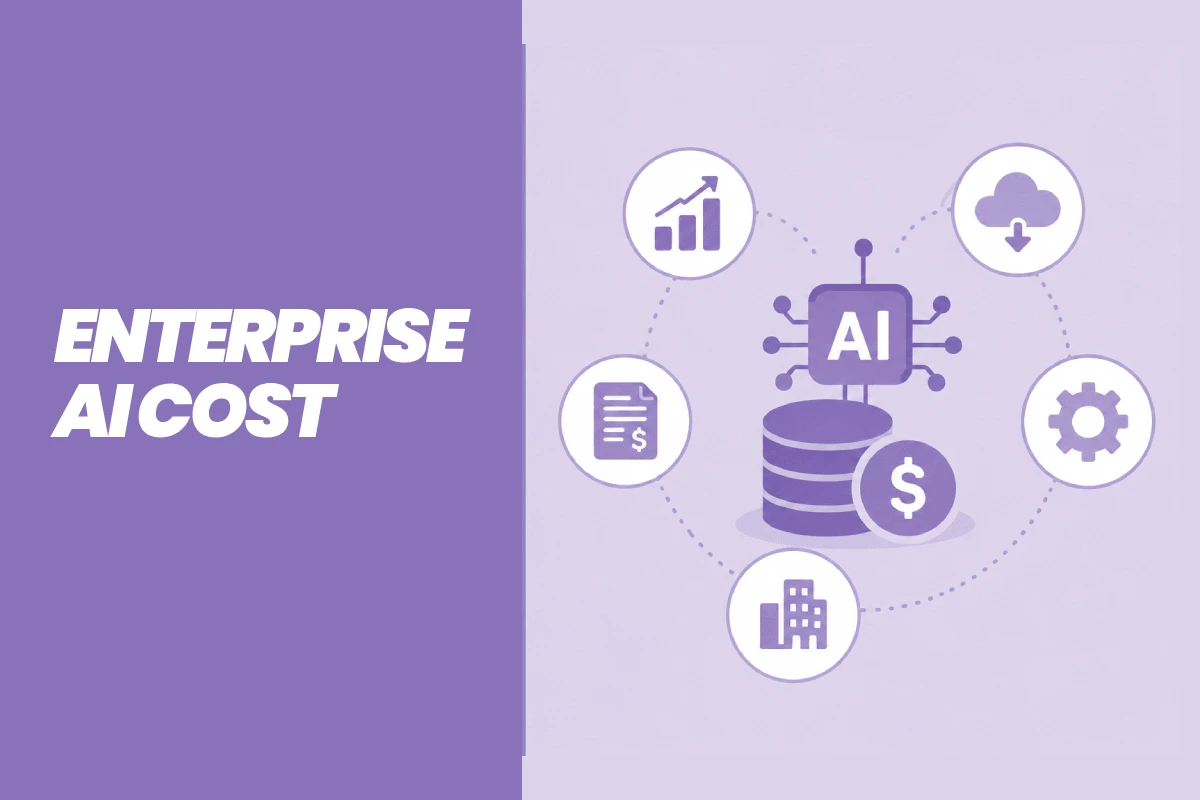
Quick AnswerEnterprise AI cost goes far beyond the API or GPU bill. Total cost of ownership includes infrastructure, model and token fees, agent orchestration, data engineering, talent, maintenance, compliance and legacy integration. Indicative build costs range from about $20K for a scoped chatbot to $500K or more for a multi-agent system, plus ongoing run costs. Enterprise AI cost is rarely the number on the first invoice. The API bill or GPU quote is easy to see, so it gets the attention in budget meetings. The larger costs sit around it: data pipelines, evaluation, monitoring, security, compliance evidence and the engineers who keep the system reliable in production. The scale of spending makes this gap expensive. Gartner forecasts worldwide AI spending of $2.7 trillion in 2026, up 49.5% year over year. Yet MIT’s NANDA initiative found that about 95% of enterprise generative AI pilots delivered little or no measurable P&L impact. This guide breaks enterprise AI cost into its real components, gives planning ranges by project type, and shows how to estimate and control total cost of ownership before you build. What Makes Up the Total Cost of Enterprise AI The total cost of enterprise AI spans eight components, and only the first two show up cleanly on a vendor invoice. A realistic AI TCO model budgets for all eight from day one. Compute costs scale with usage. People, data and compliance costs scale with the number of workflows in production. Both need separate lines in the budget. Build vs Partner
Read MoreOct 21, 2026 Artificial Intelligence Comments Off on AI Agent Integration: How to Connect AI Agents with Enterprise Systems?
Oct 21, 2026 Artificial Intelligence Comments Off on AI Agent Integration: How to Connect AI Agents with Enterprise Systems?
AI Agent Integration: How to Connect AI Agents with Enterprise Systems?
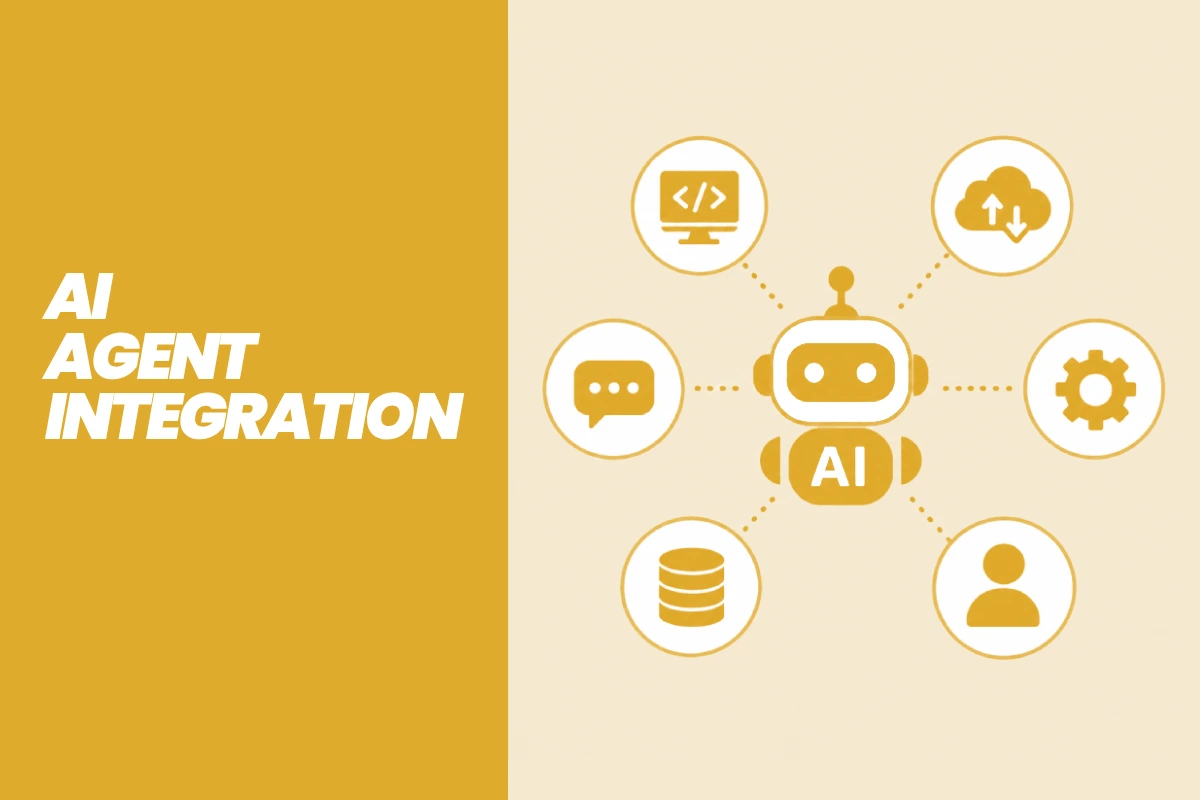
Quick answerAI agent integration connects AI agents to enterprise systems so they can use live data and take actions. Use MCP for reusable, dynamic tool access, APIs and event streams for fixed workflows, A2A for collaboration between agents, and RPA for legacy systems. Secure everything with user-scoped permissions, human approvals and audit logs. Most AI agents look impressive in a demo. The trouble starts when the same agent has to read a live order from SAP, update a ticket in ServiceNow and respect the access rights of the person asking. Gartner predicts that over 40% of agentic AI projects will be canceled by the end of 2027, citing escalating costs, unclear business value and inadequate risk controls. Much of that cost and risk is decided by one engineering problem: AI agent integration. An agent without access to your systems of record can only talk. An integrated agent can pull live context, take actions and finish a workflow from start to end. This guide explains how AI agent integration works, how MCP, APIs, A2A, event streams and RPA compare, what a production architecture looks like, an eight-step process to follow, the security controls that matter, and typical timelines and costs. What Is AI Agent Integration? AI agent integration is the process of connecting an AI agent to enterprise applications, data sources and other agents through APIs, protocols such as MCP and A2A, or automation layers, so the agent can retrieve real-time context and take authorized actions inside business workflows. How it
Read MoreOct 21, 2026 Artificial Intelligence Comments Off on AI in Expense Management: Use Cases, Technologies, and Business Impact
Oct 21, 2026 Artificial Intelligence Comments Off on AI in Expense Management: Use Cases, Technologies, and Business Impact
AI in Expense Management: Use Cases, Technologies, and Business Impact
Expense management affects more than employee reimbursements. It influences budget visibility, financial controls, tax compliance, corporate travel spending, and financial reporting. However, many organizations still rely on manual receipt reviews, rigid approval rules, spreadsheets, and disconnected systems, making it difficult to identify unusual transactions, understand spending patterns, and address policy violations before they affect financial results. AI is creating opportunities to improve these processes by analyzing transaction data, interpreting supporting documents, detecting anomalies, and generating financial insights. According to Protiviti’s 2025 Global Finance Trends survey, 36% of finance organizations already employing AI reported using it for expense management. Beyond automating receipt processing, AI can help finance teams understand spending changes, forecast reimbursement requirements, identify risks that conventional rules may miss, and evaluate expense policy effectiveness. Its value ultimately depends on reliable data, integration with financial systems, and controls that translate AI-generated insights into accurate, accountable business decisions. Traditional vs. AI-Powered Expense Management Traditional expense systems enforce predefined rules, automate approvals, and calculate reimbursements. However, they struggle with contextual decisions and patterns spanning multiple transactions. AI supplements these controls by identifying anomalies, interpreting policies, analyzing spending patterns, and prioritizing exceptions. It works best for organizations managing high transaction volumes and complex expense workflows. Dimension Traditional systems AI-powered systems Expense review Fixed rules and manual checks Contextual analysis Fraud detection Predefined thresholds Pattern and anomaly detection Policy interpretation Explicit rules Context-aware policy analysis Spending analysis Historical reports Pattern detection and forecasting Exception handling Manual investigation Risk-based prioritization Forecasting Historical averages Predictive models
Read MoreOct 20, 2026 Artificial Intelligence Comments Off on AI in Local Government: Use Cases, Technologies, and Business Impact
Oct 20, 2026 Artificial Intelligence Comments Off on AI in Local Government: Use Cases, Technologies, and Business Impact
AI in Local Government: Use Cases, Technologies, and Business Impact
Local governments manage essential public services, including waste collection, water supply, road maintenance, property taxation, building permits, traffic management, and citizen requests. These responsibilities generate large volumes of operational data, but many authorities still depend on fragmented records, manual reviews, and reactive maintenance processes. Artificial intelligence (AI) can help local governments analyze this information, automate repetitive administrative work, anticipate service demands, and allocate limited public resources more effectively. AI adoption is growing across the public sector. According to the Local Government Association’s 2025 State of the Sector report, 95% of responding English councils were using or exploring AI. The findings indicate growing interest in applying AI to everyday government operations, although adoption and readiness vary between authorities. For local governments, the opportunity extends beyond automating routine tasks. AI can support better infrastructure planning, more accurate revenue administration, improved resource allocation, and faster responses to community needs. Achieving these outcomes requires applications that address identifiable operational problems rather than introducing AI without a measurable purpose. High-Value Use Cases of AI in Local Government The strongest applications address recurring problems that affect public expenditure, service quality, infrastructure reliability, or administrative capacity. The following use cases illustrate how AI can support different municipal functions. Automating Citizen Service Requests Local authorities receive complaints and service requests through portals, email, mobile applications, and contact centers. Employees must classify each request, identify its location, determine its urgency, and assign it to the correct department. AI can interpret incoming messages, categorize issues, extract addresses, identify duplicate reports,
Read MoreOct 19, 2026 Artificial Intelligence Comments Off on AI Agent Protocols Explained: MCP, A2A, ACP & More
Oct 19, 2026 Artificial Intelligence Comments Off on AI Agent Protocols Explained: MCP, A2A, ACP & More
AI Agent Protocols Explained: MCP, A2A, ACP & More
An AI agent is only as useful as the systems it can reach. In production, a single agent may need your CRM, a document store, a ticketing system and a second agent owned by another team. Each of those connections traditionally needs its own wrapper, auth flow, schema and error handling. That integration cost is growing fast. Gartner predicts that 40% of enterprise applications will include task-specific AI agents by the end of 2026, up from less than 5% in 2025. AI agent protocols exist to stop every team from rebuilding the same plumbing. This guide explains what each major protocol does, where it sits in the stack, how mature it is, and how to choose between them. Key Takeaways What Are AI Agent Protocols? AI agent protocols are open specifications that define how agents discover capabilities, exchange context, delegate work and call external systems. They give every participant in an agentic system the same contract, so a new tool or agent can plug in without custom glue code. Agent communication protocols cover four kinds of boundary: agent to tool, agent to agent, agent to user interface, and agent to commerce or payment systems. Each protocol in this guide targets one or two of those boundaries. How Agent Protocols Differ From APIs An API exposes one service with a fixed request and response shape. A developer reads its documentation and writes code against it. An agent protocol sits one level up. It tells an agent at runtime which capabilities exist,
Read MoreOct 19, 2026 Artificial Intelligence Comments Off on AI in Data Analytics: Applications, Technologies, and Enterprise Benefits
Oct 19, 2026 Artificial Intelligence Comments Off on AI in Data Analytics: Applications, Technologies, and Enterprise Benefits
AI in Data Analytics: Applications, Technologies, and Enterprise Benefits
Artificial intelligence is changing how enterprises collect, interpret, and use business data. Traditional analytics helps organizations understand historical performance through reports, dashboards, and statistical analysis. AI extends these capabilities by identifying patterns across large datasets, detecting unusual behavior, generating explanations for changing business metrics, and helping analysts investigate questions that would otherwise require substantial manual effort. According to McKinsey’s 2026 State of AI report, nearly nine in ten survey respondents report regular AI use in at least one business function, reflecting how AI is moving beyond isolated experiments into broader enterprise operations. For enterprises, the value of AI in data analytics depends on how effectively it improves existing analytical work. Organizations may have extensive data warehouses, business intelligence platforms, and reporting processes but still struggle with fragmented information, recurring manual analysis, and delays in identifying the reasons behind performance changes. AI can help address these limitations by automating repetitive analytical tasks, connecting information across different systems, and making analytical findings easier to investigate. However, meaningful results require reliable data, appropriate analytical methods, and clear controls over how AI-generated findings are validated and used. High-Value Applications of AI in Data Analytics Automating recurring analytical workflows Enterprises regularly prepare monthly performance reviews, inventory reports, budget variance analyses, sales summaries, and operational reports. These activities often require analysts to retrieve information from multiple systems, reconcile figures, compare periods, identify exceptions, and explain the results. AI can reduce the manual effort involved in these workflows. Scheduled data pipelines collect and prepare information, while analytical
Read MoreOct 16, 2026 Artificial Intelligence Comments Off on AI in Corporate Tax Operations: Use Cases, Operational Challenges, and Business Value
Oct 16, 2026 Artificial Intelligence Comments Off on AI in Corporate Tax Operations: Use Cases, Operational Challenges, and Business Value
AI in Corporate Tax Operations: Use Cases, Operational Challenges, and Business Value
Corporate tax departments must reconcile financial records, interpret changing regulations, calculate tax liabilities, and support reporting across multiple entities and jurisdictions. These responsibilities become more difficult as businesses expand, transaction volumes increase, and reporting deadlines remain fixed. According to the 2025 State of the Corporate Tax Department report from Thomson Reuters and the Tax Executives Institute, 58% of surveyed corporate tax departments reported being under-resourced, while tax professionals spent 56% of their time on basic, reactive tasks. These pressures leave limited capacity for complex tax analysis, planning, and risk assessment. Artificial intelligence (AI) can help corporate tax teams manage these demands by analyzing financial data, extracting information from documents, identifying unusual transactions, and supporting tax research. Its value, however, depends on the quality of the information it processes and the controls surrounding its outputs. A model that produces a plausible tax explanation without identifying the applicable jurisdiction, reporting period, or supporting evidence can create additional review work rather than reduce it. Businesses therefore need to evaluate AI across specific tax activities while maintaining the professional judgment and financial controls required for accurate reporting. High-Value Use Cases of AI in Corporate Tax Operations AI can support corporate tax operations at several stages, from collecting financial information to preparing returns and reviewing tax positions. The following applications address different sources of operational effort and should be assessed according to their data requirements, financial impact, and review needs. Tax Data Extraction and Classification Corporate tax teams receive information from ERP systems, general ledgers,
Read MoreOct 16, 2026 Artificial Intelligence Comments Off on Multimodal AI Agents: Real Use Cases, Top Agents and How They Work
Oct 16, 2026 Artificial Intelligence Comments Off on Multimodal AI Agents: Real Use Cases, Top Agents and How They Work
Multimodal AI Agents: Real Use Cases, Top Agents and How They Work
Enterprise AI is moving from systems that read text to systems that see screens, hear voices, inspect photos and then act on what they perceive. This guide covers the top multimodal AI agents available in 2026, explains how they differ from the multimodal models underneath them, and walks through 12 use cases backed by named, sourced deployments wherever one exists. You will learn how multimodal AI agents work step by step, which commercial agents meet a strict definition of “agent”, what it takes to build a custom one, and how to evaluate an agent before it touches production data. The article is written for CTOs, product heads and enterprise teams deciding where multimodal agents fit in their roadmap. Key Takeaways What Are Multimodal AI Agents? Multimodal AI agents are AI systems that take in more than one type of input, such as text, images, audio, video or a live screen, combine those inputs into a single understanding of a task, and then plan and execute actions through tools, APIs or user interfaces to complete that task with limited human direction. The key word is “act”. A system that describes a photo is multimodal. A system that reads the photo, checks it against a policy document, files the result in a claims system and notifies an adjuster is a multimodal agent. Multimodal AI Model vs Multimodal AI Agent A multimodal AI model perceives and generates. It accepts inputs across modalities and returns an output, usually text, an image or audio. A
Read MoreOct 16, 2026 Artificial Intelligence Comments Off on AI in Credit Management: Use Cases, Applications, and Business Impact
Oct 16, 2026 Artificial Intelligence Comments Off on AI in Credit Management: Use Cases, Applications, and Business Impact
AI in Credit Management: Use Cases, Applications, and Business Impact
Credit management helps businesses determine which customers can buy on credit, how much exposure they can accept, and how they should respond when payments are delayed. These decisions affect sales, cash flow, bad debt, and customer relationships. Yet many organizations still depend on periodic credit reviews, manual financial analysis, fixed credit limits, and collection strategies based primarily on invoice aging. These methods can struggle to keep pace with changing customer circumstances. According to Atradius’ 2025 Payment Practices Barometer for India, overdue invoices affected an average of 63% of credit-based B2B sales in India, while bad debts accounted for an average of 7% of B2B invoices. These figures highlight the financial pressure that delayed payments and customer defaults can place on businesses. Artificial intelligence (AI) can help credit teams evaluate customer financial information, identify changes in payment behavior, estimate default risk, and prioritize accounts that require attention. Machine learning models can analyze historical transactions and financial indicators, while natural language processing can extract relevant information from credit reports and financial statements. Generative AI can summarize account histories and support credit analysts as they prepare reviews. However, these capabilities serve different purposes and require appropriate controls. The objective is not to replace credit judgment with automated scores, but to give decision-makers better evidence, earlier warnings, and a more consistent way to assess risk across the customer portfolio. Where AI Fits Into Credit Management Credit management involves more than deciding whether to approve a customer’s credit application. It covers the ongoing assessment of
Read MoreOct 15, 2026 Software Development Comments Off on RPA in Manufacturing: Use Cases, Real Examples, Benefits and Challenges
Oct 15, 2026 Software Development Comments Off on RPA in Manufacturing: Use Cases, Real Examples, Benefits and Challenges
RPA in Manufacturing: Use Cases, Real Examples, Benefits and Challenges
RPA in manufacturing is the use of software bots to carry out repetitive, rules-based digital work that people currently do by hand, such as keying orders into an ERP, matching invoices to purchase orders, updating inventory records and compiling quality reports. It delivers the most value where data has to move between systems that don’t talk to each other, like ERP, MES, warehouse software and supplier or dealer portals. Plants get faster cycle times, fewer entry errors and cleaner audit trails without ripping out the systems they already run. This guide covers where robotic process automation fits in a manufacturing business, the use cases that pay off first, real examples from named manufacturers, the benefits and challenges, how to estimate cost, and how to pick the right processes for your first bots. Key Takeaways What Is RPA in Manufacturing? Robotic process automation in the manufacturing industry has nothing to do with the robot arms on your assembly line. An RPA bot is software. It logs into applications, reads screens and files, copies data from one system to another, applies business rules and triggers the next step, much like a careful employee would. The reason it fits manufacturing so well is the typical plant IT landscape. A mid-sized manufacturer might run an ERP for finance and planning, an MES on the shop floor, a warehouse management system, a quality management system, a maintenance system and a handful of supplier, carrier and dealer portals. Few of these were designed to share data
Read MoreOct 15, 2026 App Development Comments Off on Top 10 MVP Development Companies in USA (2026)
Oct 15, 2026 App Development Comments Off on Top 10 MVP Development Companies in USA (2026)
Top 10 MVP Development Companies in USA (2026)
Most MVPs do not fail because the code is bad. They fail because the team built too much before learning anything, chose a partner who executed the wrong plan well, or never tested the assumption that mattered most. The right MVP development companies prevent all three. They help you decide what to leave out, ship a working product real users can touch, and set up the architecture so you are not rebuilding from scratch six months later. This guide compares 10 MVP development companies in USA that hold a US headquarters or US office, offer a dedicated MVP development service, and carry a Clutch rating of 4.8 or higher. It is written for US startup founders, SaaS founders, and enterprise innovation teams choosing a partner for a first release. Each entry covers who the firm suits, verified pricing data, and when to look elsewhere. Key Takeaways What Is MVP Development and Why It Matters for US Startups MVP development is the process of building the smallest working version of a product that can test your riskiest business assumption with real users. It is not a cheaper version of the final product. It is a learning system. The goal is to find out whether people want the product, whether the core workflow makes sense, and whether anyone will pay, before most of the budget is spent. That distinction changes how an MVP should be scoped. A strong MVP answers a small number of high-risk questions. A weak one tries to launch
Read MoreOct 15, 2026 App Development 0

Oct 15, 2026 App Development 0
How Much Does it Cost to Build a Dating App in 2026?
Looking into how to enter the dating app market but not sure how much it costs to develop a dating app like Raya or Hinge. No problem! This blog has summed up the estimated cost and all the prime factors affecting the overall app development cost, factors affecting the success and benefits of your business. Let's get into it.
Read MoreOct 14, 2026 App Development 0

Oct 14, 2026 App Development 0
How Much Does It Cost to Build an App in 2026?
Here's a breakdown of key factors affecting the average cost to develop a mobile app in 2026 and what it takes to set a budget for developing a quality-oriented mobile app for your business. Learn here everything from setting a right budget to create a mobile app and avoid over spendings.
Read MoreOct 13, 2026 App Development Comments Off on Mobile App Development Cost in India (2026): Real Numbers, Worked Examples

Oct 13, 2026 App Development Comments Off on Mobile App Development Cost in India (2026): Real Numbers, Worked Examples
Mobile App Development Cost in India (2026): Real Numbers, Worked Examples
Quick AnswerMost mobile app projects reviewed on Clutch cost $10,000 to $49,999, about ₹9.5 lakh to ₹47.5 lakh. A focused MVP usually sits inside that band. Apps with heavy integrations or AI run above it. Published figures disagree because most come from agencies with no stated method, and because seniority, QA depth and scope move the hour count more than location does. This guide prices mobile app development cost in India from the ground up: independent benchmarks with named sources, a quote formula you can check, three apps costed end to end, and the bills that arrive after launch. All conversions use ₹95 = $1 as a working rate. Check the latest FBIL reference rate on the day you set your budget. On 12 October 2026 the market rate was about ₹96 to the dollar, so rupee figures here may read about 1% low. Figures exclude 18% GST unless stated. Quick Reference: App Development Cost in India 2026 Every row uses the same model as the rest of this guide: estimated hours × ₹1,900 to ₹2,375 per hour ($20 to $25). The last column applies the same hours at Clutch’s US band of $25 to $49 per hour (Clutch, updated 21 September 2026). Screen counts and hours are planning assumptions, not quotes. Figures exclude GST and running costs. App type Screens Hours Timeline India cost Same hours at US rates Simple MVP, one user role 5 to 10 500 to 900 2 to 3 months ₹9.5 lakh to ₹21.4 lakh
Read MoreOct 12, 2026 Artificial Intelligence Comments Off on AI in Trucking: Applications, Operational Requirements, and Business Impact
Oct 12, 2026 Artificial Intelligence Comments Off on AI in Trucking: Applications, Operational Requirements, and Business Impact
AI in Trucking: Applications, Operational Requirements, and Business Impact
The trucking industry operates under constant pressure to control fuel expenditure, maintain vehicle availability, meet delivery commitments, and manage changing freight demand. These responsibilities generate large volumes of operational data, but having access to that data does not automatically make it useful. Fleet managers still need to identify developing problems, understand their likely consequences, and decide where intervention will have the greatest impact. AI is beginning to support these decisions across the transportation sector. According to Penske’s 2025 Transportation Leaders Survey, 70% of surveyed transportation and logistics companies reported adopting AI solutions, compared with 53% in 2024. Respondents identified improvements in fleet planning, route optimization, and operational efficiency. For trucking businesses, the opportunity lies in applying AI to specific operational requirements, integrating its outputs with existing systems, and establishing whether the resulting improvements justify the investment. Identifying High-Impact Areas for AI in Trucking Trucking companies rarely operate with a single objective. A carrier may need to reduce fuel consumption while maintaining delivery schedules, increase vehicle utilization without overloading drivers, and control maintenance expenditure without compromising vehicle reliability. These objectives can conflict, which makes operational priorities important when considering AI. For example, a routing system may recommend a shorter route based on distance. However, that route might involve congestion, restricted roads, difficult access for heavy vehicles, or additional toll charges. A useful AI application must account for the constraints that affect the actual operation rather than optimize one variable in isolation. The same applies to fleet maintenance. Reducing workshop visits may
Read MoreOct 9, 2026 Artificial Intelligence Comments Off on AI in Clinical Data Management: Use Cases, Applications, and Implementation
Oct 9, 2026 Artificial Intelligence Comments Off on AI in Clinical Data Management: Use Cases, Applications, and Implementation
AI in Clinical Data Management: Use Cases, Applications, and Implementation
Clinical data management ensures that clinical trial data is complete, consistent, traceable, and suitable for analysis. Teams collect and review information from electronic data capture (EDC) systems, laboratories, medical records, imaging platforms, and other sources. As trials become more complex, manual review and rule-based validation alone can make it difficult to identify inconsistencies across these systems. A 2025 study published in Therapeutic Innovation & Regulatory Science, based on 105 clinical trial protocols, found that a Phase III protocol collected an average of 5.9 million data points. The volume illustrates the scale of the data management workload in large clinical studies. AI can help clinical data management teams review large datasets, match records across systems, classify medical information, prioritize queries, and identify patterns that require investigation. Its value depends on how well these capabilities fit the study protocol, data standards, and existing systems. An AI model may flag a laboratory result that conflicts with a recorded visit date, for example, but a data manager must determine whether the discrepancy is an error or a valid clinical observation. The objective is to reduce avoidable manual work while maintaining data integrity, traceability, and appropriate human oversight. Where AI Adds Value in Clinical Data Management Clinical data management involves more than checking whether individual fields contain valid values. Teams must determine whether information is consistent across visits, aligned with the protocol, reconciled with external sources, and sufficiently complete for statistical analysis. Problems may remain undetected when each dataset is reviewed independently. Traditional validation rules
Read MoreOct 9, 2026 Artificial Intelligence Comments Off on Edge AI for Real-Time Analytics: Use Cases, Architecture & Tools
Oct 9, 2026 Artificial Intelligence Comments Off on Edge AI for Real-Time Analytics: Use Cases, Architecture & Tools
Edge AI for Real-Time Analytics: Use Cases, Architecture & Tools
Edge AI for real-time analytics is moving from pilot projects into standard enterprise architecture. Gartner expects more than two-thirds of enterprises to deploy edge AI by 2029, up from 10% in 2025 (Gartner, Predicts 2026: Physical AI Pushes I&O to the Edge). The driver is practical. A hand near a press, a shifting motor vibration or a refrigerated trailer drifting out of range all create decisions with a short shelf life. Sending every frame and reading to the cloud adds network delay, bandwidth cost and a dependency on connectivity that some decisions cannot tolerate. This guide covers the architecture layer by layer, when to choose edge, cloud or hybrid, the 2026 tools worth comparing, industry use cases, success metrics, governance, and a step-by-step implementation roadmap. What Is Edge AI for Real-Time Analytics? Edge AI for real-time analytics is the practice of running trained machine learning models on devices, gateways or nearby servers, so data is analyzed where it is generated and decisions land inside the time window the operation requires. Only events, summaries and exceptions travel to the cloud for storage, reporting and retraining. Three terms anchor this guide. Inference is running a trained model on new data to produce a prediction. Edge is any compute close to the data source, from a sensor’s microcontroller to an on-site server. Latency is the time between an event and the system acting on it. How fast does “real-time” need to be? Real-time means “fast enough for the decision”. Mapping each decision to
Read MoreOct 8, 2026 Artificial Intelligence Comments Off on AI in Safety Management: Use Cases, Benefits, and Implementation Considerations
Oct 8, 2026 Artificial Intelligence Comments Off on AI in Safety Management: Use Cases, Benefits, and Implementation Considerations
AI in Safety Management: Use Cases, Benefits, and Implementation Considerations
Workplace safety depends on identifying hazards early, controlling exposure, monitoring changing conditions, and responding quickly when unsafe situations occur. Yet many safety processes still depend on manual inspections, incident reports, checklists, worker observations, and periodic assessments. These methods remain important, but they can make it difficult to continuously monitor dynamic work environments. The scale of the problem is significant. According to the International Labour Organization, 2.93 million workers die each year from work-related accidents and diseases, while around 395 million workers sustain non-fatal work-related injuries. AI is being applied to safety management in areas where large volumes of operational data, images, video, sensor readings, equipment information, and safety records need to be reviewed continuously. Computer vision can identify visible hazards, machine learning can identify patterns associated with incidents, and natural language processing can analyze safety reports and inspection records. The International Labour Organization has also identified smart monitoring systems, automation, advanced robotics, and other digital technologies as areas that can improve occupational safety while creating new risks that require appropriate controls. The practical opportunity is therefore not to replace established safety processes with AI, but to use AI to detect conditions earlier, prioritize attention, support safety decisions, and improve how safety information moves through an organization. What AI Changes in Safety Management Traditional safety management relies heavily on scheduled inspections and human observation. A safety professional may inspect a worksite at a particular time, review completed checklists, investigate incidents after they occur, and analyze historical safety data periodically. AI can
Read MoreOct 8, 2026 Artificial Intelligence Comments Off on Multimodal AI Applications: Use Cases, Models, and How to Build Them
Oct 8, 2026 Artificial Intelligence Comments Off on Multimodal AI Applications: Use Cases, Models, and How to Build Them
Multimodal AI Applications: Use Cases, Models, and How to Build Them
Gartner predicts that 80% of enterprise software and applications will be multimodal by 2030, up from less than 10% in 2024. Enterprise data has always arrived as scanned forms, product photos, call recordings and sensor feeds; software is now catching up. For CTOs and product leaders, the question is no longer whether multimodal AI applications work. It is which workflows justify the build, which model fits, and what it takes to run the system reliably in production. This guide covers how multimodal AI works, 12 industry use cases with named deployments, the leading models as of October 2026, a step-by-step build process, cost drivers, and the compliance issues you need to plan for. Key Takeaways What Is Multimodal AI? Multimodal AI is a type of artificial intelligence that can take in, connect and reason across more than one kind of data, such as text, images, audio, video and sensor signals, within a single system. Instead of analyzing a photo or a document in isolation, it interprets them together to produce a more complete answer, decision or output. A unimodal model handles one input type. A text-only language model reads a claim description; a separate vision model classifies a damage photo. A multimodal model can read the description, inspect the photo and flag that the reported rear impact does not match visible front-end damage. That cross-referencing is the core value. Gartner noted in 2024 that many multimodal models were limited to two or three modalities; current frontier systems accept text, images,
Read MoreOct 7, 2026 Artificial Intelligence Comments Off on AI for Cash Application: Use Cases, Benefits, Architecture, and Best Practices
Oct 7, 2026 Artificial Intelligence Comments Off on AI for Cash Application: Use Cases, Benefits, Architecture, and Best Practices
AI for Cash Application: Use Cases, Benefits, Architecture, and Best Practices
Cash application is a core accounts receivable activity that determines how quickly and accurately incoming customer payments are matched to outstanding invoices and recorded against the right accounts. The process becomes increasingly complex as organizations manage high payment volumes across multiple banks, currencies, payment methods, customers, business units, and geographies. Payments may arrive without invoice references, cover multiple invoices, include deductions, or depend on remittance information received through a separate channel. These conditions create manual work and can leave significant amounts of cash sitting unapplied. The pressure to modernize accounts receivable is increasing. A 2025 BillingPlatform survey found that 80% of respondents considered accounts receivable automation important, a high priority, or critical, while only 3% had fully automated AR. The survey also found that 67% were evaluating AI for accounts receivable, but only 14% had deployed it. These figures show the gap between the strategic importance of AR automation and its current level of adoption. For cash application specifically, AI can address one of the more difficult parts of the process: interpreting incomplete payment information, identifying likely invoice relationships, handling exceptions, and reducing the manual effort required to reconcile incoming cash. AI for Cash Application Traditional cash application depends largely on deterministic matching rules. A system may compare the payment amount, invoice number, customer account, bank reference, currency, or remittance information and automatically clear a transaction when predefined conditions are met. These rules remain valuable for straightforward transactions. They become less effective when payment information is incomplete, inconsistent, or distributed
Read MoreOct 5, 2026 Artificial Intelligence Comments Off on Agentic AI in Manufacturing: Use Cases, Benefits, Real Examples and Challenges
Oct 5, 2026 Artificial Intelligence Comments Off on Agentic AI in Manufacturing: Use Cases, Benefits, Real Examples and Challenges
Agentic AI in Manufacturing: Use Cases, Benefits, Real Examples and Challenges
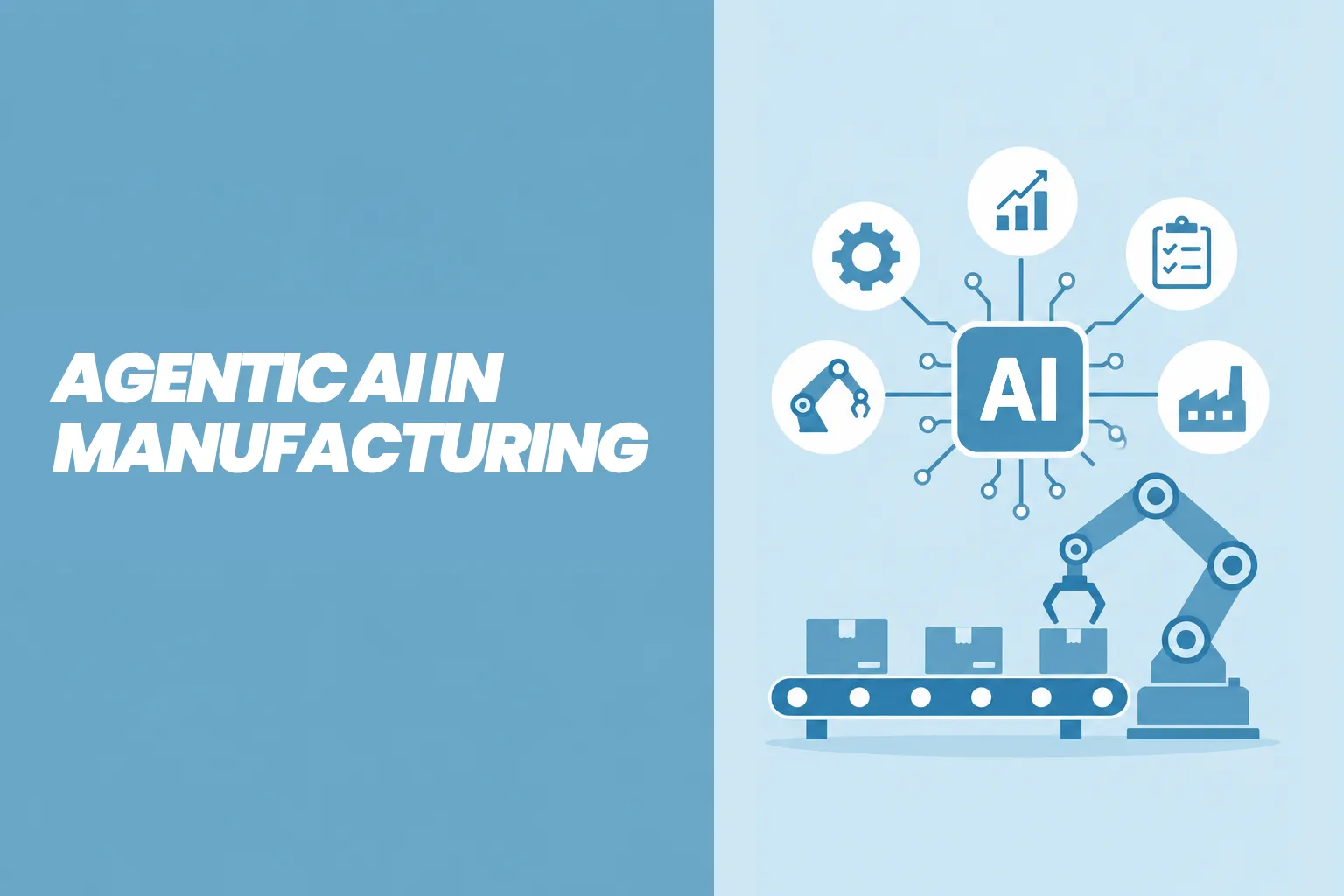
Agentic AI in manufacturing refers to AI agents that can understand a goal, plan the steps to reach it and take action across systems like ERP, MES, quality and supply chain tools, with people approving the decisions that matter. Unlike traditional automation that follows fixed scripts, these agents read context, handle exceptions and adapt as conditions change. They deliver the most value today in supply chain coordination, procurement, maintenance planning, quality documentation and customer order handling, where work is high-volume but full of variation. This guide explains what agentic AI means for a manufacturer, where it fits next to RPA and generative AI, the use cases worth starting with, real examples from named companies, the benefits and challenges, how to estimate cost and how to choose your first agent. Key Takeaways What Is Agentic AI in Manufacturing? An AI agent is software built around a large language model or other AI model that can do four things: understand a goal, plan the steps to reach it, use tools to act, and check the result before moving on. The tools might be an ERP transaction, an MES query, an email to a supplier, an RPA bot or an API call. Agentic AI is the broader approach of building operations around these agents. In a factory setting, that changes what automation can take on. A traditional bot can create a purchase order when stock drops below a threshold. An agent can notice that a supplier’s shipment is delayed, check which production orders
Read MoreOct 1, 2026 Artificial Intelligence Comments Off on AI in Healthcare Revenue Cycle Management: Use Cases, Benefits, and Practical Applications
Oct 1, 2026 Artificial Intelligence Comments Off on AI in Healthcare Revenue Cycle Management: Use Cases, Benefits, and Practical Applications
AI in Healthcare Revenue Cycle Management: Use Cases, Benefits, and Practical Applications
Healthcare revenue cycle management depends on hundreds of interconnected activities, from patient registration and eligibility verification to coding, claims, payment posting, denials, and collections. Problems rarely stay within one process. An incorrect insurance record can affect eligibility, a documentation gap can affect coding, and a coding or authorization issue can eventually appear as a denied claim. According to a 2025 HFMA survey, more than one-third of healthcare organizations lose at least $1 million annually because of documentation and coding discrepancies, while only 9% feel confident they are capturing all revenue to which they are entitled. AI is increasingly being applied to these challenges because it can analyze large volumes of structured and unstructured information, identify patterns, predict potential problems, and support revenue cycle staff with decisions that would otherwise require extensive manual review. Adoption is already underway. HFMA reported in 2025 that 71% of surveyed health systems had identified and deployed AI pilots or full solutions in finance, revenue cycle management, or clinical functions, while only 18% had a mature governance structure and fully formed AI strategy. This makes the practical focus less about adding AI to an RCM workflow and more about developing AI capabilities that can produce measurable financial results while operating within healthcare, privacy, security, and financial controls. AI in Healthcare Revenue Cycle Management Traditional RCM technology already automates many deterministic activities. Rules can validate required fields, check claim formats, route work queues, and perform other predefined tasks. AI adds capabilities that become useful when the information
Read MoreOct 1, 2026 Artificial Intelligence Comments Off on Enterprise AI Agent Architecture: Tools, Memory & Orchestration
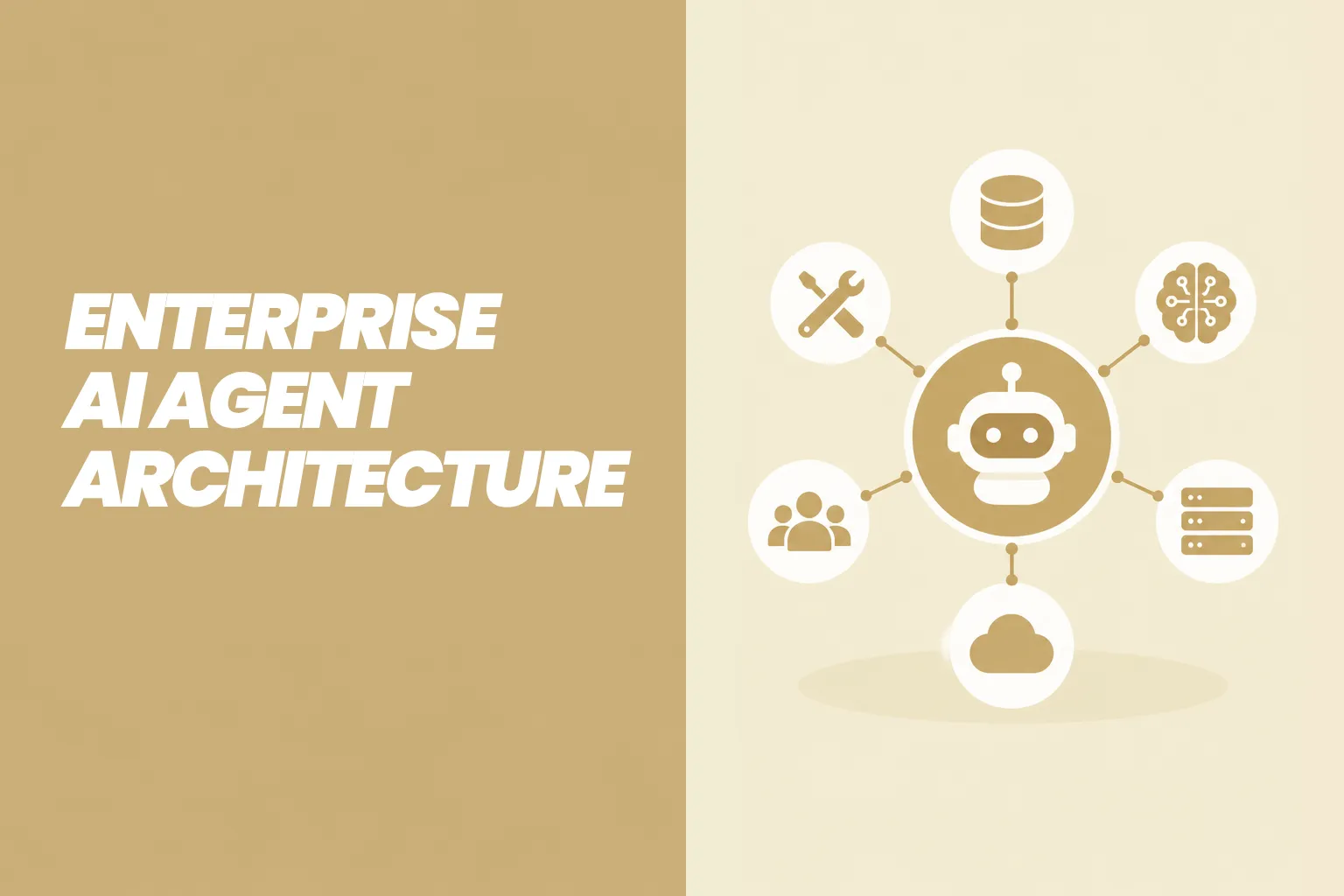
Oct 1, 2026 Artificial Intelligence Comments Off on Enterprise AI Agent Architecture: Tools, Memory & Orchestration
Enterprise AI Agent Architecture: Tools, Memory & Orchestration
Enterprise AI agents are becoming more capable than simple conversational systems. They can understand user requests, retrieve information, use enterprise tools, perform multiple tasks, and take actions within business workflows. As these capabilities expand, the architecture supporting the agent becomes increasingly important. The underlying model provides the reasoning, while tools, memory, orchestration, state management, security, and monitoring support the agent during execution. This is becoming more relevant as organizations experiment with agentic AI. McKinsey’s State of AI 2025 report found that 62% of surveyed organizations were experimenting with or scaling AI agents. This included 23% that were scaling an agentic AI system somewhere in the organization and 39% that were experimenting with agents. As organizations move beyond early experimentation, they need to consider how agents will access information, use tools, maintain context, interact with business systems, and operate within defined security and governance controls. What Makes an Enterprise AI Agent Architecture Different? A conventional generative AI application generally follows a relatively simple path: User → Application → LLM → Response An enterprise agent introduces additional components because the model needs to interact with systems and information beyond its immediate context. A more representative architecture is: User → Agent Runtime → Model → Tools / Retrieval / Memory → Enterprise Systems → Validation → Response or Action The model remains central, but it is no longer the entire application. Architecture component Primary role Key enterprise concern Foundation model Reasoning and language generation Accuracy, latency, cost Agent runtime Executes agent behavior State
Read MoreSep 30, 2026 Artificial Intelligence Comments Off on AI in Accounts Payable: Use Cases, Implementation, and Best Practices
Sep 30, 2026 Artificial Intelligence Comments Off on AI in Accounts Payable: Use Cases, Implementation, and Best Practices
AI in Accounts Payable: Use Cases, Implementation, and Best Practices
Accounts payable teams are under pressure to process growing invoice volumes without increasing manual effort, payment errors, or compliance exposure. The scale of the problem is measurable: Ardent Partners’ 2025 AP benchmarks report an average invoice processing cost of $9.84, an average processing cycle of 8.2 days, and an invoice exception rate of 18.4%. Ardent Partners’ AP benchmark analysis AI is changing where automation can be applied within accounts payable. Instead of limiting automation to invoice data capture, organizations can use AI to extract information from varied documents, classify invoices, validate data, identify anomalies, recommend accounting codes, route exceptions, answer supplier questions, and support payment controls. A 2025 Tipalti survey of more than 2,300 finance professionals found that 46% were implementing or piloting AI tools, while only 7% reported fully automated accounts payable operations. Tipalti’s Global Finance Outlook 2025 What AI Changes in the Accounts Payable Process Traditional accounts payable automation typically focuses on moving information between predefined steps. AI adds an interpretation layer that can deal with variable documents, historical transaction data, unstructured communications, and exceptions. For example, a conventional invoice capture system may extract a supplier name, invoice number, date, and amount according to predefined rules. An AI-based system can identify the same fields from invoices with different layouts, interpret line items, compare them with purchase orders and receipts, identify inconsistencies, and determine whether the invoice can proceed automatically or requires human review. Accounts payable activity Conventional automation AI-enabled approach Invoice capture OCR and predefined templates AI-based document
Read MoreSep 30, 2026 Artificial Intelligence Comments Off on What Is Super Intelligence and Why Does It Matter?
Sep 30, 2026 Artificial Intelligence Comments Off on What Is Super Intelligence and Why Does It Matter?
What Is Super Intelligence and Why Does It Matter?
Super intelligence now carries two meanings, and knowing which one you’re looking at helps you make smarter decisions. In official US government language, “Super Intelligence” (SI) is the new name for the AI we already use every day. In research, super intelligence (also called artificial super intelligence, or ASI) describes a future system that would outperform the best human minds, and even large teams of experts, across nearly every cognitive task. The first meaning updates vocabulary. The second could reshape how we work, discover, and build, which is why it matters for how you plan, govern, and invest in AI today. Key Takeaways Why Everyone Is Searching “Super Intelligence” For years, superintelligence was a term mostly used by AI researchers and philosophers. In September 2026, it moved from research papers into official government vocabulary. The US Shift From AI to SI The change was first announced at the UN General Assembly in September 2026, with US agencies directed to call the technology “super intelligence.” It became formal policy through an executive order titled “Inaugurating The Era of Super Intelligence,” which replaced the term “Artificial Intelligence” with “Super Intelligence” across executive branch operations (Business Today). What the New Term Covers Here’s the detail worth knowing. The order defines “Super Intelligence” and “SI” as the same technologies and systems covered by the existing federal definition of “artificial intelligence” in section 9401(3) of title 15 of the US Code. So a chatbot, a fraud detection model, or a document-processing tool carries a new
Read MoreSep 29, 2026 Artificial Intelligence Comments Off on How to Build Production-Ready Enterprise AI Systems
Sep 29, 2026 Artificial Intelligence Comments Off on How to Build Production-Ready Enterprise AI Systems
How to Build Production-Ready Enterprise AI Systems
AI adoption is accelerating across enterprises, but putting AI into production is proving far more difficult than proving that a model can generate an impressive response. According to McKinsey’s 2026 Global Survey on AI, 44% of organizations now report scaling AI across the enterprise, up from 38% a year earlier. Yet only 37% report a positive impact on organizational EBIT. The gap highlights a critical enterprise challenge: deploying AI at scale does not automatically make it reliable, useful, or economically valuable. A production AI system has to work under conditions that a prototype rarely encounters. It must handle inconsistent data, unpredictable user inputs, model failures, changing business requirements, security threats, API outages, rising inference costs, and increasing workloads. It also needs to fit into existing enterprise applications and processes without creating uncontrolled access or operational risk. Production AI therefore requires an engineering foundation that extends well beyond the model itself. Data must be current and governed, access must be controlled, outputs must be evaluated, integrations must fail safely, costs must remain predictable, and every model or prompt change must be traceable. This guide walks through how to design, build, test, secure, deploy, and operate enterprise AI systems that can handle real workloads—not just successful demonstrations. Define the Business Use Case Start with the business workflow, not the AI model. A production AI system should solve a clearly defined operational problem with measurable outcomes. “Build an enterprise chatbot” is not a sufficient use case. A better definition would be “reduce the
Read MoreSep 28, 2026 Artificial Intelligence Comments Off on AI in Construction: Practical Applications, Implementation and Business Impact
Sep 28, 2026 Artificial Intelligence Comments Off on AI in Construction: Practical Applications, Implementation and Business Impact
AI in Construction: Practical Applications, Implementation and Business Impact
Artificial intelligence is moving into construction through practical use cases such as estimating from historical project data, identifying design conflicts, monitoring site progress, predicting safety and quality risks, automating documentation, and making project information easier to access. The opportunity is not about replacing construction professionals; it is about reducing manual analysis and helping teams make better-informed decisions with the information already available across projects. The need is significant. Construction continues to deal with fragmented information, variable site conditions, labor constraints, complex subcontractor relationships, and large volumes of unstructured documentation. McKinsey estimates that global construction productivity improved by only 10% between 2000 and 2022, compared with 90% in manufacturing. AI can address some of these constraints when it is connected to reliable project data and embedded into existing workflows—whether that means identifying schedule risk early, retrieving the right project information, detecting site conditions, or supporting repetitive documentation and analysis. Where AI Creates Value Across the Construction Lifecycle AI can support nearly every phase of a construction project, but the underlying technology and business value differ considerably by use case. Construction stage AI application Primary input Practical outcome Preconstruction Cost estimation Historical projects, quantities, specifications Faster preliminary estimates Preconstruction Bid analysis Bid documents, subcontractor data Identify cost and scope anomalies Design Design review BIM models, drawings, specifications Detect conflicts and inconsistencies Planning Schedule risk prediction Schedules, progress, dependencies Identify activities likely to slip Procurement Demand forecasting Project schedules, inventory, purchase history Improve material planning Site execution Progress monitoring Images, video, BIM, schedules
Read More